After Dusk, Before Control: Coexisting With What Horses Need When We Can’t See Much

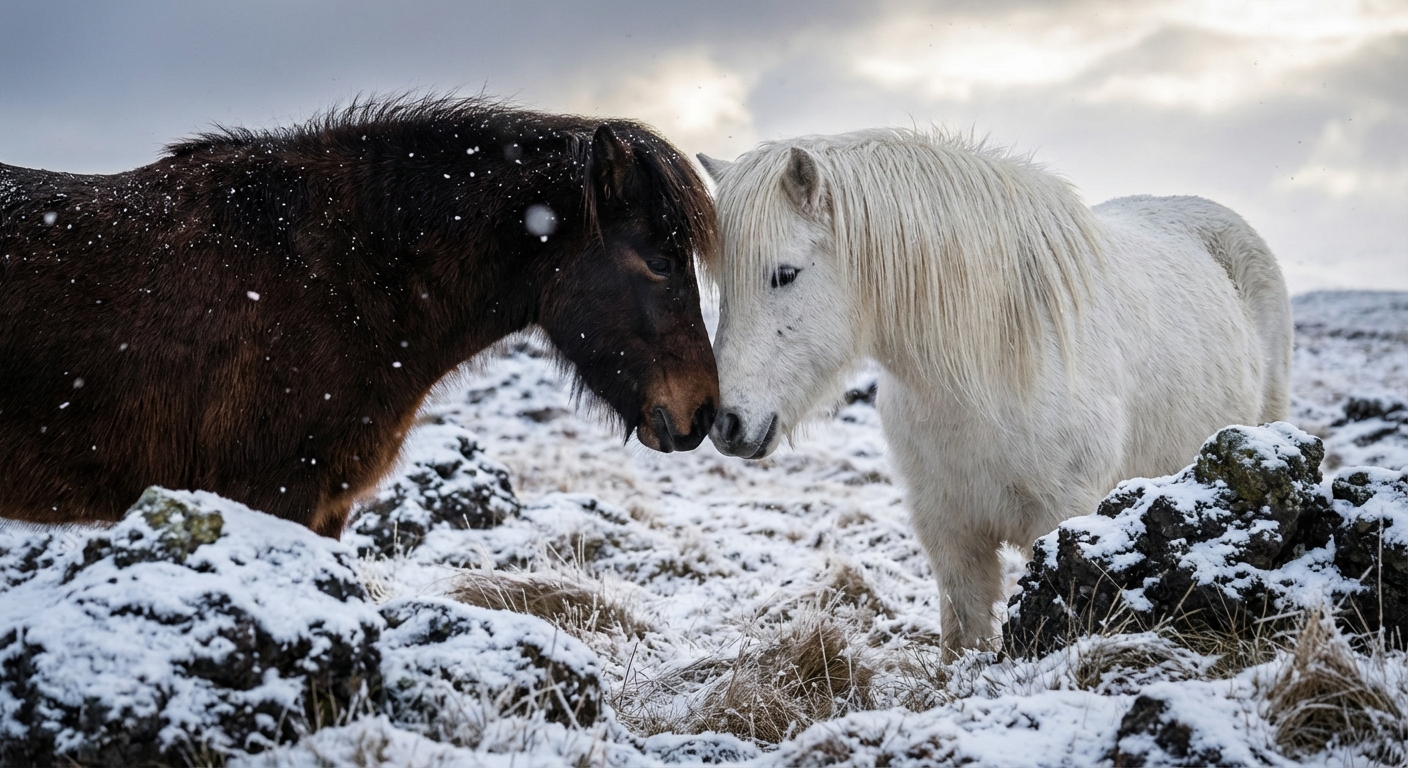
After Dusk, Before Control: Coexisting With What Horses Need When We Can't See Much
As the light begins to fade, so too does my sense of certainty.
When dusk settles over the pasture, the landscape loses its familiar legibility. Details collapse into shadow. Boundaries dissolve. My instinct is to impose order where perception fails: gather them close, establish routine, create schedule, restore what I can see. This impulse masquerades as diligence, but more often it is simply my own unease seeking relief.
What horses choose to do in darkness is not a dilemma requiring resolution. It is a quiet instruction that true coexistence cannot be constructed solely around what I find convenient to observe.
How often do we, too, impose structure on others not because they need it, but because uncertainty unsettles us? The discomfort of not knowing can drive us to control what we cannot truly see.
The human urge to tighten the frame
Diminished visibility leaves humans feeling as though they've fallen behind.
When we lose the ability to easily monitor who stands where, who consumed what, who seemed slightly wrong, we tend to react with management strategies that force the scene back into an illuminated container: reduced turnout hours, increased confinement, more instances where the horse must halt and wait simply because we cannot proceed.
Yet a horse confined to a stall through the night is not necessarily at rest. It may equally be a horse denied what its very physiology anticipates—locomotion, grazing, and sustained connection to the fluid geography of the herd. Coexistence demands we recognize the moment our hunger for visibility quietly transforms into their deprivation of continuity.
We might ask ourselves the same question in our own relationships: when does our need to monitor become another's loss of freedom?
Night is where the baseline continues
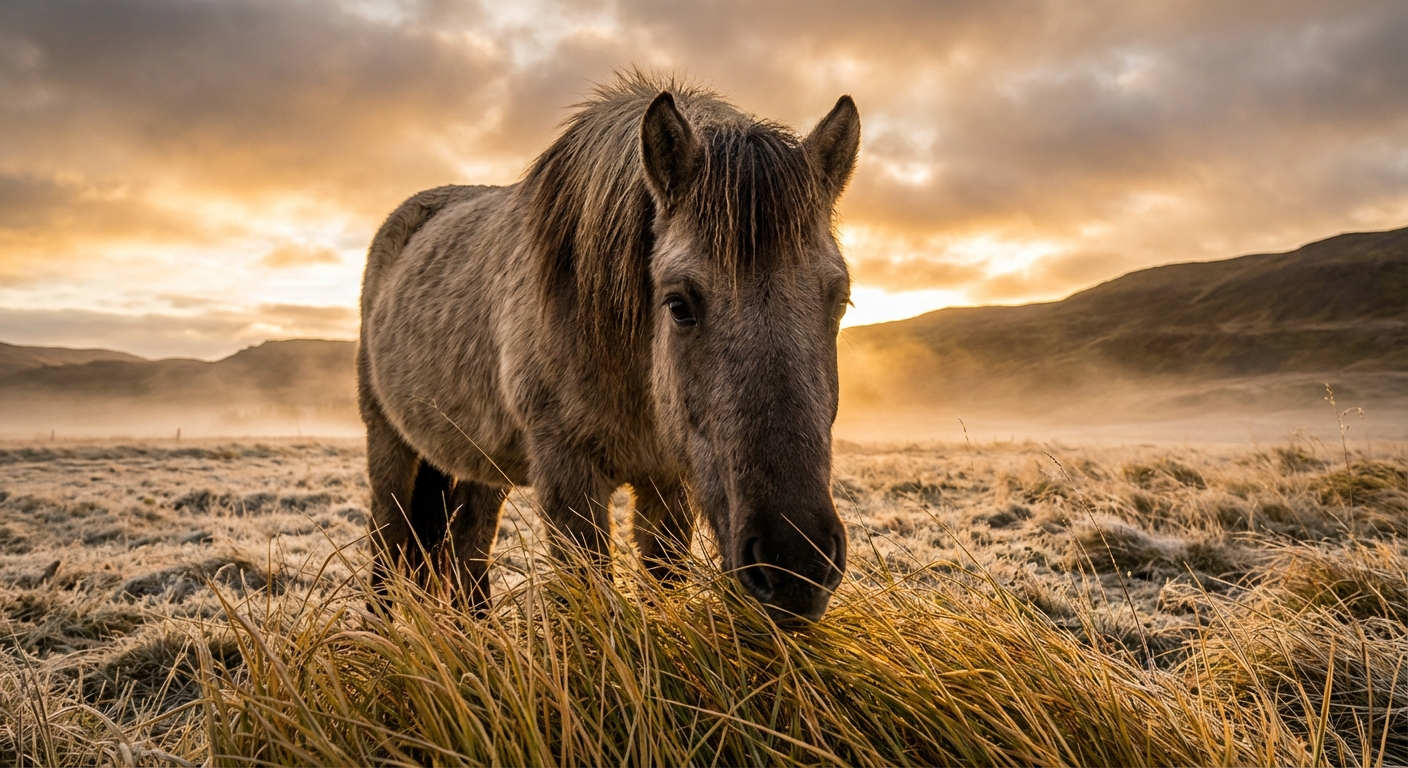
A horse's existence is not an empty vessel into which we pour scheduled activities. Foraging constitutes the foundational stratum upon which all other living is built.
This distinction matters profoundly because eating does more than occupy hours; it anchors the body in a state of equilibrium. The instant feeding ceases, a subtle clock begins—one that renders "extended intervals" something far more consequential than mere preference. Uninterrupted access to forage shifts from indulgence to irreducible standard, the baseline around which all else must be arranged.
Thus the inquiry transforms. Rather than asking, "Did they receive sufficient nourishment during daylight?" we must ask, "Did we permit the rhythm to persist when our own attention waned?" When nocturnal management fractures this foundation, we have no grounds for surprise when the following day arrives fractured as well.
Our own lives echo this truth: when the foundational rhythms that sustain us are interrupted, the instability ripples forward into everything that follows.
Herd order without a spotlight
In the half-light, dramatic confrontations cannot serve as your guide to understanding who holds significance for whom.
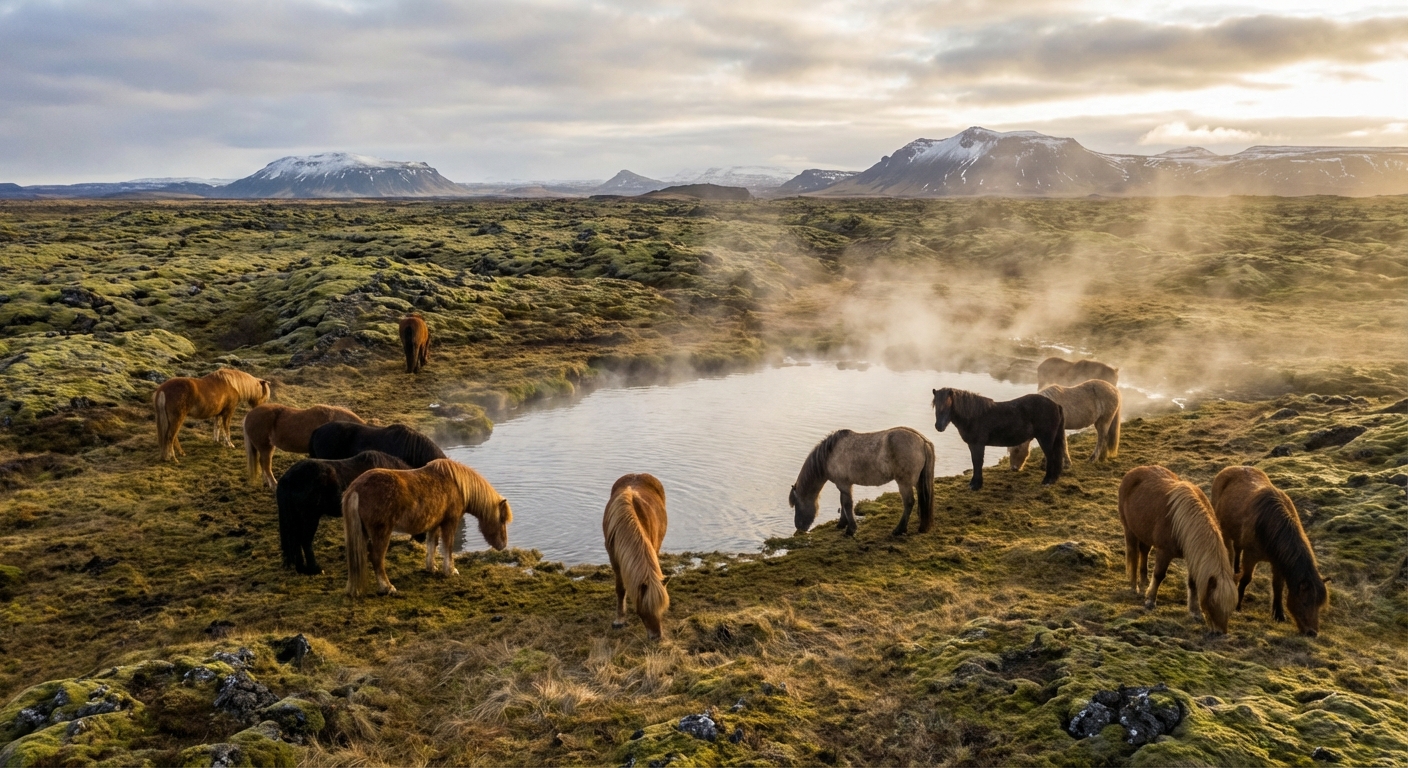
Here is precisely where reductive narratives of hierarchy mislead us. Within authentic groups, who defers and who advances fluctuates according to the resource at hand, the particular moment, and the specific relationship. Decisions about movement and collective direction do not invariably originate from a single permanent leader. Various horses may initiate or shape outcomes depending on circumstance.
Put simply: the organization we fail to perceive in low light has not vanished—it has merely grown quiet.
When we answer darkness by habitually dividing, reorganizing, or condensing the group, we may well be manufacturing the very discord we imagine ourselves preventing. Social stability constitutes its own species of security.
Human communities function similarly—the bonds that truly hold us together are often invisible, operating in registers we cannot easily observe or measure.
Watching what changes when patterns break
If coexistence is your practice, keep records of the unremarkable moments.
Observe the actual duration your horses dedicate to grazing. Observe the consequences when that cadence is severed by travel, medical interventions, weather-driven choices, or the casual assumption that "the hour is late, they'll manage." Observe what emerges from disrupted patterns—agitation, obsessive focus, withdrawn stillness, repetitive behaviors that serve as unmistakable signals of an environment grown misaligned.
The intention here is not to moralize about nighttime protocols. It is to cease regarding nocturnal continuity as expendable.
We would do well to apply this same vigilance to ourselves—noticing when the disruption of our own essential rhythms precedes our unraveling.
A different kind of care: planning for what we can't supervise
Genuine care does not invariably manifest as increased intervention. Sometimes it appears as the design of conditions that continue functioning in our absence.
This might mean ensuring unbroken forage availability so the body need not endure recurring emptiness. It might mean selecting turnout configurations and social groupings that allow horses to continue moving and negotiating territory without our perpetual intercession. It might mean accepting that our capacity to observe is not the metric of their flourishing.
Fading light reveals an elemental truth: the horse's life does not suspend itself when our vision does.
Perhaps the deepest form of love—for horses, for anyone—is learning to trust that life continues meaningfully beyond the reach of our gaze.
Equine Notion
https://equinenotion.com/