After the Startle: Letting Horses Rebuild Themselves Through Choice, Company, and Quiet Food

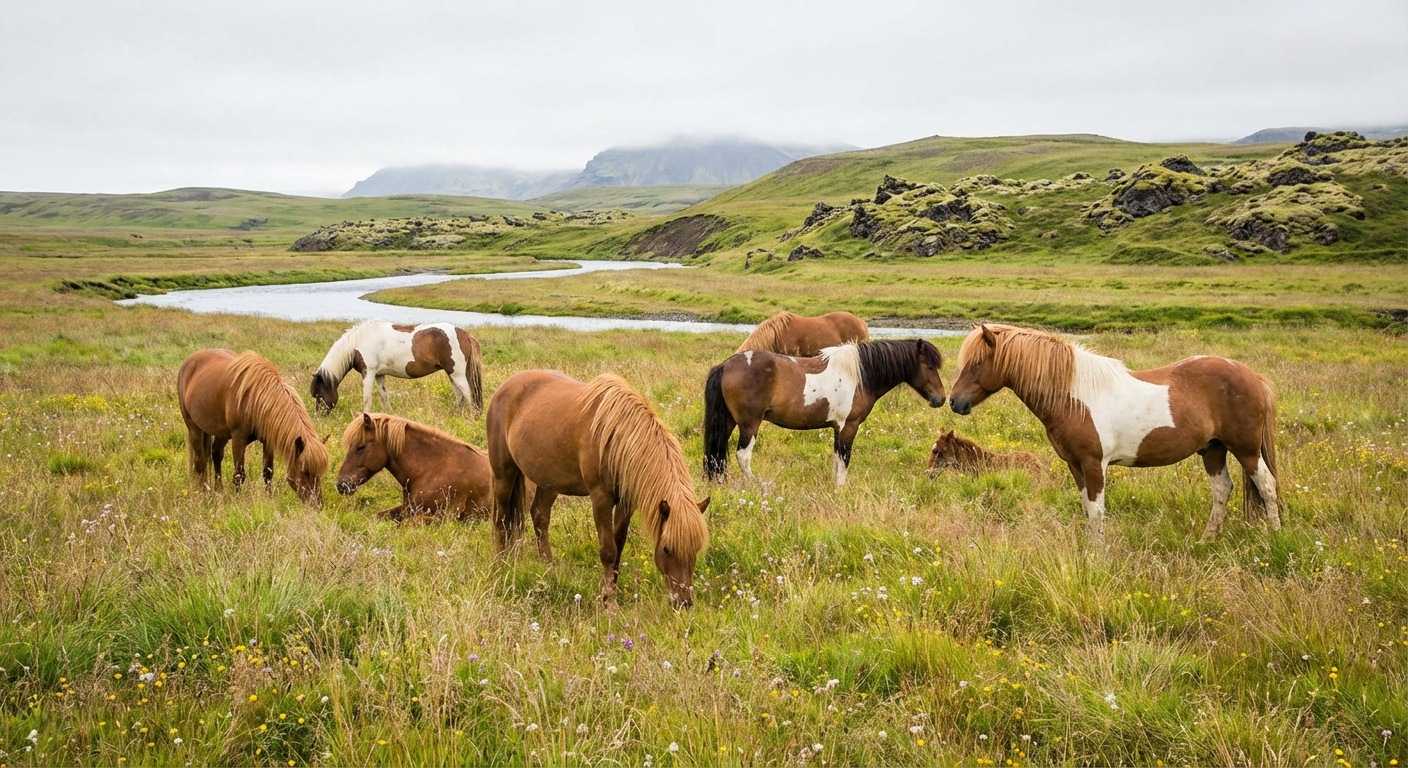
Hook
One evening, a horse startled at something I could never identify. There was no collision, no spectacle—only a swift raising of the head, a tension rippling through the frame, and then the gentlest withdrawal. What lingered with me was not the fright itself. It was everything that unfolded afterward.
No human-imposed "working through." No deliberate confrontation with the source. Simply a gradual return to the collective pulse: a hesitation at the periphery of companions, an adjusted trajectory to move past without imposing, a still moment beside the hay without laying claim. In that scene, recovery revealed itself as the liberty to make modest choices without urgency.
How often do we, too, need this same permission—to re-enter life not through grand declarations of healing, but through the quiet accumulation of small, unhurried decisions?
1) Healing doesn't always announce itself
When we contemplate trauma or hardship, we frequently anticipate visible collapse followed by visible mending. Yet within a herd, restoration can be nearly imperceptible unless one knows how to look.
You might observe a horse electing to position themselves slightly nearer to one specific companion than the day before. Or you witness the inverse: selecting additional distance, but executing it with composure rather than flight. These decisions can constitute a form of self-preservation that never calcifies into withdrawal.
In a life of coexistence without riding or training, "assistance" often means cultivating oneself as a more attentive observer. Not to transform the horse into narrative, but to discern whether their ordinary choices are becoming more effortless once again.
We might ask ourselves: how much of our own healing goes unwitnessed because we expect recovery to announce itself loudly, when it may instead be whispering through the smallest daily reclamations?
2) The herd's soft agreements: recovery through micro-choices
Communal existence is not sustained by perpetual confrontation. The greater part of it is negotiated through minute adjustments that prevent difficulty from ever escalating into conflict.
Observe how strain dissolves when a horse rotates an ear, redirects the head, alters the body's orientation, or takes a single step laterally. These subtle communications can determine whether an anxious horse feels cornered or feels held by the social fabric around them.
Resilience can manifest like this: a horse who was wound tight and reactive following a fright begins employing these delicate social instruments once more—pivoting away instead of erupting, pausing instead of forcing through, navigating a tense passage with a measured detour. The herd, when functioning harmoniously, offers countless opportunities for these small victories to accumulate.
In our own lives, we might recognize that resilience is rarely built through dramatic breakthroughs, but through the patient stacking of moments where we chose regulation over reaction.
3) Proximity and friendship as a nervous system "reset"
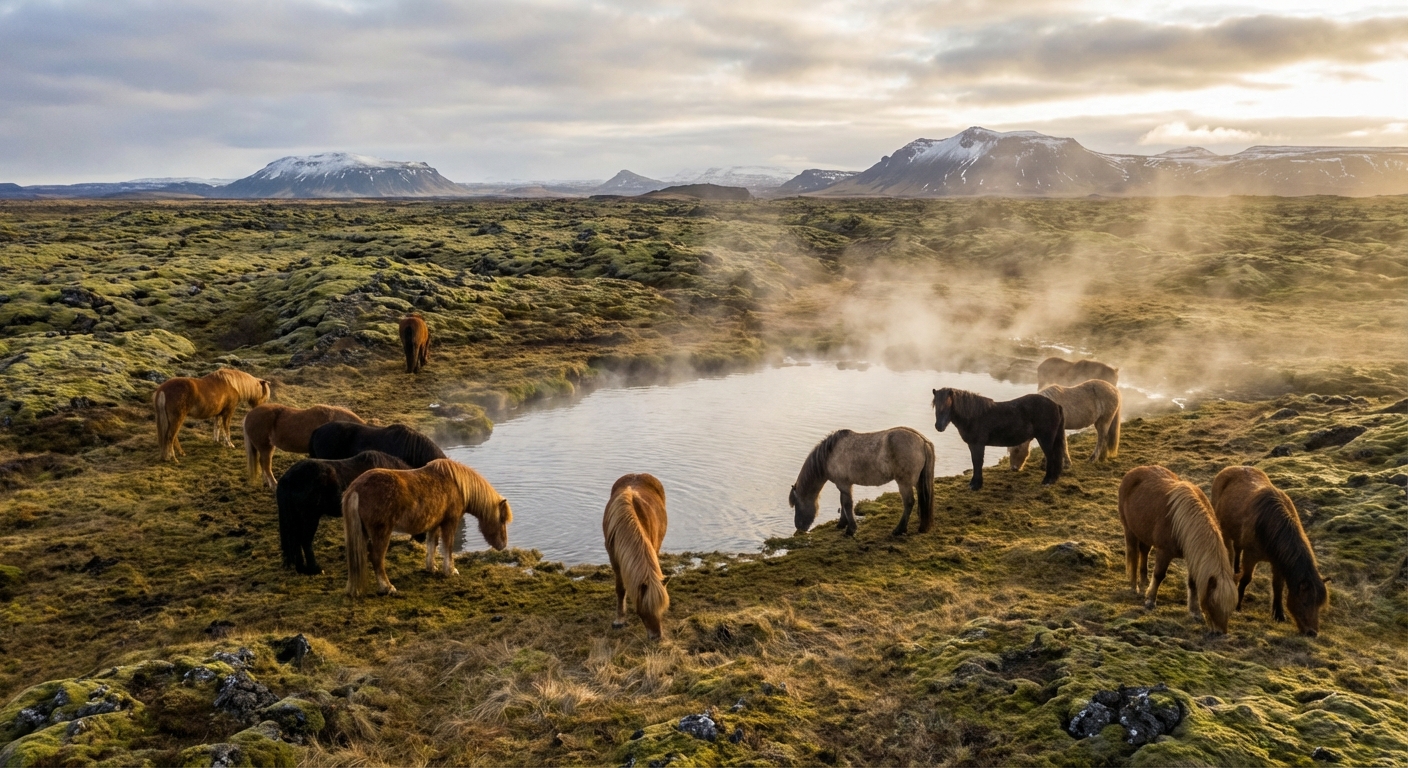
Following hardship, whom a horse selects to stand beside can carry more significance than anything we humans feel compelled to orchestrate. The pattern of repeated pairing—positioning or resting near the same individual time after time—frequently reveals where the felt sense of safety resides.
Affiliative behaviors prove particularly illuminating. Reciprocal grooming, peaceful trailing, and communal rest are not merely "endearing." They are functional methods by which horses regulate one another. A horse that has been unsettled may not resume these behaviors immediately; they may linger at the margins first, testing the threshold of intimacy.
Coexistence here can be beautifully uncomplicated: grant time. Permit the horse to gravitate toward their chosen companion without enticement, pressure, or manufactured encounters. Healing can simply be the restoration of everyday closeness.
Perhaps the same holds true for us—that after our own upheavals, the return to ordinary intimacy with trusted others is itself the medicine we seek.
4) Status isn't a personality verdict—context can change everything
When a horse has weathered a difficult stretch, people tend to assign labels swiftly: "aggressor," "victim," "dominant," "submissive." In actual herds, such categories frequently dissolve under patient observation.
Who defers to whom can hinge on the particular resource and the particular relationship in that instant. A horse who steps back at the hay may be the very one who maintains their position at the water, or the one who decisively initiates movement when the group transitions.
This carries weight for trauma and restoration because a horse's assurance can resurface in irregular fragments. They may recover ease in one circumstance while still requiring additional room in another. When we crystallize them into a permanent role, we risk overlooking the evidence of progress already underway—quietly, contextually, and without fanfare.
We would do well to extend this same grace to ourselves and others: identity after difficulty is not fixed, and growth often arrives unevenly, in patches we must learn to recognize.
5) Food as repair: letting the body choose, not just cope
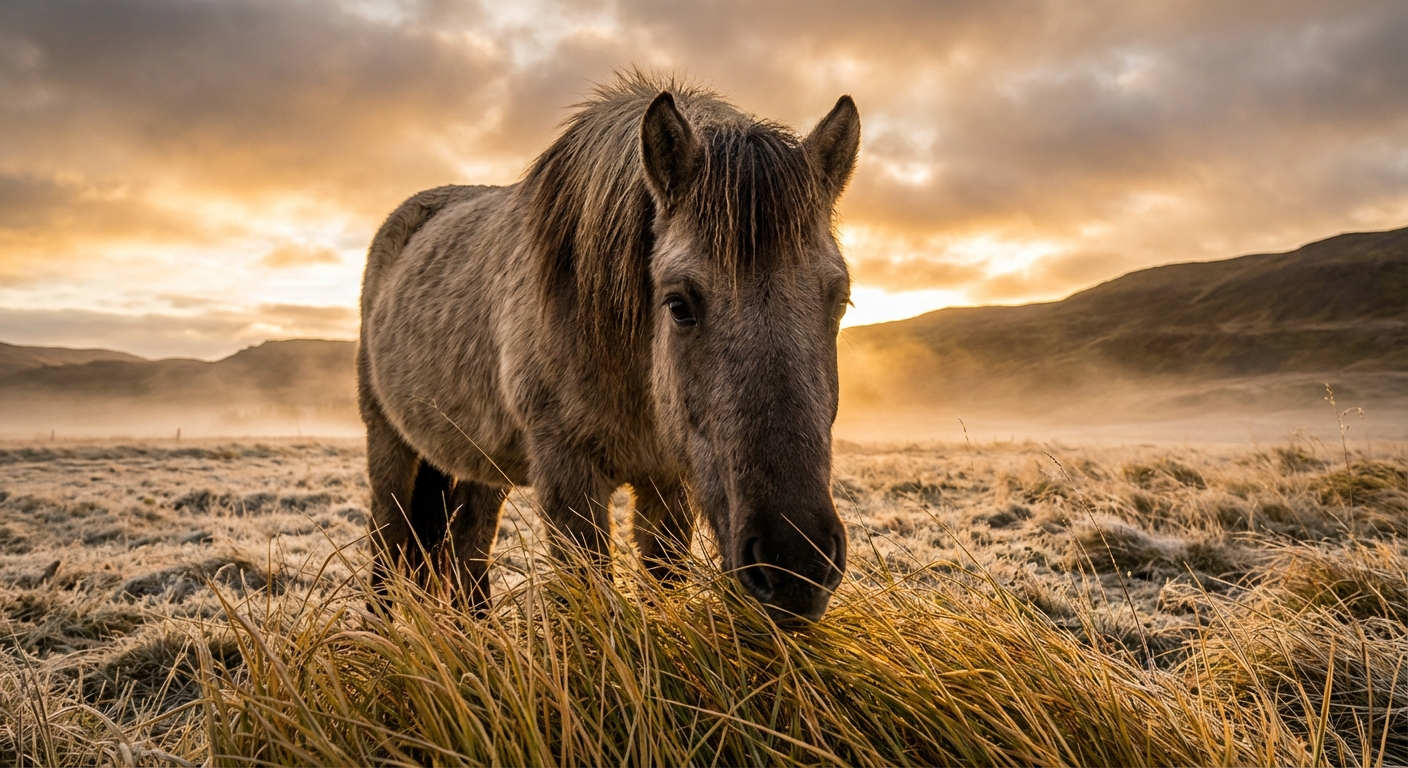
My philosophy of feeding deliberately resists the tyranny of the clock. Rather than scheduled mealtimes, I strive to nurture instinctive foraging rhythms.
This involves cultivating an environment where horses can access varied types of hay and wild-growing herbs, enabling them to intuitively select what their bodies require. In the wake of adversity, this matters profoundly because it restores sovereignty to the horse in a domain that touches every waking hour.
A horse who has endured strain often seeks constancy. The freedom to forage can become a form of that constancy: not merely satisfying hunger, but allowing the horse to participate in their own equilibrium—wandering, choosing, resting, returning. When nourishment transforms from something awaited into something navigated, the entire day can grow gentler.
There is a lesson here for human flourishing: when we reclaim agency over the rhythms of our daily sustenance—physical, emotional, spiritual—we participate in our own healing rather than merely enduring it.
6) What "support" looks like when we aren't training
When we strip away riding and training from the relationship, what remains is something unadorned and true: shared terrain, shared hours, and the humility to honor the horse's own tempo.
Support can be as elemental as watching without racing toward conclusions. Observe whom the horse elects to rest beside. Observe whether they can navigate past others at resources with equanimity. Observe whether the quiet social signals are functioning once more—ears, head turns, body angle, a single step yielded—without spiraling into intensity.
And then: resist the impulse to convert every moment into a human agenda. Some of the most profound restoration occurs when the horse's day is permitted to be cyclical, self-governed, and socially embraced.
In this, the horses become our teachers: that sometimes the deepest support we can offer another—or ourselves—is simply presence without project, attention without agenda, and the faith that healing knows its own timing.
Equine Notion
https://equinenotion.com/