At the Gate With a Newcomer: Letting Caution Be Part of Herd Peace

At the Gate With a Newcomer: Letting Caution Be Part of Herd Peace
What first catches my attention is neither teeth nor hooves.
It is the hesitation.
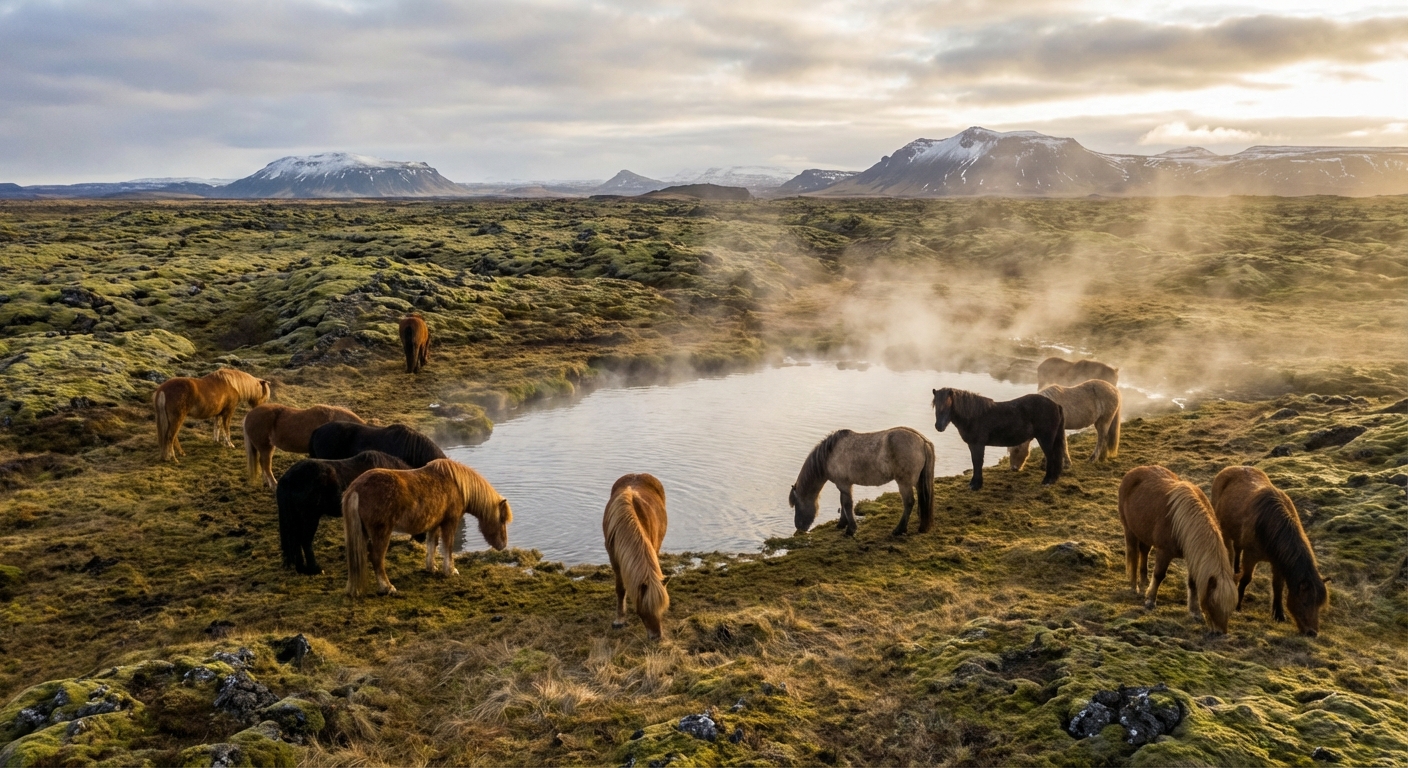
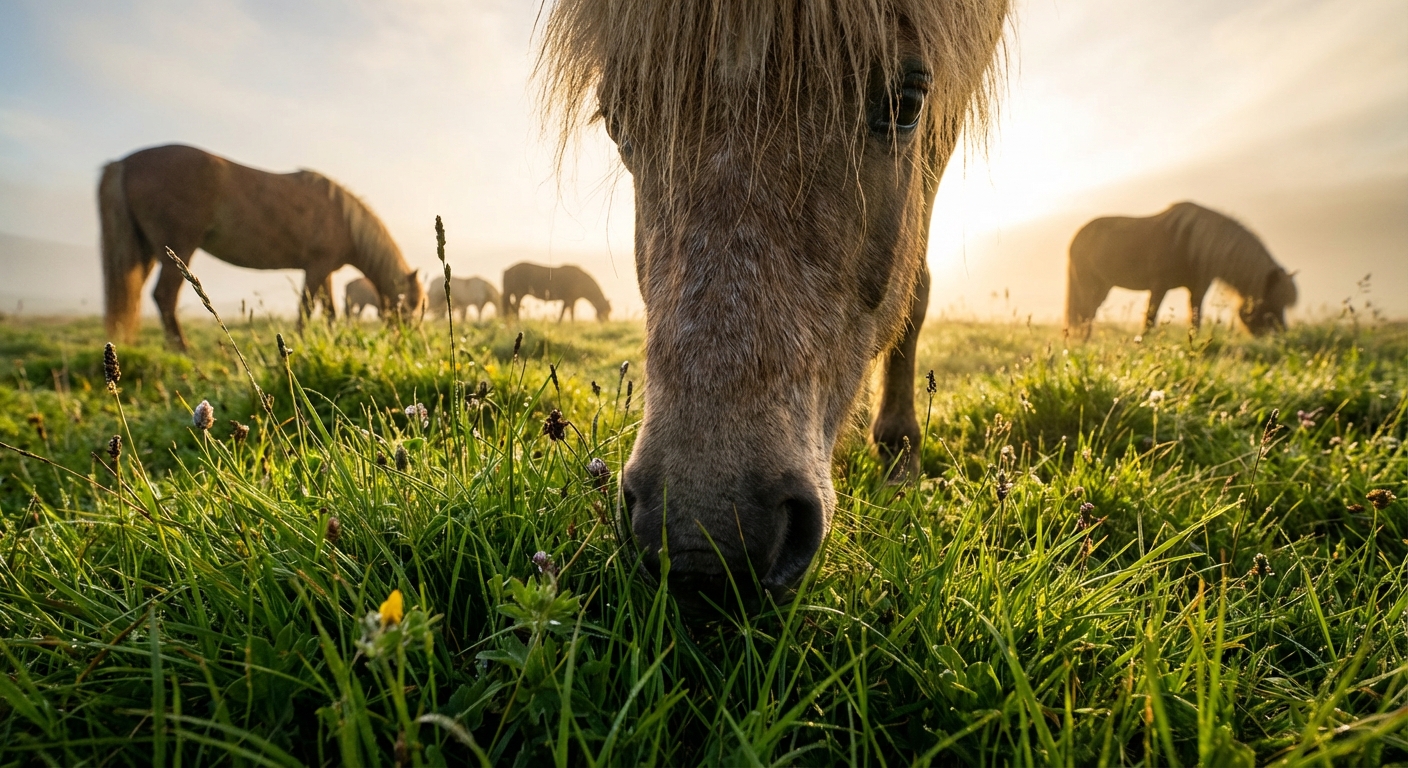
A familiar band grazes scattered across the field, heads lowered, moving and feeding in the unhurried rhythm that defines an ordinary day—until a strange horse materializes at the periphery of their existence. In an instant, stillness replaces motion where there had been flow. One raises a head and holds it aloft. Another neither charges forward nor retreats; they merely adjust their stance by a few paces, as though taking the measure of the atmosphere itself.
We humans tend to interpret this moment through the lens of hierarchy. Who is "pushy." Who is "alpha." Who is "challenging." Yet the longer I remain and observe, the more it resembles something altogether different: a deliberate, communal assessment. Who may stand near whom. Who will defer around a given resource. Who can occupy shared ground without creating tension. The herd is not staging a performance for our benefit. They are endeavoring to preserve the day's functionality.
Caution as Social Intelligence, Not Bad Behavior
Suspicion toward unfamiliar individuals is often regarded as a difficulty requiring management—either through compelled interaction or complete separation so nothing "goes wrong." Yet what I observe in an established herd is that peace is typically constructed from innumerable subtle decisions, not from perpetual confrontation. The visible tranquility we prefer to name "respect" is frequently nothing more than predictability: horses internalizing the contours of one another's inclinations.
When a strange horse enters, that predictability vanishes.
So the collective does precisely what evolution equipped them for: they collect data. They probe distances. They observe who retreats when another draws near, and in what circumstances. This proves significant because what appears to be a fixed personality trait from close range is often a relationship unfolding moment to moment. A horse who yields at one feeding station may stand firm at another. A horse who presses forward in one situation may grow gentle in a different one. The objective is not to anoint a lasting victor. The objective is to discover functional arrangements so that grazing, locomotion, and rest may continue with minimal disruption.
When we brand that wariness as misconduct, we risk meddling precisely when the herd is laboring to establish a new equilibrium.
How often do we, too, mistake careful discernment for hostility—in ourselves and in others? The wisdom to gather information before committing may be one of the most undervalued forms of social grace.
The Hidden Cost of "Keeping It Calm": When Eating Stops
There exists another dimension that escapes human notice because it lacks spectacle.
When social strain intensifies, feeding can halt.
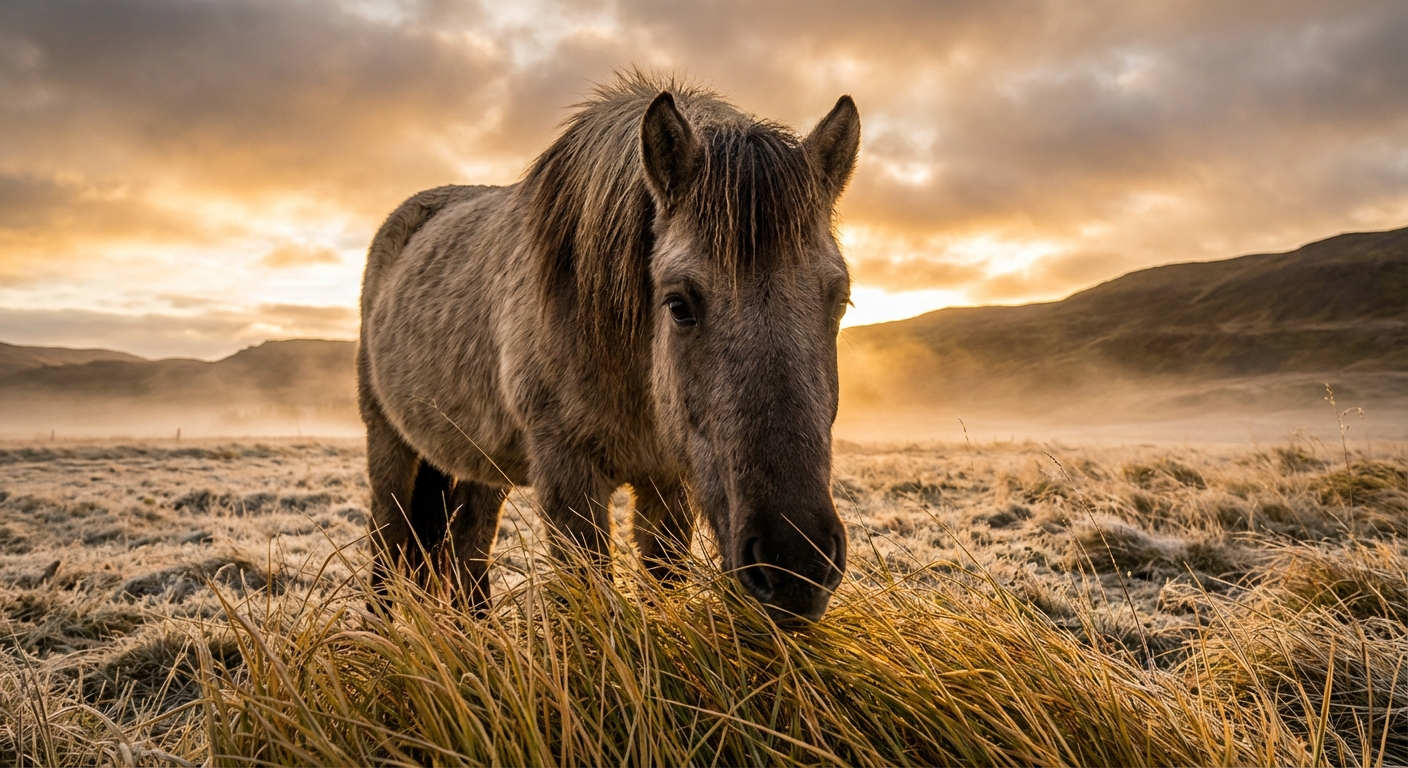
This carries weight because horses depend on perpetual grazing. Their digestive apparatus does not pause between feedings; stomach acid flows without interruption, and once eating ceases, the clock of internal harm begins to advance. This explains why "scheduling grazing time" misunderstands the animal entirely—their existence is organized around continuous intake, with countless other behaviors woven into that foundation.
A newcomer can fracture that baseline without any aggression whatsoever.
Heads rise with greater frequency. Motion becomes vigilant rather than relaxed. Horses may elect to position themselves where they can surveil the stranger rather than lowering their muzzle and remaining there. From a human vantage point, it might appear that nothing of consequence is occurring. From the horse's vantage point, the day's essential structure—uninterrupted foraging—has been breached.
Here is where coexistence becomes tangible. Our task is not to orchestrate introductions as if we could manufacture immediate "companionship." Our task is to safeguard continuity while the horses conduct their social recalibration. Neither by pressing them into proximity, nor by immobilizing them in contrived stillness, but by ensuring that the fundamental requirements of equine existence remain accessible: space to travel, space to select distance, and sustenance that does not transform into a rationed event where every approach becomes a bargain.
We might ask ourselves: how many of our own essential rhythms—sleep, nourishment, solitude—do we sacrifice to social uncertainty, and at what hidden cost?
Movement Is the Conversation We Interrupt
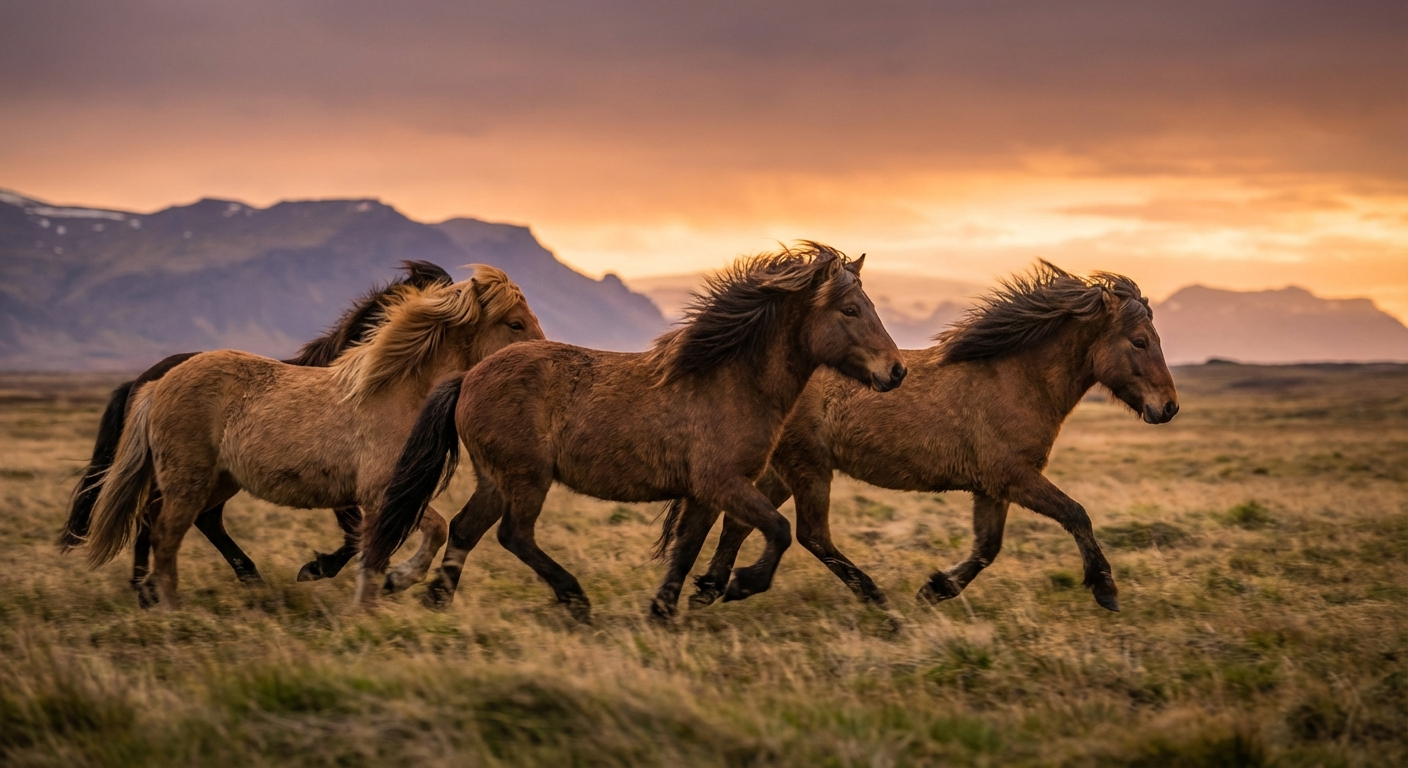
Horses are designed for an existence involving substantial daily locomotion. When afforded adequate space, movement transcends mere exercise; it becomes social dialect. A single step backward can constitute a reply. An arc rather than a direct path can establish a boundary. The choice to trail at a distance can serve as an invitation that imposes nothing.
In confined or excessively managed environments, that dialect is silenced.
When the sole alternatives are "remain stationary" or "collide," naturally a stranger registers as an emergency. It is not that horses possess an innate appetite for conflict; it is that the surroundings have diminished their capacity for gentle negotiation. Herein lies one of the central paradoxes of human stewardship: when we perpetually intervene, we may ultimately strip away the very mechanisms horses employ to sustain their own equilibrium.
Coexistence demands something more nuanced from us: the awareness to recognize whether our arrangement permits incremental adaptation. When we witness wariness, we can interpret it as intelligence about what the environment is allowing. Does sufficient space exist for one horse to depart without pursuit? Are resources distributed widely enough that a wary horse can continue eating while monitoring the stranger? Can the group reorganize without being channeled through a single constricted passage?
None of this necessitates riding, conditioning, or any specialized protocol. It requires only the forbearance to let movement fulfill its purpose.
In our own lives, we might consider how often we deny ourselves—or others—the room to step away, to arc around difficulty, to approach at our own pace. Sometimes the kindest thing we can offer is simply space.
Neutral Nature: Trusting the Herd to Build a New Normal
Much contemporary welfare philosophy succumbs to a convenient oversimplification: comfort equals virtue, discomfort equals harm. Yet nature does not cultivate resilience through unbroken ease. A modest degree of challenge forms part of how living systems evolve and strengthen. The complete absence of adversity does not inherently generate peace; it can generate brittleness.
A newcomer constitutes a challenge.
Not because horses require "conflict," but because they are creatures of community who sustain viable patterns through embodied experience, not through human pronouncements. The alternative to domination is not abandonment. It is faith—what I conceive of as neutral nature: neither assuming omniscience, nor fabricating a flawless sanctuary, nor succumbing to alarm at every disturbance.
Within that framework, stranger wariness becomes something worthy of our esteem. It is the herd investing time to discover the boundaries of a nascent relationship. It is a collective endeavor of determining what is secure, what is bearable, and what demands greater distance for the present.
And if we position ourselves near enough to witness without incessantly stepping in, we frequently encounter something quietly instructive: seasoned horsemen and horsewomen have "understood" this without requiring scientific validation. Horses reflect our inner state. They respond to patience. Connection emerges through cadence and trust, not through imposing a narrative upon them.
When a strange horse arrives, the question is not how swiftly we can compel everyone to perform normalcy.
It is whether we can furnish the unwavering essentials—perpetual forage, room to roam, room to choose—while the herd accomplishes what it has always accomplished: transmuting uncertainty into a fresh, inhabitable pattern.
Perhaps this is the quiet teaching horses offer us all: that the deepest peace is not engineered but allowed—that trust, given time and steady ground, builds what force never can.
Equine Notion
https://equinenotion.com/