Before Stiffness Becomes a Story: A Time-Based Approach to Preventing Tight Bodies in Horses

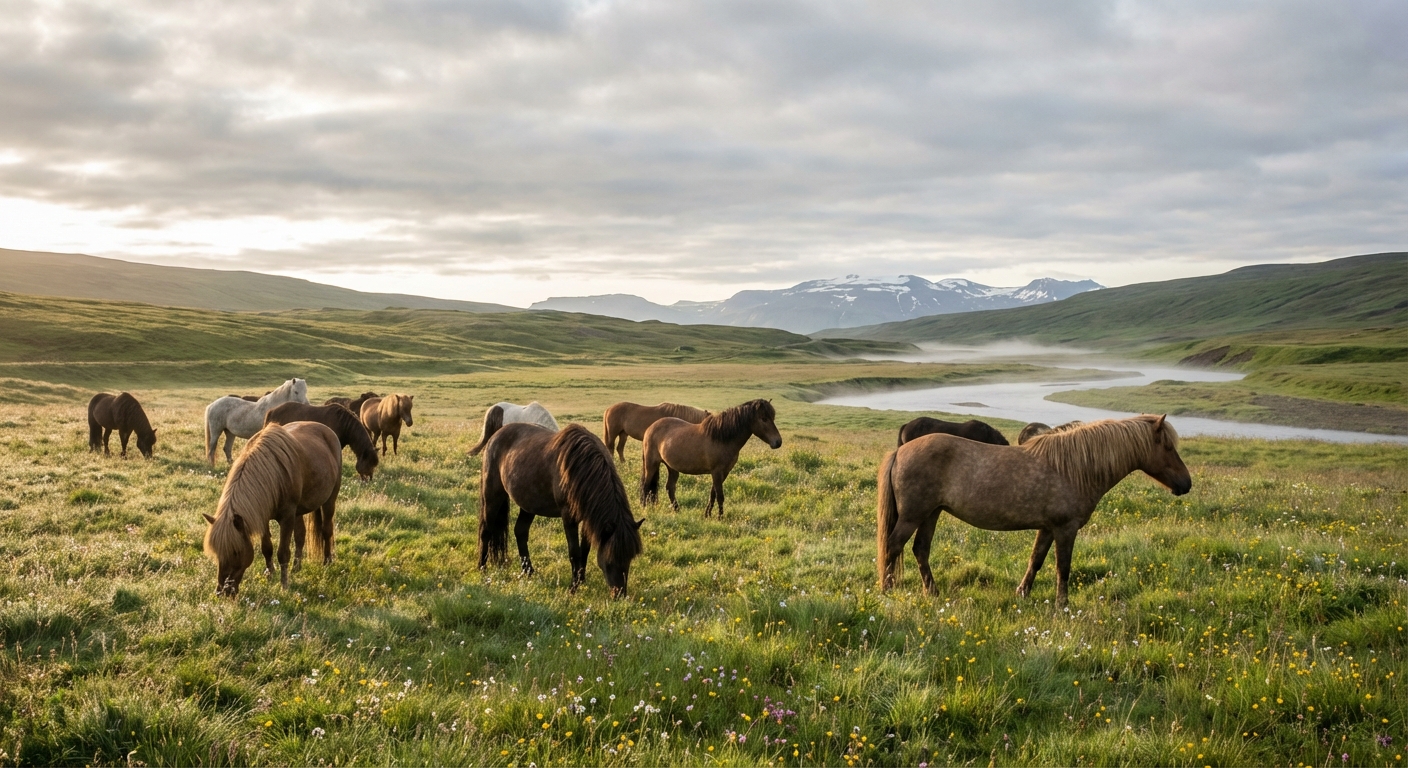
Hook
When dawn arrives, horses do not synchronize their waking with ours.
They begin when something within them stirs.
A handful of steps toward one pile of hay. A moment of stillness. A gradual drift to another grazing spot. A bite from here, a sampling of wild growth from there. The body awakens through the act of living itself, not through being put to work. When you observe this unhurried rhythm over weeks and months, your perception shifts—particularly when you begin considering how tension can slowly calcify into a permanent stance.
This is not a clinical framework. It is an experiential one: how a horse's form can remain adaptable when their hours remain unscripted.
We too often forget that our own bodies stiffen not from age alone, but from days that have lost their natural variety.
1) A Timeline That Begins With Small Pauses
Should stiffness and muscular shortening ever develop into a chronic condition, they do not announce themselves dramatically. They creep in as subtle hesitations.
A horse lingers a moment longer before initiating the next stride.
They opt for the closest food rather than venturing further—not from indolence, but because their surroundings fail to inspire easy, regular motion.
When horses find themselves restricted to cramped quarters, the "pause" becomes their baseline state. Their existence shrinks to standing, pivoting, and anticipating.
Our circumstances present the inverse: the majority of our acreage belongs to the horses, to such a degree that we humans seem to be the ones inhabiting a modest enclosure near the dwelling. This inversion carries weight. It transforms movement into the fabric of daily life rather than a scheduled occurrence.
A preventive timeline originates here—long before anyone assigns the word "stiff" to a body.
How often do we recognize the same pattern in ourselves—the way small spaces and repetitive routines quietly teach our bodies to stop expecting change?
2) Prevention Through Space: Movement That Isn't a Task
Living alongside horses without riding or training them poses an honest inquiry: if we are not requesting movement, will movement occur on its own?
It can—provided the landscape permits it.
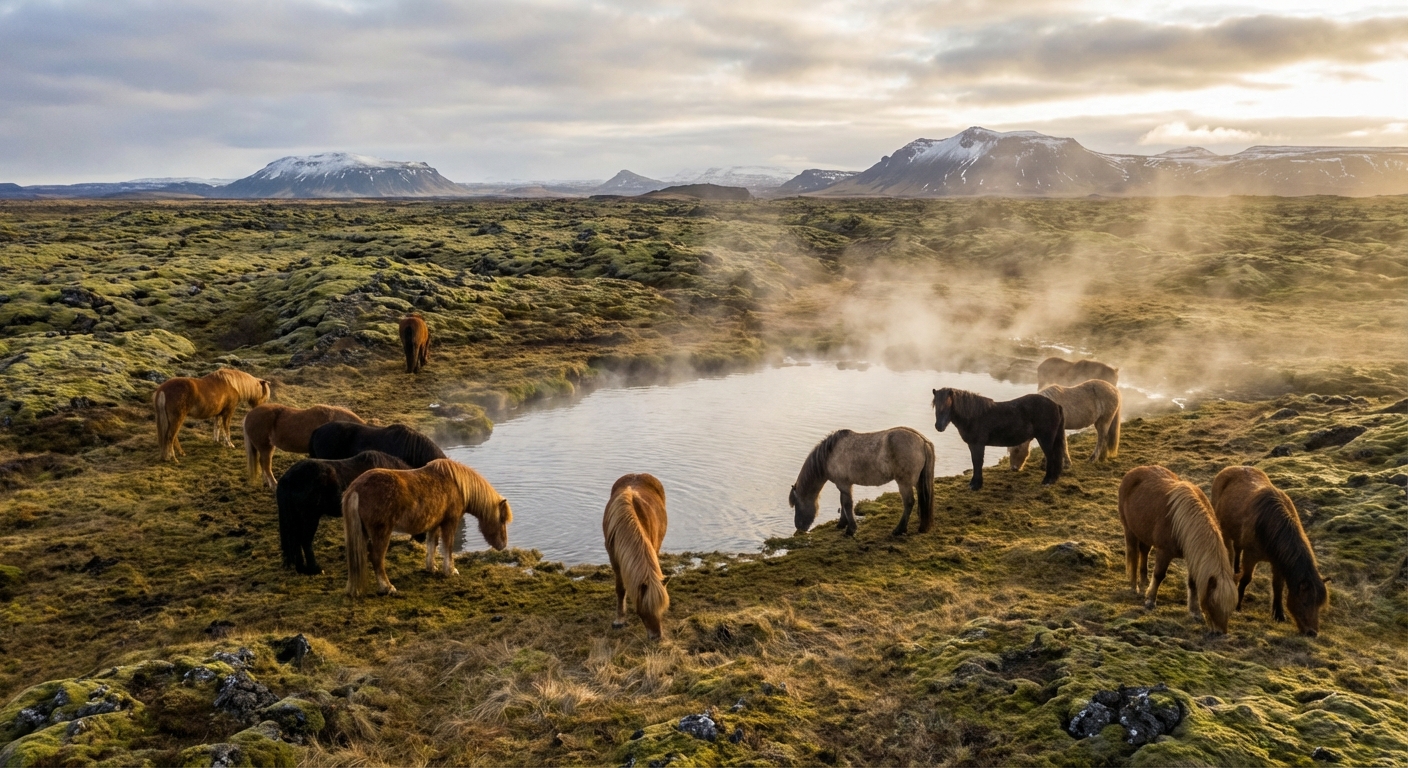
When a horse possesses ample territory, they require no human to "provide them exercise." They can meander, shift position, and make innumerable effortless decisions that prevent joints and connective tissues from settling into a single repeated configuration.
This is not a method. It is a habitat.
Cramped enclosures tend to reduce existence to corners: turn, halt, turn, halt.
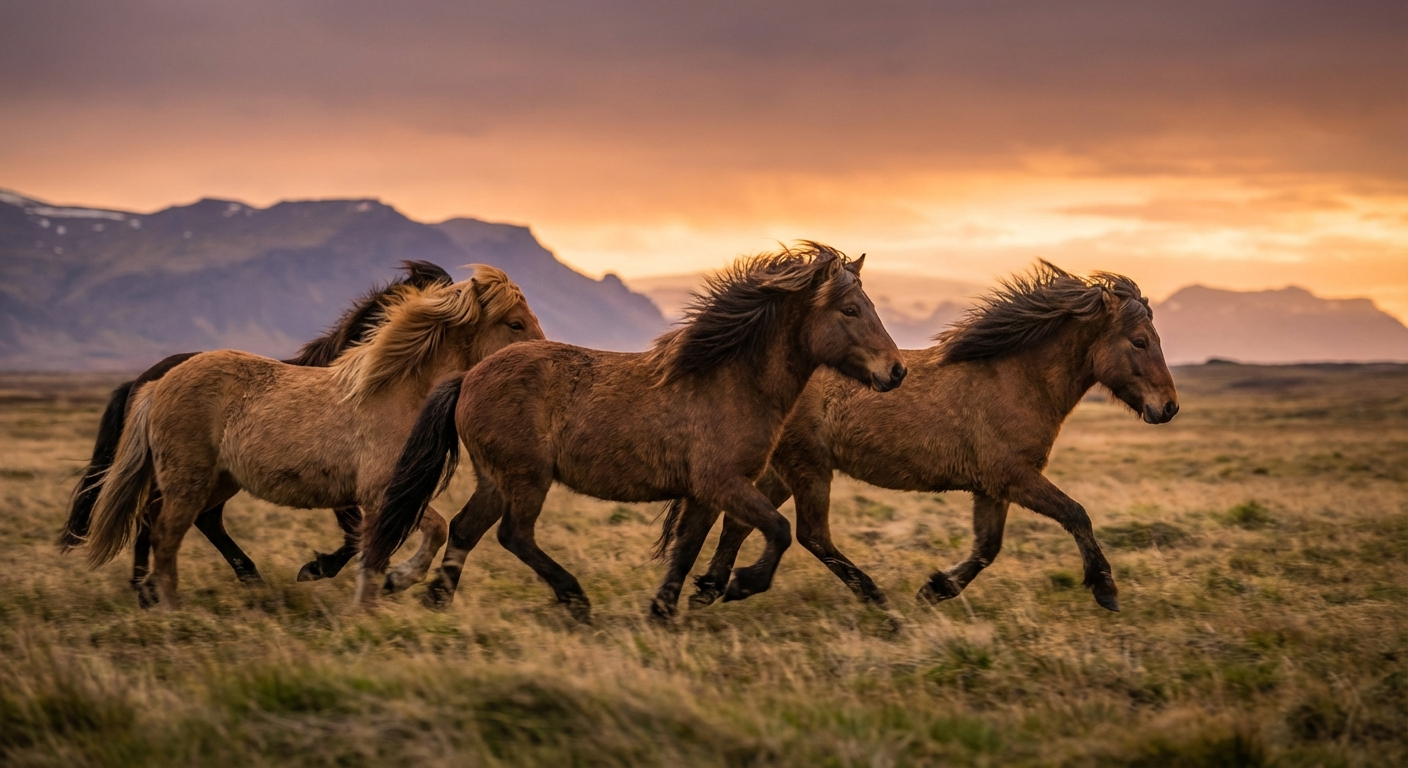
Unrestricted access transforms existence into flowing lines and gentle arcs: amble, rest, amble, graze, amble.
When viewed through the lens of time, this variety of motion constitutes prevention unfolding continuously, silently, without appointment.
The same principle applies to human flourishing: when our environments invite spontaneous movement rather than demanding it, our bodies remain capable of adaptation.
3) The Role of Feeding Without a Clock
We do not adhere to scheduled feeding times. Rather, we seek to cultivate the instinct to forage.
That solitary decision reshapes the body's entire day.
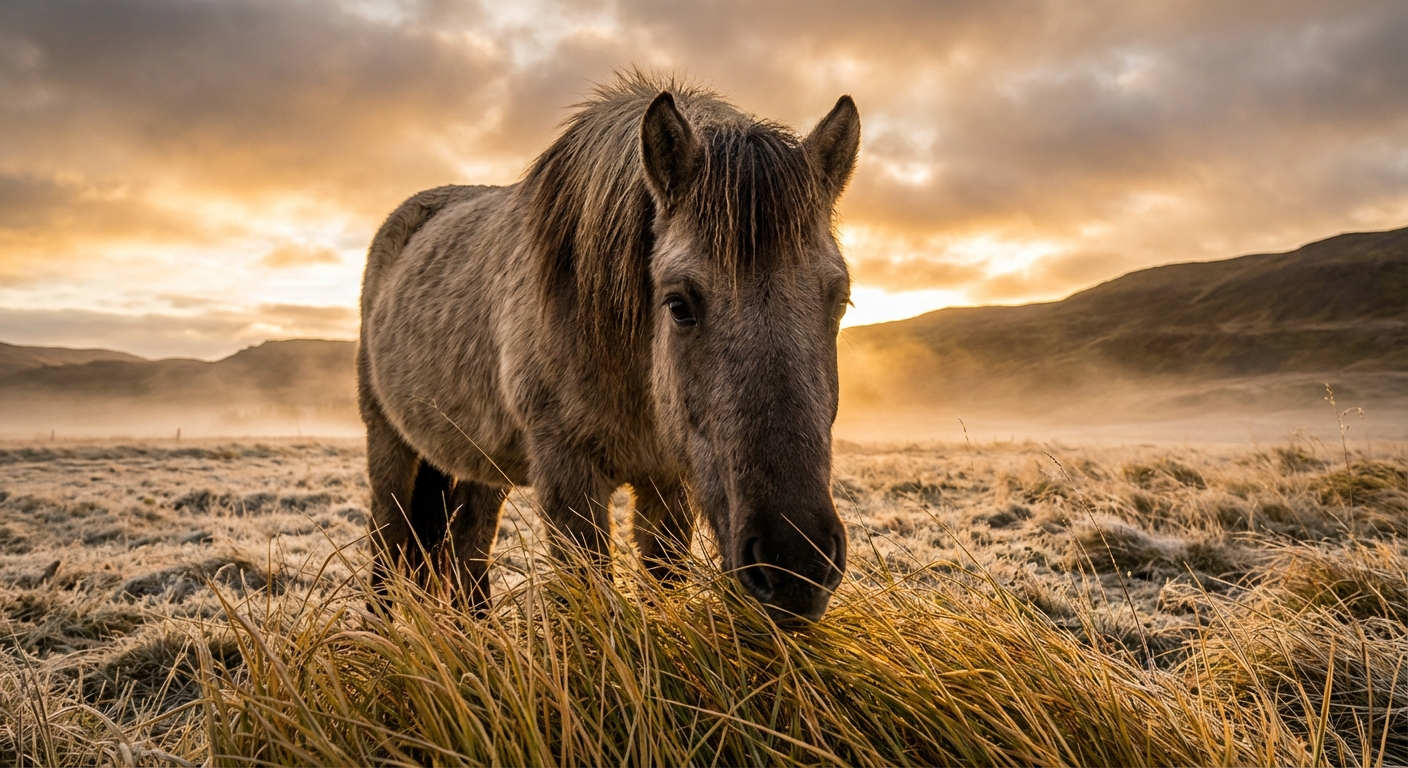
Regimented meals can produce extended periods of stillness punctuated by concentrated attention on a single feeding event. By contrast, availability of diverse hays and wild herbs encourages the horse to keep moving gently and frequently—approach, sample, withdraw, return.
Our goal is to create conditions where horses may select from an array of hay varieties and native plants, allowing them to follow their innate wisdom about what their bodies require.
Even setting aside any particular nutritional claims, the physical rhythm is apparent: diversity distributes motion throughout the day.
And distributed motion is precisely what a contracting body is missing.
We might ask ourselves whether our own eating habits—rushed, scheduled, monotonous—have similarly taught our bodies to wait rather than to move.
4) "Reversal" as a Living Concept, Not a Fix
When people speak of reversing a physical ailment, they frequently envision a singular corrective action.
Within a coexistence framework, reversal—to whatever extent it remains possible—resembles something more like restoring the circumstances under which the body can transform once more.
Greater expanse.
More brief wanderings.
Expanded options.
Additional hours devoted to what horses naturally do: nibbling, roving, tasting.
If restriction can render a horse's posture increasingly fixed, then open living can liberate posture from its constraints.
Not through imposed correction, but because the horse is no longer condemned to repeat identical angles, identical pivots, identical immobility.
Understood this way, "reversal" commences by eliminating the everyday conditions that cause a body to cease adapting.
Perhaps healing—for any creature—is less about intervention and more about removing the obstacles that prevent the body from remembering its own capacity for change.
5) The Human Role: Designing the Day, Then Getting Out of the Way
Coexistence without training does not equate to passivity. It means being deliberate about what falls within your sphere of influence.
We determine boundaries and pathways.
We determine which nourishment is offered and how it appears: not as a timed ritual, but as a standing invitation to browse.
We determine whether horses inhabit a constrained, box-like existence—or whether the terrain fundamentally belongs to them.
Beyond that, we observe.
We take note of how frequently a horse elects to relocate in search of sustenance.
We take note of whether the setting promotes prolonged, motionless standing or a gentle cadence of movement.
This represents a distinct form of stewardship: less intervention, more architecture of the day.
It honors the horse's inherent wisdom rather than supplanting it.
There is a lesson here for how we might care for one another—and ourselves: sometimes the most profound gift is not guidance, but the creation of conditions where instinct can flourish.
6) A Practical Way to Think in Timelines
If you wish to adopt a temporal perspective on prevention, keep your approach straightforward and rooted in observation.
In the early stages, you are not seeking a striking transformation. You are assessing whether the day furnishes sufficient invitations to move.
Does the horse enjoy access to terrain that renders walking ordinary?
Does the horse enjoy access to assorted hays and wild herbs so they may explore and select, rather than stand and anticipate?
Are humans structuring life so the horse's body remains stationary, or so it continues gently reorganizing itself?
This constitutes the essence of a coexistence philosophy: you do not pursue the body with expectations. You construct a life where the body possesses the freedom to remain supple.
The same question echoes back to us: have we built lives that invite our own bodies to stay fluid, or have we unknowingly designed our days around stillness?
Equine Notion
https://equinenotion.com/