Behind the Hedge, Still Relevant: What “Hidden” Things Reveal in Coexistence

What "hidden" usually means in a horse's day
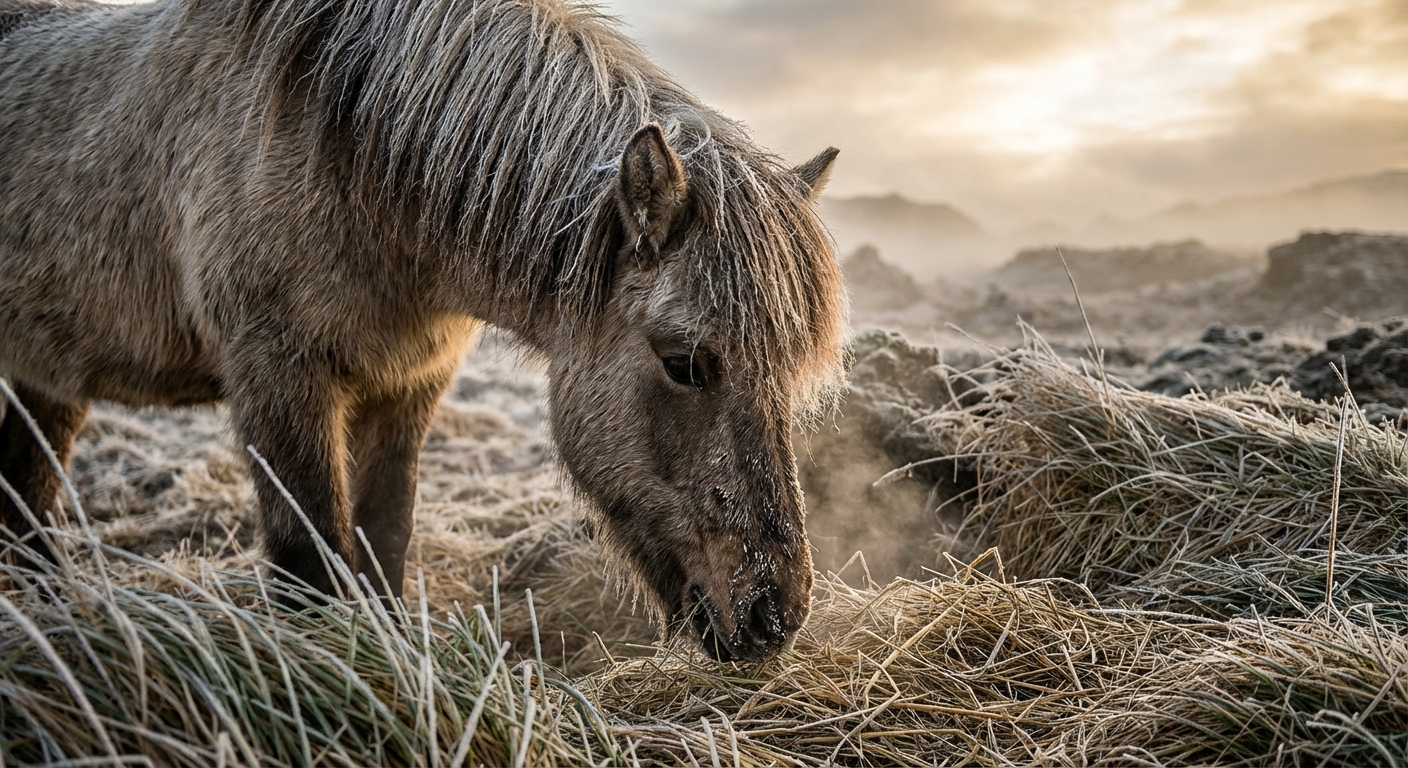
The day before, I observed a horse bypass his customary spot, pause, and gaze—with quiet persistence—toward a corner where hay had been tucked away beyond view. There was no fanfare. Only a serene conviction that something persisted in the world despite its invisibility.
Such moments carry weight for those of us living alongside horses. Not because we must demonstrate anything about equine cognition, but because the environments we construct perpetually erase things: nourishment, companions, pathways, access, even the simple capacity to keep a stomach working.
Within lives shaped by human management, disappearance becomes systematic.
A pail vanishes behind a closed door.
A bonded friend is led away.
A well-worn route becomes impassable.
Grazing ceases because we have declared "mealtime" concluded.
Even when the horse maintains composure, each alteration demands they make peace with a reality where necessities can simply evaporate. The toll extends beyond the emotional realm. Once eating halts, gastric acid begins its corrosive work—meaning "out of sight" swiftly transforms from "absent" to "harmful."
True coexistence emerges when we recognize how frequently we orchestrate these disappearances, then consciously reduce them.
We might ask ourselves: how often do we engineer similar vanishing acts in our own relationships—removing presence, withholding information, withdrawing access—and what hidden costs accumulate in those we share life with?
Setting up fewer vanishing acts (without turning it into a test)
Consider this a matter of thoughtful design rather than intellectual assessment.
Establish continuous forage access as the foundation. Your purpose transforms from "provider of meals" to guardian of perpetual availability, ensuring the horse's existence no longer pivots on sudden deprivation. This also dissolves the anxiety that renders every concealed morsel feel desperately important.
Allow the surroundings themselves to offer possibilities. Distribute life throughout the space: varied locations for standing, wandering, browsing, and resting. Equine bodies evolved for days filled with extensive travel—locomotion is not supplementary but integral to their very design.
Minimize abrupt, unexplained removals wherever possible. When circumstances demand routine disruption (transport, veterinary care, scheduling conflicts), regard the cessation of eating as a primary welfare consideration, not an incidental footnote.
Perhaps we too might examine our own environments: are we designing lives where what sustains us remains accessible, or are we perpetually scrambling after essentials that seem to vanish without warning?
Reading the search without romanticizing it
When a horse investigates the corner where hay once rested, or traces a fence line leading to a cherished grazing spot, interpret this as data: this terrain holds significance, and recollection is woven into how they inhabit it.
This same interpretive framework illuminates other equine decisions—gravitating toward particular soils, employing mud, or choosing specific plants—where what escapes immediate notice may nonetheless carry meaning. Whether we name it object permanence or simply call it pragmatic attentiveness, our stewardship response remains constant: construct an existence where vital elements cease their perpetual disappearing, and where the horse's inherent strategies—movement, unbroken foraging, social bonds—are permitted to function as intended.
In our own lives, we might recognize that the search itself—for meaning, for connection, for what once nourished us—is not sentimentality but survival, and deserves environments that honor rather than frustrate it.
Equine Notion
https://equinenotion.com/