Clock-Free Companionship: How Horses Read Time When We Stop Running the Day

Hook
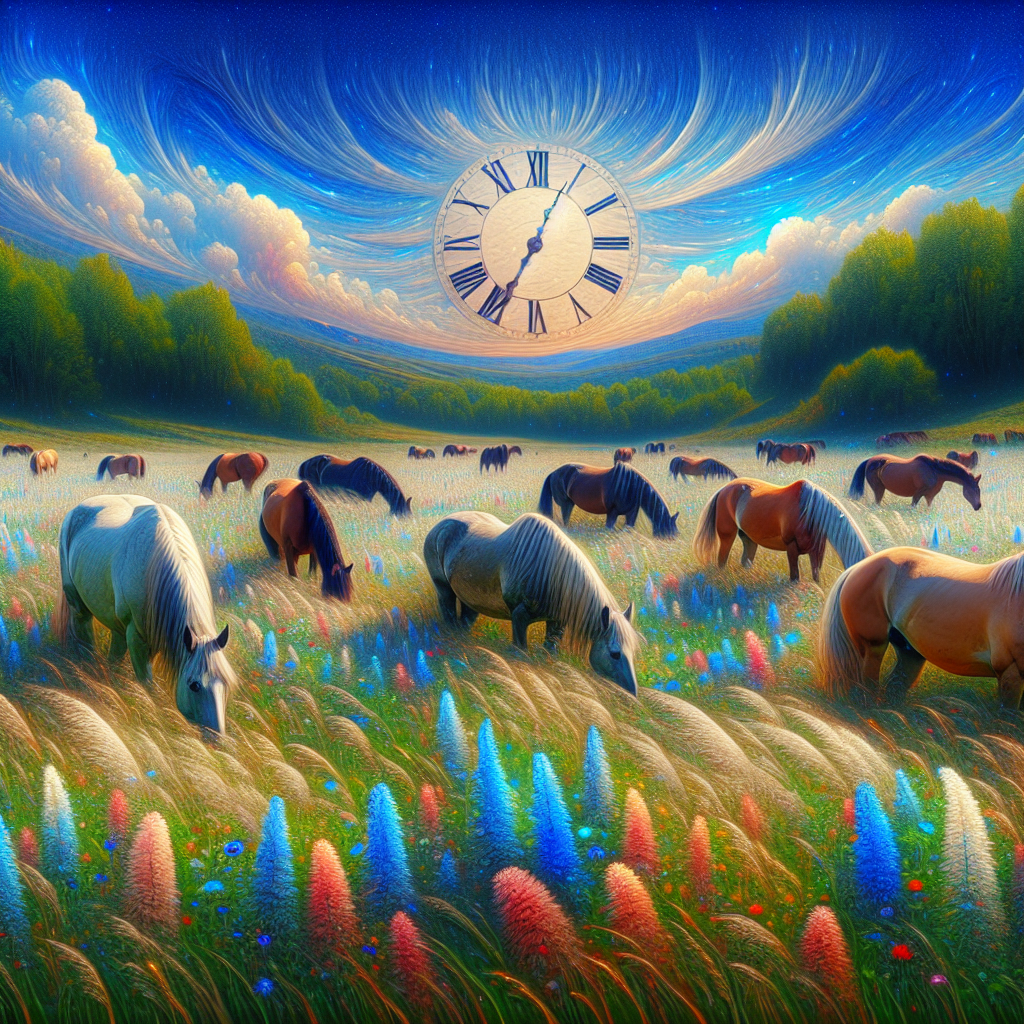
How does "time" transform in a shared existence with horses when you cease organizing their day like a calendar of appointments? When feeding isn't tied to specific hours, and when these animals have freedom to roam as they wish, anticipation doesn't fade away—it merely takes a different form. It shifts from waiting for someone to provide a predictable occurrence, toward interpreting the surroundings: what's accessible right now, what could become accessible soon, and where to position themselves as circumstances change.
This is where living together without riding or training becomes unexpectedly pragmatic. The inquiry isn't about getting horses to follow a timetable, but about existing in a manner that honors their capacity to anticipate—without tying their welfare to our timeliness.
Living Without the Bell: Stepping Away From Fixed Feeding Times
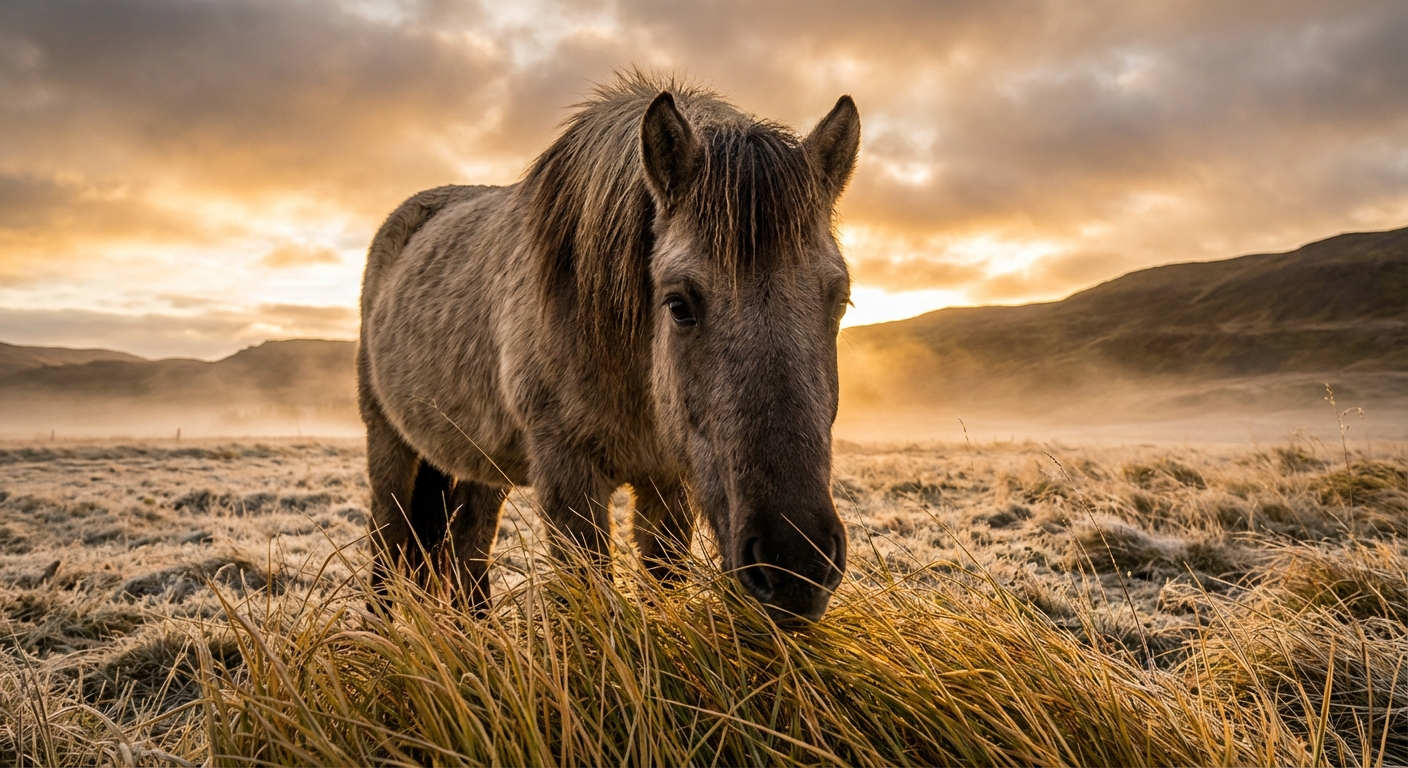
An obvious method to prevent time from becoming a source of stress is to abandon feeding at rigid hours. Rather than "morning meal at X and evening meal at Y," the daily flow can be molded by promoting instinctive grazing behavior. This involves establishing a space where horses can reach various hay types and native plants, allowing them to select what they require naturally, instead of being channeled into a single moment of deprivation followed by a single moment of satisfaction.
In such an existence, anticipation persists, but it's no longer one intense peak—no anxious countdown toward a feed bucket, no collective focus on a gate as the sole pathway to ease. When nourishment is treated as something to seek out and choose, time transforms from a stopwatch into a terrain. The "when" shifts beyond just "when the person shows up," expanding to "when I'm inclined to wander," "when I desire something new," and "when I revisit a spot that presently has what I'm seeking."
Anticipation Without Anxiety: When Choice Replaces Waiting
Horses possess a profound awareness of patterns, though this pattern-recognition needn't translate to dependency. In a schedule-bound arrangement, a horse's anticipatory ability can become confined to one restricted pathway: awaiting the human's arrival at the "correct" moment. In a more expansive, foraging-based setting, that same cognitive capacity can operate in wider, more peaceful ways.
When varied hay and native plants are available, the day holds more than a single significant "occurrence." The horse isn't merely expecting one delivery; they're exploring possibilities. They can revisit what satisfied them before, try something different, or simply depart and return afterward. The perception of time grows more flexible, because the surroundings provide consistency. Coexistence in this context isn't about creating artificial stimulation; it's about eliminating needless restrictions that compress anticipation into an anxious queue.
Space Changes Time: What Open Land Teaches About Routine
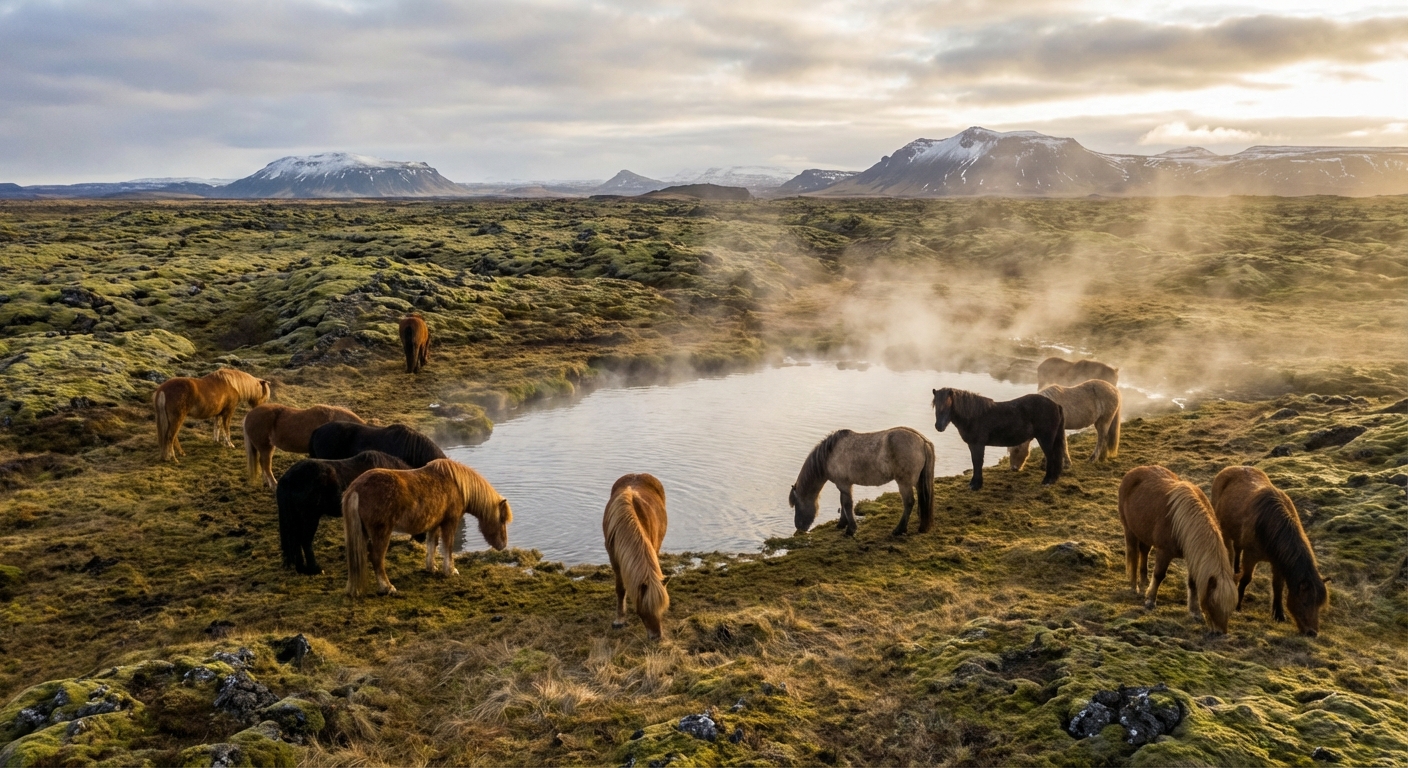
Time and space are interconnected. When horses are restricted to compact "enclosures," the day can seem like a repetitive cycle broken only by human-initiated disruptions. Yet when the majority of the property is accessible to the horses, something remarkable occurs: it can appear as though the humans are the ones residing in the confined space.
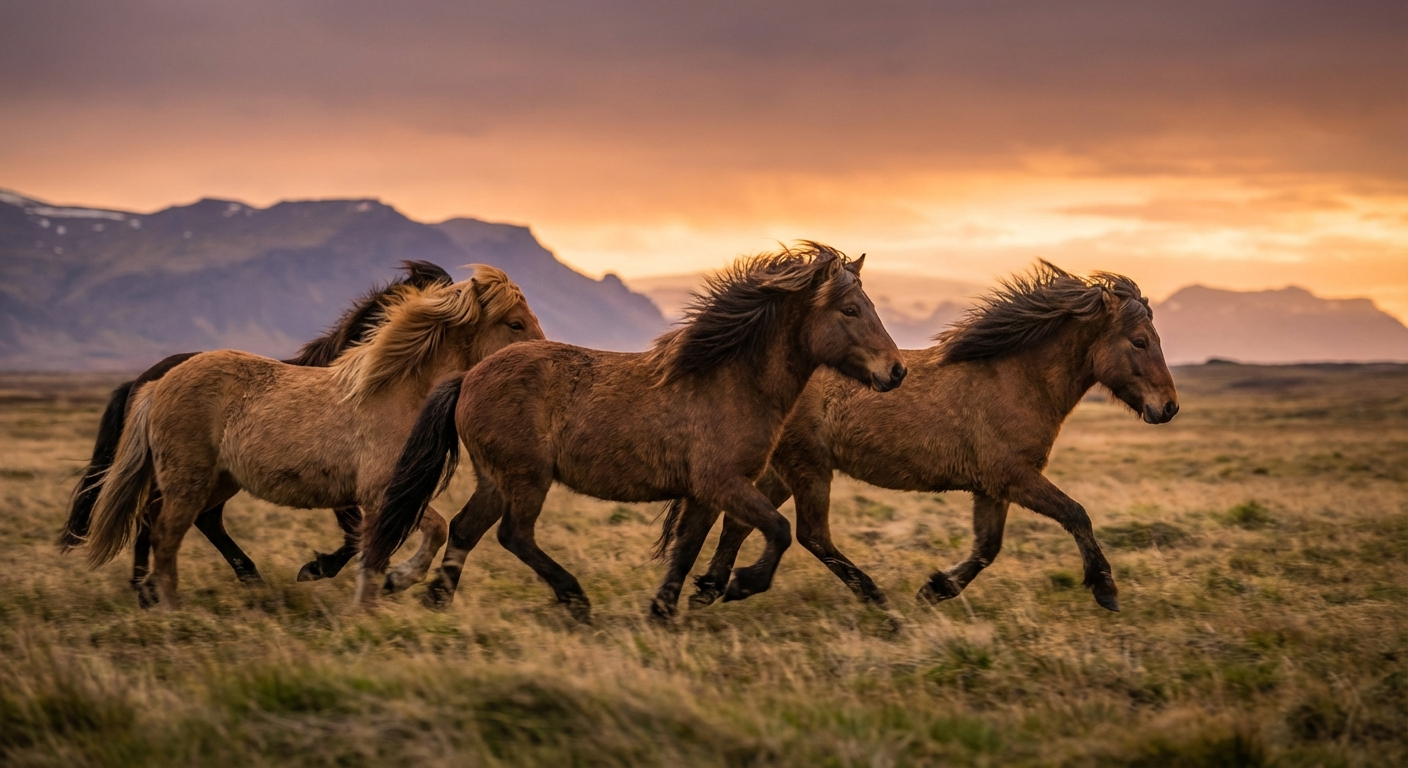
This inversion is significant for schedule-consciousness. In a broad, open setting, horses don't need to track time by the noise of someone approaching. Their "strategy" can emerge from mobility and accessibility—where to position themselves, where to venture next, what to return to. A horse's anticipation transforms from a rigid appointment into an adaptable expectation: the understanding that possibilities exist throughout the shared territory, not exclusively under human control.
Living together without riding or training can involve acknowledging that the horses' day doesn't center on ours. When they possess space, their sense of structure can derive from the terrain itself—trails, favored spots, known resources—rather than a series of human-directed activities.
The Human Shift: From Time-Keeper to Environment-Builder
When you cease being the person who "creates the day" at designated hours, your function transforms. You shift from time-keeper to environment-architect. This isn't passive; it's deliberate. Offering access to different hay varieties and native plants is a decision that influences how horses perceive time: it substitutes a strict schedule with continuous availability and choice.
It can likewise alter what horses expect from you. Rather than expecting prompt delivery, they may expect that you sustain the circumstances allowing them to act on their instincts. That represents a subtler form of dependability: not "I show up at precisely the same moment," but "the world stays habitable, and the possibilities stay genuine."
In this manner, coexistence evolves into an enduring arrangement rather than a daily routine. The horses aren't required to align with our timepiece; we embrace the duty of cultivating an environment where their own natural rhythms have space to operate.
Small, Observable Moments of "Time Sense" in a Clock-Free Life
When rigid timetables are relaxed, anticipation becomes more noticeable in gentle, daily instances—not as restlessness, but as direction. A horse deciding to head toward a known location, pausing where various hay is reachable, or going back to native plants can be viewed as a type of temporal awareness: an active recollection of what usually exists where, and an individual perception of "present" versus "future."
And when the majority of the property belongs to the horses, their decisions can illuminate something regarding our own patterns. If we remain behind a barrier near the dwelling while the horses traverse the broader territory, the distinction can expose our fixation on schedules: we typically gauge the day through tasks and time markers, while they can gauge it through possibility and locomotion.
This isn't idealization. It's merely noting what shifts when horses aren't pressed into a constricted timetable: anticipation doesn't disappear; it becomes more expansive.
Closing: Coexistence That Doesn't Depend on the Minute Hand
Horses possess the ability to anticipate. They can identify patterns. Yet coexistence without riding or training can strive for an existence where their anticipation isn't imprisoned by a strict timetable. By steering clear of set feeding times and encouraging natural grazing through varied hay and native plants, and by granting horses access to most of the property, you permit "time sense" to manifest as selection rather than waiting.
Ultimately, the most considerate schedule might be one that doesn't require the horse to structure their nervous system around our timepiece—but rather allows the surroundings to guide the day.
Equine Notion
https://equinenotion.com/