The Conversation in the Gap: How Horses Use Approach and Retreat to Keep Peace

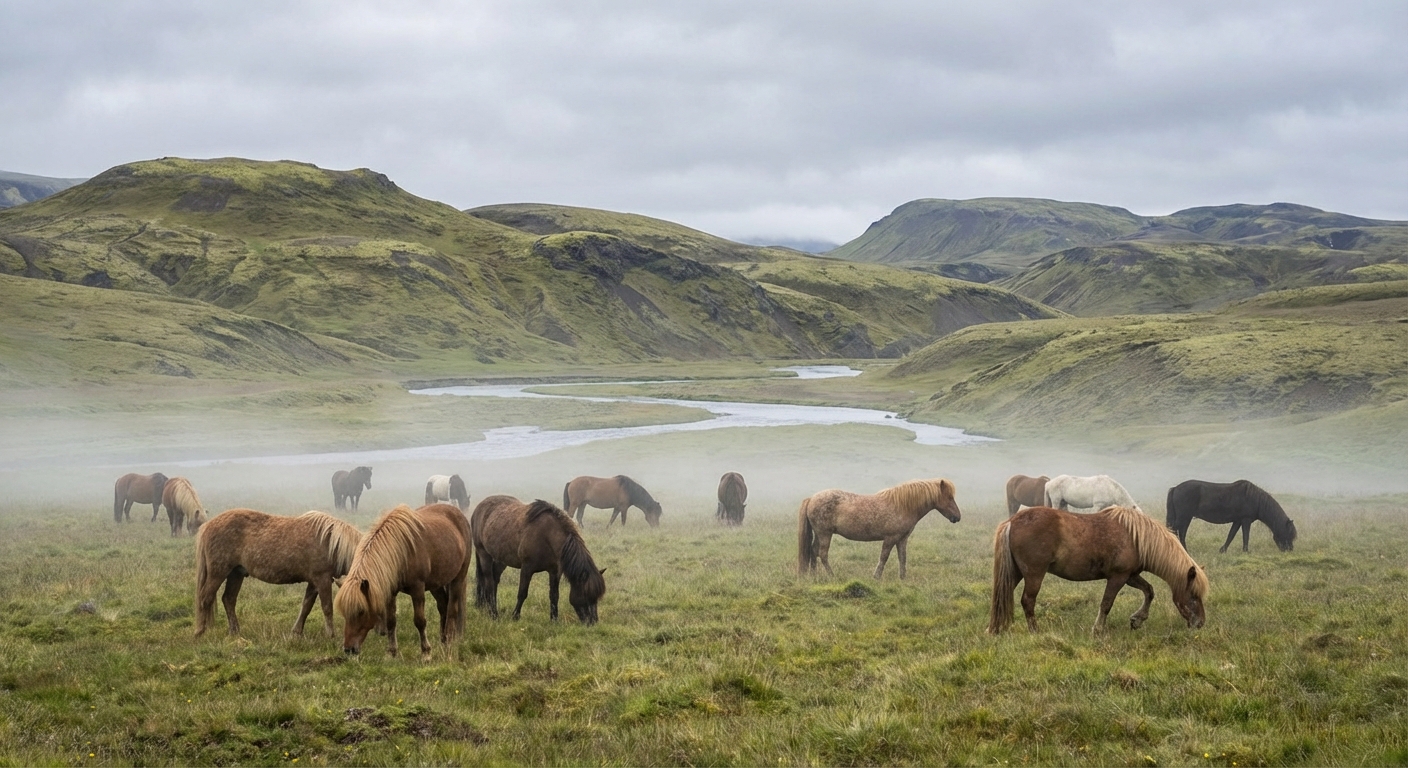
Hook
What if the most meaningful exchange within a herd produces no sound at all—only the shifting space between bodies? Spending time among horses without any agenda reveals something striking: proximity is seldom random. These animals perpetually fine-tune their distances—a single step closer, a half-stride backward, a stillness that welcomes, a gentle drift that politely declines. These subtle decisions are how communal living remains harmonious.
This holds profound relevance for how humans share space. We tend to search for the obvious conflicts—the chasing, the squealing, the visible friction—when the true negotiations have already unfolded in the quiet positioning that preceded any drama. Moving toward and stepping back are more than physical acts. They carry meaning.
What might this reveal about us?
Consider how often we wait for the argument to erupt before recognizing tension—when the real rupture happened hours earlier in an unreturned text, a seat chosen across the room, a conversation ended too quickly. We miss the small negotiations because we're watching for explosions. A colleague's slight turn away during a meeting. A partner's pause before answering. A friend who stops suggesting plans. These are the quiet spacings of human life, and they speak volumes before any words are raised.
Perhaps becoming more attuned to these micro-moments—in ourselves and others—is where genuine understanding begins. What silent negotiations might be happening around you right now that you haven't yet noticed?
1) Distance as a language you can watch
Within a herd, observing "who stands near whom" captures only the surface picture. The deeper revelation lies in watching how proximity gets negotiated moment by moment. One horse might begin moving toward another, then slow its pace, angle its body ever so slightly, and halt just short of arrival—almost as if posing a question. The second horse responds without fanfare: remaining still, turning its head, redistributing its weight, or taking just enough steps backward to keep things comfortable.
Such exchanges are easy to observe in natural settings because they require no elaborate preparation. You can witness them during mundane activities: horses standing quietly, resting in the sun, wandering the pasture, or rearranging themselves around common resources. Once you begin tracking these distance shifts, you discover an ongoing current of small mutual understandings.
What might this reveal about us?
We speak constantly without words. The way you position your body in a crowded elevator. How you angle your chair toward or away from someone at dinner. The pause before you sit down next to a stranger on a bench. These are all negotiations—proposals and responses happening below conscious thought.
Think of entering a party where you know few people. You don't charge toward a group; you drift, pause, read the room. You're asking silent questions with your body: "May I join?" And others answer—a glance held, a shoulder turned, a small opening made in the circle. We are always negotiating closeness, whether we recognize it or not.
What if we brought more awareness to this ongoing dialogue? How might our relationships shift if we noticed—and honored—these tiny agreements?
2) The "ask" in an approach—and the "answer" in a retreat
Moving toward another can signal friendship, neutrality, or pressure—the distinction lies in what happens next. Frequently, the approach unfolds tentatively: unhurried, deliberate, and rich with possibilities. The advancing horse often maintains a gentle trajectory, preserving the option to change course. That very adaptability forms part of the communication.
The reply carries equal weight. Stepping away doesn't automatically mean yielding, just as moving closer doesn't necessarily mean asserting control. A horse who creates distance might simply be selecting tranquility, safeguarding rest, or maintaining a preferred zone of personal space. That same horse could retreat today yet hold ground tomorrow, shaped by the circumstances, the setting, and the particular bond involved.
For peaceful coexistence, this offers a valuable shift in perspective: the space between beings isn't a competition with winners and losers. It's an evolving dialogue that transforms with each new context.
What might this reveal about us?
How often do we misread retreat as rejection? A friend needs solitude after a difficult week—and we interpret it as coldness. A partner asks for quiet—and we hear criticism. We've been trained to see stepping back as losing, as weakness, as something wrong.
But what if retreat is sometimes the wisest response? The colleague who doesn't engage with office gossip isn't antisocial—they're protecting their peace. The parent who steps out of a heated moment with a teenager isn't avoiding—they're choosing not to escalate. Sometimes the most loving thing we can do is create space.
And our own approaches—are they tentative and full of options, or do we barrel forward expecting others to accommodate? Do we leave room for a "no" in how we ask?
The invitation is this: What if we stopped keeping score and started listening to the conversation?
3) Watching the quiet negotiations at shared resources
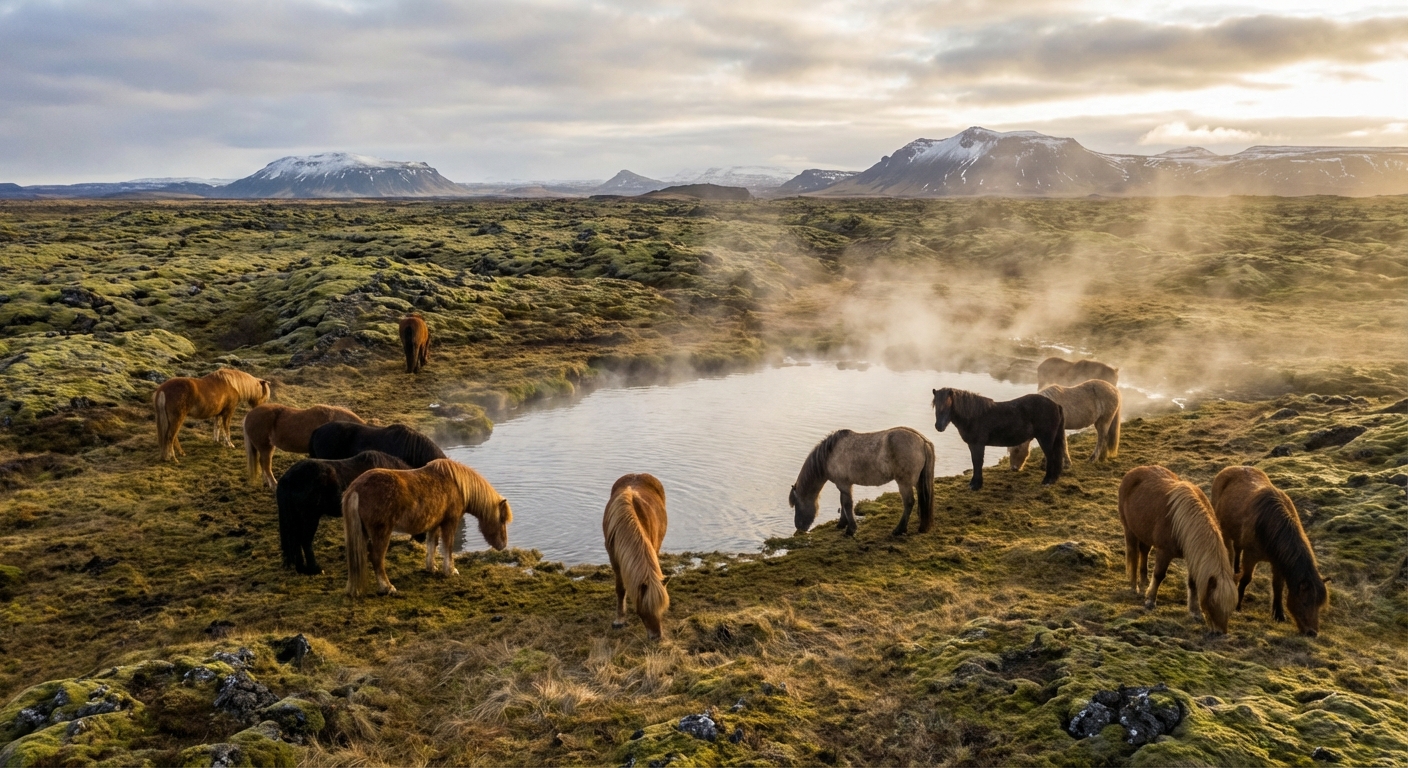
To witness distance communication at its clearest, observe the places horses value and must share—feeding areas, water sources, and narrow pathways. These locations expose whether a herd's spatial dynamics lean toward cooperation or strain.
During a peaceful interlude, you might notice a horse approaching hay, pausing briefly, then choosing a wider arc around a companion rather than passing too close. That "longer route" becomes a courtesy that allows everyone to keep eating. Or watch a horse arrive at the water trough and linger just beyond another's comfort zone, stepping forward only when room naturally appears.
Pay attention as well to tranquil movement through confined spaces. A horse can "create room" without abandoning its position entirely: a minor adjustment of the hooves, a subtle shift in body orientation, a simple turn of the head. Often, these small gestures suffice for another horse to pass without any tension rising.
What might this reveal about us?
Resources reveal character—in horses and in humans. Watch people at a buffet, in a crowded parking lot, or competing for a promotion. Watch families divide an inheritance. Watch colleagues share credit for a project. These moments expose whether our default is cooperation or tension.
The horse who takes the longer arc around a companion to keep the peace—have you ever been that person? Choosing the inconvenient route because it preserved harmony? Taking slightly less so everyone could have enough? These small courtesies are the invisible architecture of community.
And the opposite is equally instructive. When we cut close, when we don't wait our turn, when we take the direct path regardless of who we displace—we may "win" the resource but lose something harder to recover.
Where in your life might a small detour keep everyone fed?
4) Resting space: where relationships show up without pressure
Rest provides an often-overlooked window into spacing dynamics, precisely because resting horses aren't actively vying for anything. When certain horses consistently choose to stand or recline near specific companions, time after time, it points toward genuine preference—a comfort that requires no proof.
In these moments, the dance of approach and retreat becomes especially delicate. One horse may meander toward a favored friend, stop at an easy distance, and sink into stillness. A different horse might approach the same pair only to receive a gentle "perhaps not now" signal: a head turning, ears repositioning, a slight movement that widens the gap. No pursuit is necessary; the spacing speaks for itself.
When mutual grooming occurs, observe how it originates. Typically it begins with a cautious approach followed by a pause—something like an unspoken proposal. The other horse's response might be to step nearer, to orient the body into grooming position, or to shift away, ending the invitation before any awkwardness develops.
What might this reveal about us?
Who do you rest near? Not who you work with or socialize with out of obligation—but who do you genuinely relax around? Whose presence requires nothing from you? This is one of the most honest measures of relationship.
Think of sitting in comfortable silence with an old friend. No performance, no effort, just being. That's the human equivalent of horses choosing to stand together in the afternoon shade. It's a preference that doesn't need to be explained or defended.
And notice, too, the gentle "not right now" that healthy relationships contain. A partner who needs to read alone. A child who doesn't want to be touched after school. A friend who cancels plans. These aren't rejections—they're the spacing doing its quiet work, preserving the relationship for when closeness is genuinely wanted.
Who do you rest near? And do you allow others to rest—even when that means resting apart from you?
5) When humans enter the spacing: coexistence without pushing
Human presence alone reshapes the distance equation. Even without riding or training, you select how you inhabit space—and horses interpret your movements exactly as they interpret each other's: through direction, velocity, and how much room you allow.
Walking directly toward them without hesitation can inadvertently echo a more demanding approach. Moving instead like a considerate herd member—decelerating, stopping before you arrive, leaving generous space around your path—makes it simpler for horses to preserve their existing arrangements.
This isn't a method or a strategy. It's a manner of presence that acknowledges horses are already orchestrating an intricate web of distances. When you offer them room to readjust—rather than cornering them into proximity—you witness more of their authentic choices.
What might this reveal about us?
We change every room we enter. Our energy, our pace, our expectations—they ripple outward and others adjust around us. The question is whether we notice, and whether we care.
Think of a manager who walks through an open office. Do conversations continue naturally, or does something tighten? Think of a parent entering a room where teenagers are talking. Does the energy stay easy, or does it shift? We are always affecting the spacing around us.
The horses teach us that there's another way: to enter without demanding, to be present without requiring acknowledgment, to occupy space while leaving room for others to keep their own agreements intact. This isn't passivity—it's a profound form of respect.
How do you enter the spaces of others? Do you leave room for them to be themselves?
6) What to write down when you're simply observing
To sharpen your observations over time, concentrate on recurring patterns you can recognize without transforming the practice into a system of scores or rigid categories.
- Which horses consistently select positions near particular companions, and which habitually maintain greater distance.
- Where approach-and-pause sequences most frequently unfold: feeding spots, water sources, or constricted passages.
- Which individuals regularly permit others to pass nearby without tension, and which prefer that others take a wider path.
- How frequently situations resolve through subtle cues—a head turning, ears adjusting, body angles shifting—before any hooves relocate.
The purpose isn't to identify a fixed "leader." It's to perceive who welcomes closeness, who navigates space with care, and how the web of relationships shapes these ongoing choices.
What might this reveal about us?
What if we observed our own lives with this same gentle attention? Not to judge or categorize, but simply to notice patterns.
Who do you consistently move toward? Who do you keep at a distance, and why? Where in your life do the approach-and-pause sequences happen most—at work, at home, in your inner world? Which relationships resolve through small signals before anything needs to be said aloud?
This kind of self-observation isn't about finding fault. It's about becoming fluent in a language you've been speaking all along without knowing it. The patterns are already there. The question is whether we're willing to see them.
What might you notice if you watched yourself the way you'd watch a peaceful herd?
Closing
The dance of approach and retreat can appear insignificant, particularly if you're anticipating something dramatic. But when you attend to the gap itself—the hesitations, the curved paths, the step that halts just short—you begin to perceive a steady, understated mastery. Horses sustain functional living arrangements through innumerable micro-adjustments of space. When humans share their world without insisting on contact or control, we're granted the privilege of observing that mastery rather than disrupting it.
What might this reveal about us?
Perhaps the same quiet competence is available to us. Perhaps peace in our families, our workplaces, our communities isn't built through grand gestures but through countless small spacings—the pause before responding, the step back that prevents escalation, the arc we take around someone's tender place.
We are always in the gap with each other. The question is whether we're paying attention.
What conversation is happening in the spaces of your life—and what might change if you started listening?
Equine Notion
https://equinenotion.com/