Edges of Wind: Letting Horses Choose Shelter and Company Without Interference

Hook
When the wind turns keen, the pasture transforms without altering its appearance. The gate remains unchanged. The expanse stays open. And yet, everything within it seems to contract.
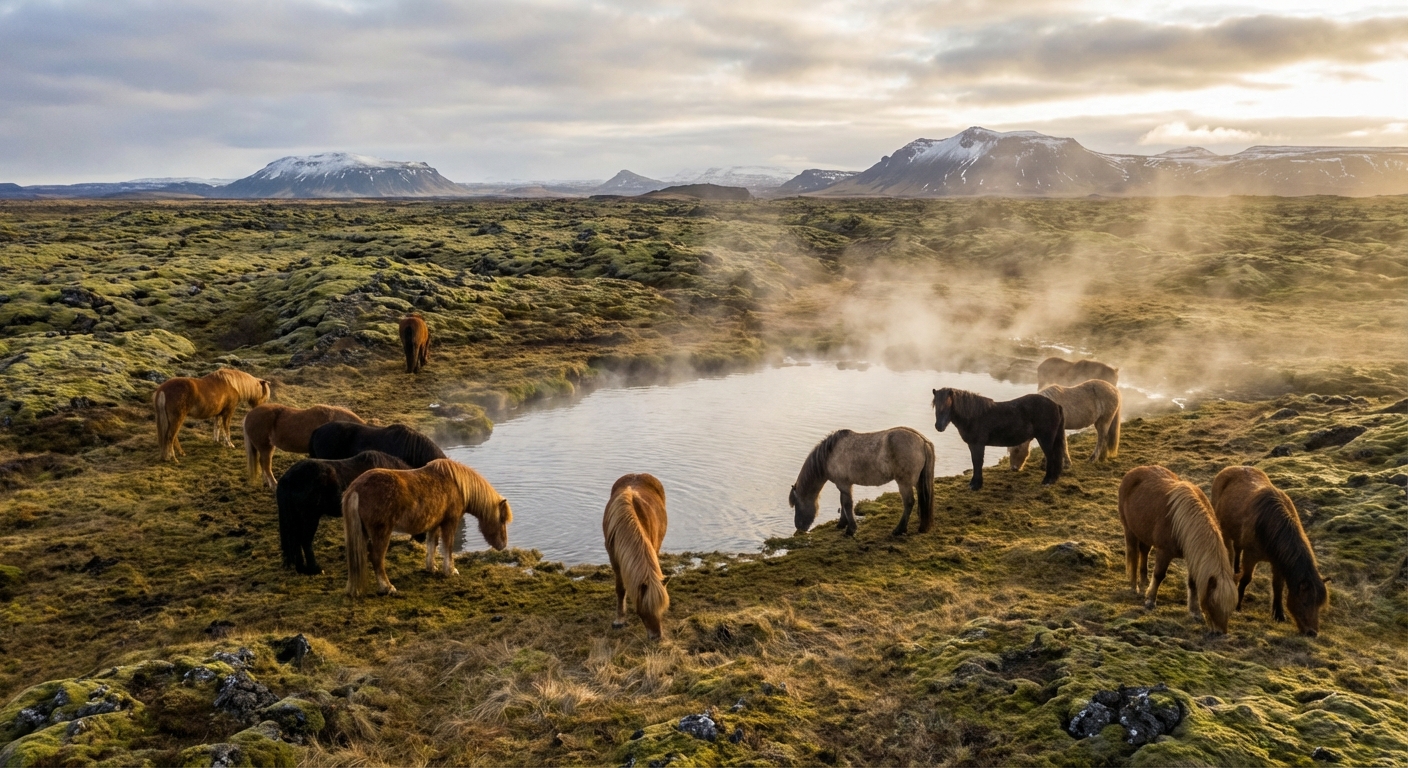
I perceive it first in the way bodies congregate. Not as a singular event, but as a gradual redrawing of the landscape. Journeys grow shorter. Stillnesses stretch longer. The horses issue fewer proclamations and make more quiet recalibrations.
Here is where shared existence reveals itself most plainly: not in our actions, but in what we choose not to do as the elements bear down.
We might recognize this same wisdom in our own lives—how sometimes the most profound offering we can give another is the gift of our restraint, our willingness to be present without directing.
1) Wind chill as a social weather
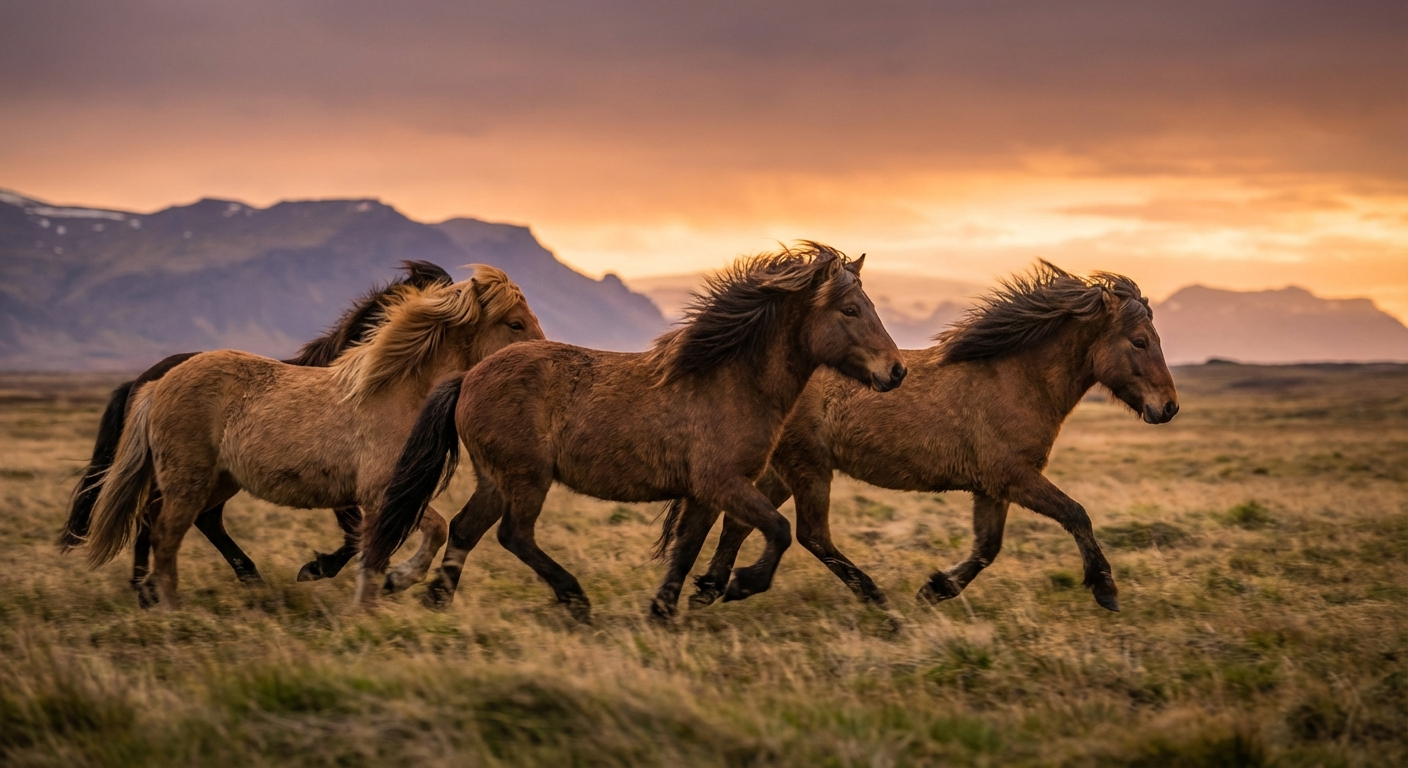
Wind does more than graze the skin; it restructures awareness itself. On such days, even the smallest gesture appears purposeful.
If there exists a human tendency worth releasing here, it is our compulsion to convert every shift into a puzzle requiring solution. Living alongside asks for something gentler: allowing wind to simply be wind, permitting horses to respond in ways that require no narrative of ours.
Rather than interpreting proximity as "dependent" or "anxious," we might receive it as data: the herd is determining how to exist together when the very atmosphere exerts its weight.
How often do we, too, draw closer to others when invisible pressures mount—and how might we honor that impulse rather than judge it?
2) Shelter-seeking as choice, not "management"
In the human imagination, a shelter can morph into many things—a directive, a regulation, an instrument of authority. Through the lens of coexistence, however, it remains simply one possibility within the environment.
The distinction appears slight but carries immense weight. When shelter remains an option, horses continue to author their own decisions about timing, manner, and companionship. When we transform it into an obligation, we risk converting the threshold into a chokepoint of human agenda.
Coexistence here might resemble keeping the space unencumbered: room to enter, room to depart, and no human certainty that remaining inside constitutes the "correct" choice.
This mirrors the autonomy we ourselves crave—the freedom to seek refuge on our own terms, without justification.
3) Huddling without romance or alarm
It is tempting to sentimentalize a close-knit gathering—companionship, solace, a picturesque moment. It is equally tempting to grow anxious—overcrowding, friction, danger. Either response can divert us from witnessing what is actually unfolding.
A more measured perspective awaits: nearness as a pragmatic configuration assembled in the present moment.
On days dominated by wind, a group may tighten and then expand again, as though sampling the atmosphere. Coexistence means observing these transitions without attempting to crystallize them into fixed arrangements. The horses are permitted to be provisional. They are permitted to reconfigure.
Perhaps we might extend this same permission to ourselves and our communities—to gather and disperse according to need, without demanding permanence.
4) The doorway problem: how humans accidentally add pressure
When conditions deteriorate, humans are prone to linger. We monitor the shelter entrance. We tally bodies. We position ourselves in the harshest gusts and then anticipate the horses will act as though our presence is inconsequential.
Within coexistence, "assistance" can be as straightforward as refusing to become yet another barrier.
When a horse pauses near shelter, it may not signal uncertainty; it may be assessing the complete scene—wind, ground, other bodies, the human positioned too near, the subtle sensation that an entrance has become a performance. Withdrawing, both physically and relationally, can return the shelter to its proper nature: an option.
We might ask ourselves how often our well-meaning presence inadvertently complicates the choices of those we wish to support.
5) Being present without making the weather a test
Days of fierce wind can seduce us into demonstrations—of trust, of courage, of endurance. Yet coexistence requires no arena for proof.
A horse owes no human a display of ease. A horse need not "acclimate" to wind for our momentary reassurance. When we cease to frame weather as an obstacle to conquer, we create space for a simpler truth: the horse is already adjusting, already choosing, already inhabiting its life.
What we can extend is a steady periphery: consistent presence, attention without demand, and a readiness to accept the day as it arrives.
This same grace—releasing others from the burden of performing wellness for our comfort—is among the most generous things we can offer one another.
6) A small ethic for cold, windy hours
If an ethic exists that suits this inquiry—wind chill, the search for shelter, the act of huddling—it is the practice of restraint.
Restraint manifests as:
- permitting closeness to be functional without scripting it as spectacle;
- keeping shelter accessible without converting it into decree;
- allowing the herd to shift without hastening to decode every movement;
- refusing to let our own discomfort become the justification for interference.
Coexistence is not inaction. It is a deliberate choice to have faith in the horses' continuous, moment-to-moment adaptations—particularly when the air presses hard enough that we long to assume control.
In this, perhaps, lies an ethic for all our relationships: the courage to trust that others are already navigating their lives, and that our role is often simply to remain present without seizing the reins.
Equine Notion
https://equinenotion.com/