Fermentation as a Patch: What Horses Tell Us When the Gut Wants Continuity

Fermentation as a Patch: What Horses Tell Us When the Gut Wants Continuity
It becomes most apparent on those mornings following a fractured night: the horse who emerges with a vigilant, searching gaze, the one who approaches the hay only to hesitate, as though the first bite requires some internal negotiation. Nothing overtly significant has occurred. No dramatic incident. Simply an absence—too many hours during which eating ceased, motion contracted, and yet the body's internal processes had to persist regardless.
Conversations about fermented feeds often carry an optimistic undertone: a belief that the proper bucket might heal the gut, quiet the mind, and smooth the edges of a horse who seems perpetually over-alert. Such hope is understandable. Yet living alongside horses brings me back to a more difficult inquiry: are we seeking to enhance the food itself, or are we attempting to compensate for a way of life that disrupts eating from the start?
The Gut Clock Doesn't Stop Because We Do
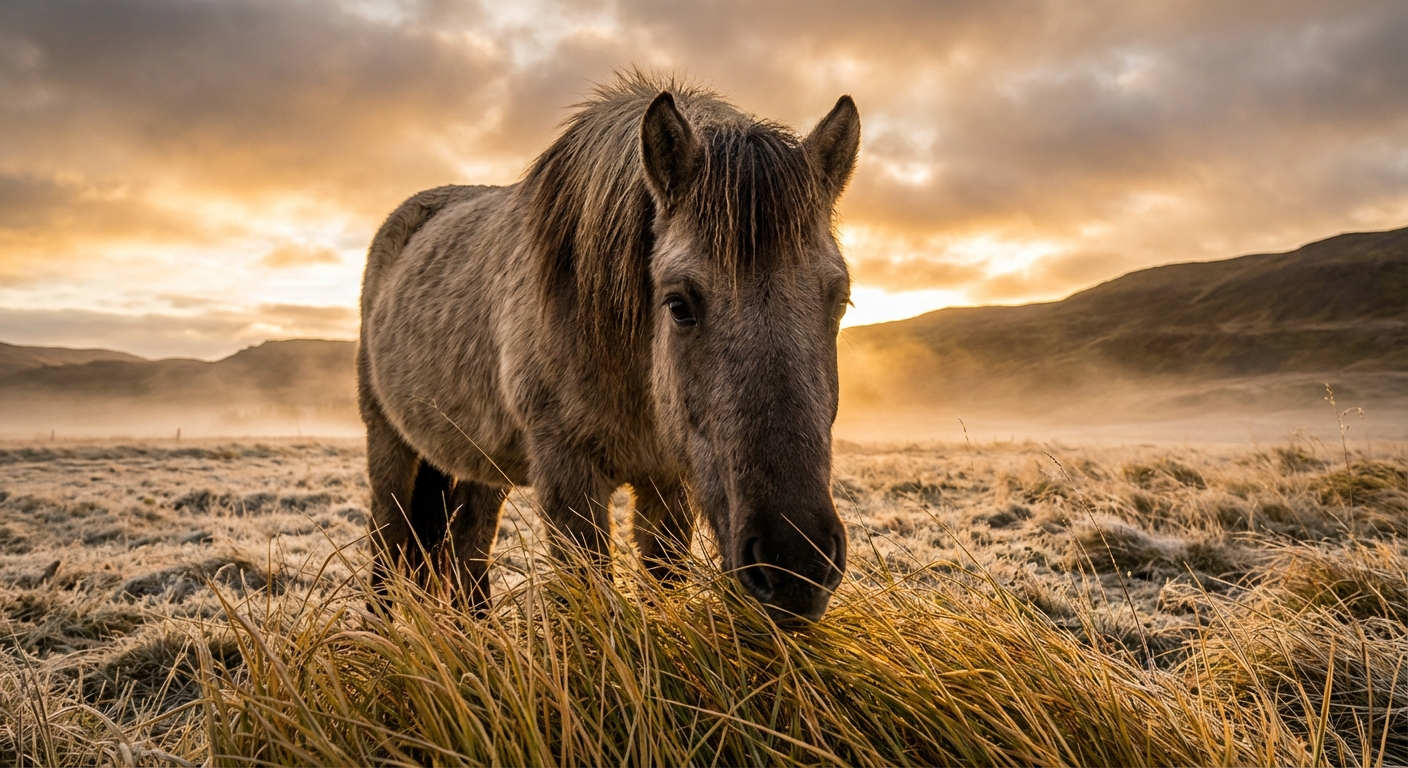
The horse's interior life does not simply "power down" when we declare the day finished. The stomach continues secreting acid, and the instant eating halts, an invisible countdown begins: empty moments transform into corrosive ones. Viewed this way, digestive well-being is not solely determined by what enters the mouth; it equally depends on whether the mouth remains in motion throughout day and night.
When fermented feed captures our attention, I regard it as a directional marker. Not a trend worthy of debate, but an indication of something we have overlooked. If equine biology anticipates continuous foraging, then our obligation shifts: not "feeding the horse" as a timed ritual, but structuring existence so that food remains perpetually accessible. The foundation is not a specialized supplement. The foundation is unbroken continuity.
This continuity extends beyond nutrition alone—it encompasses temporal rhythm as well. Travel, medical procedures, and shifts in routine all exact a digestive toll because they frequently interrupt eating. The clock of acid damage begins its count the moment chewing ceases. If fermented feed is employed to "support gastric health," the first act of coexistence is to identify what routinely stops chewing in your particular arrangement.
We humans share a similar vulnerability: our own well-being suffers when the rhythms we depend upon are fractured, when the continuities that sustain us are treated as optional rather than essential.
Preference Is Often a Mirror of the Environment
When a horse displays pronounced preferences regarding feed—enthusiasm for certain offerings, reluctance toward others—it is tempting to interpret this as mere pickiness. But coexistence proposes an alternative perspective: preference as communication.
Horses are not conversion machines transforming rations into mass. They are sentient beings with innate restorative instincts. Under natural conditions, they wander, browse, graze, and maintain constant digestive activity. They also engage in self-medication when circumstances permit—zoopharmacognosy—selecting substances that address needs we may not yet have perceived.
Within a constrained environment, preference often amplifies precisely because options diminish. If a horse favors a particular commercial feed, the lesson is not to idealize the bucket. The lesson is to question what the bucket represents. Extended chewing time? Fewer barren intervals? A reliable caloric source in a day that permits insufficient grazing? Such questions cannot be resolved by examining the feed container alone. They require observing the horse's entire existence.
Perhaps our own cravings and aversions function similarly—not as character flaws, but as the body's attempt to communicate what our circumstances fail to provide.
Gut Health Isn't Separable from Miles
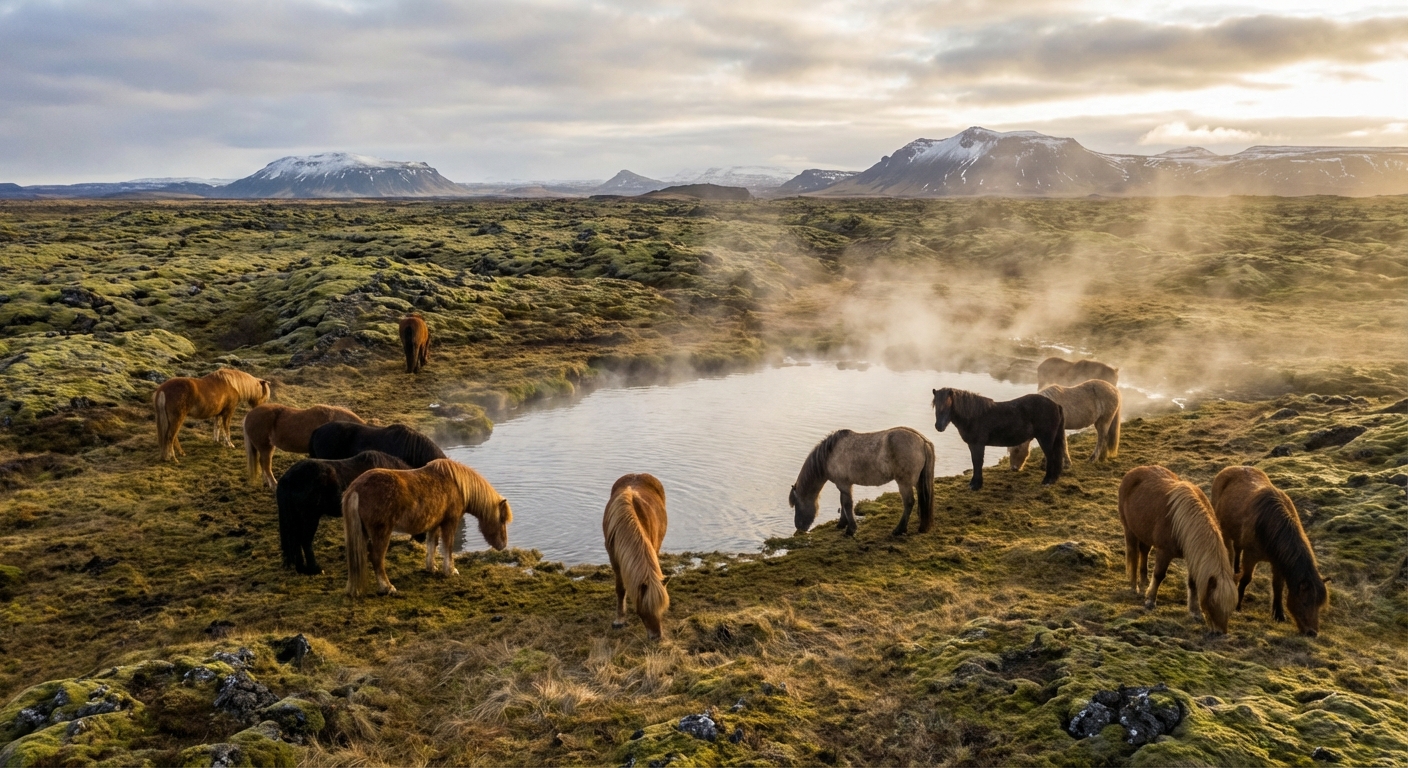
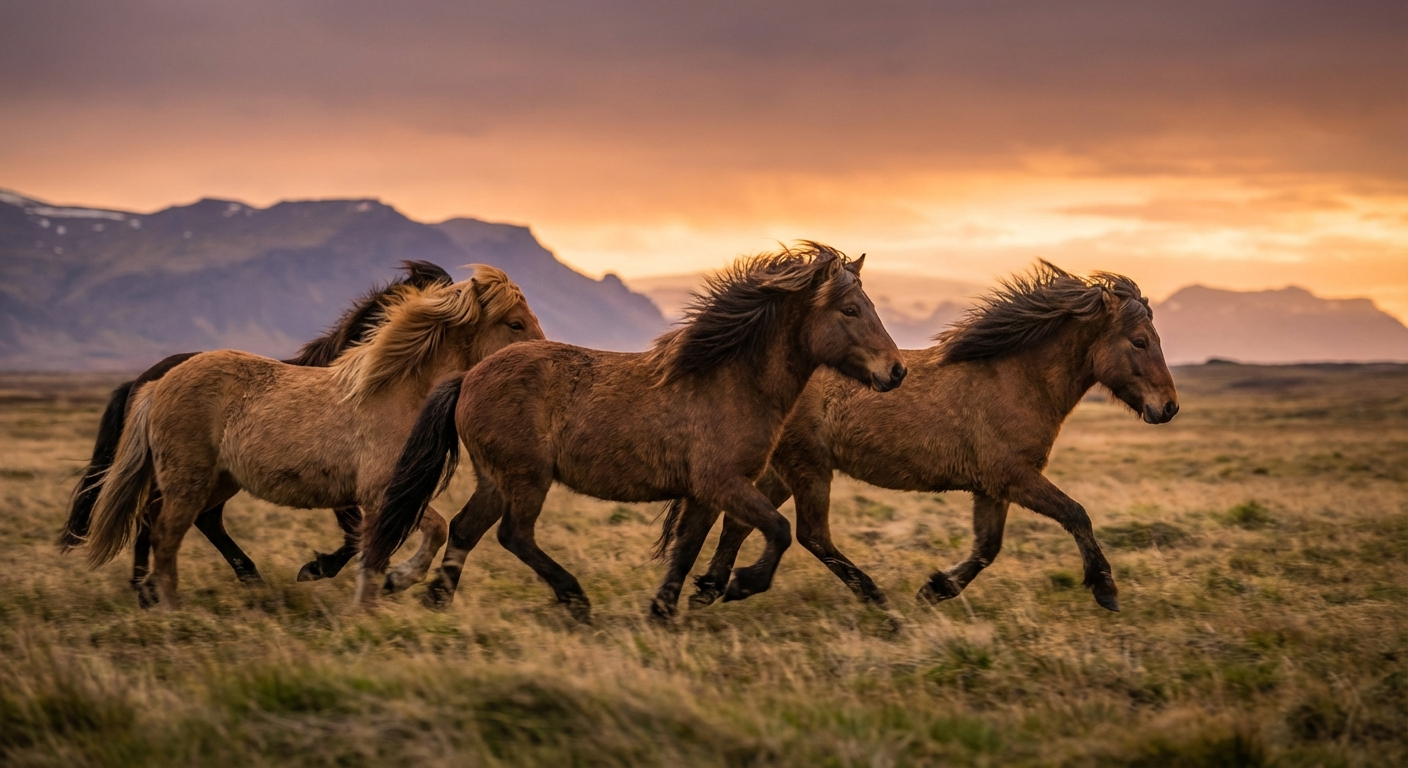
Equine digestion was never engineered for immobility. A foundation of daily locomotion—measured in many kilometers—belongs to the horse's fundamental design. When movement diminishes, the digestive narrative seldom remains isolated to the gut. The entire organism grows more fragile in subtle ways: reduced capacity for stress regulation, fewer opportunities to select one's position, and diminished hours engaged in the activity horses are built to repeat endlessly—eating while traveling.
Here, stereotypic behavior emerges as an environmental signal. Repetitive actions are not "bad habits" existing in a vacuum; they may be the visible manifestation of a life lacking something essential. If fermented feed is deployed hoping to pacify the system, it is worth considering that the system may be objecting to an arrangement that restricts movement and disrupts foraging.
From a coexistence perspective, the most gut-supportive measure may appear unremarkable: construct a day that spares the horse from extended gaps, and design a space that fosters autonomous walking and grazing rhythms rather than static waiting.
We might recognize ourselves here too—how our bodies and minds protest when confined, when the movement we were made for becomes the exception rather than the rule.
Soil, Pasture, and the Quiet Nutrition We Don't Count
Gut health is commonly conceived in narrow terms—what the horse consumes: hay, grass, bucket contents. Yet pasture stewardship and soil vitality underlie everything. They determine what flourishes, what the horse can explore, and what possibilities extend beyond the conventional offerings.
This is precisely where ecological function becomes relevant to horse care. A thriving landscape is not merely aesthetically pleasing. It sustains a richer foraging existence—one encompassing self-selection and self-regulation, not mere consumption.
Even behaviors that alarm us, such as soil ingestion, can be interpreted as communication rather than pathology requiring suppression. In coexistence, we treat such moments as data: the horse acts with purpose, and our task is to discern what the environment provides—or fails to provide.
If fermented feed is intended to "enhance gut function," we should remember that the earth itself constitutes part of the horse's alimentary world. Our stewardship either preserves that world's diversity and vitality, or reduces it to a narrow range of possibilities.
The same principle applies to human flourishing: we cannot separate our health from the health of the ground beneath us, the complexity of our environments, the richness of what we are offered to choose from.
A Coexistence Standard: Don't Make the Bucket Carry the Whole System
Preferences for fermented feed may be genuine. Horses perceive textures, aromas, and how a food settles within the body. Yet coexistence challenges us not to allow the bucket to become the entire strategy.
The horse's gastric reality operates without pause. Therefore, the essential welfare standard becomes uninterrupted forage availability. The daily architecture matters: grazing is not an "activity" slotted into a timetable; it is the ground upon which the entire day is constructed. When that ground is removed—through nighttime confinement, transport, extended waiting—we should not be astonished when we find ourselves seeking remedies.
If you are attracted to fermented feeds because you desire a horse with more stable digestion and a calmer disposition, consider that the most profound support may not be a product at all. It is an existence where chewing rarely halts for long, where movement is ordinary, where social bonds perform their steadying function, and where the land is tended as a living system rather than a mere feeding surface.
And perhaps this is the invitation horses extend to us: to examine our own lives for the same pattern—the quick fixes we reach for when what we truly need is not a better product, but a better continuity.
Equine Notion
https://equinenotion.com/