Flexibility Over Fixing: A Coexistence Strategy for Change Without Breaking the Horse

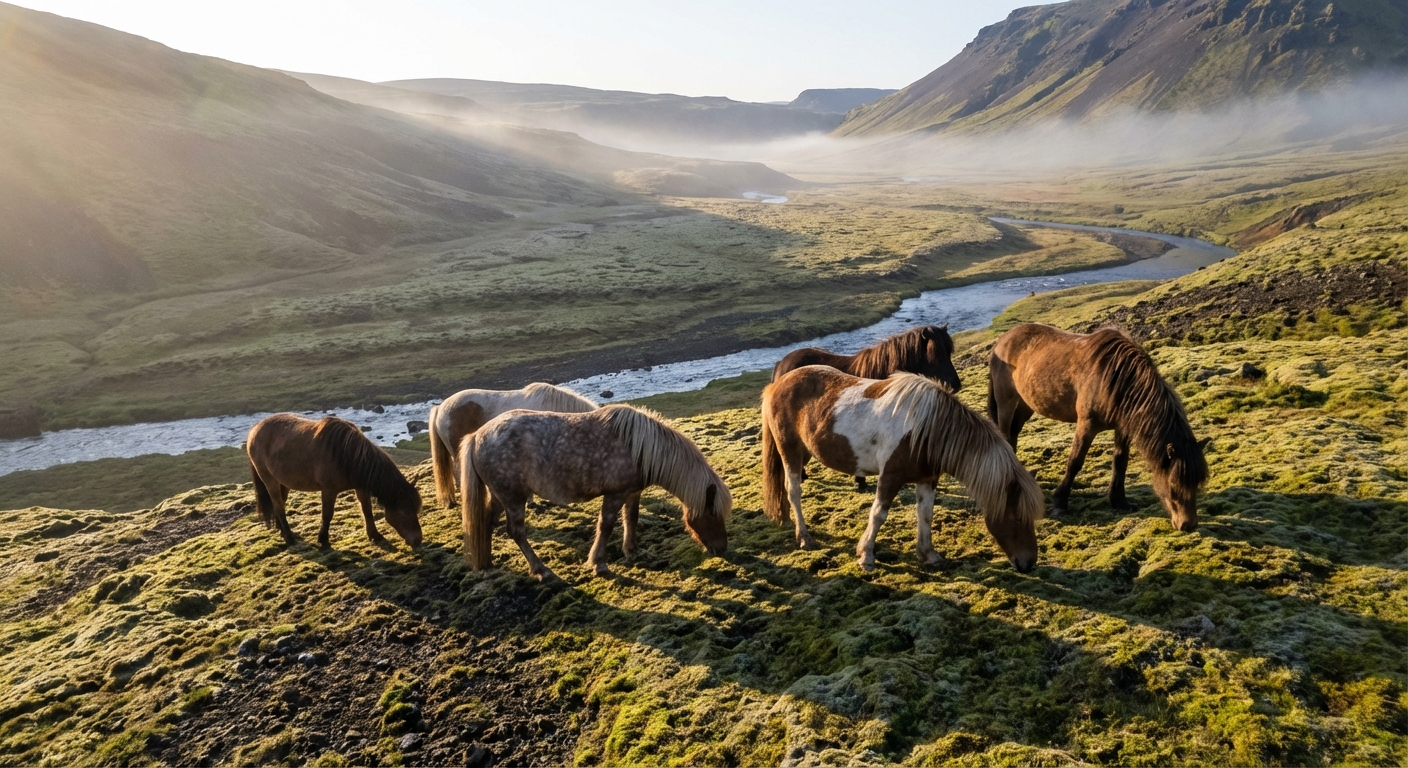
Flexibility Over Fixing: A Coexistence Strategy for Change Without Breaking the Horse
The earliest indication that a shift has occurred is not always dramatic. Often it manifests subtly: a horse who ceases wandering and begins to stand still. A prolonged gaze toward the familiar feeding spot. A slight compression in the herd's spatial arrangement. Nothing overtly "problematic" that demands correction—merely a system finding its new orientation.
Cognitive flexibility, within the framework of coexistence, means recognizing that moment and selecting adaptation rather than interpretation. It means resisting the urge to construct a narrative about temperament. It means refusing to transform observation into intervention.
When Our Mind Locks, Their Life Narrows
We humans crave tidy narratives. One horse is "the leader." One approach is "the answer." One factor is "the cause." Yet equine groups do not operate under a single permanent authority, and daily choices are not consistently made by the same individual. Who initiates travel, who gives way, who gains first access—these dynamics shift according to circumstances and the resource at stake.
When we hold fast to a fixed hierarchy narrative, our reactions to change become equally inflexible. We act in the wrong places. We address the visible symptoms (who flattened ears, who displaced whom) while overlooking the true source of strain: uninterrupted access to nourishment, sufficient space for continuous movement, and social proximity that renders life predictable.
Cognitive flexibility is not indulgence. It is precision.
How often do we, too, manage the surface of our relationships—the visible tensions—while ignoring the deeper needs for security, access, and belonging that truly govern our peace?
The Acid Clock and the Unseen Deadline
One change exists that most horses cannot simply "reason through": an extended period without food.
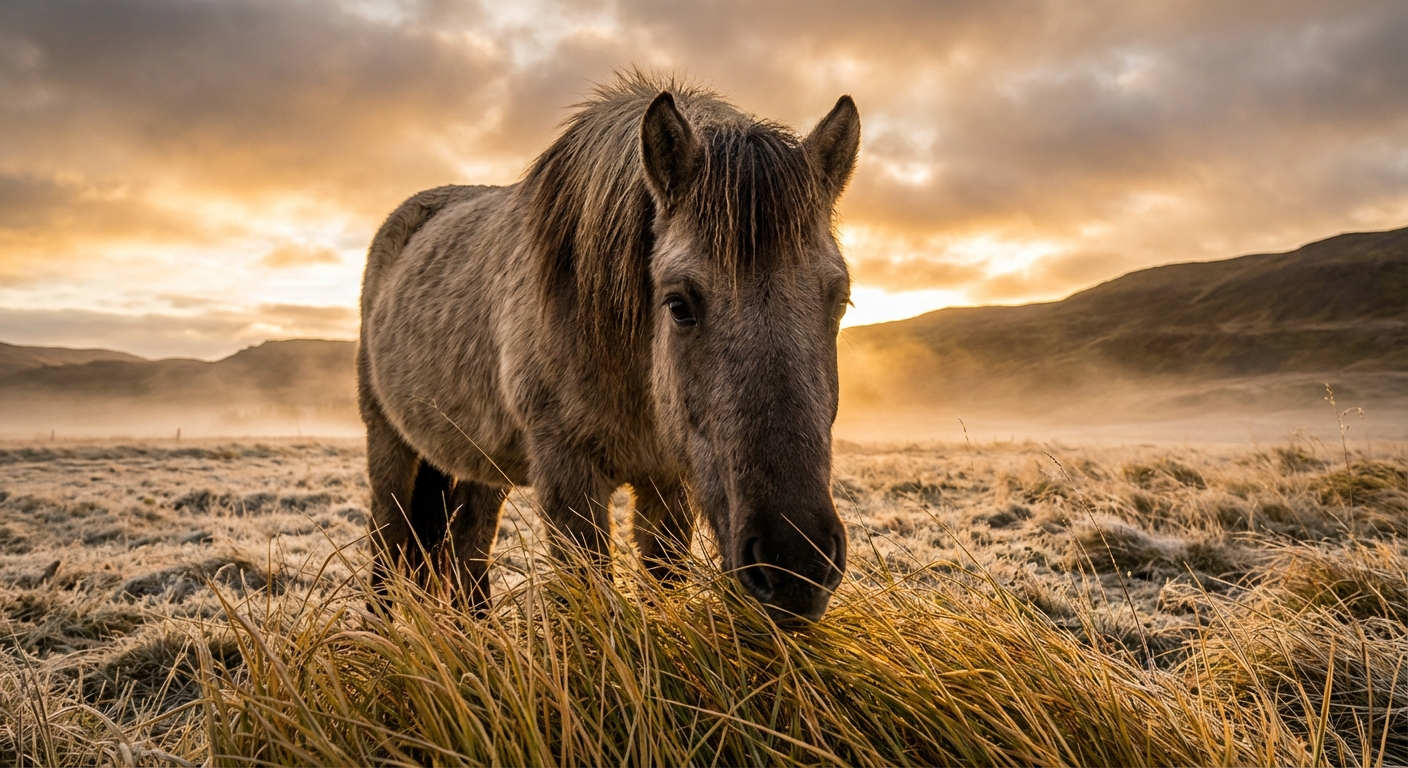
Gastric acid operates independently of any convenient timetable. When forage ceases, the window of risk begins to widen—not as a character flaw, not as a teachable moment, but as pure physiology. Thus any viable approach to change must start with a fundamental welfare principle: food that remains perpetually available, or as near to constant access as circumstances permit.
This transforms the human function. Rather than "feeding the horse," it becomes "safeguarding continuity." This encompasses anticipating the nutritional gaps introduced by travel, medical procedures, or everyday interruptions. It also means observing how swiftly anticipation transforms into stress when meals are administered as scheduled events rather than as an ever-present foundation.
An adaptable human mind organizes around the horse's biological rhythm, not the numbers on a clock.
We might ask ourselves: what invisible deadlines govern our own wellbeing—hungers we dismiss because they lack convenient schedules, yet which quietly erode us when ignored?
Movement Is Their Way of Solving Things
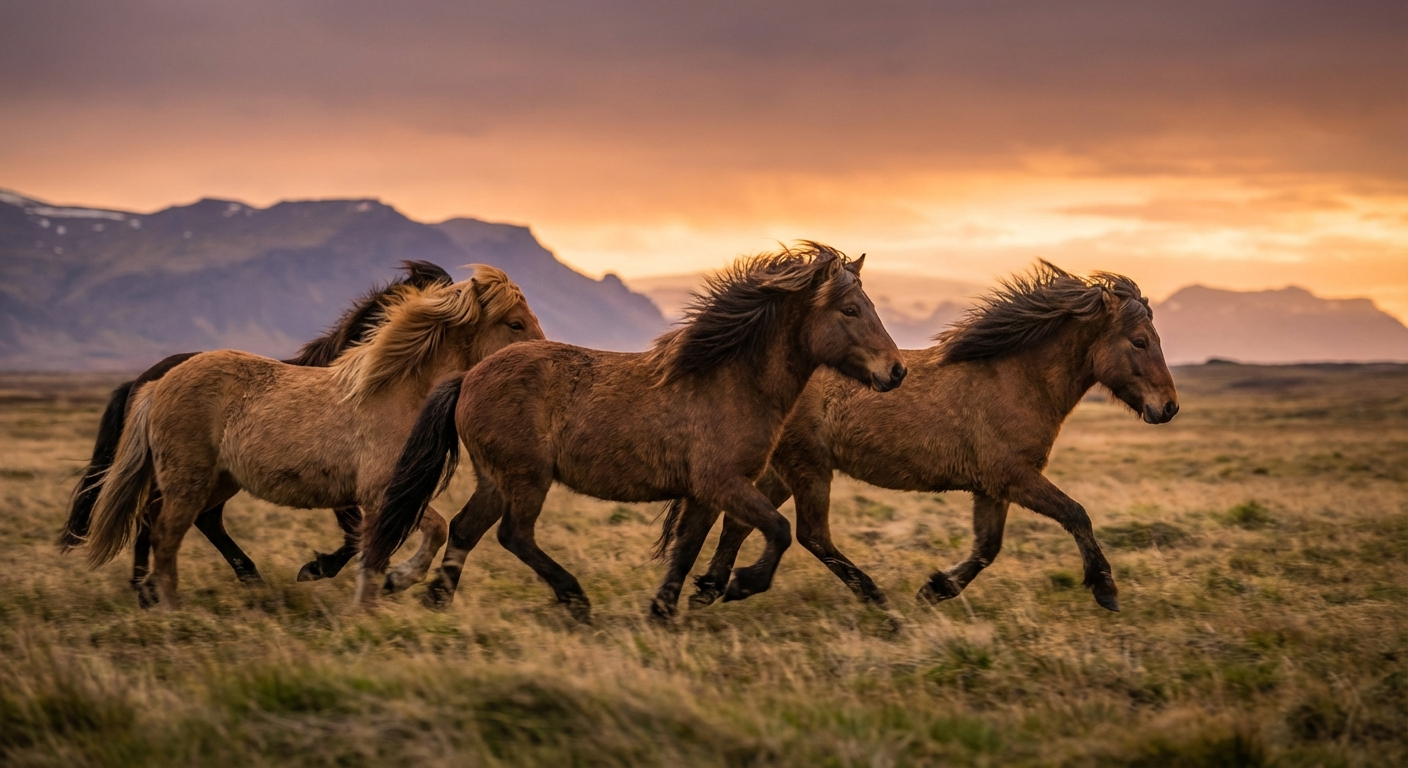
Horses are designed for locomotion. On an ordinary day, they would traverse considerable distances while grazing. Movement is not a supplementary activity to incorporate once other needs are met; it is integral to how their bodies and nervous systems sustain equilibrium.
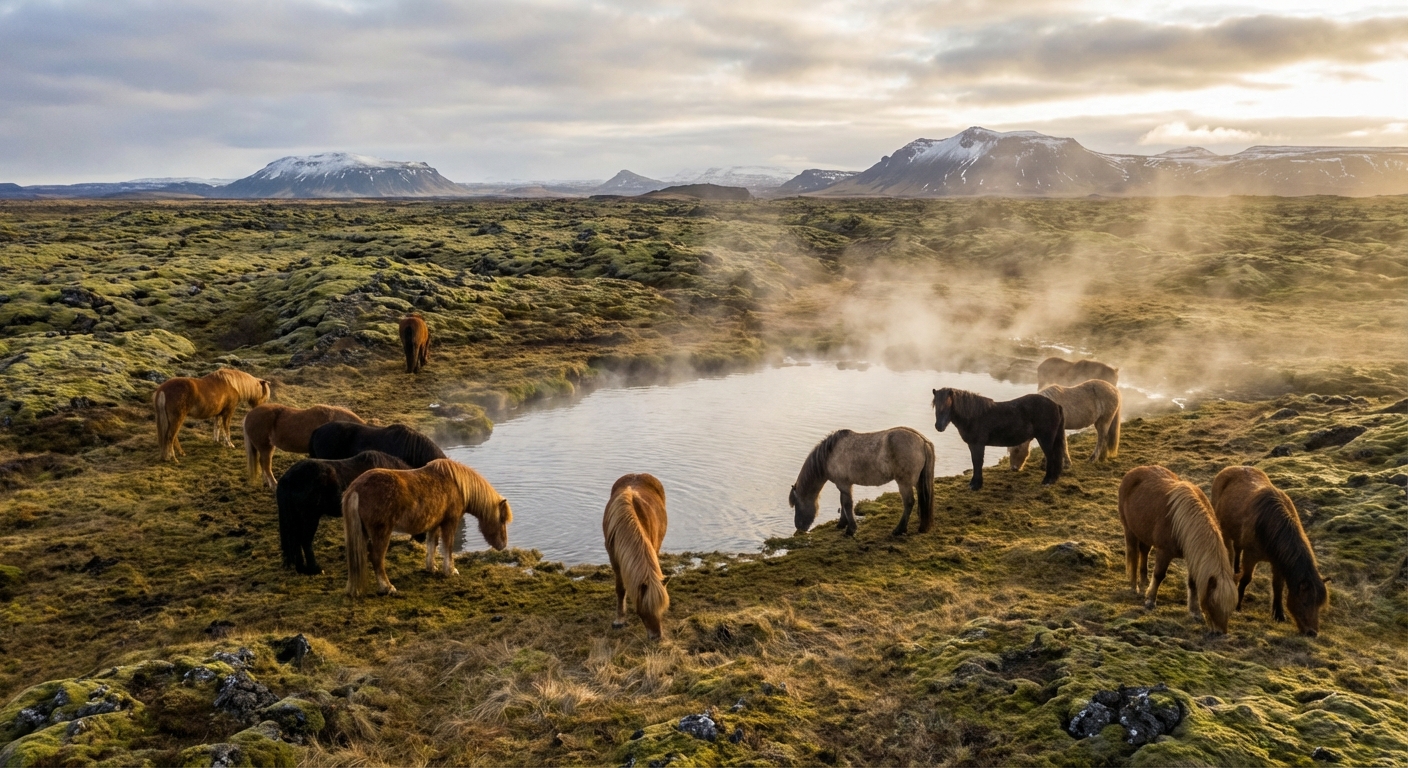
When disruption arrives—unfamiliar horses in proximity, altered pasture boundaries, a relocated hay station—many horses respond by walking. They reorganize through drifting, halting, returning, and reassessing. When we eliminate space, we eliminate possibilities.
Here cognitive flexibility becomes tangible. The inquiry shifts from "How do I suppress this behavior?" to "What dilemma are they resolving through movement?" When a horse exhibits repetitive, stagnant behaviors, this is not a puzzle to punish; it is an environmental communiqué. Something in their surroundings has become too confined, too fragmented, too predictable in harmful ways (predictable restriction, predictable anticipation), or too erratic in harmful ways (abrupt absences, sudden isolation).
A flexible approach creates room—in the most literal sense—for the horse's innate problem-solving.
Perhaps our own restlessness, too, is not a flaw to suppress but a form of intelligence—the body's attempt to solve what the mind cannot yet articulate.
Social Negotiation Is Not a War Zone
During periods of transition, humans frequently search for discord and read every gesture as evidence of an "alpha" storyline. Yet harmony within a herd often emerges from modest decisions: who yields at a feeding spot on a given day, who advances and who holds back, who seeks closeness and who prefers a few paces of separation.
Because these patterns are rooted in relationship, they can reorganize without demanding perpetual confrontation. This matters for coexistence, as it illuminates what must be preserved during transitions:
- Maintain social possibilities wherever feasible (companionship, the capacity to be proximate without being confined).
- Refrain from crowding all horses into identical cramped quarters when resources change.
- Attend to those who silently forfeit access when routines shift, not merely those who vocalize their discontent.
This is also where human cognitive flexibility manifests as humility. Rather than presuming to know who "belongs" where, you chronicle what unfolds. You observe who settles alongside whom, who eats at what hour, who departs and circles back. You allow the herd's own negotiations to reveal what support is required.
In our human communities, too, the loudest voices rarely tell the whole story; wisdom lies in watching who quietly withdraws when the landscape shifts.
Neutral Nature: Trusting Adaptation Without Manufacturing Perfection
A control-dominated welfare philosophy entices us toward a simplistic ethic: comfort equals virtue, hardship equals vice. But the natural world refuses such neat divisions. A measure of challenge serves as the catalyst for resilience and adaptability; eliminating all adversity does not inevitably produce tranquility—it may instead cultivate fragility.
Neutral nature represents an alternative stance: neither engineering an immaculate artificial sanctuary, nor intervening at every tremor, yet also not disregarding what the horse cannot navigate alone (such as prolonged forage deprivation or chronic spatial restriction). It is a philosophy grounded in trust—trust that, given proper foundations, the horse possesses the capacity to reorganize.
Thus the coexistence strategy for change becomes less about enforcing regulations and more about fortifying essentials:
- Unbroken access to forage as a baseline, because biology operates on deadlines.
- Territory and liberty to move, because locomotion is self-maintenance.
- Social connection and agency, because relationships are how herds absorb stress.
- Attentive observation, because the horse perpetually communicates whether the environment is functioning.
Cognitive flexibility is the human capacity that weaves these elements together. It is the willingness to amend your approach when the horses disclose new truths. To release the orderly narrative. To cease imposing a single explanation upon a living system.
And within that mental transformation, coexistence grows quieter—not because nothing shifts, but because change ceases to be a battle.
Perhaps this is the deepest teaching horses offer us: that peace is not the absence of change, but the presence of enough space—inner and outer—to let change move through without resistance.
Equine Notion
https://equinenotion.com/