Giving Back the Reins Without Riding: How Small Choices Create Bigger Calm

Hook
On an ordinary afternoon, nothing seemed to unfold.
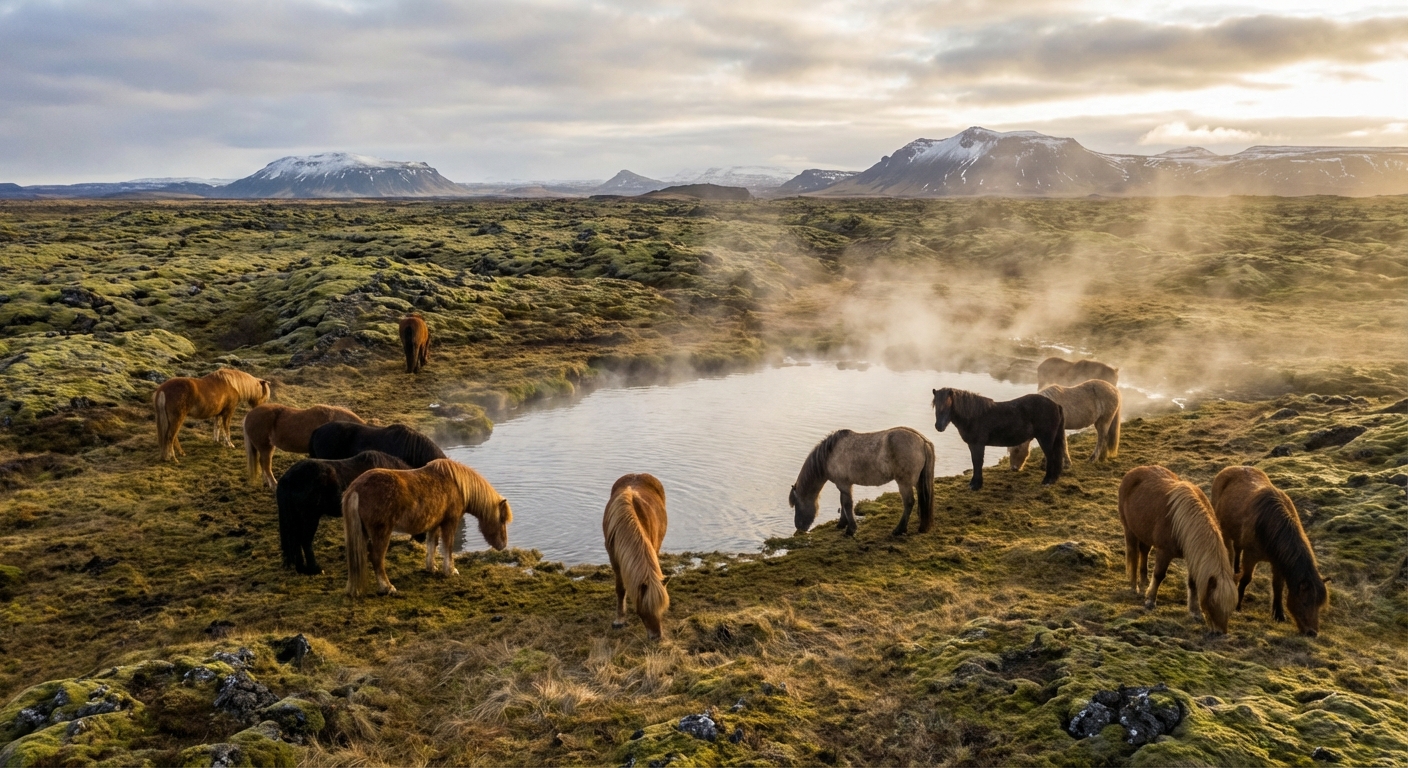
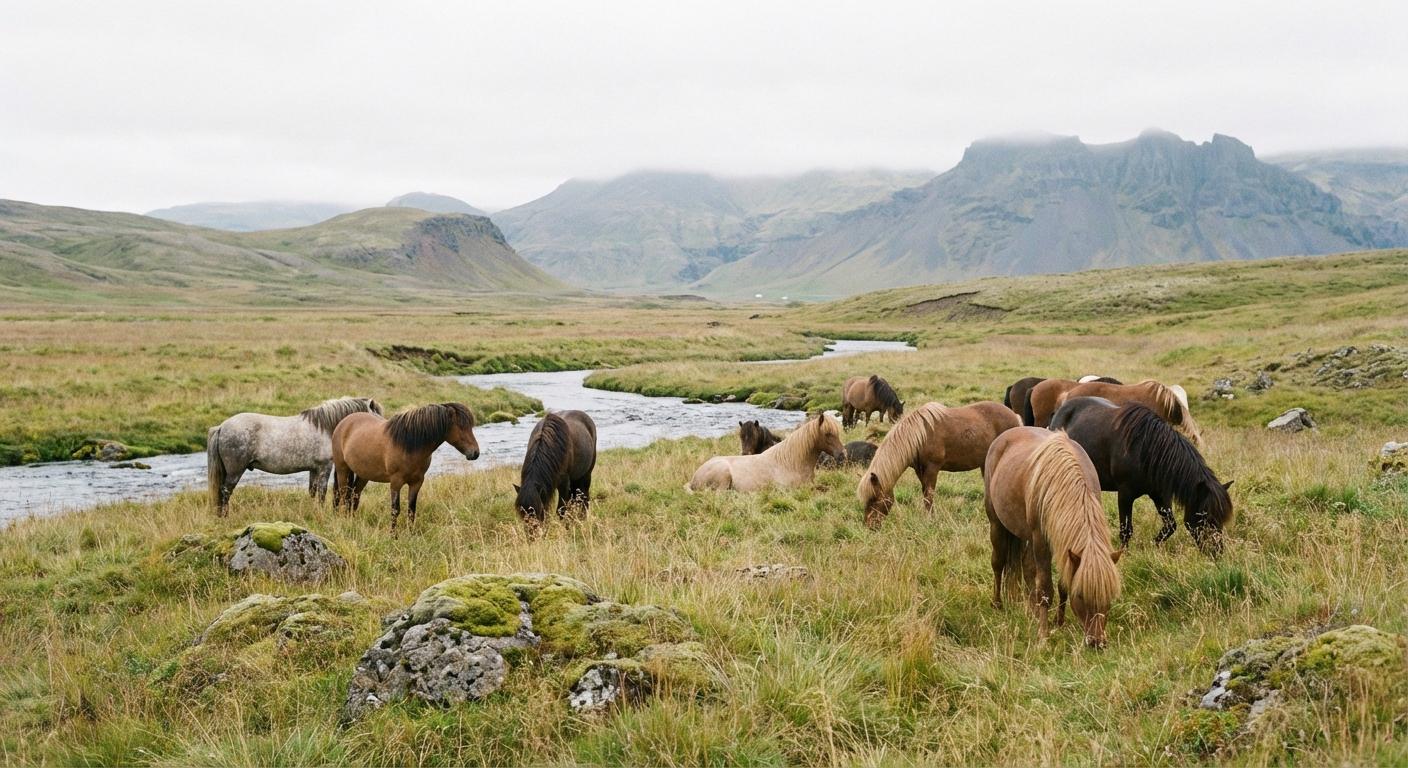
A mare halted beside the water trough, shifted her stance subtly, and stood in quiet expectation. A second horse drew near, slowed her pace, then eased a single step sideways. No ears stayed pinned. No pursuit ensued. No human rushed in to intervene. Within moments, the exchange dissolved into stillness.
From afar, it appeared as though nothing had occurred. Observed closely, it was a choice—several choices, in fact—authored entirely by the horses themselves.
This is where the partial restoration of agency begins: not by relinquishing all authority, but by honoring the small decisions horses already employ to maintain harmony within their group.
We might ask ourselves: how often do we overlook the quiet negotiations happening around us, mistaking stillness for absence?
1) "Control" can be tiny—and still matter
When we consider control, our minds often leap to grand gestures: who commands, who dominates, who claims the right to act. Yet within herd dynamics, much of the daily equilibrium emerges from far subtler exchanges.
A turn of the head that communicates, "Not at this moment." A shift in posture that redirects movement. A single sidestep that dissolves potential confrontation.
When humans perpetually interrupt these micro-negotiations—repositioning horses to assert a point, correcting every interaction, dispersing one the instant another arrives—horses forfeit the chance to cultivate their own social intelligence.
Restoring control in increments can be as uncomplicated as allowing a moment enough space for the horses to respond to one another.
In our own lives, we might recognize how over-managing small conflicts robs others—and ourselves—of the capacity to navigate tension with grace.
2) Status is situational, so autonomy has to be allowed to shift
One reason that returning agency proves beneficial is that herd positions are not fixed identities. Who defers depends on the resource at stake, the particular relationship, and the fleeting instant.
A horse who retreats at the hay pile may be the very one others trail during periods of rest. A horse who waits patiently at the water may be the one who determines where the group settles when stillness arrives.
When humans demand a singular narrative—one leader, one immutable hierarchy—they often find themselves addressing the wrong concern. They labor to enforce a permanent order, while the herd operates fluidly on context.
Granting partial autonomy serves wellbeing because it permits the group to express these evolving understandings rather than confining them to a single rigid framework.
Perhaps we, too, would benefit from releasing our attachment to fixed roles—allowing leadership and deference to flow naturally according to circumstance.
3) Watch who chooses whom—then stop rearranging it
A practical starting point in the field is straightforward: observe the recurring patterns of proximity.
Who remains close when nothing particular is happening. Who rests within comfortable reach. Who follows another with ease and without coercion.
These behaviors lack drama, yet repeated companionship carries weight. It represents one of the most transparent ways horses reveal preference and security.
When humans habitually separate contented pairs without reason, or persistently force horses into closeness with those they would naturally avoid, the herd expends greater energy managing social unease.
A partial return of agency might simply mean respecting preferred arrangements—permitting horses to remain near those they select, and honoring distance when they request it.
How often do we disrupt the quiet bonds others have formed, imposing our own logic onto relationships we do not fully understand?
4) Affiliation is real structure, not a soft extra
Reciprocal grooming. Unhurried companionship. Shared repose.
These are not sentimental flourishes; they serve essential functions. They represent how horses construct more stable bonds without requiring perpetual high-stakes conflict to establish boundaries.
When a horse possesses dependable affiliative companions, the broader herd often appears more settled—because that horse has a place to anchor, a presence to stand beside, and a recognizable social cadence.
Human oversight can inadvertently diminish this when every tender moment becomes a managed occasion: summoning a horse away the moment grooming commences, disrupting peaceful rest to "maintain order," or treating closeness as something inherently suspect.
Returning agency in part can mean safeguarding the mundane: allowing affiliative exchanges to complete themselves when they unfold calmly and mutually.
The same holds true for us: genuine connection requires protection, not management. Our quiet bonds deserve space to breathe.
5) Resources reveal relationships—so let the horses do some of the negotiating
Hay, water, constricted passageways: these are the sites where social dynamics become legible.
Yet the compelling element is not merely who arrives first. It is how access unfolds.
Observe yielding that forestalls conflict. Watch for a horse permitting another to approach without intensifying the encounter. Notice calm passage rather than obstruction.
Humans frequently hasten to "resolve" resource moments by assuming command—immediately relocating horses, occupying the space themselves, or imposing a uniform traffic pattern. Occasionally intervention proves necessary for safety, but perpetual takeover can eliminate the herd's own quiet solutions.
A partial restoration of agency is not abandonment. It is permitting horses to navigate small, legible negotiations when they are already operating below the threshold of conflict.
We might consider how our own communities function best when individuals are trusted to work through minor tensions themselves, rather than having every interaction mediated from above.
6) The smallest signals are the ones that keep peace
Countless herd decisions occur before anything resembles a confrontation.
Ears that shift orientation. A head that turns aside. A shoulder that pivots. A single early step that prevents ten steps of pursuit later.
When humans acknowledge only dramatic signals—squeals, strikes, flight—they overlook the quieter vocabulary that renders such outbursts unnecessary.
Once you begin recognizing these early indicators, "returning control" gains precision. You can offer horses latitude when they are evidently resolving something through nuance, rather than intervening so prematurely that they never conclude the exchange.
The welfare dividend often manifests as a gentler atmosphere: fewer repeated encroachments, fewer fraught standoffs, more fluid, unremarkable movement through common ground.
In human terms, the same wisdom applies: peace is often preserved not by grand gestures, but by the smallest courtesies we extend before friction ever builds.
7) Coexistence without riding: a practical way to "give back" decision-making
Coexistence beyond training does not demand that you orchestrate the herd. It invites you to witness without perpetually revising the scene.
Position yourself where observation is possible, and allow the horses to reveal their own arrangements.
Take note of recurring proximity patterns, instances of mutual grooming, and how access at hay or water proceeds when no urgency intrudes.
Attend to the quiet signals that avert trouble. These often constitute the genuine labor of living together.
Partial restoration of agency enhances welfare because it recovers something horses employ throughout their days: the freedom to choose—whom to stand beside, when to yield, when to pause, and how to pass one another without escalation.
Perhaps the deepest lesson horses offer us is this: autonomy, granted in small measures, creates the conditions for peace. The same may be true in every community we inhabit.
Equine Notion
https://equinenotion.com/