The Hay You Can’t See Anymore: How Horses Plan Around What’s Out of Sight
Hook
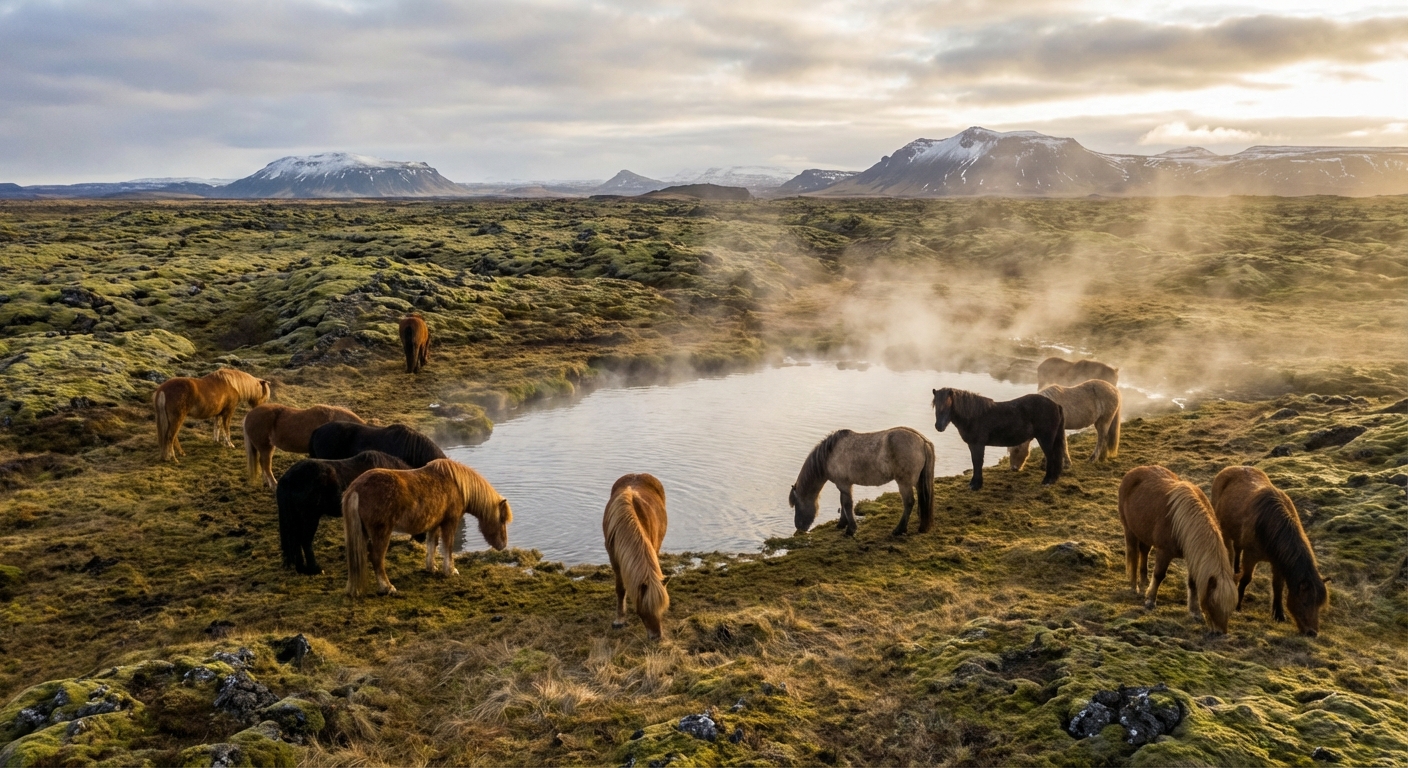
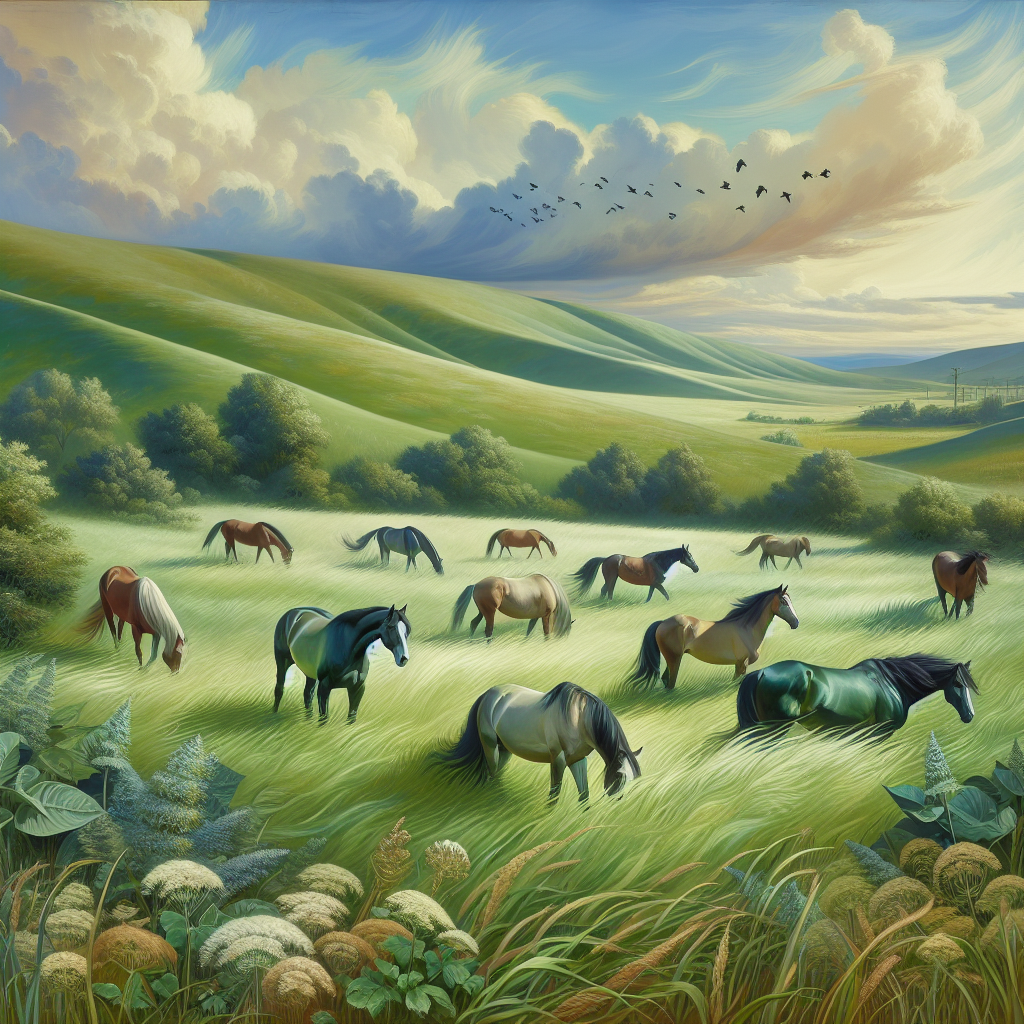
At our property, the horses roam freely across nearly all the terrain.
We are the ones confined within a fence.
From that compact, human-scale boundary, you observe something easily overlooked when you dictate every movement: the horses behave as though they're mentally tracking things currently beyond their view.
Not because someone trained them to follow a pattern.
Because the surroundings encourage remembering and choosing.
1) Living where humans feel "enclosed" changes what you notice
When the majority of the property remains accessible to the horses, the usual perspective inverts.
Rather than observing horses in "their space," you find yourself watching them from what seems like your space—compact, limited, distinctly defined.
That inversion is significant.
It allows their movements to appear deliberate rather than controlled. It also makes their decisions seem less like responses to humans and more like autonomous choices.
In this context, the most remarkable thing isn't velocity or strength. It is purpose. Where they head next. What they investigate. What they ignore.
And how frequently they appear to follow a plan involving resources not currently visible from their position.
2) Choice-based feeding creates a world worth remembering
We avoid feeding on a set schedule.
Rather, we aim to encourage natural grazing behavior whenever possible.
That one adjustment—shifting away from "meals arrive at predictable times"—generates a different cognitive landscape for a horse. When eating isn't a scheduled occurrence, the day transforms into a succession of possibilities: to explore, to rest, to revisit, to weigh options.
We additionally offer access to various types of hay and foraged herbs.
This matters greatly.
A diverse food landscape isn't merely "additional choices." It is a landscape that values memory. When a horse can select, a horse can also develop preferences. And when a horse can develop preferences, past experiences become relevant.
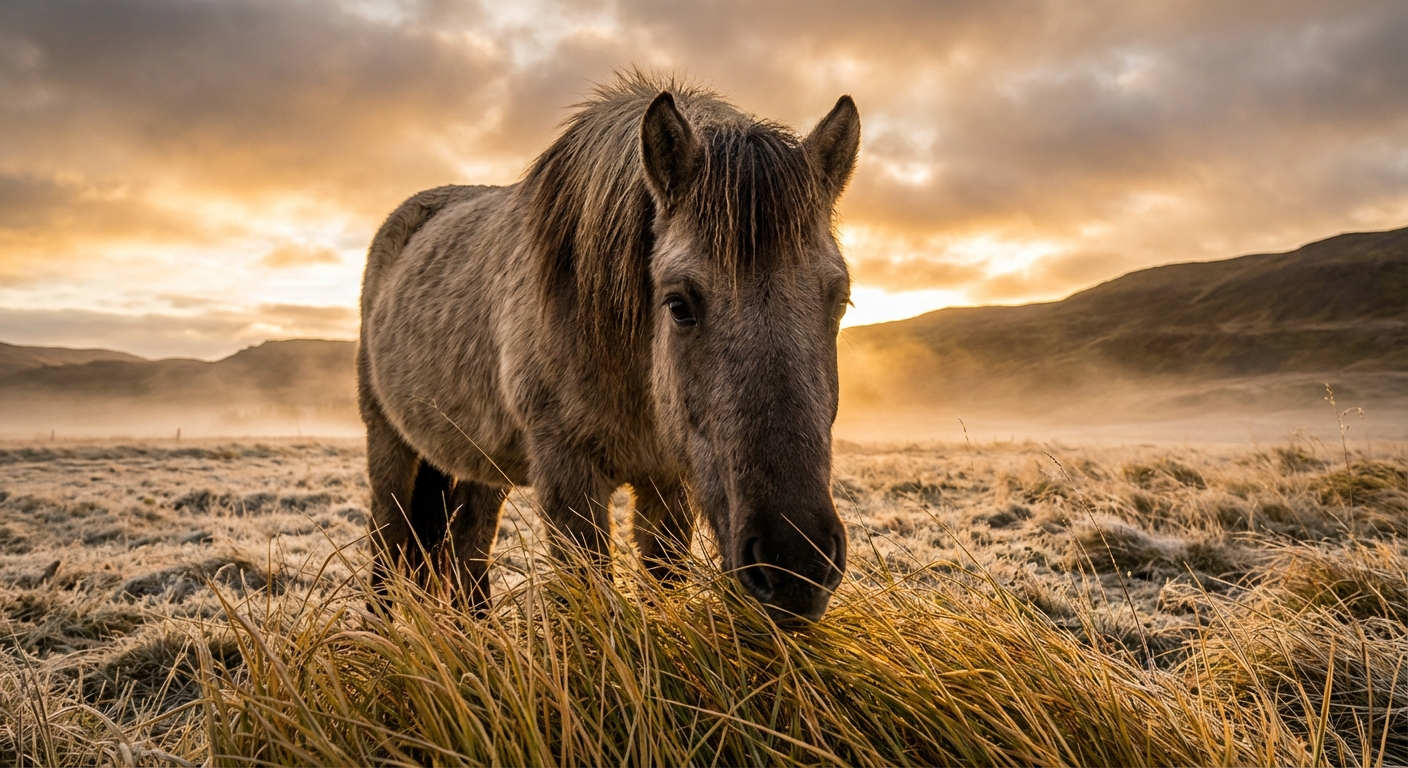
Without any riding, without any training objectives, you can simply observe how a horse engages with these options—approaching them not as though finding food anew each time, but returning to familiar resources.
3) Object permanence, lived quietly: returning to what isn't in front of them
"Beyond view" doesn't necessarily mean "forgotten."
In an area where several varieties of hay and wild herbs exist, a horse's travel can appear less like roaming and more like verifying.
They might depart from one location.
They might browse or search elsewhere.
Then, subsequently, they return with a purposefulness that seems knowing.
From the human side of the barrier, it appears this way: a horse isn't simply reacting to what's nearest. They are behaving as if they recall that a particular type of food exists somewhere else and can be revisited whenever they wish.
And since we aren't structuring the day around a feeding schedule, the horse has space to do this according to their own rhythm.
No signal from us.
No "time to eat."
Simply a series of decisions—some instant, some evidently shaped by what the horse already understands is accessible across the property.
4) Strategic thinking without training: selecting, comparing, and moving on
When horses can access varied hay and wild herbs, "strategy" can appear remarkably unremarkable.
It can appear as:
- investigating one choice, spending time there, then walking away
- heading toward a different source afterward, as though extending a decision rather than initiating a fresh one
- treating the surroundings like a selection, not a single dish
This isn't a learned behavior.
It isn't something we develop through drills.
It's an outcome of the conditions: a setting where the horse can intuitively select nutrients, and where those selections aren't compressed into a human schedule.
From a shared-living standpoint, this transforms our function.
We cease attempting to make the horse "perform" for us.
We become guardians of circumstances: accessibility, diversity, and sufficient tranquility for the horse to choose.
Within that tranquility, planning emerges naturally.
5) What "no fixed times" gives back to the horse's mind
Rigid schedules can turn a day into a sequence of disruptions.
Meals come.
Meals go.
Waiting becomes the primary focus.
But when we avoid feeding at scheduled times, the horse can ease into something resembling continuous foraging. The horse isn't forced into a limited frame of anticipation.
This is important for strategic cognition.
A horse perpetually awaiting a timed meal has less incentive to exercise choice. A horse who can browse, pick, and return has greater motivation to monitor what's available throughout the area.
In reality, this resembles a subtler form of intelligence.
Not theatrical.
Not showy.
Simply a horse making numerous minor decisions—some of them clearly connected to options not presently right in front of them.
6) Coexistence means designing for decisions, not demanding obedience
This philosophy isn't centered on riding.
It isn't centered on training.
It is centered on existing alongside horses in a manner that honors what they inherently understand.
Granting the horses access to most of the property makes one declaration: their existence shouldn't be confined to a tiny enclosure.
Offering varied hay and wild herbs makes another declaration: consuming food isn't just "receiving meals," but also choosing what they require.
Eliminating scheduled feeding times reinforces that declaration: the horse is permitted to structure their own day.
From within the human enclosure, you recognize how much of shared living is essentially this: creating a setting where a horse can recall, evaluate, return, and reconsider.
That is strategy.
Not forced.
Not demanded.
Permitted.
Equine Notion
https://equinenotion.com/