Leave the Whiskers: Practicing Restraint on the Horse’s Face
Leave the Whiskers: Practicing Restraint on the Horse's Face
What catches my attention is never the obvious.
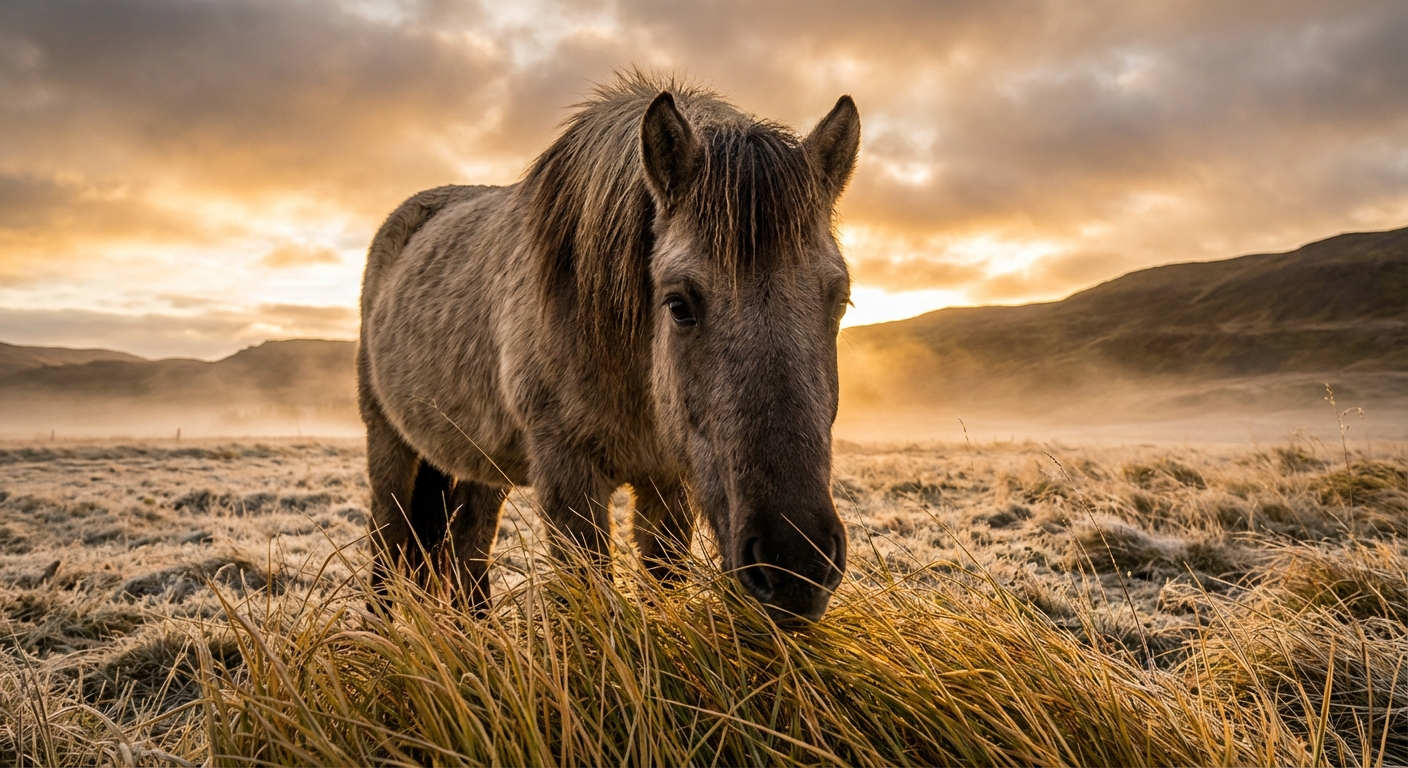
It's the subtle outline of a face appearing at the gate. The way a muzzle hesitates before making contact. The gentle pause before breath touches fabric. And the whiskers—those unassuming, everyday filaments that invite humans toward "cleaning up."
In a life with horses centered on shared existence rather than riding or schooling, that invitation carries weight. It exposes a decision we confront repeatedly: do we reshape the horse according to our tastes, or do we allow the horse to retain what nature gave them?
The Smallest Edit Is Still an Edit
There exists a particular human satisfaction in making an animal appear "complete." Tidy. Consistent. Ready for viewing. But the horse has no interest in being ready for viewing. They are occupied with living—grazing, moving, resting, navigating proximity with companions, and remaining grounded in a world that shifts with every passing hour.
When we clip whiskers, we convince ourselves it's insignificant. A matter of aesthetics. A simple grooming choice.
Yet shared existence demands a different measure than mere convenience: fewer alterations that serve no purpose. Fewer instances where our preferences eclipse the horse's original form.
The understanding we depend on in the stable is rarely a clinical catalogue of data points. It's the embodied wisdom that emerges from sustained observation—noticing what brings a horse ease, what unsettles them, what grounds them. Generations of thoughtful practitioners have discovered that connection cannot be demanded; it grows through patience, tone, mutual rhythm, and earned trust. That same patience can reach the face.
Choosing not to trim becomes a silent expression of regard: I will not modify what I do not wholly comprehend or what I have no genuine need to alter. Perhaps this is how we learn reverence in any relationship—by recognizing the boundaries of our understanding and honoring what lies beyond them.
Coexistence Is Measured in Touch We Don't Take
So much of caring for horses revolves around action. Correcting. Repairing. Overseeing.
Yet nature possesses its own self-sustaining rhythms—most of which flourish when we cease our interference. We already acknowledge this in larger contexts when we ensure constant access to forage for digestive health, or when we design the surroundings so the horse can move as their body was meant to move. We strive to create a life that doesn't demand perpetual human intervention.
Whiskers belong to that same ethos.
Even without framing it as a scientific position, we can still regard the horse's face as territory where restraint is fitting. The muzzle is where so much of a horse's waking experience unfolds: choosing what to eat, exploring unfamiliar objects, gauging closeness. If our commitment to wellbeing runs through environment—space, motion, social bonds, reliable nourishment—then leaving the face untouched completes the picture.
Living alongside horses without training also transforms what "contact" signifies. Touch is not an examination. It is not a bargain for obedience. It becomes an exchange about mutual safety.
And in exchanges of that nature, the most essential skill is frequently not what we accomplish with our hands, but what we consciously withhold. In our own lives, too, the deepest intimacies are often preserved not by what we grasp, but by what we allow to remain free.
Status, Relationships, and the Humility of Not Being the Center
Humans are drawn to tidy narratives about dominance. The "leader horse." The "dominant mare." The "alpha" concept that renders everything comprehensible.
But authentic group dynamics are far more fluid. Who defers can shift depending on what's at stake, the circumstances, the bond between individuals. Initiative and choices can emerge from different members at different moments. Much of what appears as structure is actually horses sidestepping needless friction through familiarity and habit.
When we hold this awareness, we begin to perceive our own position differently.
We are not the constant orchestrator of every encounter. We are a single presence within a broader ecology—field, herd, sky, forage, stillness.
Leaving whiskers intact is a modest way of releasing the illusion that our preferences should define the horse down to every detail. It is choosing to tend conditions rather than curate surfaces.
And it frequently transforms our own inner state as well. Because horses reflect our way of being. When we arrive with the steadiness of "nothing requires fixing in this moment," we tend to carry ourselves differently—more slowly, more gently, less grasping. The horse perceives this. How often do we forget that our relationships with others—human and animal alike—begin with the quality of presence we bring?
A Face Kept Whole Becomes a Promise
Some worry that preserving whiskers amounts to "doing nothing."
But "doing nothing" is not synonymous with neglect.
Neglect is the failure to supply what sustains health and equilibrium. Shared existence is establishing the proper foundations—companionship, room to roam, consistent forage, space for instinctive behaviors—and then permitting the horse to inhabit them.
A horse's life speaks to us about what succeeds. Repetitive behaviors can signal something amiss in the environment. Stillness can be genuine, or it can mask withdrawal. Soundness can be supported through movement, not solely through treatment. Nature abounds with systems that thrive when we abandon the impulse to substitute them with endless human management.
So preserving whiskers is not a fashionable decree. It is a personal boundary drawn in the earth: I refuse to reduce the horse to a project when the finest care is often the quietest.
Ultimately, this is what it means to share life with horses without requiring them to prove their worth: the readiness to let certain things stay unaltered, simply because those things belong to them. And perhaps this is the invitation horses extend to us—to discover that love, in its truest form, asks not for perfection but for presence.
Equine Notion
https://equinenotion.com/