Letting the End Arrive: A Coexistence View on Natural Death and the Wish to Intervene

Letting the End Arrive: A Coexistence View on Natural Death and the Wish to Intervene
The final day rarely heralds its own coming. It tends to settle in the way twilight does—gradually, through subtle shifts that only reveal their significance in hindsight.
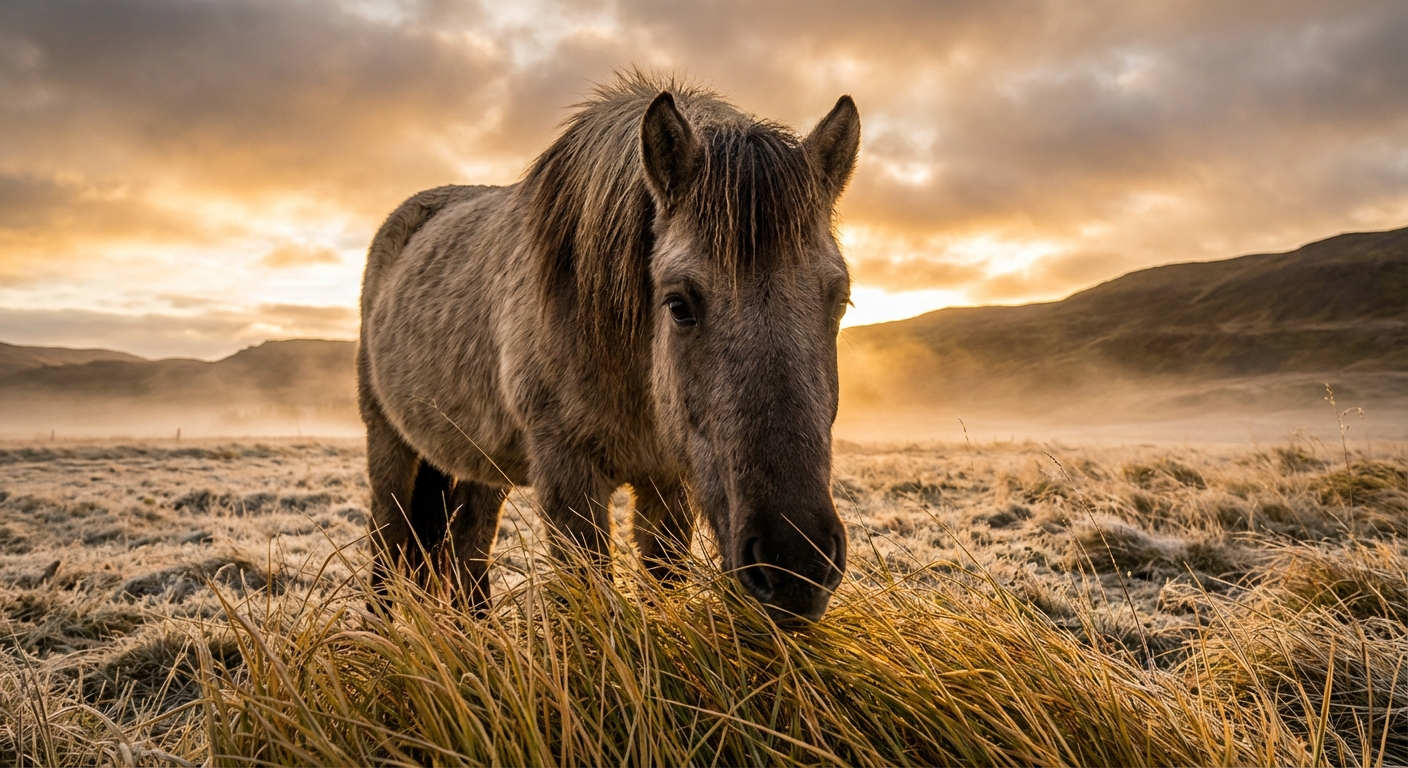
I recall standing at a pasture's edge where nothing "dramatic" unfolded. No panic. No audible suffering. Simply a horse selecting stillness over motion more frequently, seeking solitude and then returning to companionship, as though gauging what the body might still accommodate. The human intellect craves a definitive choice. Nature delivers something far less tidy: an unfolding.
The Control Reflex
Much of contemporary welfare thinking rests upon a straightforward moral calculus: suffering is unacceptable, ease is desirable—full stop. This stems from genuine compassion, yet it can narrow into a kind of myopia. Nature does not operate on the principle of perpetual comfort. It functions through adaptation, through difficulty, through bodies that learn amid conditions that are not always gentle.
This is not to elevate suffering as inherently meaningful. Rather, it suggests we cannot interpret every moment of hardship as a summons to intervene. When we insert ourselves at every turn, we risk stripping the horse of its own essential nature—particularly as life draws to a close, when the body is engaged in what bodies have always done: winding down by degrees.
The opposite of intervention is not abandonment. It is a different orientation: faith. Not assuming the role of architect for a pristine, controlled conclusion, but creating space for the horse's own cadence—while remaining attentive enough to perceive what the horse is genuinely electing. We humans face this same tension in our own lives: the impulse to manage every discomfort often blinds us to the wisdom that emerges when we allow difficulty its natural course.
What the Herd Makes Possible
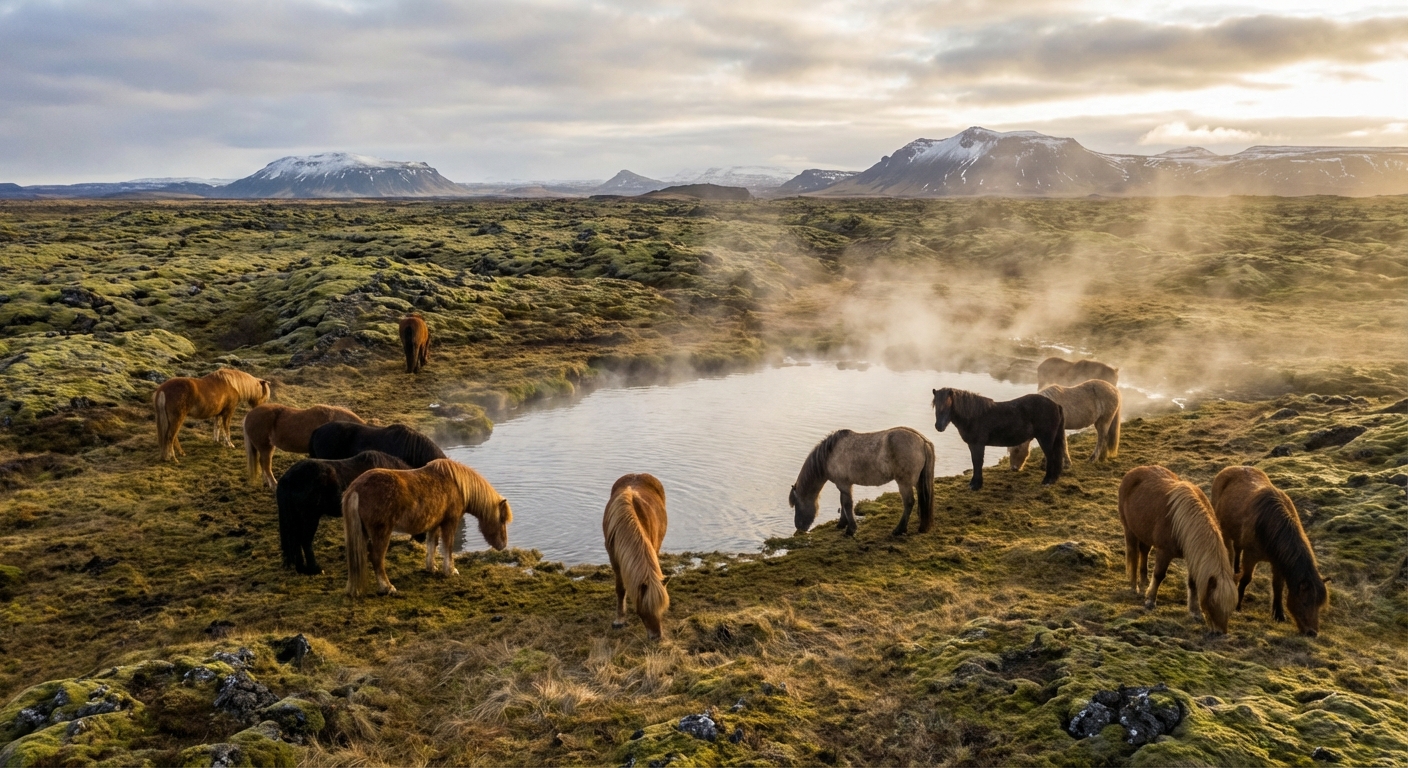
Part of why "natural death" carries such weight in domesticated contexts is that many horses already exist far removed from the circumstances that render dying less isolating and less terrifying. Social architecture is not mere ornamentation; it constitutes a form of care in itself.
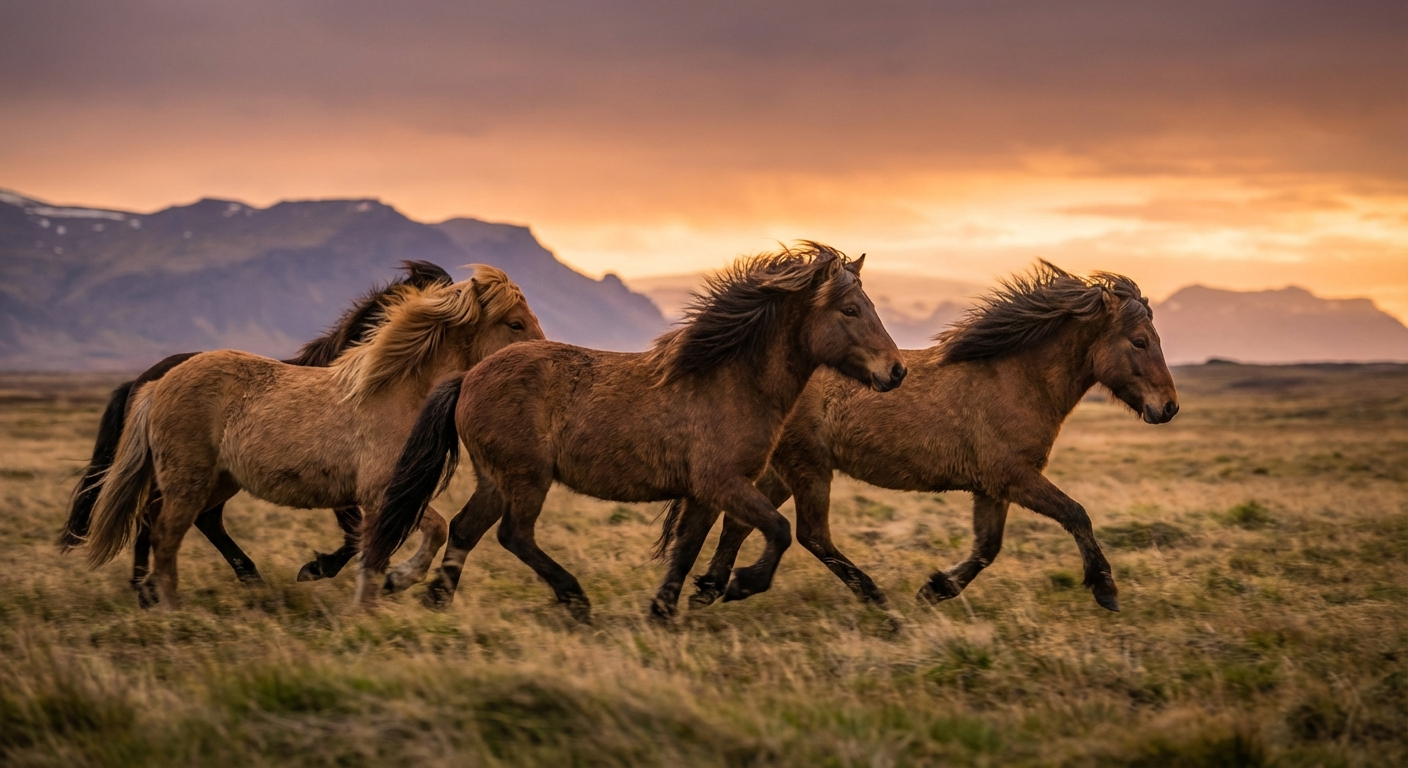
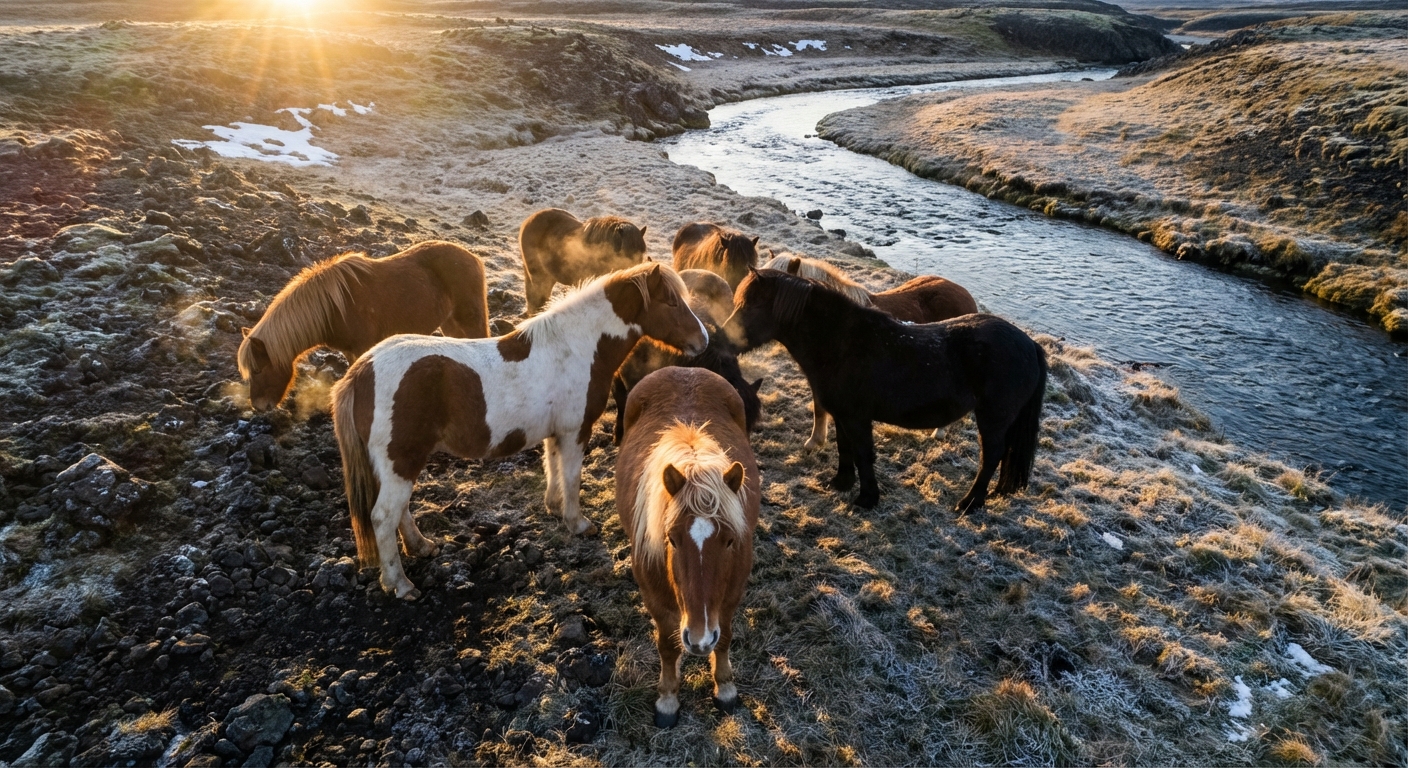
Within a cohesive group, harmony is frequently preserved through established bonds rather than perpetual confrontation. Deference may shift according to situation and need, not according to fixed hierarchy. Leadership in movement can pass between individuals as context demands. These nuances become crucial at life's end, because a horse is never merely an isolated body—it is also a social creature attuned to its companions.
When we observe an aging or fading horse solely through the clinical lens of symptoms, we overlook how much the herd itself can sustain: the quiet shelter of presence, the freedom to rest without harassment, the unspoken choreography that spares a fragile member from navigating every challenge in solitude.
Here is where the human fixation on "dominance" inflicts damage, even unintentionally. If we assume that tranquility emerges only from hierarchical enforcement, we may fail to recognize what the group is already accomplishing: creating room, modulating closeness, permitting a gentler rhythm without treating it as emergency. Our own communities might flourish similarly if we trusted the organic accommodations people make for one another, rather than imposing rigid structures of control.
Neutral Nature at the End of Life
Neutral nature is not some idealized vision of untamed wilderness. It is the discipline of retreating from the compulsion to orchestrate every result, while still honoring the environment's significance. It invites us to cease regarding the horse as a project requiring perfection—even in the act of dying.
A horse's fundamental requirements do not vanish as the end approaches. Continuous grazing remains a grounding force; the digestive system was never built for prolonged emptiness. Movement—within whatever capacity remains—continues to be part of how the body recognizes itself. The freedom to exist outdoors, to select sunlight or shade, to self-regulate through modest decisions, can distinguish a day that feels endurable from one that feels like imprisonment.
There exists also the paradox of protection: our endeavors to shield horses can sometimes manufacture a more fragile, diminished existence. As life concludes, this paradox takes on emotional weight. We wish to cushion every corner, erase every challenge, banish every uncertainty. Yet a life stripped of all adversity does not yield serenity; it yields fragility. For certain horses, the most dignified offering is not to engineer a "flawless" departure, but to preserve a familiar world and honor the horse's own tempo—especially when that tempo includes withdrawal, repose, and gradual release. We might ask ourselves whether our own fear of mortality drives us to sanitize endings that were never meant to be sanitized.
The Human Task: Presence Without Agenda
The most demanding aspect of embracing natural death is that it withholds from humans the consolation of one decisive gesture. It requires a different species of bravery: to remain present without converting every moment into action.
Presence without agenda manifests as attentiveness to what the horse pursues. Does the horse still elect to graze in brief intervals? Does the horse still gravitate toward the herd's periphery, or toward a specific companion? Does the horse still demonstrate interest in traveling with the group, even if the strides are fewer? These are not clinical metrics. They are evidence of whether the horse continues participating in its own existence.
It also requires reading what the surroundings communicate. Repetitive behaviors, for instance, are not arbitrary "vices" but signals that something in the arrangement conflicts with the horse's needs. In life's final chapter, the aim is not to remedy everything; it is to ensure we are not compounding strain through confinement, erratic feeding, or enforced isolation.
And occasionally, it demands accepting that we cannot choreograph a poetic narrative. Nature owes us nothing that conforms to our vision of a "beautiful death." Our responsibility is to remain truthful: to maintain a supportive world, to offer companionship when companionship is sought, to grant distance when distance is desired, and to resist the instinct to mistake control for the only expression of devotion. Perhaps this is the deepest lesson the dying horse offers us: that love sometimes means staying close while letting go of the outcome.
A Different Definition of Kindness
Kindness is conventionally understood as subtraction: subtract discomfort, subtract uncertainty, subtract danger. But coexistence proposes a more expansive understanding. Kindness can equally be permission—allowing the horse to retain its inclinations, its bonds, its small quotidian choices, until the body ceases choosing.
Understood this way, a natural-death philosophy is not an assertion that intervention is inherently misguided. It is a refusal to presume that intervention automatically represents the most honoring response. It is the readiness to perceive the horse as more than a constellation of problems awaiting solutions—especially at the very threshold. In this, the horse becomes our teacher: showing us that dignity at the end of any life may lie not in our ability to fix, but in our willingness to witness.
Equine Notion
https://equinenotion.com/