Loose Hair, Loud Information: Reading the Seasonal Coat Without Making It a Project
Loose Hair, Loud Information: Reading the Seasonal Coat Without Making It a Project
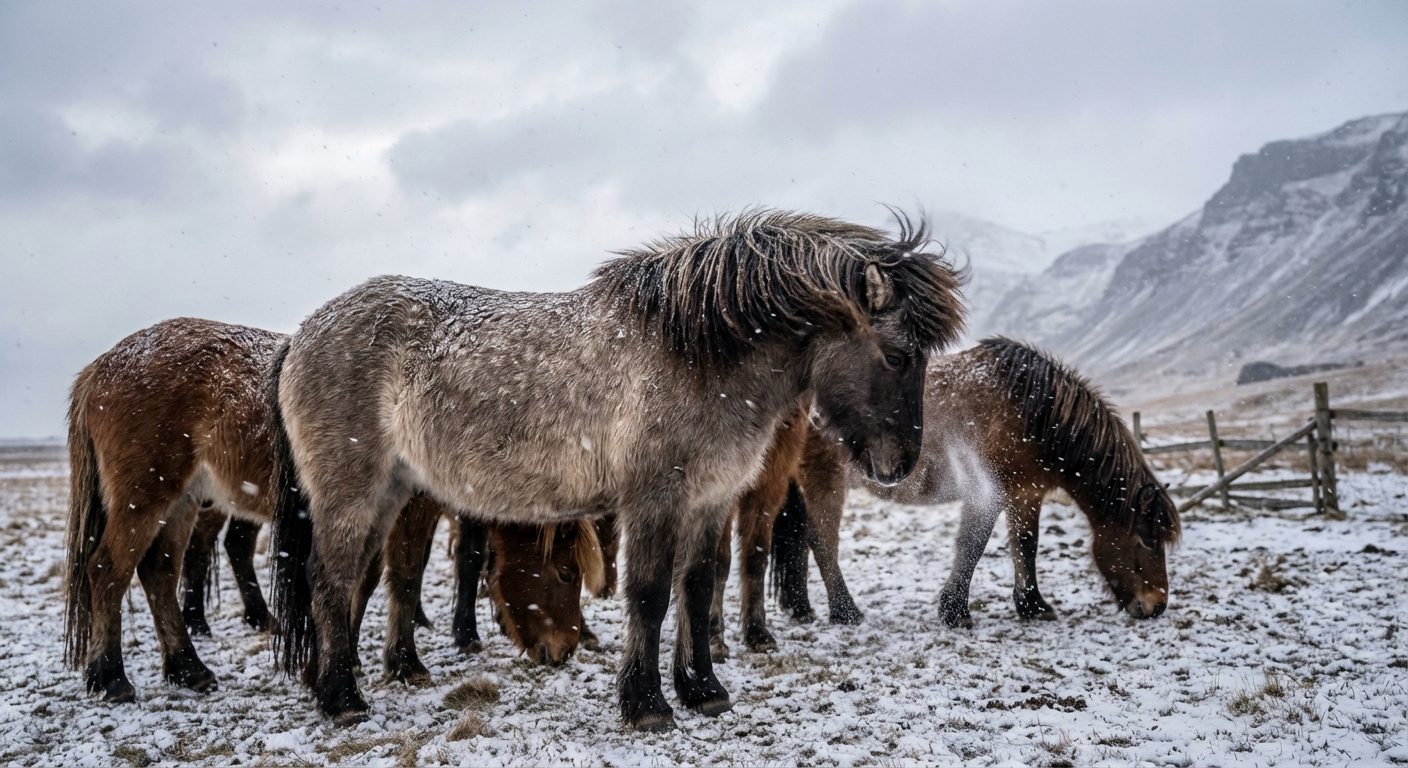
Each year, there arrives a week when the earth itself seems dusted with remnants—delicate strands caught in the impressions of hooves, drifting toward the rims of water troughs, gathering in those still corners where the breeze never reaches. The horse has made no grand declaration. No lameness, no eruption, no visible grievance. Only this gradual release of a winter covering, as though the entire pasture were quietly reconsidering itself.
One might be drawn to approach shedding as mere grooming work: a chore, a tidying, an opportunity to feel useful. Yet the transformation of the coat can also be understood as a kind of accounting—an exterior page revealing an interior season. Not a clinical finding, not a measure of success or failure, but something closer to a visible echo of how the horse has been existing as the world turns toward warmth. We, too, carry seasons within us that eventually surface—our bodies and spirits revealing what we have weathered, often before we find the words.
In the practice of living alongside horses, the most illuminating inquiry is not "How much hair is falling away?" but rather "What has this horse had access to while the body attempts to find its new equilibrium?" A life of consistent movement carries weight here—for the horse was never designed for stillness, and a body permitted to travel through its hours possesses a different quality than one confined to a narrow routine. The fundamental need to move is not an exercise regimen; it is simply the condition that prevents systems from growing stagnant. How often do we forget this truth in our own lives—that movement is not ambition but necessity, and that stillness imposed too long becomes its own quiet erosion?
The same principle applies to nourishment. The equine stomach does not pause its work simply because our schedules grow crowded. Acid continues its production, and when feeding ceases, an invisible timer begins its count in the background. Continuous access to forage is not a luxury; it is the unspoken requirement that allows the gut to remain a site of function rather than a site of harm. The coat cannot narrate the entire story, but it may be among the first surfaces where "interruptions" manifest as a certain flatness in the season's expression. Perhaps our own bodies speak similarly—our skin, our energy, our eyes betraying the gaps in care we thought no one would notice.
And then there is the matter of social terrain. Life within the herd is not a court with a single unchanging monarch; it is a web of relationships that shift according to who desires what and when. When the group exists in equilibrium—when distance, access, and agency remain negotiable—the horse expends less vitality managing friction and more vitality simply inhabiting its nature. We might recognize this economy in our own communities: how peace is not the absence of difference, but the presence of enough space for each being to remain whole.
And so the loose hair transforms from a nuisance to be conquered into an invitation: if the coat represents the visible passage, what unseen passage in stewardship is being called for in this very moment?
Equine Notion
https://equinenotion.com/