The Low, Even Voice: Calm Reassurance as Coexistence, Not Control

Hook
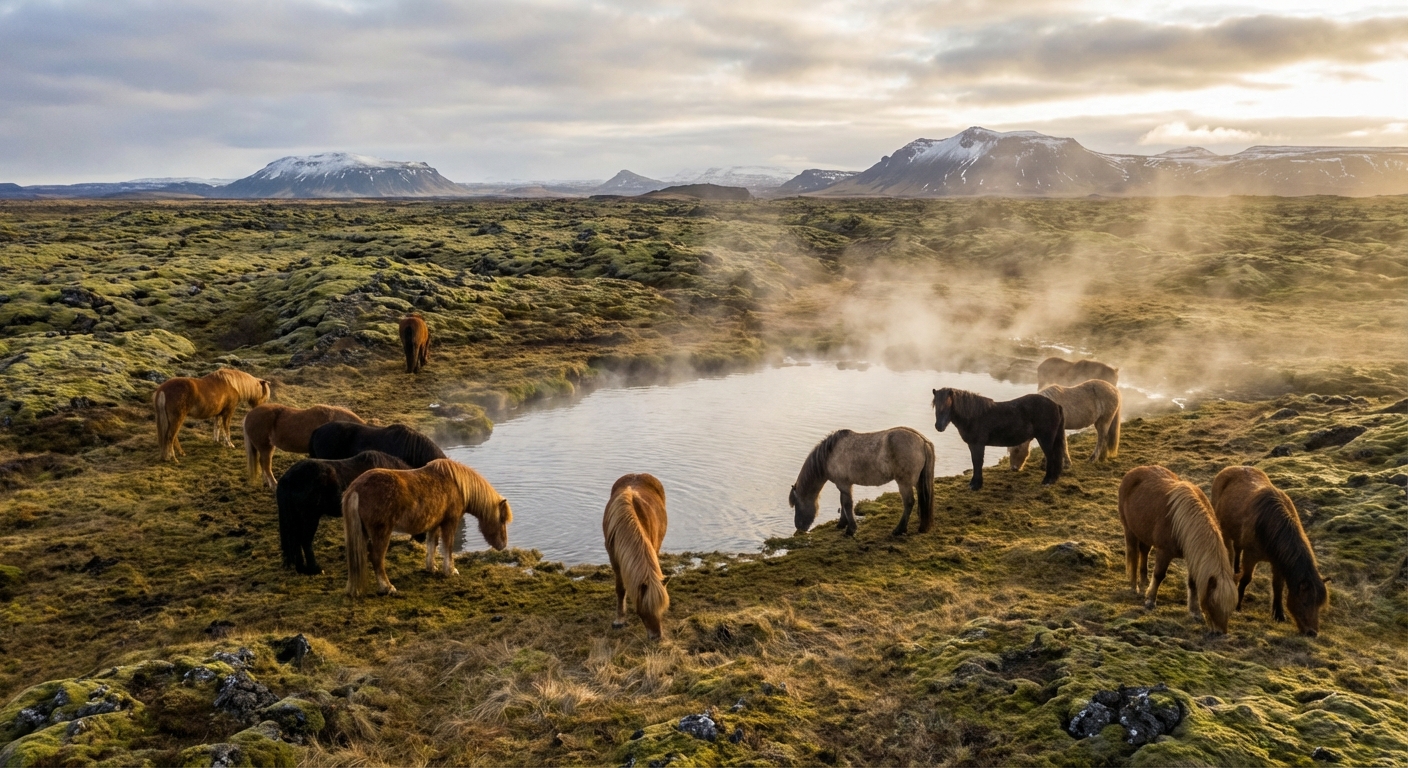
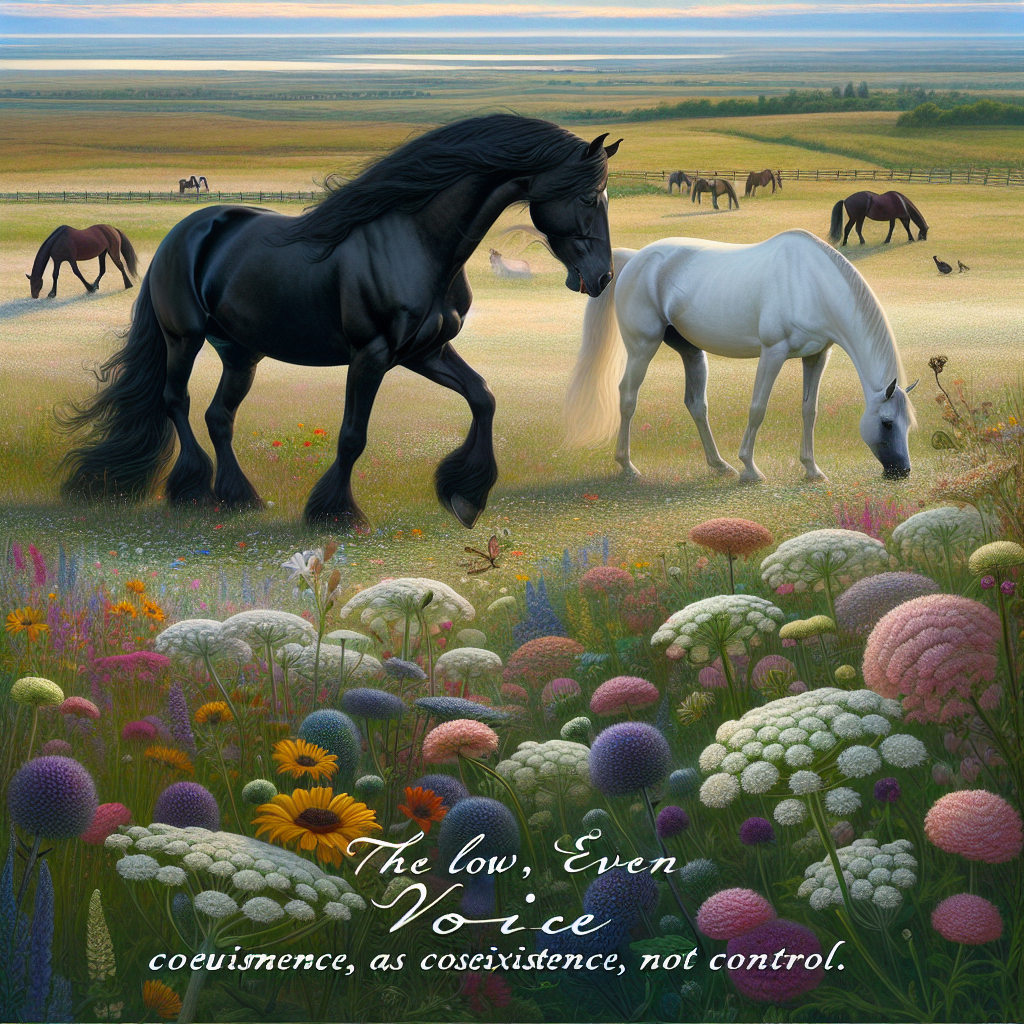
On a particular afternoon, nothing special occurred—and that was precisely the intention. Several horses had scattered across the space, heads lowered, wandering between hay piles and various plants that drew their interest. A pair stood near enough to breathe the same air without making contact. One more moved off when the proximity grew uncomfortable, no vocalizations, no tension. I was present as well, not to accomplish anything, but to exist as part of the surroundings.
When I vocalized, I maintained a quiet, steady quality. No louder than the atmosphere itself. Not cheerful, not abrupt. The sound was subtle—resembling a shift in weather rather than a demand. The group didn't activate. No one became suddenly alert. They merely continued their existing activities, and that uninterrupted flow was the most evident indicator of comfort.
1) Reassurance isn't a cue—it's a background condition
In a collaborative equine existence without riding or instruction, a gentle voice proves most valuable when it isn't wielded as an instrument to "cause" outcomes. Horses already coordinate themselves through subtle negotiations: a head movement, a minor shift in posture, a step that creates room without declaring itself. When a person arrives with a bold, pointed tone, it can feel like a disruption.
A comforting voice serves a different purpose. It remains in the background as a constant signal of reliability. It communicates: nothing pressing is being added. This matters because herd existence is constructed on minor modifications rather than dramatic occurrences. When your tone remains steady, it integrates into the environment—like a breeze through branches—instead of a stimulus that compels a reaction.
2) Matching the herd's "volume": why evenness matters more than words
Horses have no requirement for our language. In a cohabitation arrangement, what frequently counts is whether we introduce stress to the area. A voice that jumps—elevated pitch, quickened pace, abrupt outbursts—can generate the same type of pressure that a rushed entrance might produce.
A consistent tone, employed minimally, functions more like a gentle boundary around your being. It can assist you in navigating communal zones—around hay, water, or tight passages—without causing the area to feel competitive. Not because the horses "comply" with it, but because it doesn't interfere with their own subtle method of managing closeness.
When two horses are relaxing beside each other, the situation already reveals something about ease and preference. Your voice can honor that by remaining uncomplicated. Gentle reassurance is less about "communicating with the horse" and more about preventing your human presence from becoming the dominant element in the group.
3) Voice and space: how tone supports the small step-aside moments
Group friction frequently dissipates before it intensifies. You'll observe it in subtle movements: one horse rotates an ear, another adjusts their body position, someone exits the pathway. These aren't setbacks; they are resolutions.
A peaceful voice combines best with equally peaceful motion—particularly when you're moving through locations where horses might need to work out access. Consider the contrast between entering as though you possess the entryway versus appearing as a visitor who anticipates being accommodated. When your tone is stable, it can serve as an "I'm present" signal that requires nothing. That allows horses space to select their own courteous reactions: pause, defer, continue, or maintain their position without sensing confrontation.
In concrete terms, you may observe fewer sudden startles and fewer tight, defensive movements. Not because you've conditioned a response, but because your presence has become readable—and readability is soothing.
4) Reassurance during feeding life: calm voice in a foraging-oriented rhythm
When the setting accommodates natural grazing—no strict feeding-time intensity, availability of various hay types and even foraged vegetation—there's frequently less of that "everyone prepare for the surge" atmosphere. Horses can navigate eating and selecting in a more autonomous manner.
A peaceful voice complements this pattern. It's not a mealtime signal. It doesn't accelerate the process. It doesn't transform feeding into a heightened-awareness occasion.
When horses have the freedom to browse and select, they frequently appear less like a group anticipating a timetable and more like individuals pursuing their own requirements. Your voice, when employed at all, can merely indicate your arrival: a quiet comfort as you enter the area, stop, or move past. The objective isn't to control who feeds where. It's to prevent becoming an additional stress factor within an already operational structure.
5) "No permanent boss": what calm tone communicates about status
People frequently attempt to reduce herd dynamics to a singular narrative: who commands, who "rules," who serves as "the alpha." Yet in actual groups, who defers can shift based on who's participating and which resource is at stake. A single horse might move aside in one instance and maintain their spot in another. Circumstances are significant.
A peaceful, undemanding voice reinforces that truth because it doesn't attempt to establish a rigid social hierarchy through human dominance. It sidesteps the emotional stance of: "I'm the one making decisions." Rather, it expresses: "I can navigate this area without compelling the group to rearrange themselves around me."
That represents a more profound form of comfort—particularly for horses who favor separation, or for those who manage access thoughtfully. Your tone can signal that you aren't joining the herd as a rival.
6) The simplest practice: speak less, soften more
Gentle reassurance isn't perpetual chatter. It's self-control. It's selecting fewer utterances and allowing the tone to carry the message.
When you dedicate time to pure observation—who settles near whom, who trails peacefully, who permits another to pass at hay or water—you begin to recognize how infrequently horses require major signals. The group typically resolves matters early, silently, and with notable efficiency. Your voice can embrace that same efficiency.
A quiet, steady tone—employed as a soft indicator of presence, not a mechanism—can integrate into a shared existence that demands nothing from the horse. It doesn't supplant their social communication. It honors it.
Equine Notion
https://equinenotion.com/