The Low Note Between Us: Reading the Nicker as a Relationship Signal, Not a Summons

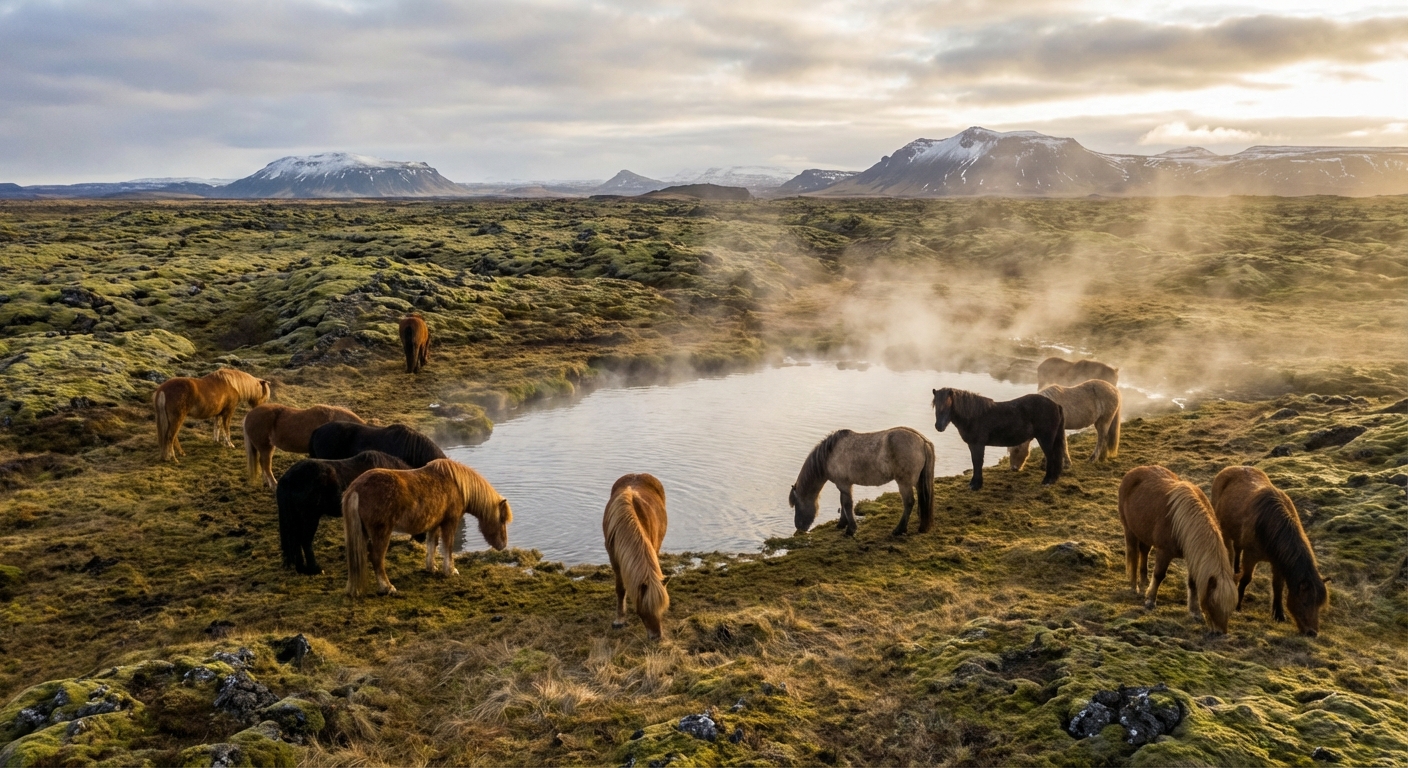
The Low Note Between Us: Reading the Nicker as a Relationship Signal, Not a Summons
What significance emerges when the quietest utterance carries the greatest social meaning?
When sharing space with others, our attention gravitates first toward the conspicuous—the percussion of hooves, the clatter of barriers, a sharp cry disputing territory. Yet the most profound exchanges in equine life are often the most subdued. A soft, bonding nicker arrives like a filament cast tenderly across the gap between beings: absent of theatrics, free of warning, not necessarily pressing—merely a gentle affirmation that the other holds value.
When we dwell among horses without transforming each encounter into an objective, that vocalization reveals itself more clearly for what it truly is: a relational gesture. Not a lever we pull. Not a prompt we deploy. A hushed social inquiry that wonders, in its own tongue, "Do you remain—and do we still belong to one another?"
The Nicker as Social Maintenance
Equines do not sustain communal harmony through perpetual conflict. Their tranquility emerges from continuous, effortless recalibration—minute shifts that dissolve tensions before they can take root. Within this framework, a gentle nicker functions less as a petition and more as upkeep.
Its affiliative nature stems from its residence in the "us" territory: that realm where nearness is welcomed, where drawing close is sanctioned, where days unfold more gracefully because no one must relitigate familiar ground. Its low register is not merely acoustic but tonal—rooted, unpretentious, impossible to counterfeit.
Critically, this sound tends to emerge when circumstances nurture authentic social existence: sufficient space to elect solitude, adequate consistency to unwind, enough permanence that bonds can genuinely develop rather than perpetually dissolve and reform. In our own lives, we might ask whether we have cultivated the conditions that allow our gentlest communications to flourish—or whether we have built environments where only the loudest signals survive.
When Humans Accidentally Turn It Into a Doorbell
A care routine can condition the caretaker as thoroughly as it conditions the horse.
When nourishment arrives in isolated episodes, when fellowship is disrupted, when locomotion is restricted, equine expression begins to revolve around deprivation and discontinuity. With gastric acids perpetually at work in the background, intervals without roughage are not benign; they exact a toll. The moment grazing ceases, the countdown commences. Under such circumstances, any vocalization—a nicker included—can be drawn toward desperation because the organism has internalized that absences carry weight.
We then misconstrue the relational thread as a service appeal.
We perceive a quiet salutation and respond with intervention: bringing something, relocating something, remedying something, stepping in. We transform into the provider of reprieve, and the horse discovers that the subtlest sound can be redirected into an instrument for managing the person. This arises not from cunning—but from accommodation.
Shared existence demands an alternative response: neither dismissing nor appeasing, but examining what we have constructed. When a nicker consistently precedes a husbandry event, it may have fused with human timetables rather than equine social reality. How often do we, too, reshape our authentic expressions into transactions because our environments have taught us that connection must serve a function?
Trust, Not Control: Letting Meaning Stay Meaningful
A welfare paradox exists that masquerades as kindness: suffering is undesirable, ease is desirable, therefore eliminate every difficulty.
Yet an existence engineered to erase all resistance can cultivate brittleness. Trusting in nature's neutrality—honoring the horse's inherent architecture rather than attempting to fabricate an immaculate enclosure—does not constitute abandonment. It means suppressing the impulse to supplant every signal with administration.
A soft nicker represents one such signal we are inclined to "resolve" too hastily.
Often the most honoring reply is simply to remain constant and legible. Horses reflect our own interior states; they attune to forbearance, to cadence, to the quality of presence that resists converting connection into commerce. When we answer a greeting with immediate extraction—bridling, dividing, "accomplishing"—we demonstrate that intimacy bears a price.
When we answer it with serene continuity, we demonstrate that intimacy is sanctuary.
Within the herd, "who defers to whom" fluctuates with circumstance and commodity. No single permanent sovereign exists, and authority can transfer depending on situation. A gentle affiliative call can inhabit that supple reality: one horse acknowledging another, not delivering a directive—one relationship confirming itself without requiring escalation.
People can integrate into that social terrain without compressing it. Not as the arbiter of results, but as a dependable neighbor. Perhaps this is the deeper teaching: that our human relationships, too, might flourish if we could learn to be present without presiding.
Management That Protects the Soft Signal
To preserve the nicker from being consumed by desperation, the surroundings must cease generating desperation.
Uninterrupted access to forage becomes foundational, not indulgent. The human function evolves from "providing meals" to guaranteeing sustenance remains perpetually accessible. This matters not solely for digestion, but for the emotional atmosphere of each day. When grazing flows without interruption, the horse possesses less cause to convert every exchange into anticipation.
Locomotion holds equal importance. Horses are engineered for daily distances; the fundamental range of movement constitutes not an "exercise session" but an ordinary day. When they can traverse as their bodies intend, they possess additional channels for self-regulation—diminished pressure to freight every social contact with intensity.
Then there is communal architecture: enduring relationships, latitude to withdraw, latitude to return. When we perpetually reorganize, disrupt, or sequester, we compel horses to expend energy reconstructing security. Under those conditions, even tender vocalizations can calcify into alertness.
Lastly, recognize that stereotypic behavior serves as an environmental barometer. When repetitive patterns manifest, they convey information about the system—not evidence of a defective horse. As circumstances improve, the horse frequently requires less recourse to repetition for relief, and subtler modes of communication can resurface.
Stated simply: safeguard the conditions that permit a quiet note to remain quiet. We might examine our own lives through this lens—asking whether the systems we inhabit allow our softest truths to be spoken, or whether they have trained us to communicate only through urgency.
The Coexistence Test: Can We Receive Without Taking Over?
A salutation does not automatically constitute an obligation.
In stable culture, we have grown accustomed to converting every interaction into administration: inspect, modify, correct, relocate. Yet a horse's gentle nicker can represent a precious invitation to merely coexist without demanding obedience. It serves as a reminder that relationship can justify itself.
When we allow that sound to arrive without instantly transmuting it into a duty, we restore to the horse a fragment of its essential nature: the capacity to reach out without being charged for it. And in doing so, we might rediscover something in ourselves—the forgotten art of receiving another's presence as gift rather than obligation, of letting connection exist for its own quiet sake.
Equine Notion
https://equinenotion.com/