Mist-First Mornings: Letting Dawn Set the Pace of Coexistence

Hook
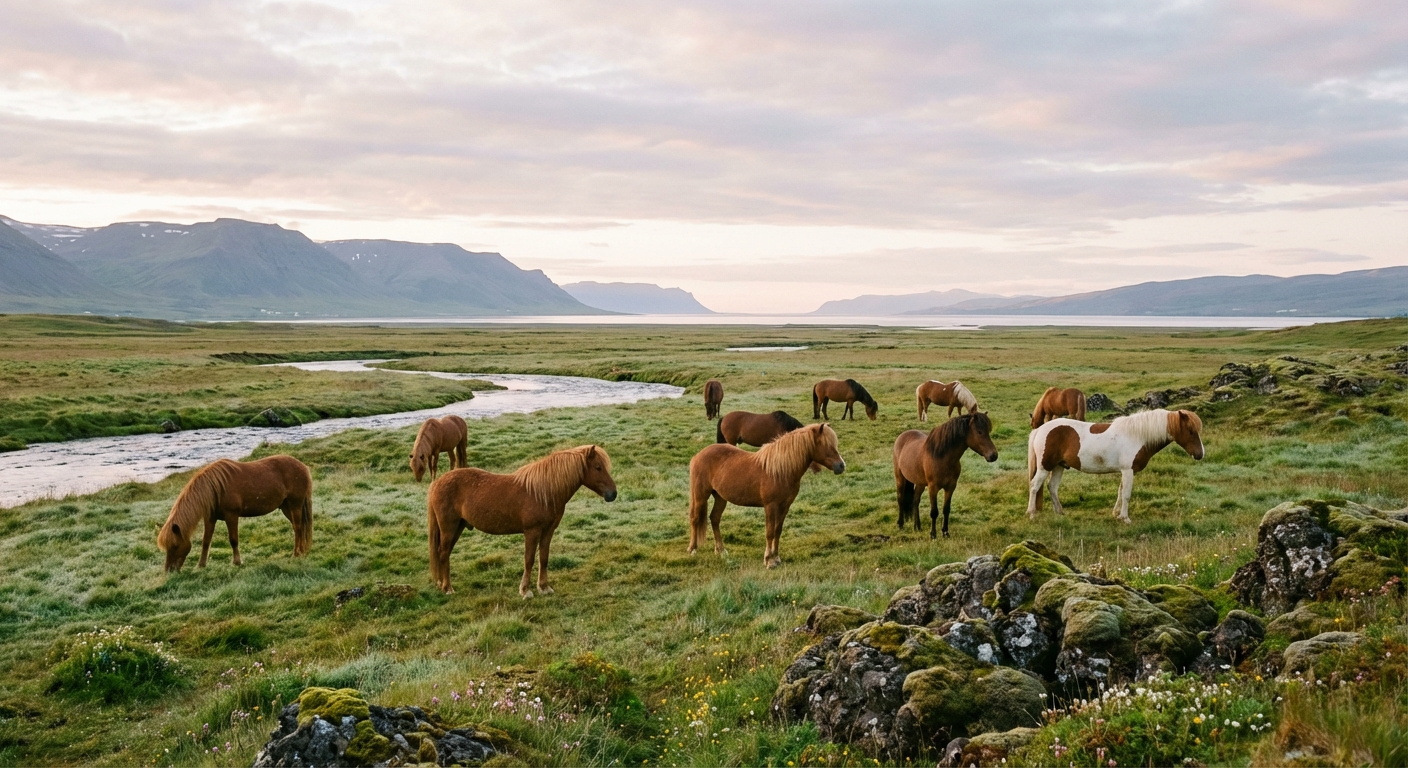
At first light, the pasture seems to dissolve into boundlessness.
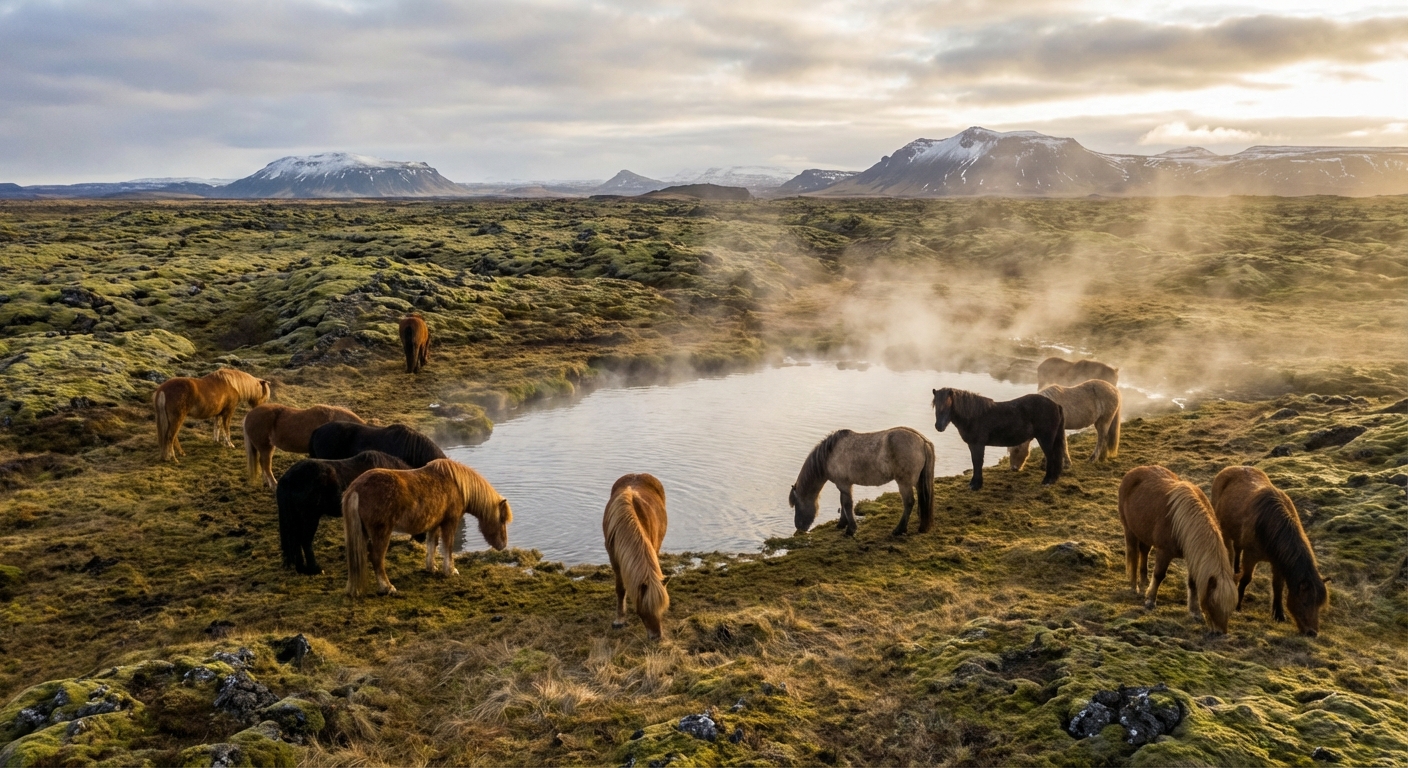
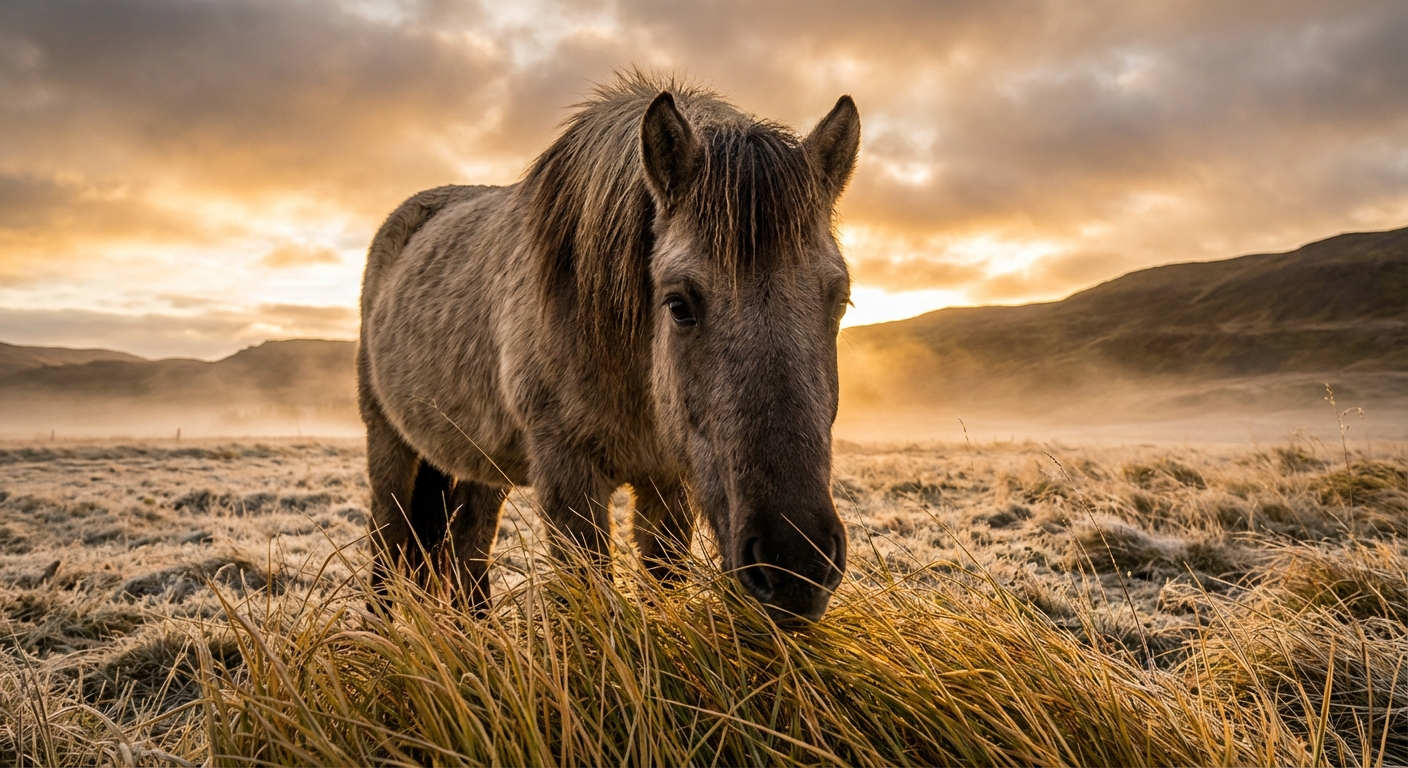
The mist hovers close to the earth, blurring every boundary that appears so certain under the midday sun. In that hushed hour, the horses do not appear to be "beginning their day" because some external measure demands it. They simply commence—gently, without fanfare—by drifting through whatever terrain lies open before them, allowing their internal clock to guide each step.
This is where the essence of living alongside another species reveals itself most clearly: not in our actions, but in what we cease to demand.
Perhaps we too might find greater peace if we released our grip on the schedules we impose upon ourselves and others.
1) Dawn mist as a reminder: the world is bigger than our schedule
In most conventional arrangements, a horse's morning is predetermined: their permitted standing area, their allotted space, and the precise moment sustenance appears. Our situation, however, diverges entirely. The horses roam freely across nearly all our acreage, and there is an ironic twist in realizing that we appear to be the "confined" ones—enclosed in a modest perimeter around our dwelling, while they inhabit the vast expanse beyond.
Through the morning haze, this contrast takes on an almost gentle quality. Our enclosure remains visible, yet unimposing. The boundlessness surrounding them is what truly matters.
If daybreak carries any wisdom, it is this: when the landscape offers abundance, horses require no human intervention to fashion their morning. They possess one already.
How often do we forget that the world continues its rhythms without our orchestration—and that stepping back might be the most generous thing we can offer?
2) Timing without a bell: how mornings unfold when feeding isn't a fixed event
Meals are not dispensed on a rigid schedule here. Rather, I strive to nurture their innate foraging instincts as fully as circumstances allow.
What this means in practice is that morning is not characterized by anticipation of a human bearing a pail. Instead, it unfolds through countless small decisions that emerge whenever the horses feel ready to begin. Within the mist, these movements may appear languid—resembling wandering more than purposeful action. Yet this apparent gentleness deceives; much is transpiring beneath the surface.
When horses can access various types of hay alongside wild-growing herbs, their earliest motions become acts of discernment rather than expectation. The day need not commence with longing. It can commence with choice.
For any person learning to share space with horses—without mounting, without instruction, without ulterior purpose—this distinction carries weight. It transforms the meaning of our presence. We are no longer the bell that signals commencement.
In our own lives, how might we shift from being driven by anticipation to being guided by authentic preference?
3) A landscape that feeds back: diverse hay and wild herbs as dawn decisions
A fog-laden morning obscures fine details, yet paradoxically makes broader patterns more apparent.
When several varieties of hay are scattered about, complemented by wild herbs, the horses can select—through pure instinct—precisely what their bodies require. This approach is not about our accurate predictions or meticulously crafted feeding plans. It concerns creating conditions where the horse's inherent wisdom can emerge and express itself.
Daybreak is when the serene assurance of this arrangement becomes most evident to me. Not because the horses demonstrate some observable strategy, but because no single food source must bear the entire weight of nourishment. The environment presents possibilities, and the horses navigate among them.
In the fog, their heads vanish and resurface like vessels on a quiet sea. They seek no authorization to fulfill their needs. They simply persist, and the morning transforms into a chain of intimate, embodied selections: this place, not that one; this offering, not another.
This form of coexistence demands no explanation or justification. It demands only that we create opportunity—and then withdraw our interference.
True support, whether for horses or for the humans in our lives, often means providing resources and then trusting others to know what they need.
4) The human as a quiet neighbor: learning from the inside of the fence
Having enclosed a modest zone for ourselves adjacent to the house, an unusual shift in viewpoint accompanies each dawn.
From within our boundary, we observe the horses claiming what most would term "the land." Yet in that hour, the land does not feel possessed. It feels inhabited.
This reversal alters something in a person's bearing. It becomes more difficult to think through the lens of dominion, and more natural to think in terms of being neighbors. We are not entering their existence as the central figure; we are occupying our own modest corner while their world expands around us.
In the mist, the horses may or may not draw near. Regardless, the aim is not to attract them. The aim is to allow closeness to occur—or not occur—without transforming it into a summons.
Forgoing riding and training eliminates most conventional reasons to approach a horse at daybreak. What remains is more elemental: witnessing, attending, and permitting their morning to stay wholly their own.
We might discover that our most meaningful relationships flourish when we release the need to be central to another's experience.
5) What "activity" can mean in the mist: not speed, but self-directed movement
There is a temptation to categorize a horse's morning as either energetic or still, as though no other possibilities exist. The mist of early morning dissolves such binary thinking.
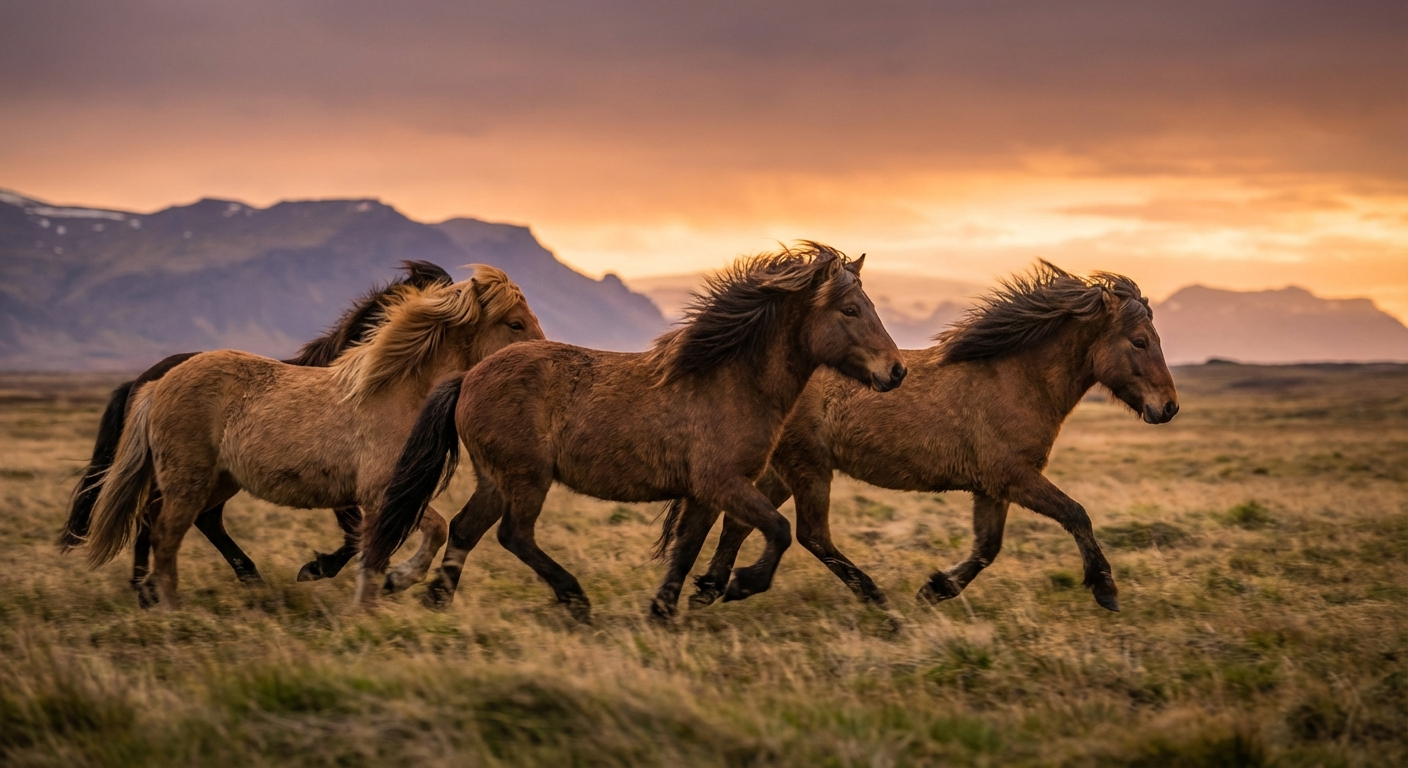
In an expansive setting, activity can manifest as leisurely transitions between nourishment sources. It can appear as deliberation, reconsideration, return, and stillness. It can resemble a horse composing their own tempo rather than being fitted into ours.
When meals arrive without a predetermined hour, one recognizes that the day requires no abrupt starting signal. It can emerge as a gentle unraveling.
This gradual emergence holds significance for human coexistence because it makes a demand of us: patience untethered from anticipation. For those accustomed to "performing horse activities" upon horses—managing, steering, scheduling—these fog-shrouded dawns may seem uncomfortably silent.
Yet that silence is not vacancy. It is a horse granted permission to exist as a horse.
In our own lives, we might ask what becomes possible when we measure our days not by productivity, but by the quality of our self-directed presence.
6) A different kind of intimacy: sharing dawn without making it productive
A particular kind of nearness emerges when desire falls away.
In the mist, the horses may linger close enough to hear, yet remain not "alongside" you in the conventional sense. They await no assignment. They undergo no preparation for an assignment. They are merely existing, choosing among the hay and wild herbs at hand, and traversing the terrain we have substantially opened to their wandering.
Here is where the human dimension of shared existence becomes a discipline: allowing the dawn to remain unproductive.
If we can remain within our small enclosed area and accept that the horses' morning does not revolve around us, then we accomplish something profound while appearing to accomplish nothing. We relinquish the habit of serving as timekeeper, initiator, the one who determines what follows.
And the horses answer—not with exhibition, but with the sustained tranquility of their own unfolding rhythm.
Perhaps the deepest intimacy we can offer anyone—human or animal—is the gift of our presence without agenda, our attention without expectation.
Equine Notion
https://equinenotion.com/