Night Watch Between Two Horses: Bedmates, Guard Duty, and the Trust We Didn’t Assign
The Bedmate Isn't Just "Company"
The first time I witnessed it, I felt a quiet undoing of my own expectations.
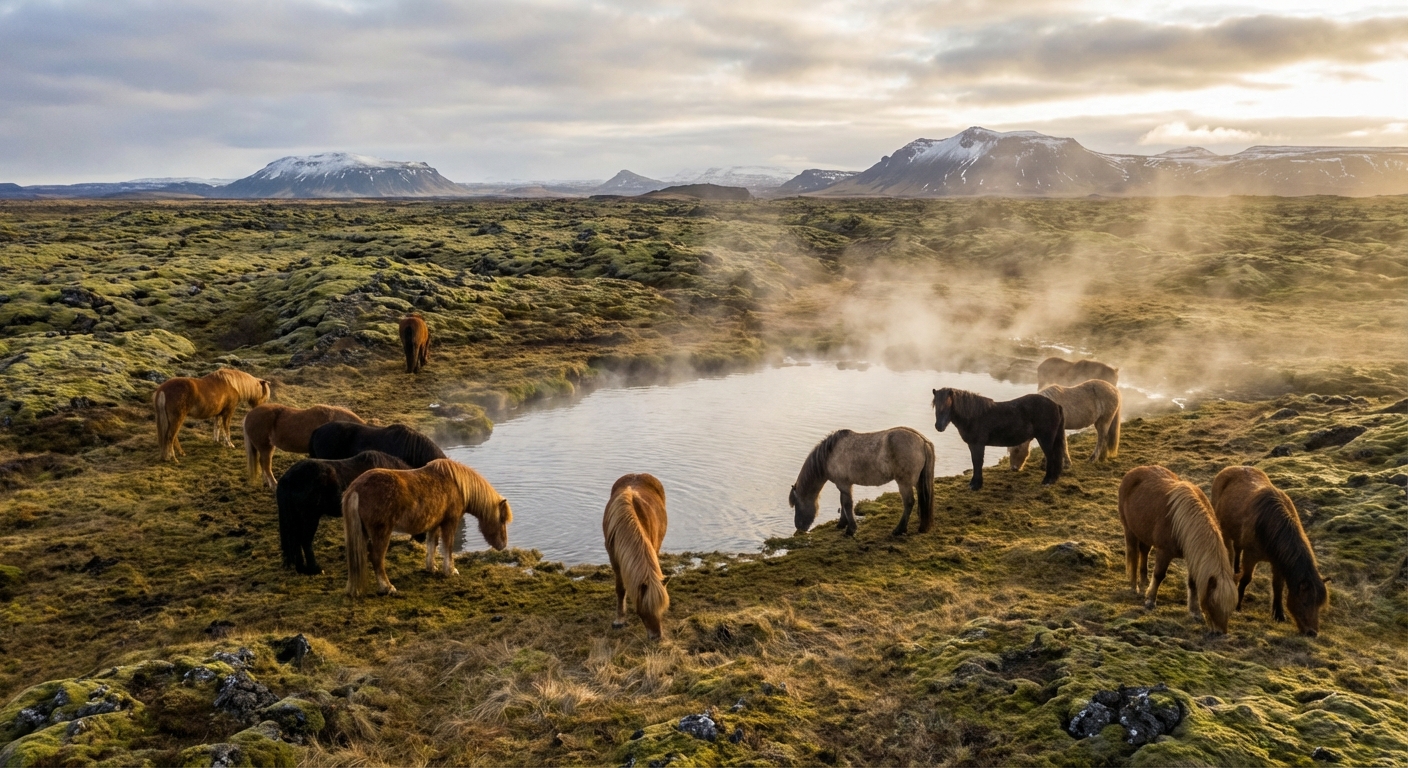
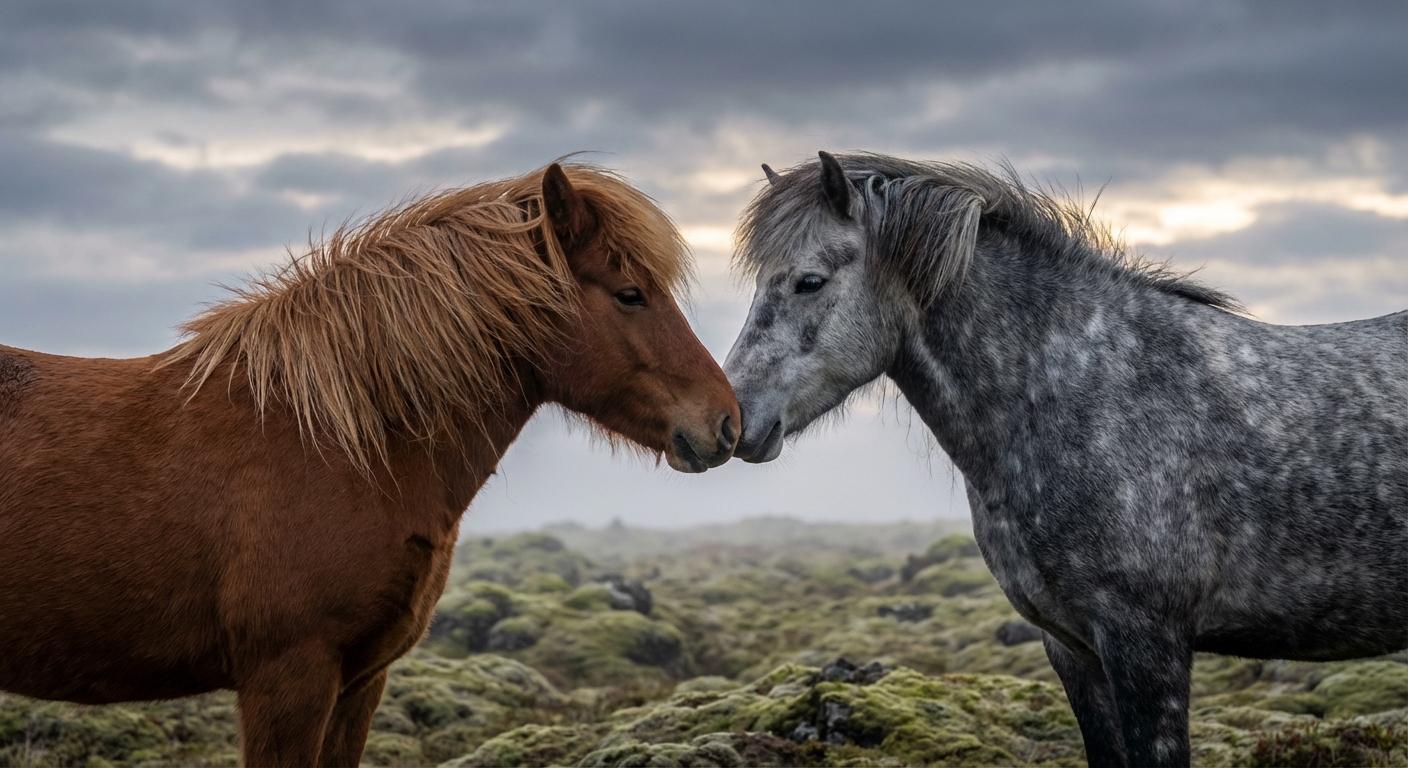
Two horses had claimed the same stretch of earth, positioned so near that their warmth and breath seemed woven into a single atmosphere. I anticipated balance: two forms at rest, two consciousnesses dimming in tandem. Yet the longer I observed, the more apparent it became that repose was not equally shared. One horse held their head aloft. One ear remained attuned to the world beyond. One hind leg never quite released its tension.
This was not anxiety. It appeared to be intention.
We speak of companionship as if it were merely a gentle inclination—who gravitates toward whom, who prefers whose presence. But the bedmate arrangement carries weightier implications. Rest exposes us. To lie down is to proclaim that the world feels secure enough—or secure enough because another is helping to render it so.
Here is where human perception often defaults to the simplest narrative: a rigid hierarchy, an unchanging leader, a dynamic that flows in one direction only. But what I repeatedly observe is far more nuanced. Around particular needs—territory, sustenance, sleep—different horses defer or assert themselves depending on their companion and the circumstances at hand. The same individual who yields in one moment may be the one who stands firm in the next.
Bedmates reveal this with uncommon intimacy. This is not a throne. It is a bond.
How often do we, too, assume that relationships must follow fixed scripts—that someone must always lead and another always follow? The horses remind us that true connection is fluid, responsive, and earned moment by moment.
Guard Duty as a Form of Care
When one horse maintains heightened awareness while the other descends into deeper slumber, it can resemble an assigned task. Yet "task" feels too mechanical. It is closer to an unspoken offering.
This also illuminates the paradox of protection embedded in our caretaking impulses.
We frequently construct lives where safety is manufactured through perpetual intervention—relocating horses, isolating them, managing every variable, acting before any uncertainty can register. Yet horses evolved in a world that demands they observe, adapt, endure, and continue forward. An existence devoid of challenge does not inevitably produce tranquility; it can cultivate brittleness. Within this framework, a vigilant bedmate is not a lapse in comfort. It is a living security apparatus that belongs to the herd, not to our orchestration.
The silent sentinel is not necessarily troubled. They are engaged.
And the horse surrendered to sleep is not "capitulating." They are accepting something that has been genuinely earned.
Perhaps our own lives would deepen if we understood care this way—not as control or constant rescue, but as the quiet gift of presence that allows another to finally let go.
What This Reveals About Trust (Including Ours)
What strikes me most profoundly is how absent force is from this equation.
No one commands another to relax. No one conditions a horse to maintain the watch. The relationship itself accomplishes everything. The arrangement persists through minute decisions—where hooves settle, how near a shoulder drifts, how much distance is permitted to vanish.
This is where lessons from the barn echo what generations of devoted horsemen and horsewomen have understood through patient observation: horses attune to our inner state. They perceive patience. They recognize cadence and tone. They forge connection through steadiness that radiates from within.
Yet bedmates also expose a subtler human tendency: the compulsion to become the central nervous system of the entire property.
At times we intervene so persistently that we obstruct the horse's inherent social wisdom from operating. We deprive them of the opportunity to be horses together—negotiating, adapting, settling, recalibrating. The alternative is not abandonment. It is trust enacted: creating space for equine nature to perform what it has always known.
Within the bedmate pair, trust clearly moves in multiple directions. The resting horse trusts the sentinel. The sentinel trusts the surroundings enough to remain composed without escalation. And both trust the relationship sufficiently to return to it again and again.
We might ask ourselves: in our human bonds, do we allow trust to flow both ways? Or do we insist on being the sole guardian, never permitting ourselves the vulnerability of rest?
Coexistence Without Making It a Project
So what becomes of this knowledge, if we are not riding, not training, not converting every realization into another methodology?
We might begin by recognizing how much equine flourishing is sustained through social fabric rather than mechanical systems.
Horses require movement and territory woven into their existence; they are designed for continuous roaming and grazing patterns, not prolonged immobility. They equally need the solace of authentic companionship—contact that is not an indulgence but a grounding force. When these foundations are present, bedmates and their delicate nocturnal choreography have room to emerge.
Then our responsibility becomes at once remarkably simple and remarkably demanding:
- Resist treating every vigilant moment as a dilemma requiring resolution.
- Resist compressing every relationship into a singular hierarchy.
- Resist presuming that the horse who remains more alert is always the same individual, or that alertness carries identical meaning across contexts.
- Resist intervening merely to confirm that you remain the architect of safety.
Grounded presence carries weight here. When we traverse their world with tranquil, lucid consistency, we transform into a dependable element of the landscape rather than an unpredictable force. Horses are not seeking a commander to govern the darkness. They are seeking constancy—something that communicates, in their language, that all is well.
And if we are truthful with ourselves, bedmates impart a humbling lesson: much of what we name "security" unfolds without our involvement. Not because horses lack needs, but because evolution equipped them to participate in their own flourishing—through motion, through foraging, through social architecture, through the small, capable agreements they forge when we cease rewriting their existence every hour.
Ultimately, I do not believe the sentinel sacrifices rest so much as they articulate devotion in the sole currency available to a horse: vigilance, positioning, preparedness, restraint. The other horse responds with the most profound tribute a prey animal's body can offer—sleep.
And our only true obligation is to honor the covenant by stepping aside.
In this, the horses become our teachers: that the deepest security often lies not in what we construct, but in what we have the wisdom to leave undisturbed.
Equine Notion
https://equinenotion.com/