No Holding Pattern: The Calm That Arrives When Horses Aren’t Made to Wait
No Holding Pattern: The Calm That Arrives When Horses Aren't Made to Wait
What if much of the tranquility we seek in horses isn't something we instill—but rather something that emerges naturally when we cease imposing stillness upon them?
The concept of waiting is a human construct. Queues. Barriers. Timetables. That sensation of being suspended while another determines when your life may resume. Perhaps we, too, know this restlessness more intimately than we care to admit—the quiet erosion that comes from being perpetually on hold.
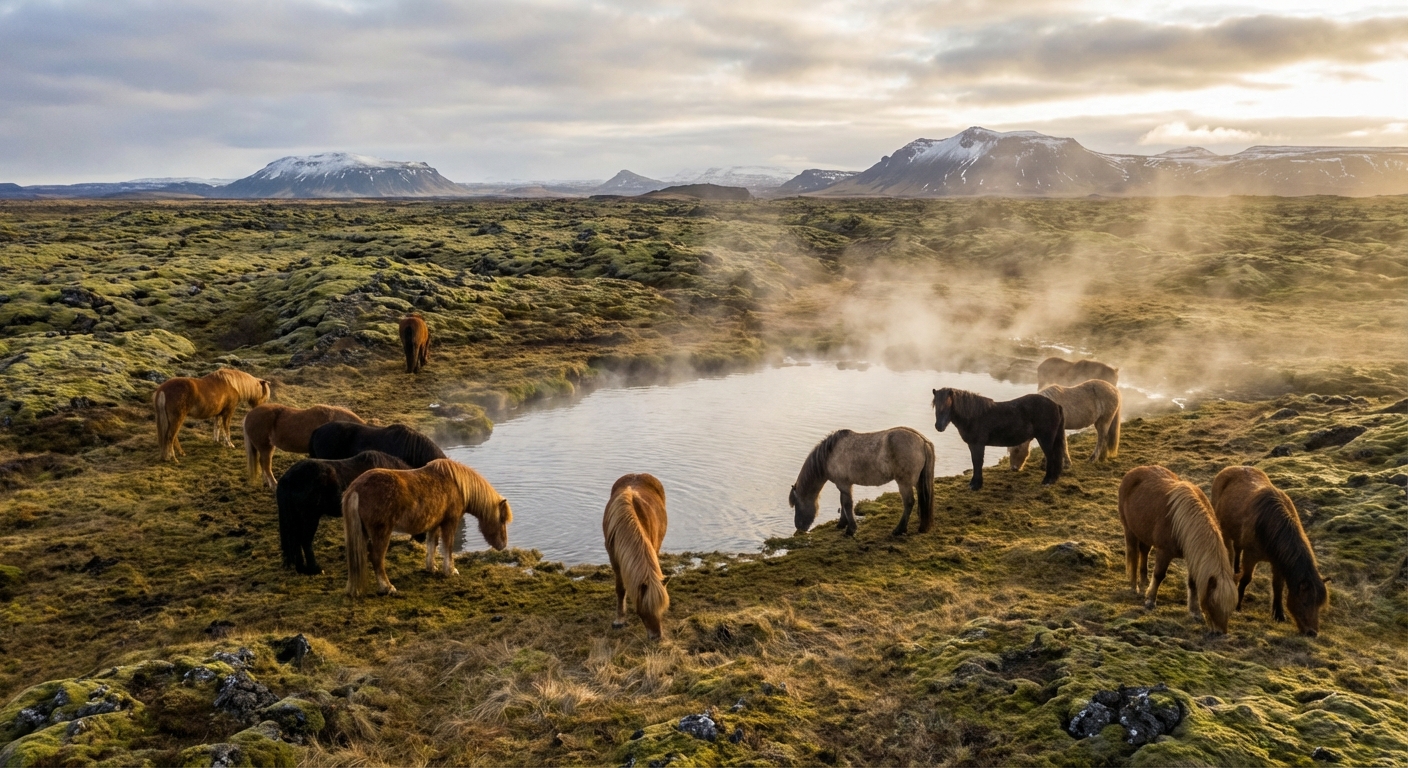
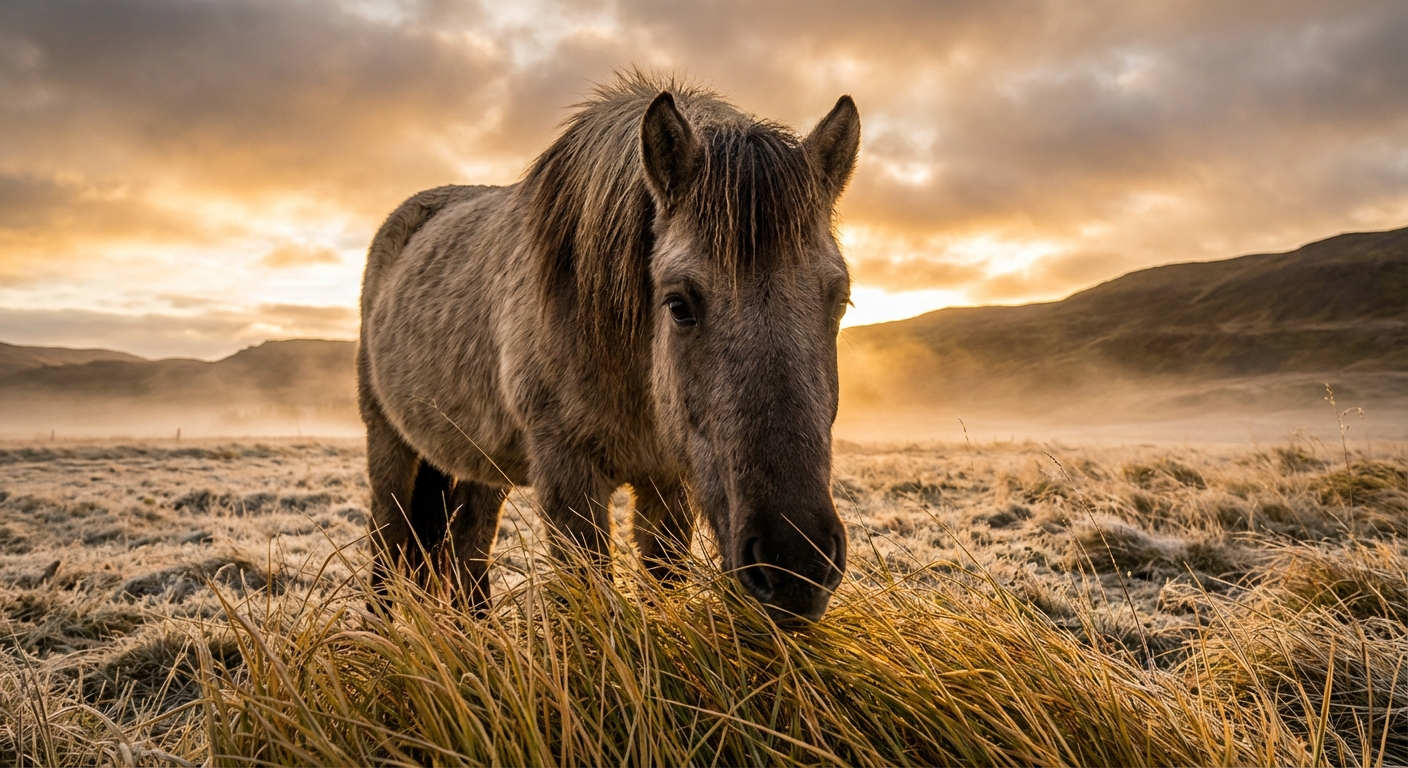
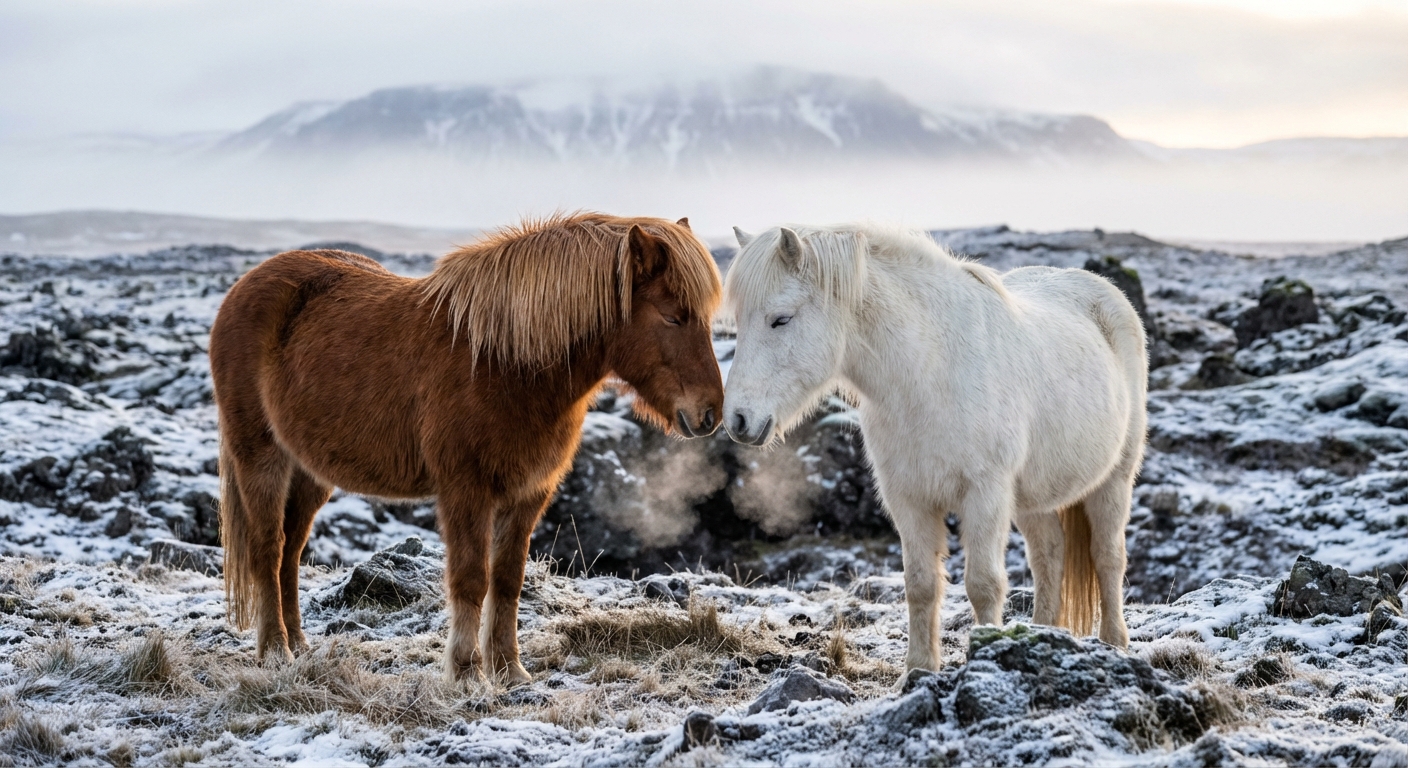
Out in the pasture, there is no signal marking the day's divisions. There is only drift. A mouthful here. Several unhurried steps. A longer amble. A pause that dissolves the moment it has served its purpose.
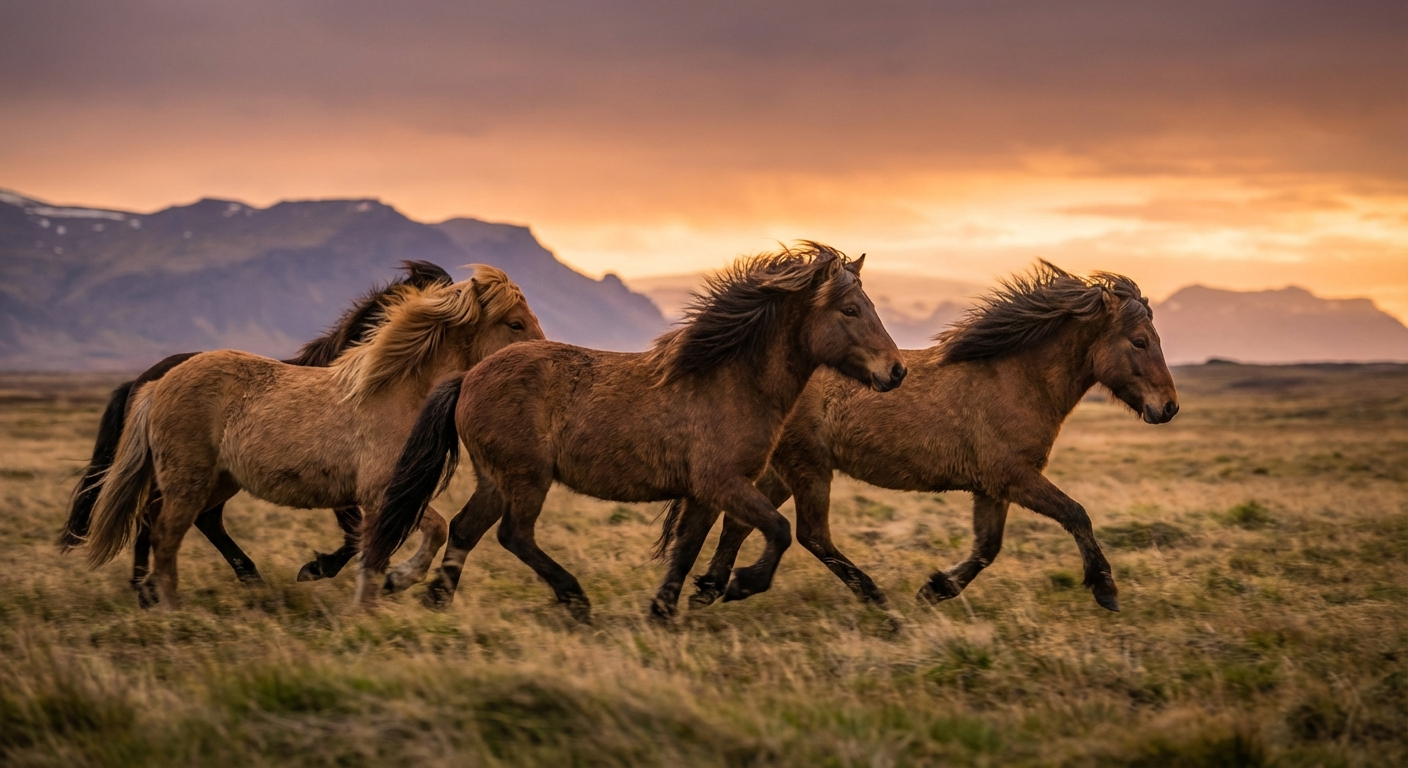
Horses are designed for movement as a constant undercurrent—an unremarkable rhythm that can carry them 15–30 kilometers daily when terrain, ground, and grazing permit. Not urgent. Not "training." Simply a body maintaining its dialogue with the earth beneath it. We might recognize something of ourselves here: the way our own bodies long to move without agenda, to wander rather than be directed.
When we impose waiting upon a horse, we fracture that dialogue into abrupt interruptions.
Remain here. Be still. Suspend that impulse.
The body may obey, but the nervous system refuses to quiet. A suppressed need does not dissolve; it finds alternative channels. The surroundings begin manifesting through repetitive behaviors—those stereotypic cycles that might appear as tedium, or as a nervous system desperately seeking release. How often do our own unmet needs surface as restlessness, as patterns we barely recognize as coping?
Yet eliminate the obstruction, and a transformation occurs.
Not an "acquired behavior." A restoration of flow.
Forage presents itself as a continuous offering rather than a scheduled occasion, and the digestive system need not steel itself against prolonged emptiness. Movement transforms from something deferred into something elected—a few steps toward the next grazing spot, a drift toward a companion, a gentle repositioning as the herd reorganizes around ease and availability. There is wisdom here for human lives: nourishment and motion need not be events we schedule, but rhythms we inhabit.
Even the social fabric loosens. Horses require no singular permanent authority to maintain harmony; the dance of yielding and asserting can shift fluidly with circumstance and need. When time is not artificially compressed, they can resolve minor tensions simply by stepping away before escalation occurs. We might learn from this—that many human conflicts intensify not from the disagreement itself, but from the artificial pressure of having to resolve everything immediately, in place, without room to breathe.
For those of us who share life with horses, coexistence might look like this: fewer orchestrated pauses, fewer enforced holds, fewer human-imposed "not yet" intervals—and greater space for the horse's innate tempo to fulfill its purpose.
Equine Notion
https://equinenotion.com/