Nose-to-Nose Without a Request: Letting a Horse’s Greeting Stay a Greeting

Hook
On a quiet morning, two horses converged at the boundary of the feeding ground.
There were no sharp calls. No displays of dominance.
They simply stopped, oriented themselves toward one another, and drew their noses near enough to exchange breath. Then one shifted a half-step to the side, and the other wandered away as though the entire encounter had been nothing more than a brief, wordless exchange of news.
When we witness such moments, there is a pull to replicate them—or worse, to codify them into method. Yet nose-to-nose contact carries its deepest meaning when it remains exactly what it is: a freely offered greeting that either party may end in an instant.
How often do we, too, long for encounters that ask nothing of us—meetings that are complete in themselves, requiring no performance or continuation?
1) A greeting is not a test
Within the life of a herd, so much is resolved without conflict. Horses rely on subtle decisions—their positioning, the angle of their stance, whether they hesitate—to maintain harmony.
A nose-to-nose exchange belongs to this same quiet category. It need not become an examination the horse must succeed at, nor a ceremony the human attempts to recreate on a timetable.
If our aim is to share space without riding or training, the most essential change is this: receive the greeting as information rather than treating it as an invitation to request something further.
When a horse draws near, the compassionate response is simply to remain present—without transforming proximity into expectation.
In our human relationships, too, we might ask ourselves: how often do we receive someone's openness as a gift complete in itself, rather than an opening we must exploit?
2) The most important part is the option to leave
A greeting can only be tranquil when either participant may conclude it without difficulty.
When you observe horses with attentiveness to their natural rhythms, you begin to notice how frequently the group dissolves small tensions through stepping away, averting the gaze, relaxing the body's angle, or selecting an alternate route. These are not dramatic gestures. They are subtle adjustments that render communal life sustainable.
When a horse extends nose-to-nose contact to a person, maintaining that same freedom of movement is essential. Avoid obstructing their path with your stance. Do not pursue the muzzle as it retreats. Allow the horse to take that half-step of departure.
By respecting that withdrawal, you preserve the integrity of the greeting.
We might recognize this principle in our own lives: the relationships we trust most are those where departure is never punished, where we are free to step back without consequence.
3) What the herd teaches us: closeness is selective
When you observe which horses rest beside which over the passage of days, you discover something invisible in moments of commotion: bonds reveal themselves through patterns of repeated choice.
Certain horses seek each other out time after time. They occupy shared space with ease. They may engage in mutual grooming. They may drift after one another without insistence.
A nose-to-nose greeting can exist within this same relational terrain—fleeting, peaceful, and entirely voluntary. It does not constitute evidence of fixed hierarchy, nor does it necessarily indicate a singular leader.
It is merely one of the ways horses acknowledge each other when the moment feels right.
To coexist gracefully means allowing our presence to be equally adaptable: sometimes intimate, sometimes peripheral, always legible.
Perhaps the deepest friendships in human life share this quality—a willingness to be close without claiming, to be present without possessing.
4) The breath moment is shaped by tiny signals
The most eloquent elements of a greeting are frequently the most minute.
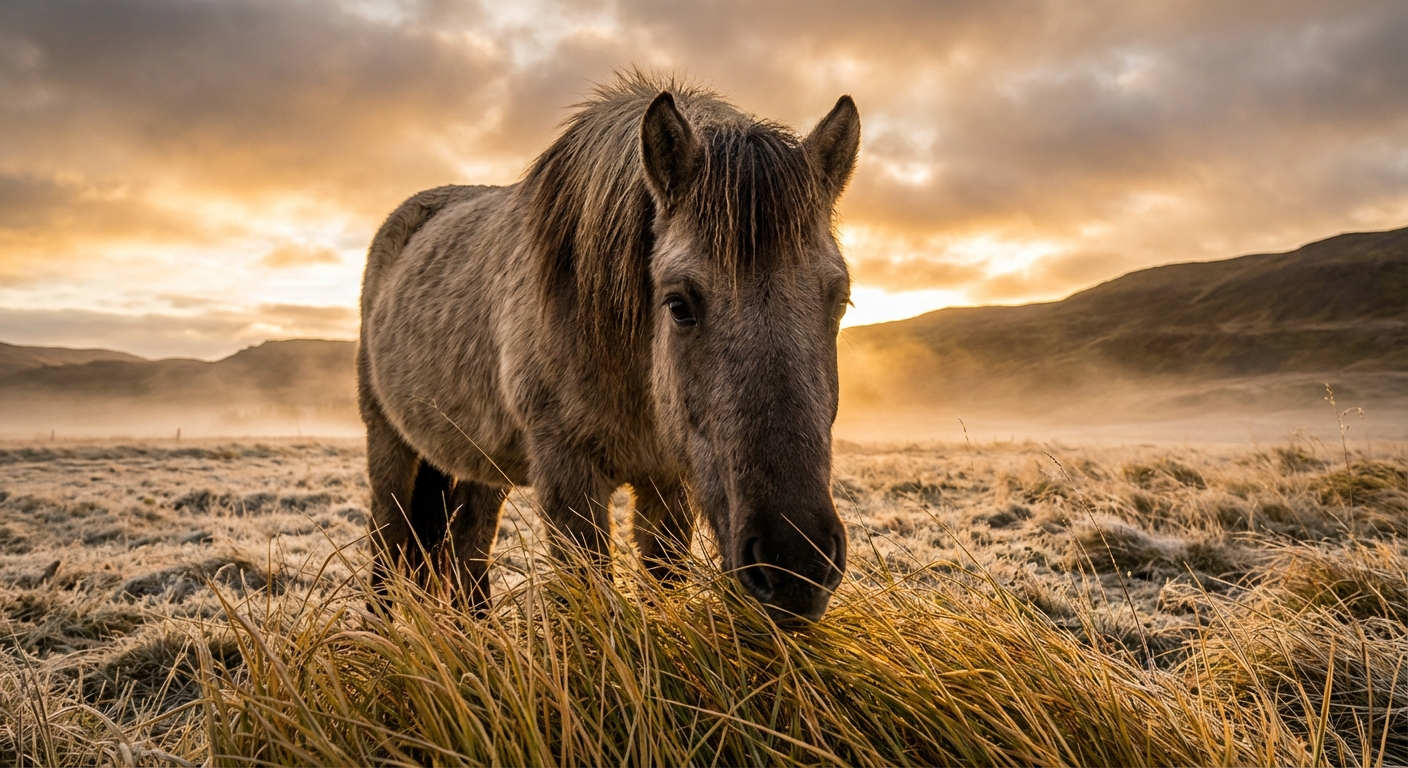
Ears that remain relaxed rather than flattening. A head that rotates gently instead of fixing its gaze. A body that angles just enough to communicate, "I am present, but I am not cornering you." A step that offers space rather than seizing it.
Horses employ these understated signals with one another continuously. When we share their world, we can do likewise—without fanfare.
There is no need to perform. One can simply refrain from abrupt forward motion and allow one's posture to remain undemanding.
Within such an atmosphere, a horse may offer a nose-to-nose breath exchange while retaining complete freedom to withdraw at once.
This attentiveness to the small and the subtle is a discipline we might carry into every sphere of life—learning that presence need not announce itself loudly to be felt.
5) Greetings around resources: where patience becomes visible
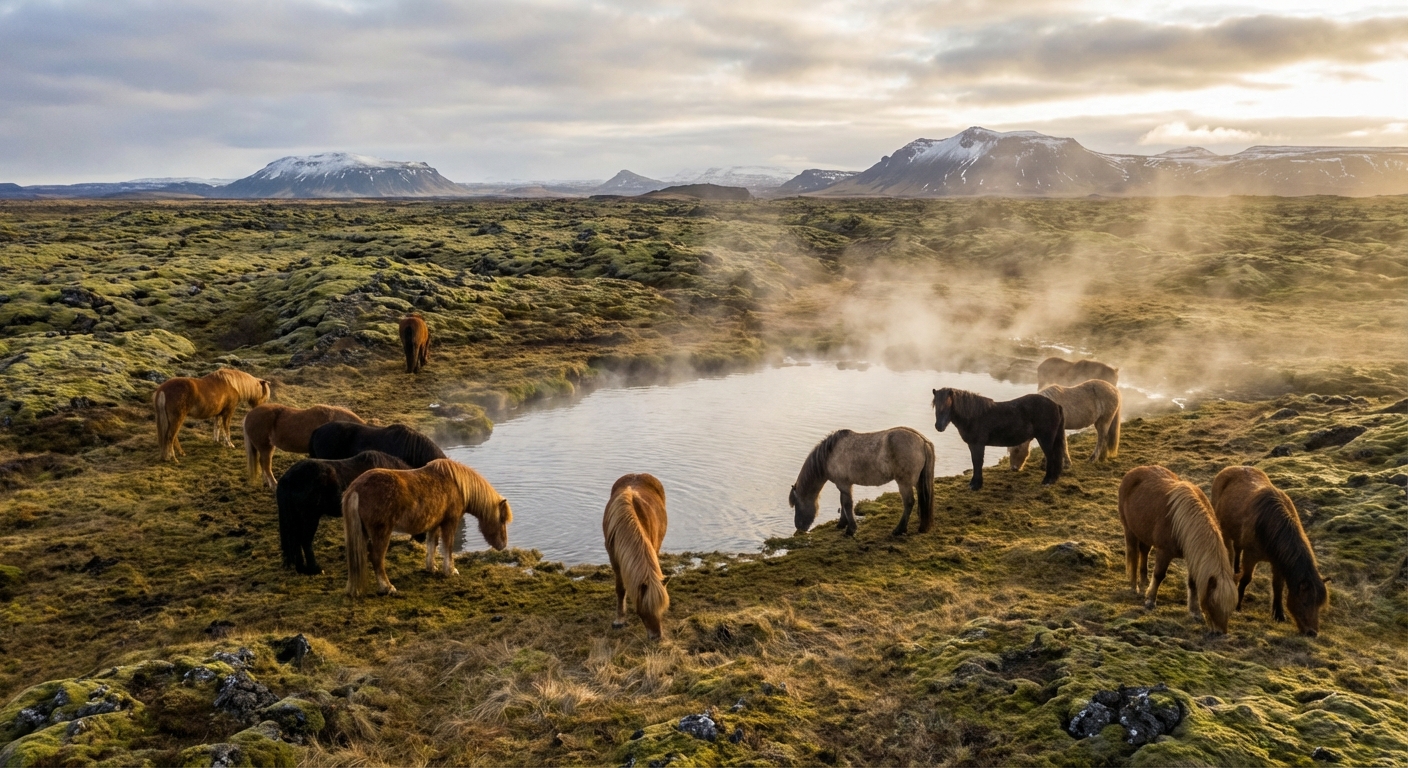
Spaces centered on resources—hay, water, constricted passages—are where you can witness how horses negotiate without resorting to escalation.
One horse gives way. Another pauses. Two move past each other with calm.
These choices are not solely about hierarchy or rank. They concern the particular relationship, the particular instant, and what each horse is prepared to accept in that moment.
This holds significance for human coexistence because so many of our encounters occur near resources: when we arrive bearing hay, when we inspect the water, when we traverse shared territory.
My approach favors supporting natural foraging over scheduled feedings, and I strive to create an environment where horses have continuous access to varied hays and wild plants so they may select according to their needs. In such a setting, the atmosphere around food shifts from anxious anticipation to quiet, ongoing availability.
When tension diminishes, greetings begin to resemble greetings once more—brief, gentle, and spontaneous.
We might consider how scarcity and scheduling shape the tenor of our own gatherings, and how abundance—of time, of access, of patience—allows connection to unfold more naturally.
6) Keeping the greeting clean: the practice of "nothing happens next"
A horse who meets you nose-to-nose is extending an offering of nearness.
To honor that offering, the most valuable practice is allowing it to conclude without any subsequent demand.
No reaching forward to convert it into handling. No effort to prolong the moment. No interpreting it as license to advance further into the horse's space than was invited.
In the language of the herd, this mirrors what unfolds between peaceful companions: they can share proximity without making it an occasion. They can inhabit a moment together and then return to grazing, resting, or wandering onward.
When humans cultivate this same restraint, the horse comes to understand that approaching us does not initiate a cascade of demands. It can simply be a breath, a stillness, and then the ordinary rhythm of life resumes.
This is coexistence: to be welcomed into the circle without needing to dominate it.
And perhaps this is the quiet wisdom horses offer us for all our relationships: that the most profound gift we can give another is the freedom to approach without consequence, to share a moment without obligation, and to depart whenever they choose.
Equine Notion
https://equinenotion.com/