Not Three Meals: The Welfare Line You Can’t See on a Clock

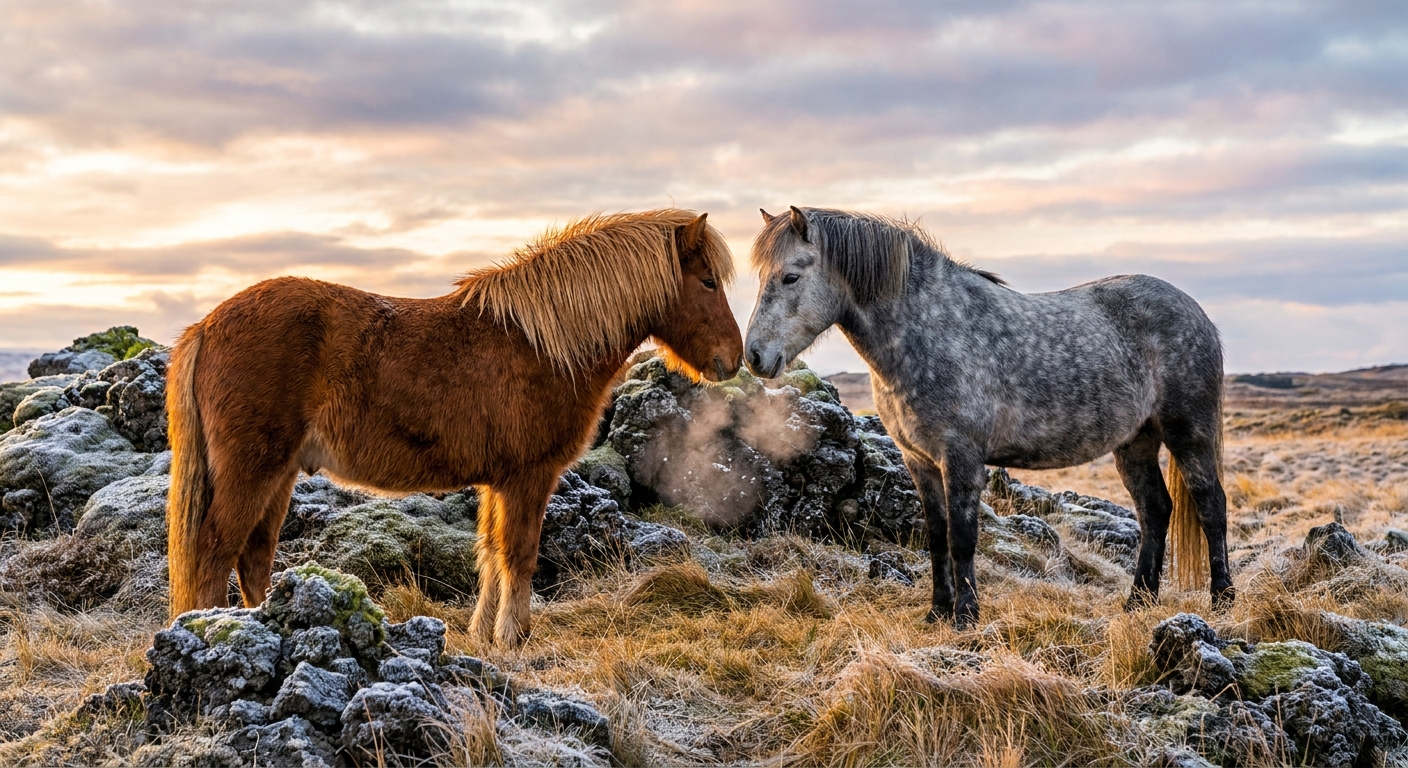
Not Three Meals: The Welfare Line You Can't See on a Clock
What if the true issue lies not in how frequently we offer food… but in how often we allow the act of eating to cease?
From a human vantage point, a feeding schedule appears orderly and complete.
Morning meal. Midday meal. Evening meal.
Three tidy occasions we can reference when we wish to demonstrate adequate care.
Yet a horse does not exist within discrete moments.
Within the horse's body, gastric acid refuses to pause until the next portion arrives. It persists—silent, relentless, indifferent to our well-meaning efforts.
Thus the genuine welfare inquiry becomes more nuanced than "How many times do we feed?"
It transforms into: how long must the mouth remain idle from the work it was designed to perform?
Uninterrupted access to forage is not an indulgent extra. It approaches something more fundamental—because the countdown begins the moment chewing ends. How often do we, too, mistake structured intervals for genuine nourishment, when what we truly need is sustained presence with what sustains us?
This realization reshapes our purpose.
We cease to be the one who provides meals to the horse.
We become the guardian of nutritional continuity, much as one would safeguard access to breath or shelter from the sun. Perhaps the deepest forms of care in any relationship are those that protect what another needs before they must ask for it.
Even a seemingly "peaceful" horse standing motionless in a stall after dark can be misinterpreted by us as being at rest.
Yet being denied the opportunity to graze is not equivalent to voluntarily choosing stillness.
When innate rhythms are disrupted, the body does not simply wait with patience. Behavior becomes the messenger. Compulsive patterns emerge. The environment is narrated through repetitive cycles. We might recognize this in ourselves—how our own unmet needs surface not as complaints, but as restless loops we barely notice.
We gravitate toward numbers because they offer the comfort of certainty.
Yet welfare is frequently determined in the spaces between measurements.
The hollow minutes. The extended silences. The moments we arranged for travel, a medical procedure, an efficient routine—forgetting what unfolds in a horse's digestive system when mastication halts.
In true partnership, the day is not constructed around "carving out time" for grazing.
Grazing forms the bedrock. All else is what we arrange around its necessity. The same might be said of any life built with integrity: we do not schedule what is essential—we build everything else around it.
And perhaps this is the demanding humility at the heart of it:
the most vital nourishment is that which never crystallizes into a separate, quantifiable event at all.
Equine Notion
https://equinenotion.com/