Open Ground, Moving Blood: Why Space Is the Quiet Partner of Equine Circulation

Hook
It becomes most visible in moments of apparent stillness.
A horse meanders from one scattering of hay to the next, hesitates, drops its head, gathers a few bites, then ambles forward once more—unrushed, unbidden. No exercise session. No agenda. Simply modest steps threaded throughout the hours.
Such unremarkable drifting is easily dismissed as "idleness." Yet this is motion—gentle, recurring, autonomously chosen. In a life intertwined with horses, this form of movement stands as one of the most transparent, uncomplicated ways we can nurture what we broadly call "circulation," without transforming it into an undertaking.
Perhaps we, too, would find our own vitality renewed if we stopped waiting for grand occasions to move and simply let small, purposeless wanderings become part of our days.
1) Movement without a job: letting walking stay normal
Under typical human arrangements, a horse's locomotion becomes condensed into brief intervals: a short outing, then confinement again. Where space is scarce, movement transforms into an occasion rather than a constant backdrop.
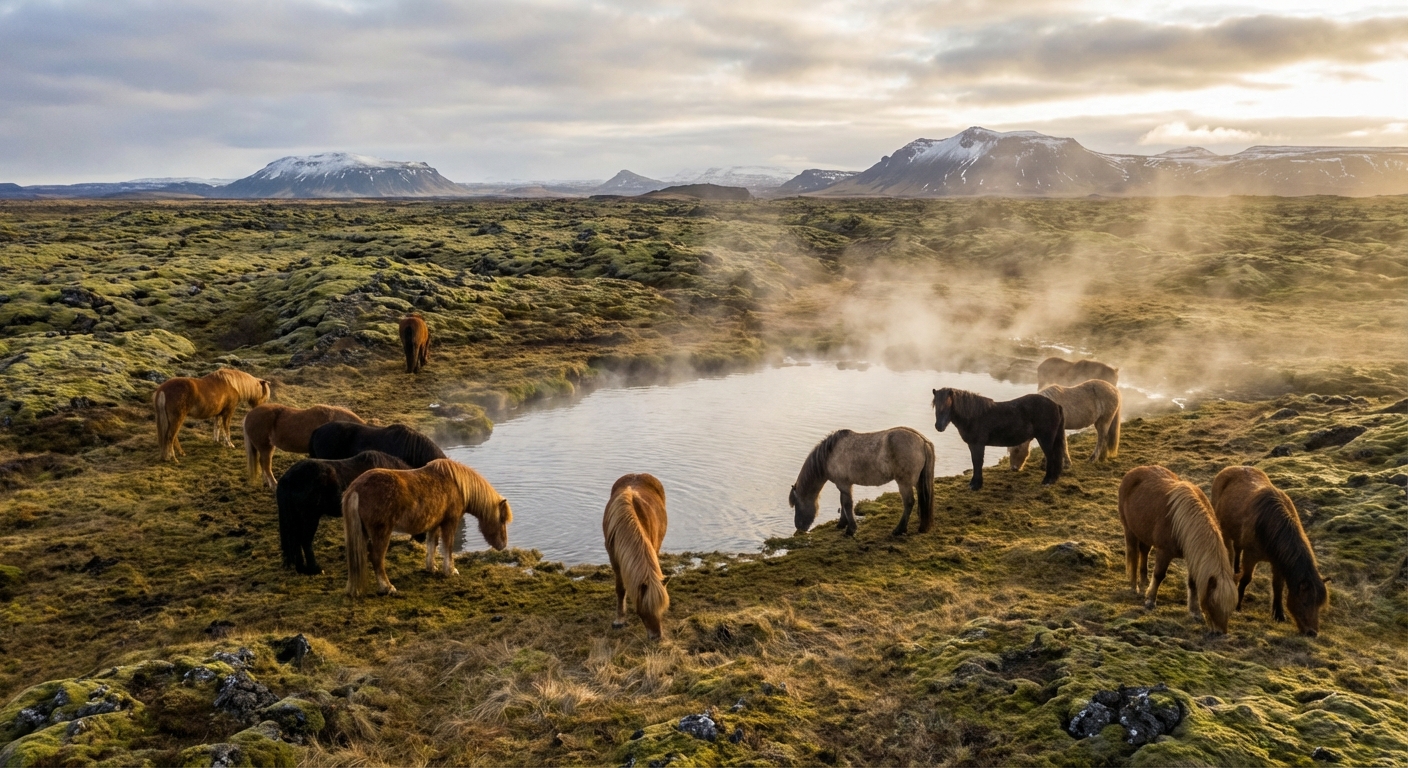
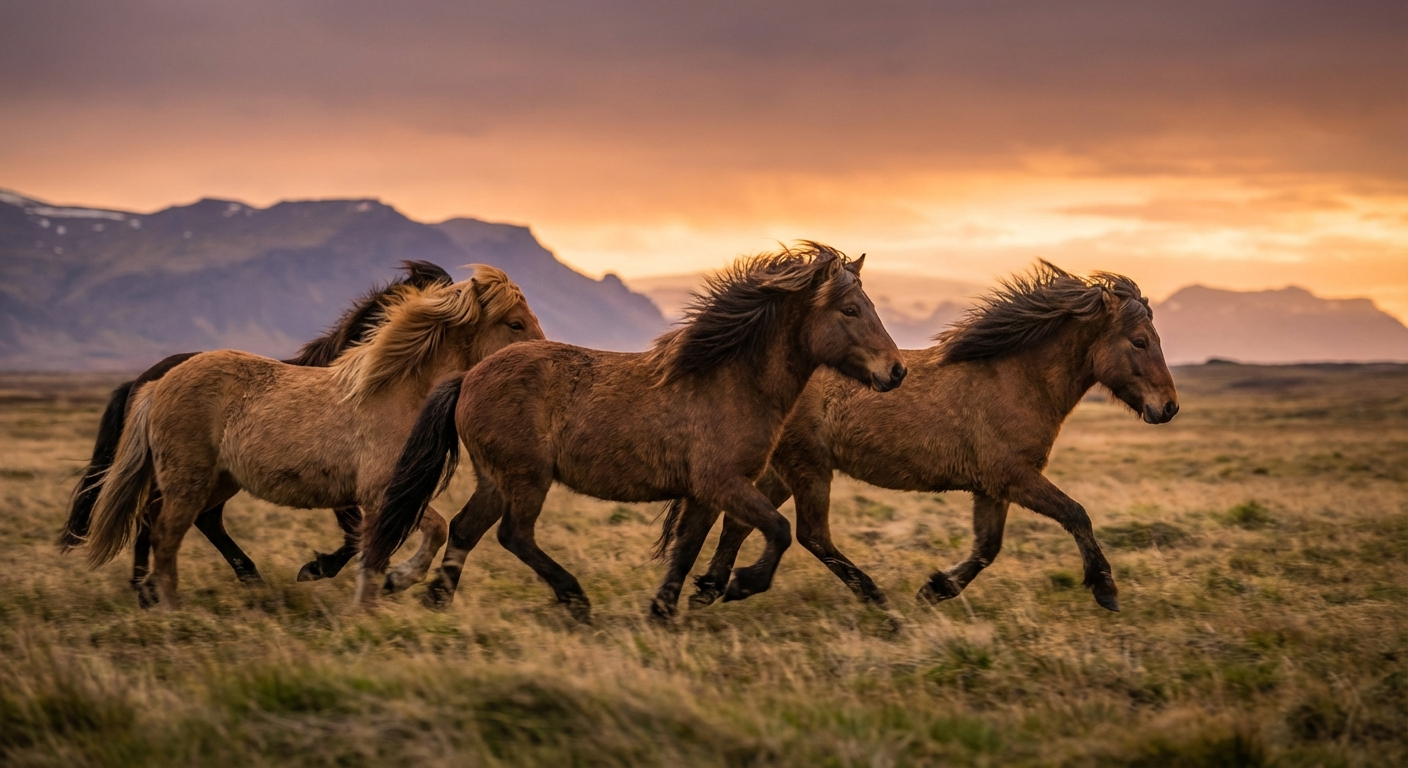
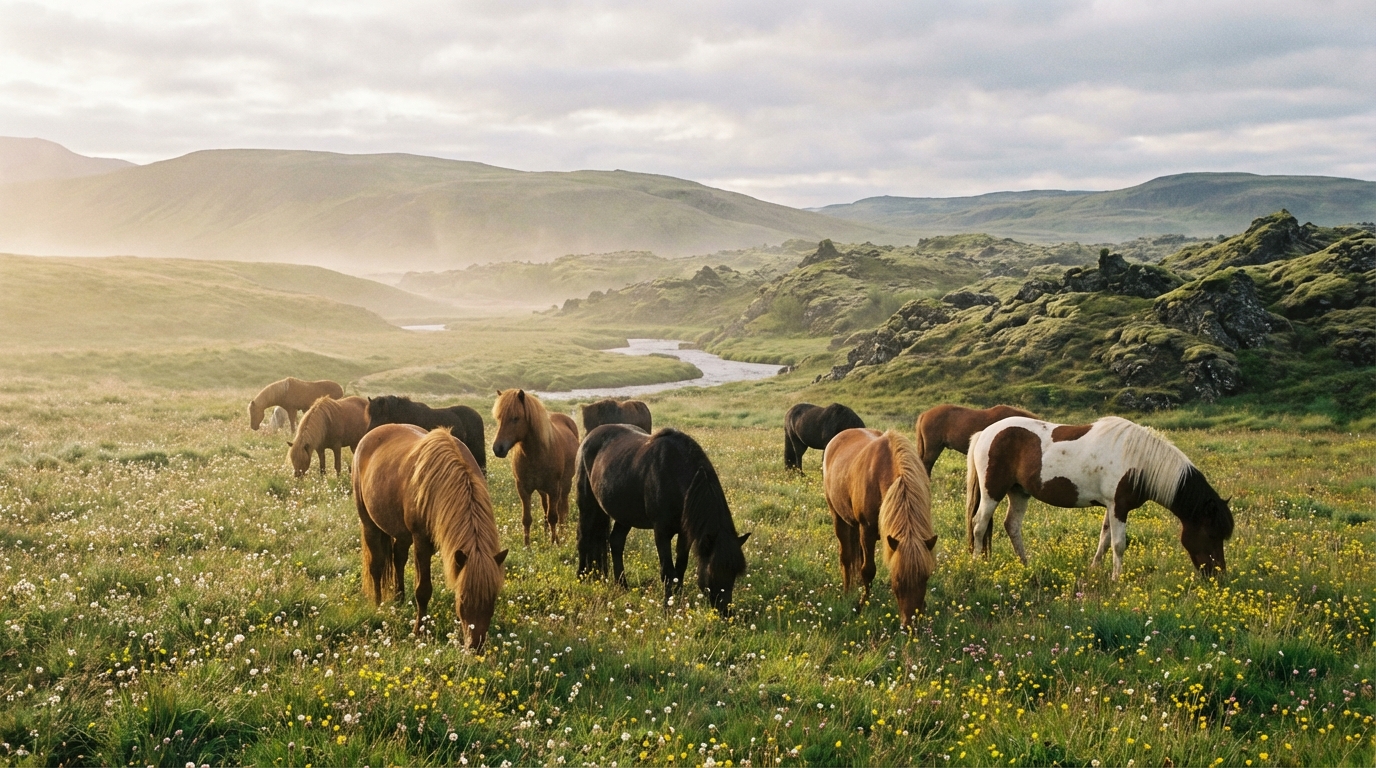
Our decision to make most of the land accessible to the horses alters this dynamic entirely. Rather than being "permitted outside," they simply inhabit the outdoors. The outcome is not spectacular galloping from dawn to dusk; it is consistent, understated relocation—walking because existence unfolds across a terrain.
When motion is interlaced with daily life, it requires no external motivation. There is no necessity to "compel" the body into action. The body stirs because the day contains destinations.
The same truth applies to human flourishing: when our environments invite natural movement rather than demanding it, motion ceases to be a chore and becomes simply how we live.
2) Space as a circulation partner: what a large area quietly offers
We habitually conceive of care as something supplementary: an intervention, a scheduled appointment, a deliberate act. Yet the most profound support can be a subtraction—the removal of restriction.
In countless situations, horses are housed in cramped stalls. In our arrangement, we inverted that paradigm: the majority of our property lies open to the horses, and it can almost appear as though we humans occupy the modest enclosed quarters near the dwelling, behind fencing that suggests we have "confined ourselves."
This inversion carries weight because it transforms who must accommodate whom. The horses are not obliged to compress themselves into a minimal footprint. Instead, the surroundings extend room to wander, to select, to shift position. This is not a guarantee of flawless wellbeing. It is merely a context where movement can occur frequently, in gentle increments, throughout the day.
We might ask ourselves: how often do we shrink our own lives to fit convenient containers, when what we truly need is the freedom to roam?
3) Feeding that creates footsteps: forage variety as a reason to roam
If you wish a horse to move without riding or conditioning, you require no timetable; you need a landscape that furnishes the horse with incentives to journey.
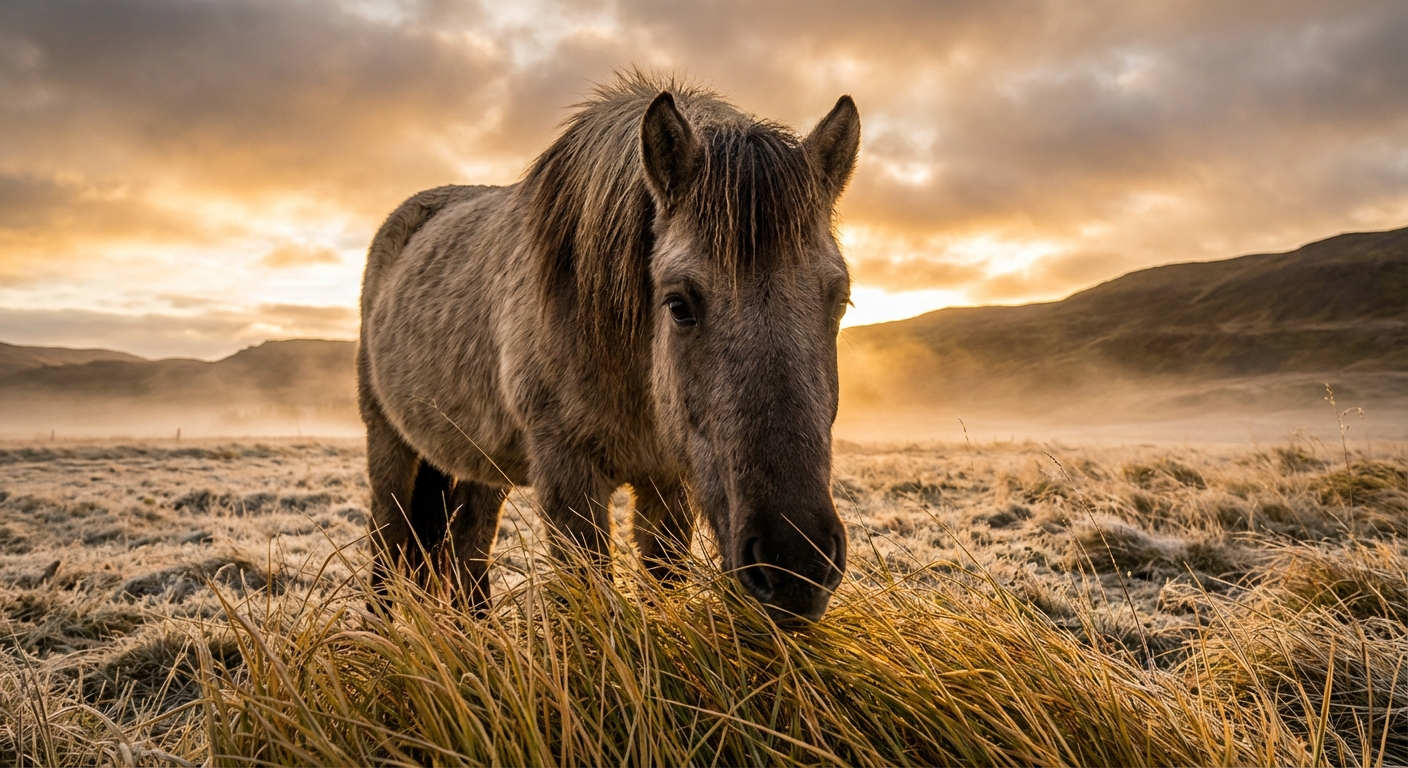
I do not offer meals at predetermined hours. Instead of converting nourishment into a scheduled event, I endeavor to awaken innate foraging instincts. I cultivate an environment with access to diverse varieties of hay and wild herbs, allowing the horses to intuitively select the nutrients their bodies require.
This accomplishes two purposes simultaneously. First, it dissolves the "anticipatory tension" that accumulates when feeding is punctual and foreseeable. Second, it disperses curiosity across the daylight hours. When a horse can travel from one offering to another—hay in this corner, herbs in that—walking becomes inseparable from eating, not detached from it.
The footfalls are modest, yet they recur. And recurrence is precisely what elevates quiet movement from incidental to indispensable.
In our own lives, we might discover that scattering our interests and nourishments across time and space invites us into a more embodied, less sedentary existence.
4) Coexistence over management: arranging life instead of directing it
A delicate transformation occurs when you cease organizing a horse's day like a schedule and begin shaping the circumstances of their existence instead.
A regimented feeding routine can draw the horse into our temporal framework. A constrained area can draw the horse into our convenience. Both can generate prolonged periods of immobility that are not elected, merely endured.
Yet when the guiding question becomes "How might this horse dwell here more authentically as a horse?", we begin modifying the environment rather than the animal. Expanding territory. Providing diverse forage and untamed herbs. Permitting the horse to determine when to graze and what to sample. None of this demands training. It is coexistence through intentional design: sculpting the setting so the horse can enact what the body inherently understands.
Within this framework, supporting circulation is not an isolated objective. It emerges as a natural consequence of a day composed of countless small pilgrimages.
Perhaps the deepest care we can offer—to horses or to one another—is not direction but design: creating conditions where life can unfold according to its own wisdom.
5) The human role: noticing without turning it into a program
The temptation, once movement matters to us, is to quantify it: to observe, to measure, to fret, to append duties.
Yet there exists another mode of participation—attentive witnessing joined with practical deference.
When you observe a horse meandering among forage possibilities, intervention is unnecessary. When you watch them select one variety of hay and later seek out wild herbs, commentary is superfluous. Your role can be as straightforward as preserving access and leaving the horse's preferences undisturbed.
Such restraint is not abandonment. It constitutes an understanding: "I will sustain a supportive environment, and I will not supplant your instincts with my agenda." In a life without riding or training, this may represent one of the most genuine offerings a human can extend.
We might recognize here a broader invitation: sometimes the most loving thing we can do for another being is to step back and trust their native intelligence.
6) What "essential" can mean: not a claim, but a priority
Given the circumscribed certainty any of us genuinely possess, it proves useful to interpret "essential" with humility.
Essential can signify: worthy of safeguarding.
If you hold that movement sustains the body's internal currents, then the everyday conditions enabling movement ascend to high importance. Not because the rewards are always perceptible in a single afternoon, but because the alternative—extended, enforced immobility—diminishes a horse's universe.
Therefore we embrace the fundamentals that keep the day in motion: expansive land, liberty to roam, and forage configurations that beckon natural seeking rather than clock-bound anticipation.
And then we allow the remainder to be uncomplicated.
In this, horses remind us of something we often forget: that simplicity, space, and the freedom to move at our own pace may be among the most essential gifts we can offer ourselves.
Equine Notion
https://equinenotion.com/