Out of Sight, Still in Mind: Coexisting With the Horse’s Hidden Planning
Out of Sight, Still in Mind: Coexisting With the Horse's Hidden Planning
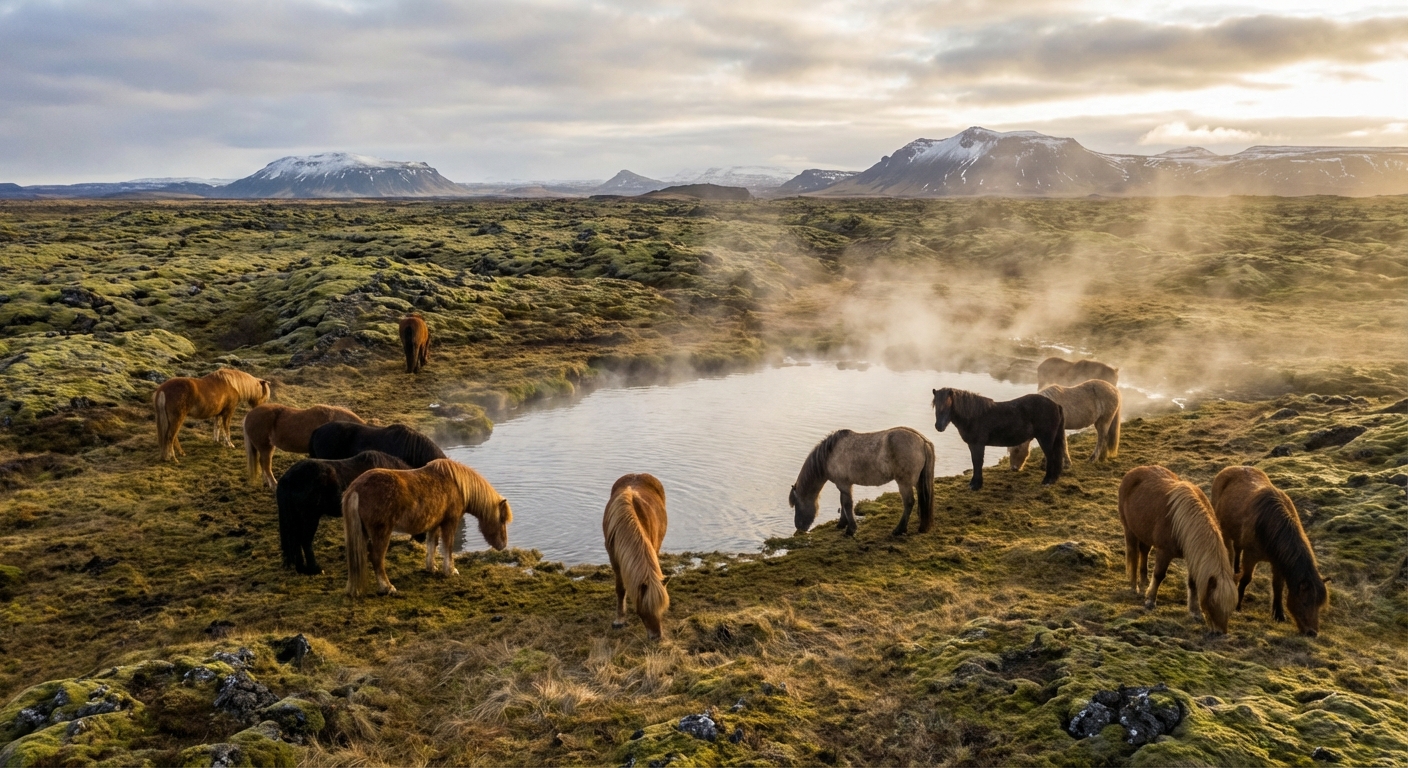
I slipped behind the shed to return an empty hay net to the feed room, and the pasture shifted without fanfare.
No rush.
No objection.
Simply a gentle reconfiguration—as though my presence had served as a momentary reference point, and now the landscape had quietly recalibrated.
When we speak of living alongside others, our attention tends to rest on the visible: who flattens an ear, who steps aside, who reaches the gate first. Yet much of the herd's intelligence reveals itself when the object of concern has passed from sight. We, too, often measure our relationships by the obvious gestures—the spoken word, the immediate reaction—while the deeper work of connection happens in the silences, in what we do when no one is watching.
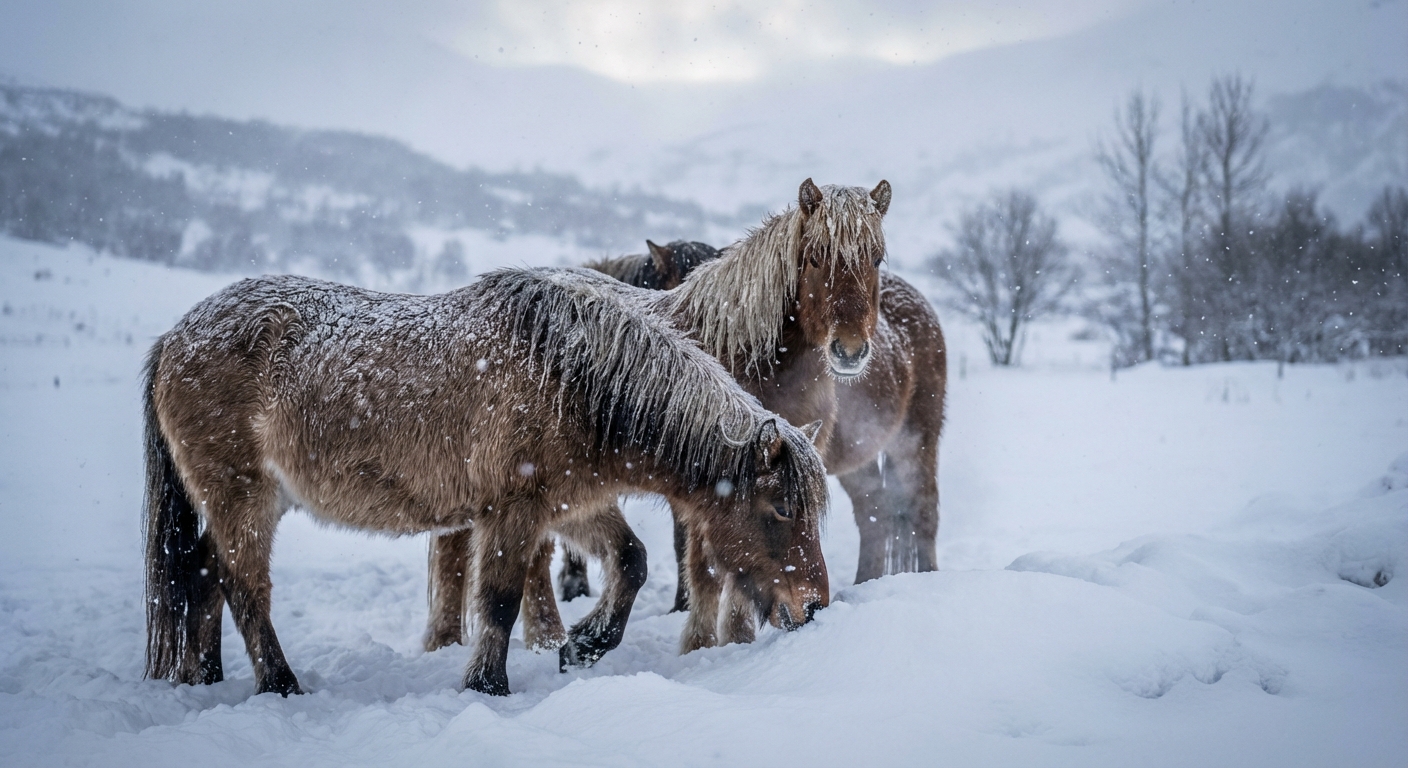
One horse wanders away from grazing, vanishes over a small hill, and reappears at precisely the moment the group's movement invites return.
Another concedes ground near a shared resource, not from defeat, but because this particular instant isn't worth the expenditure—and later, when circumstances shift, that same horse holds firm.
Rank is not a permanent emblem. It functions more as a collection of understandings that apply only when something particular hangs in the balance. How often do we cling to titles and positions as fixed identities, when in truth our authority is contextual, borrowed, and renegotiated with every changing situation?
Here is where strategic intelligence conceals itself in open air.
Not as cunning maneuvers.
As timing.
As forbearance.
As selecting the circuitous path because the straight line would exact too high a social cost. We might recognize this wisdom in ourselves—the moments we chose patience over confrontation, knowing that some victories aren't worth their price.
Our stewardship can unintentionally penalize this caliber of mind.
When food arrives in abrupt episodes, the day fractures into a sequence of alarms.
When eating ceases, the horse's physiology does not pause alongside it—the clock of gastric damage begins its count the moment foraging ends, and "we'll feed later" becomes an interval the animal must simply endure.
When nights are spent standing confined in a stall, we may name it rest, but the horse is merely barred from fulfilling what its biology assumes as the foundation of existence. Perhaps we should ask ourselves what essential rhythms we interrupt in our own lives—and in others'—by imposing structures that serve our convenience rather than deeper needs.
So the practical gesture of coexistence is not to orchestrate every herd decision.
It is to sustain a world continuous enough that their planning can remain unhurried: forage perpetually accessible, room to wander, space to reconvene, time for the subtle negotiations to unfold without spectators.
Then you begin to perceive it.
Even when you step away briefly.
The herd does not unravel.
It continues composing a future. And perhaps this is the quiet measure of any community we tend—not whether it needs us in every moment, but whether it thrives in our absence.
Equine Notion
https://equinenotion.com/