Pasture Roommates: A Coexistence Philosophy Built on What Horses Maintain

Coexistence Isn't a Vacuum—It's a Relationship With Place
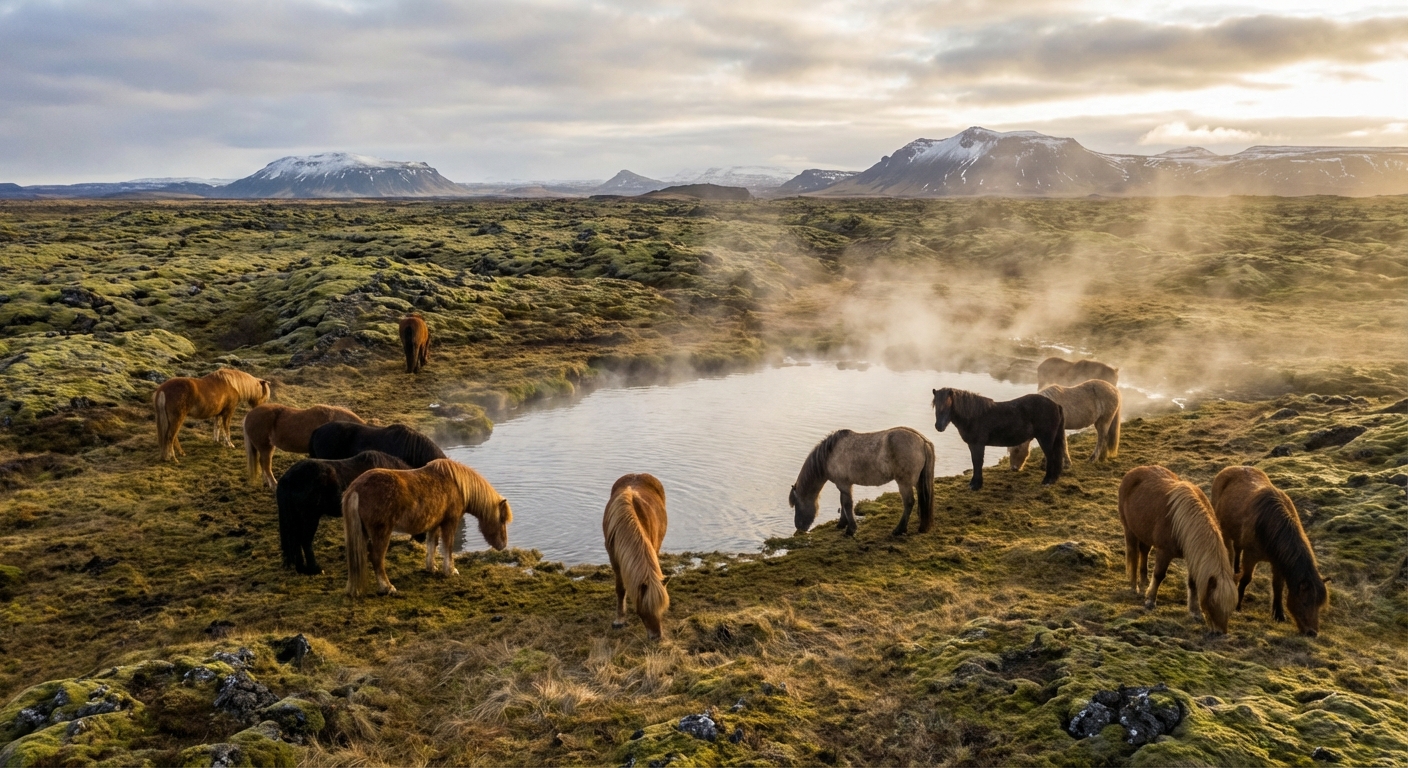
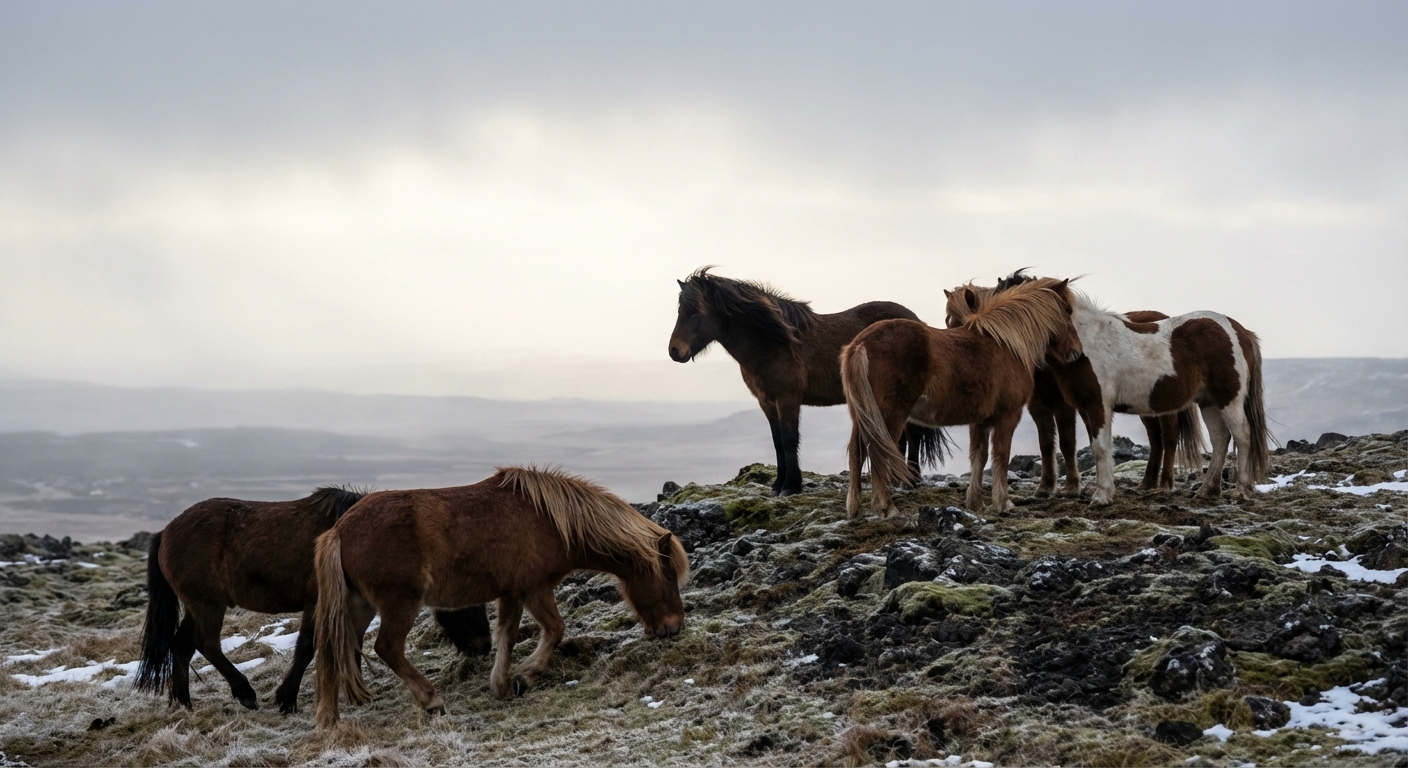
Occupying the same ground without extraction might seem like inaction. Yet anyone who has lingered at a pasture's edge understands that stillness is rarely empty. Hooves compress and release the earth in rhythmic dialogue. Grasses are chosen, rejected, and returned to with intention. Trails emerge through repetition alone. Dung cycles back into the soil. The hours organize themselves around locomotion, hunger, sky, and the quiet choreography of companionship.
When we decenter our own agendas, the horse reveals itself as an active participant within a system that carries its own imperatives. The field is not mere scenery—it breathes, responds, degrades, and regenerates. True coexistence requires attention to the circular logic of land: exhaustion manifests in the turf, unease manifests in the animal, and our interventions either harmonize with nature's self-correcting tendencies or perpetually resist them.
Here, philosophy becomes something you can touch. When the earth is depleted, the horse's existence grows impoverished alongside it. When the land holds resilience, the horse often appears more fully themselves—wandering more freely, resting more deeply, absorbed in the unremarkable labor of simply living. We might recognize this same truth in our own lives: the environments we inhabit shape the selves we become, and impoverished spaces produce impoverished souls.
Movement as a Right, Not a Feature
Perhaps the subtlest way to instrumentalize a horse—without ever mounting or drilling—is to frame locomotion as enrichment rather than necessity. The equine body evolved for sustained travel throughout the waking hours. When that motion contracts, everything else must absorb the deficit: cognition, physiology, social bonds.
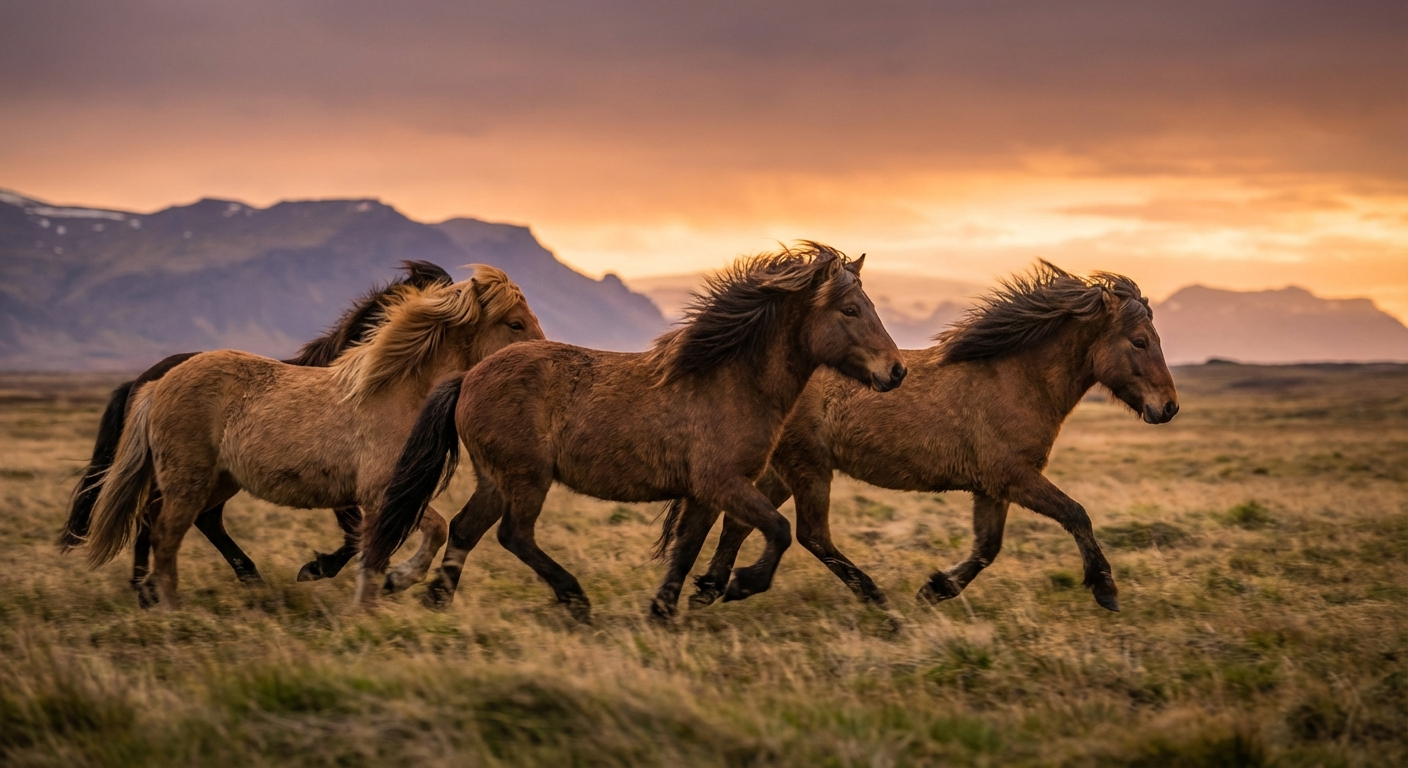
Coexistence demands that we accommodate the distances horses would naturally cover on their own terms. Not a timed exercise block, not a schedule imposed from outside, but terrain that beckons exploration: sources of water, grazing opportunities, shelter, fellowship, and the elemental liberty to depart and return at will.
A certain candor lives in this recognition: when a horse cannot move sufficiently, we may label our arrangements as care, yet the surroundings contradict what the animal was designed for. To share space without appropriating it means, partly, constructing a world where motion becomes ordinary again—so the horse need not convert energy into anxiety, or immobility into survival mechanism. How often do we humans also mistake constraint for safety, forgetting that our bodies and spirits were built for movement we no longer permit ourselves?
Food Continuity: Let the Day Stay Unbroken
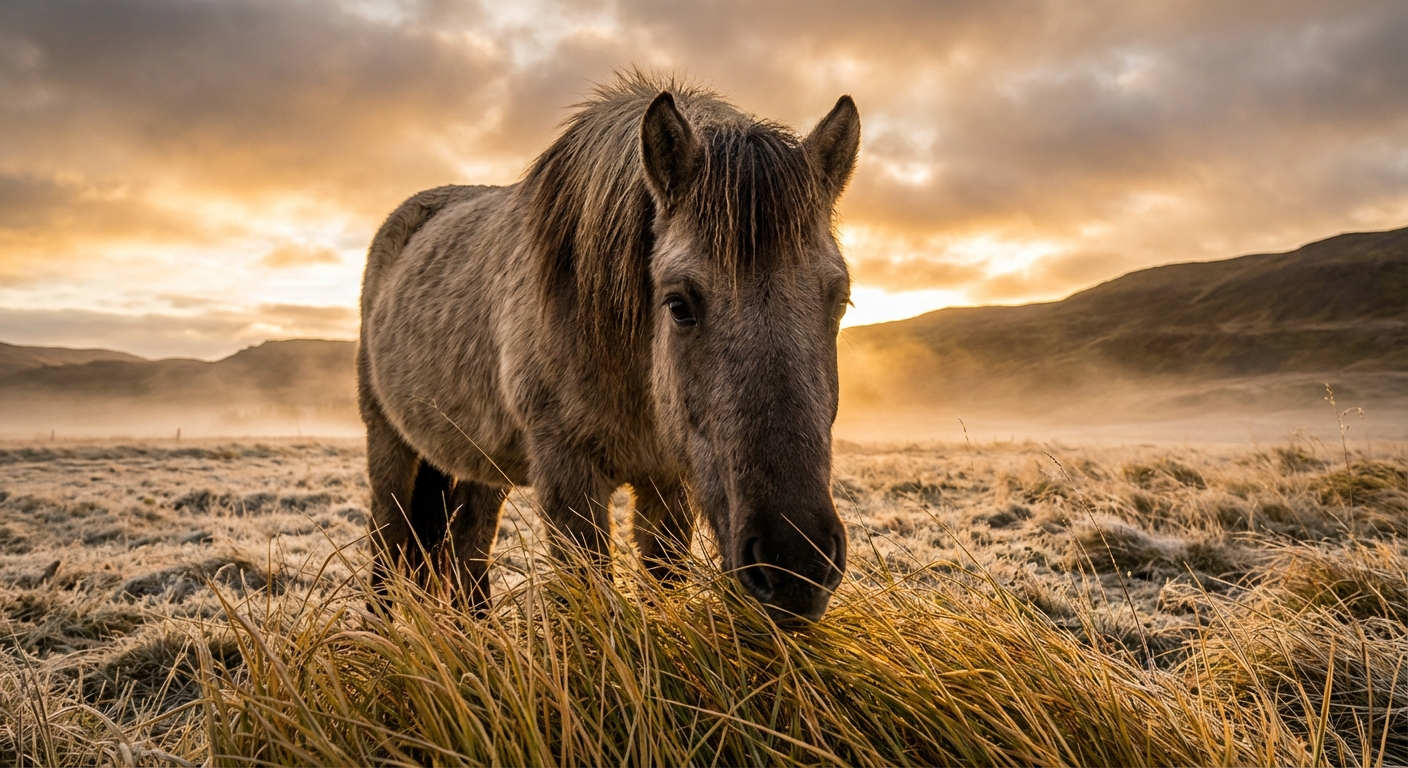
We also instrumentalize horses by fragmenting their time into human-sized portions. Horses following their innate rhythms orient themselves around perpetual grazing. Both gut and psyche seem to find equilibrium when the day flows uninterrupted rather than fracturing into cycles of "now consume / now endure."
Coexistence in this context is not a nutritional strategy aimed at peak performance; it is a pact against weaponizing appetite for convenience. When forage remains accessible and time stays whole, behaviors take on different meanings. Anticipation grows quieter. Minor frustrations no longer compound so rapidly. The pasture transforms from waiting room to dwelling place.
This perspective also reframes how we read difficulties. When compulsive or repetitive behaviors emerge, they can be understood as testimony—less an indictment of the horse's character, more an environmental audit. The inquiry shifts from "How do we suppress this?" toward "What has been severed or withheld?" Within coexistence, the horse becomes a living gauge of their own habitat. Perhaps we too exhibit our own stereotypies when our days are carved into artificial segments, our hungers managed rather than met.
Social Order Without the Fairy Tale of the Permanent Boss
We humans crave tidy narratives: a single authority, a fixed pecking order, a universal explanation. Horses seldom accommodate such neatness.
What actually binds a group is not perpetual contest but the mundane choreography of yielding and asserting—who defers at one resource, who advances at another, who gravitates toward whom, who shares without provocation, who withdraws early enough to prevent spectacle. Rank is not a fixed trait stamped onto personality; it shifts with circumstance, relationship, and stakes.
When we cohabit without exploiting, we can cease casting horses in the dramas of our own imagination. We can allow their social fabric to remain contextual and particular. This matters because countless welfare choices are actually social choices in disguise: who enjoys peaceful company, who gets displaced from rest, who eats unmolested, who finds themselves isolated by arrangements that appear prudent on inspection.
Coexistence means observing for fit and friction—not to govern the herd, but to cultivate conditions where horses can negotiate with nuance rather than being cornered into crude resolutions. We might ask ourselves whether our own communities suffer when we impose rigid hierarchies onto relationships that were meant to remain fluid and negotiated.
Let Nature Do Its Portion—And Do Ours With Restraint
Protection harbors a contradiction: the more zealously we attempt to abolish every hazard, the more we risk forfeiting the horse's inherent capabilities. Coexistence is not abandonment. It is the discipline of selecting interventions that do not supplant the environment with an accumulation of human corrections.
A vital landscape provides horses with more than visual pleasure. It furnishes opportunities for self-governance: relocating to regulate temperature, choosing plants and substances in patterns resembling instinctive medicine, drawing on the herd as an anchoring presence, reading weather and ground as data. The aim is not to sentimentalize the "natural," but to relinquish the assumption that horses are helpless without unceasing human adjustment.
Then there is the earth itself. Tending soil and managing pasture become ethical acts rather than maintenance tasks: fortifying the ground so it can sustain the horses without perpetual crisis response. Within this understanding, horses are not consumers requiring endless provision; they are fellow residents whose daily existence also sculpts the place. The bond grows mutual: we steward the conditions, they enact the patterns that keep an ecosystem turning.
Sharing space without extracting is, finally, a vow to let the horse's life remain intact even when it yields nothing for us—save the quiet evidence that a common home can thrive. In this, horses offer us a mirror: the question of whether we can let another being flourish without demanding return is ultimately a question about who we are willing to become.
Equine Notion
https://equinenotion.com/