Samurai Hands, Soft Fields: Precision Without Cutting in Horse–Human Coexistence

Hook
Here, the fence has become something of an irony.
Not for lack of boundaries—but because the boundary encircles us, the humans.
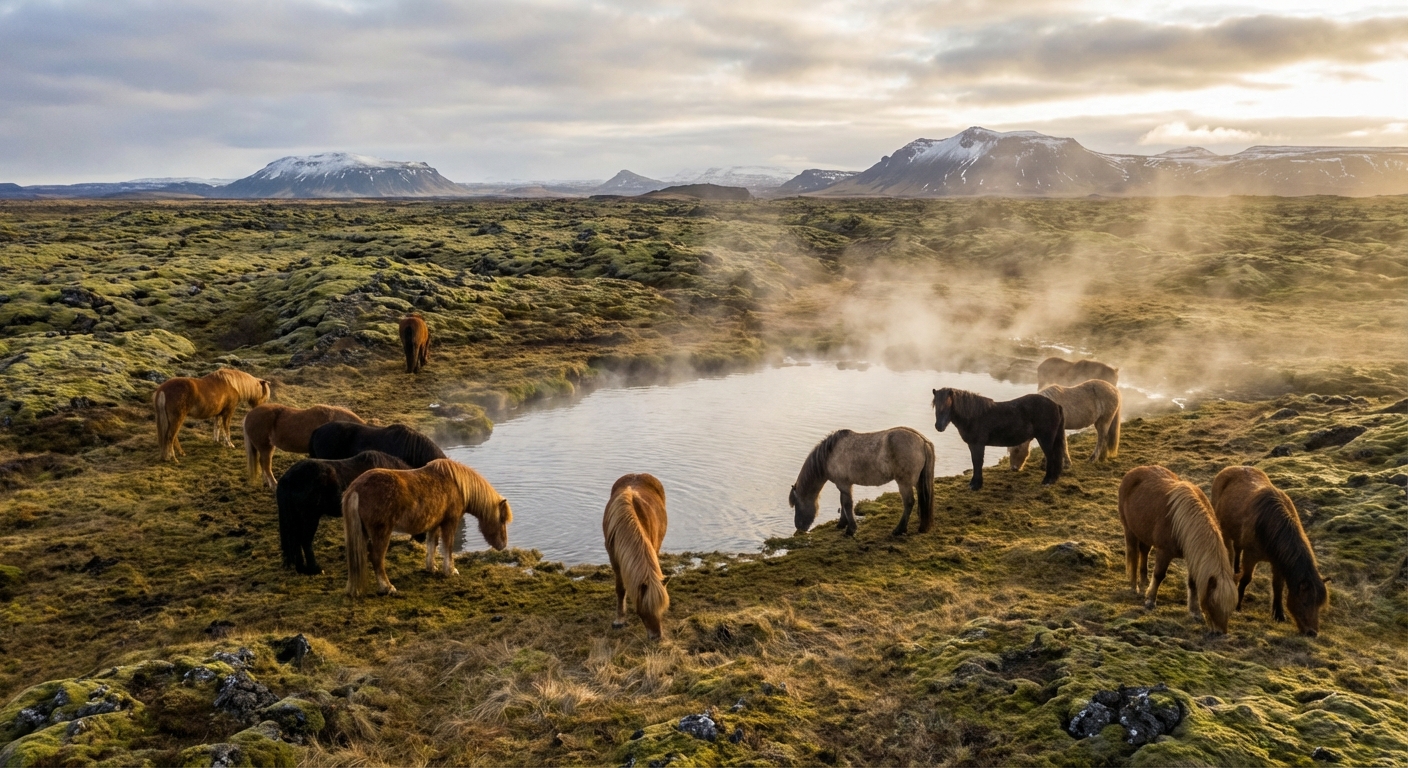
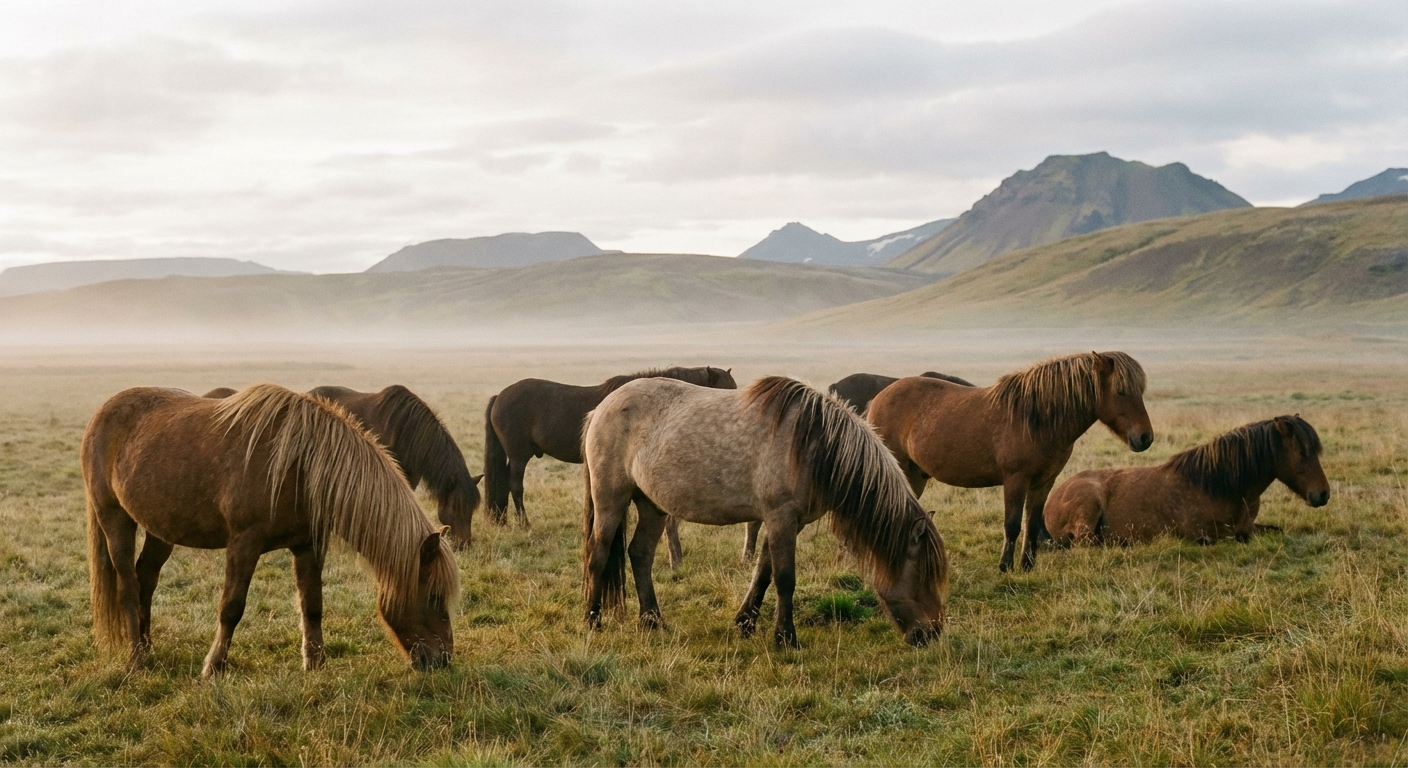
The horses roam across the greater portion of the land.
And when you observe them traversing that expanse—unrushed, selecting their own destinations—you begin to recognize how frequently we mistake "caring" for commanding.
1) Samurai Quality as a Way of Holding Yourself
"Japanese hoof knife samurai quality" evokes an instrument designed for clean, decisive cuts.
Yet in a life shared with horses that rejects riding and training, the truest sharpness is not found in any blade—it lives in self-restraint.
Samurai quality, understood this way, is the discipline of withholding interference simply because one possesses the power to interfere. It is the capacity to observe nuance without converting every observation into a correction. It is attentiveness married to a hand that knows when to remain still.
Sharing a life with horses demands this form of precision: the lucidity to discern what genuinely matters, and the equanimity to let the horse manage what rightfully belongs to the horse.
Perhaps this is a lesson we all need—the wisdom to see clearly without always acting, to witness without always intervening in the lives around us.
2) Turning the Usual Picture Inside Out: Who Is "Confined" Here?
Countless horses pass their entire existence within cramped stalls.
That image alone reveals a persistent human tendency: we compress the horse's universe so that our oversight becomes more convenient.
We chose a path that appears almost inverted. We surrendered most of our acreage to the horses. The human zone is the modest, enclosed area beside the dwelling. To an outsider, it might seem as though we imprisoned ourselves.
This inversion is no performance. It fundamentally alters the emotional geography of the place.
The horse ceases to exist as a visitor within human architecture. Instead, the human becomes a visitor at the periphery of the horse's expansive world.
How often do we shrink the lives of others—children, partners, communities—to make our own sense of order feel manageable? True generosity sometimes means accepting the smaller space ourselves.
3) Precision in Feeding: Letting Foraging Lead
Control frequently conceals itself within the feeding routine.
Rather than adhering to predetermined mealtimes, we endeavor to honor natural foraging instincts. This decision appears straightforward, yet it demands the same "samurai" restraint: one does not fabricate anticipation and anxiety by presenting food exclusively at designated hours.
The surroundings carry weight. We offer access to varied hays and wild-growing herbs so the horses may choose according to their own needs.
This is not a claim that humans exert no influence—we undeniably do. But it represents a fundamentally different mode of influence.
Instead of prescribing a singular correct portion timed to the clock, we cultivate an environment where the horse can exercise countless small decisions throughout the day.
The precision resides in the preparation, not in the enforcement.
In our own lives, we might ask: do we create conditions for others to flourish, or do we simply dictate outcomes and call it love?
4) Coexistence Without a Project: Observation Without an Agenda
When you abandon riding and relinquish training, an unusual tension can persist.
The compulsion to "accomplish something worthwhile."
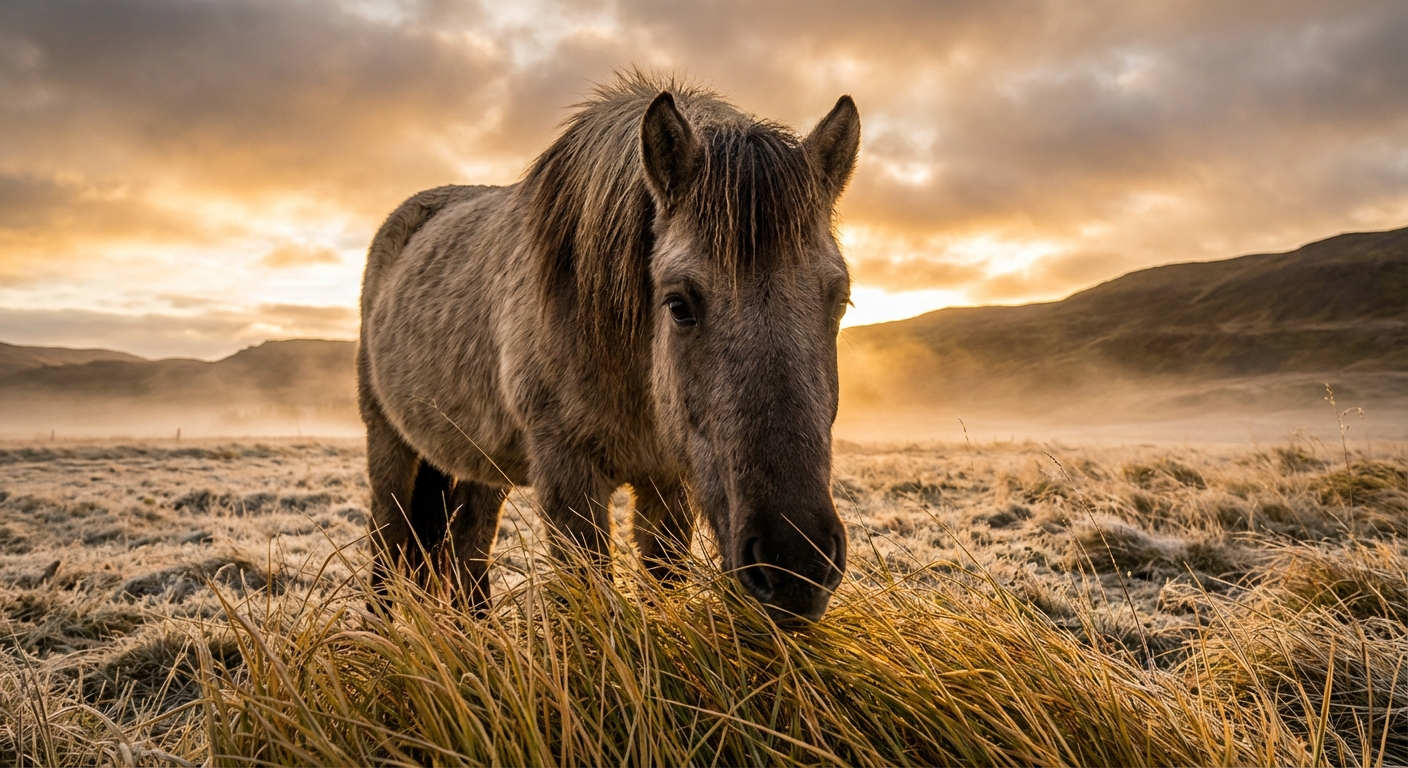
Yet coexistence gains clarity when you cultivate presence without transforming the horse into an assignment. One can stand at the field's edge, witness a horse wander toward a particular hay, then drift elsewhere, and simply allow that truth to exist—without weaving it into a narrative or system.
This variety of silent observation harmonizes with a landscape the horse can genuinely inhabit.
When the majority of the land belongs to the horses, their subtlest choices become visible. Where they elect to stand. What they bypass. What draws them back.
And the human's role transforms from director to steward—maintaining the conditions that permit such choices to unfold.
There is profound freedom in witnessing without agenda, in letting another being simply be—a practice that might heal many of our human relationships as well.
5) The Clean Cut You Don't Make: Choosing Not to Over-Manage
A fine blade earns respect for its capabilities.
Yet respect equally manifests in what one declines to do with it.
In equine life, there exists an ever-present temptation to "organize" everything: compress the routine, limit the possibilities, render the day predictable for human convenience. The samurai-quality alternative is not disorder—it is intentional simplicity.
Openness in place of enclosure.
Continuous access to nourishment rather than rigid feeding schedules.
A habitat rich with diversity—various hays and wild herbs—instead of a solitary, human-determined solution.
These are not sweeping interventions. They are precisely the opposite: choices that diminish the necessity for future intervention, because the horse is allowed to exist in a manner that honors its nature.
The cuts we choose not to make often define us more than those we do—in relationships, in parenting, in leadership, the restrained hand frequently accomplishes what force never could.
6) Living Like Neighbors, Not Owners
When horses possess the greater territory, and humans embrace a more modest presence, something fundamental transforms.
The connection evolves from ownership toward something resembling true neighborliness.
You continue to care. You continue to provide. You continue to shape the environment.
But you do so with a quality of respectful distance: the horse is neither conveyance, nor training objective, nor daily undertaking.
It is a creature moving through a world that—at last—offers sufficient room.
This is the quiet "samurai quality" worth pursuing: exactitude in what you establish, humility in what you leave untouched, and an unwavering dedication to coexistence that demands neither riding, training, nor perpetual demonstration of purpose.
Perhaps the deepest wisdom we can carry from the pasture into our human lives is this: that love sometimes looks like stepping back, that care can mean creating space, and that the most meaningful relationships are those where we finally stop trying to prove ourselves.
Equine Notion
https://equinenotion.com/