Scent in the Wind: Living With a Horse’s Unspoken “No” Without Explaining It Away

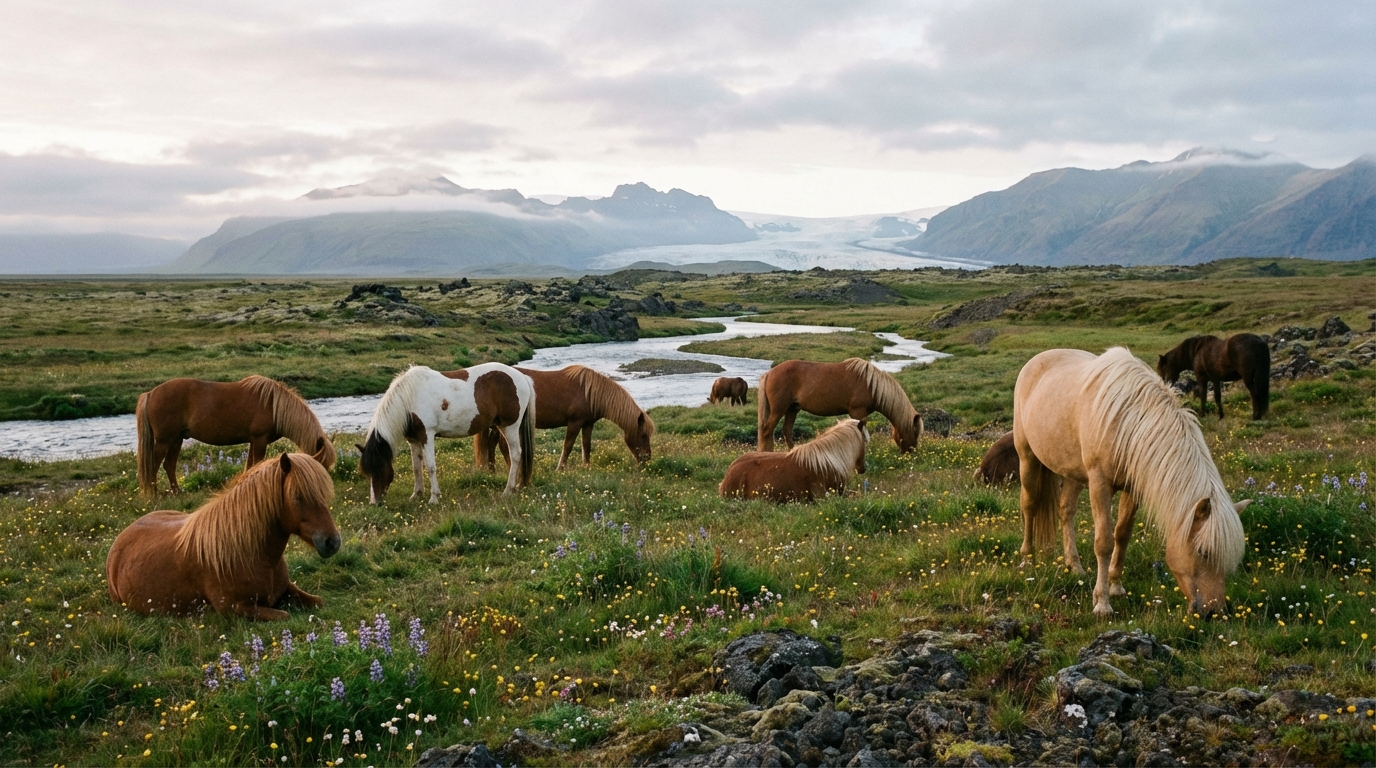
A question we love to answer too fast
Is it "instinct"? Is it "genetic"? Did the horse "recognize a predator"?
The moment a horse stills, raises their head, or veers unexpectedly from their path, we humans rush toward tidy explanations. Such answers comfort us—they restore our sense of knowing.
Yet true coexistence demands something more difficult: remaining close to what we can genuinely observe, rather than imposing a narrative onto the horse.
How often do we do the same with one another—filling silence with story, mistaking our interpretation for another's truth?
1) The honest starting point: we don't smell what they smell
A horse responding to a scent—whether real or imagined, near or distant—often reveals itself first as a shift in posture before it manifests as visible action.
When we leap immediately to explanations like "innate fear" or "genetic memory," we risk overlooking what is most significant in that instant: the horse is expressing a limit.
To coexist without riding or training means refusing to treat that limit as a problem requiring a solution. We allow it to remain simply what it is: information.
We might ask ourselves how often we dismiss another person's unspoken "no" because we cannot perceive what they perceive.
2) What to watch when "something is in the air"
No checklist or theoretical framework is necessary to begin. What is required is your full attention.
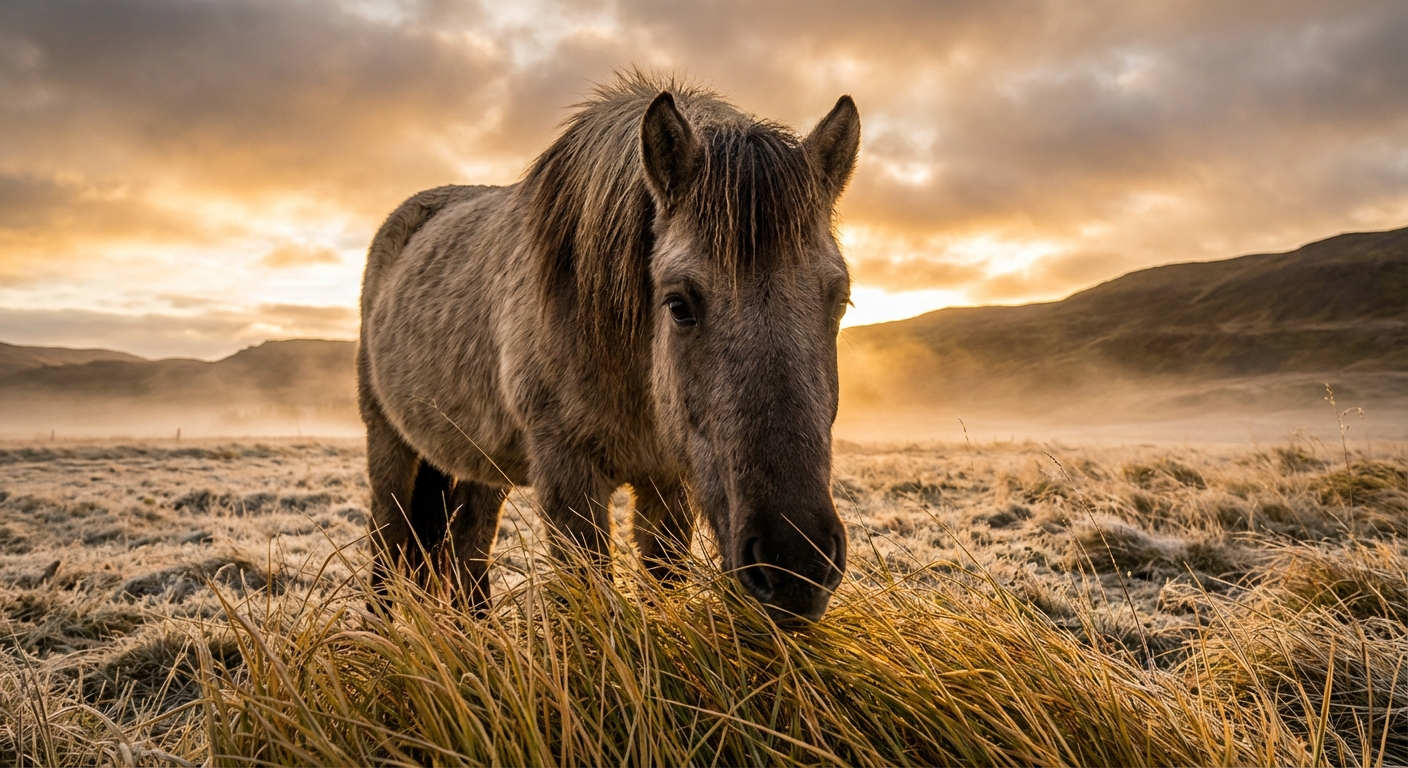
Observe the subtle, legible changes: ears that fix upon a single direction, a head that begins to turn but halts midway, a body that angles just enough to alter the trajectory by several steps, a quiet sidestep that opens space.
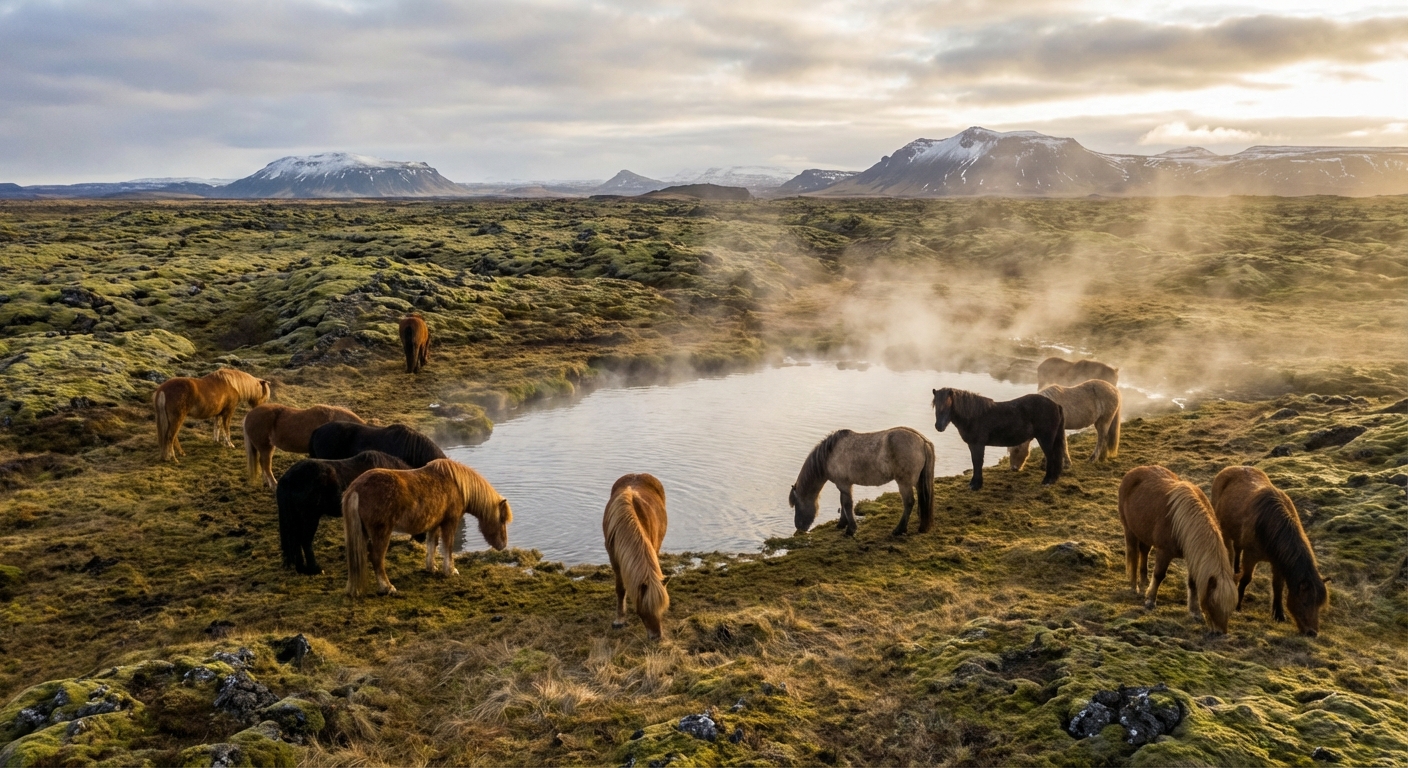
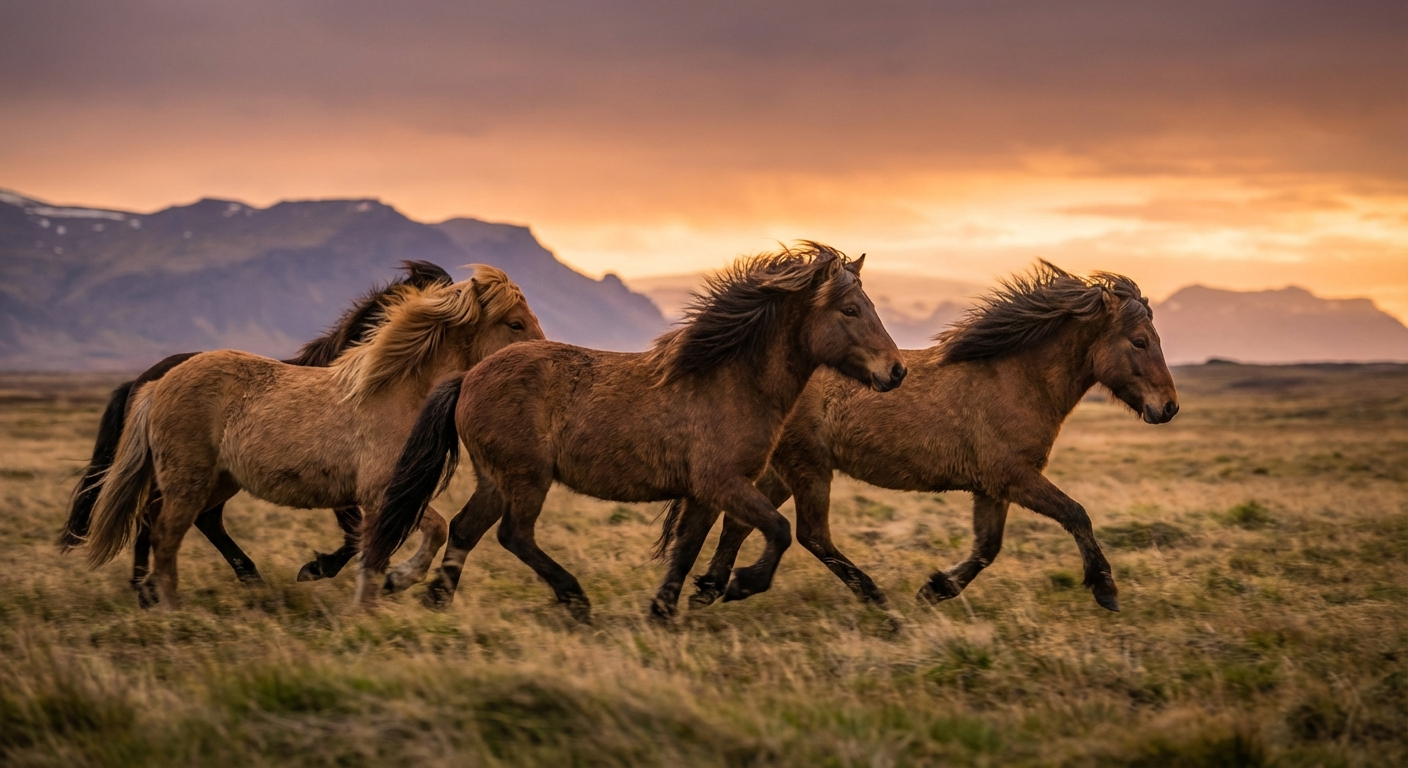
Frequently, the herd manages these moments without theatrics. One horse shifts position; another drifts after them; a third remains stationary but pivots so departure becomes effortless. The collective response can be hushed and synchronized, with no one creating a scene.
Such moments slip past us entirely when we watch only for signs of terror.
Perhaps we, too, communicate our discomfort in whispers rather than shouts—and wonder why no one seems to notice.
3) The herd's answer is rarely a fight—more often a rearrangement
When an unfamiliar scent or mysterious presence registers as significant, horses may quietly reorganize: who stands beside whom, who rests, who remains vigilant, who gravitates toward the periphery.
This is precisely where humans tend to misinterpret what unfolds before them. We might declare one horse "dominant" for displacing another from a particular spot, or anoint another "leader" because the rest follow in their wake.
But what is actually observable proves far more specific and far more instructive: who defers in this particular situation, near this particular resource, in this particular moment. By tomorrow, the pattern may have shifted entirely.
Coexistence means permitting the herd's own relational dynamics to function, rather than superimposing a simplistic hierarchy onto a richly complex social world.
How much of our own social confusion stems from insisting that relationships hold still when they are, by nature, always in motion?
4) Resource moments matter: hay, water, and narrow places
When a horse carries unease, the tension becomes visible around essential needs.
Notice what transpires near hay or water as the mood shifts. Does one horse still permit another to approach? Does someone step quietly to the side? Does a pair continue grazing together while others disperse?
Pay attention as well to confined passageways. A tranquil herd often navigates these spaces through small gestures of courtesy: a pause, a turn of the head, a gentle angling of the body that grants the other safe passage.
When we are present without agenda, these become the moments where we witness horses preserving their own safety—without requiring us to "repair" anything.
In our own lives, scarcity and constraint reveal character; generosity in tight spaces speaks louder than abundance ever could.
5) Our best support is often environmental, not interpersonal
When anxiety rises in us, we tend toward busyness: summoning the horse, demanding their focus, relocating them, demonstrating that all is well.
Yet a horse working through uncertainty may require precisely the opposite: freedom to choose distance, time to observe, and access to familiar, grounding comforts.
Feeding offers one concrete example. Rather than adhering to rigid schedules, you can nurture more instinctive foraging by providing an environment with varied hays and wild herbs, allowing horses to select according to their own sense of need.
This does not "resolve" fear. It sustains self-regulation. It offers the horse something reliable to do with their body while their mind makes sense of the world.
We might remember this for ourselves: sometimes the kindest thing another can offer is not intervention, but an environment that allows us to find our own equilibrium.
6) "Presence" without pressure: being near, not being in charge
If you wish to coexist meaningfully with horses, you can cultivate a straightforward practice: refuse to make their response about yourself.
When a horse elects to stand at greater distance, or to take a different route, let that decision remain undisturbed. Observe it. Honor it.
When the herd draws together and then eases apart, you need not frame it as instruction or as an occasion for training. You can simply bear witness to how they speak through space, through patience, through incremental adjustments.
To live alongside horses—without riding, without training—can become the discipline of allowing their "no" to remain whole, even when we long for a neat explanation.
And perhaps this is the deepest teaching: that love, in any species, sometimes means letting another's refusal stand—unexplained, undiminished, and fully respected.
Equine Notion
https://equinenotion.com/