Shoulders First: How Our Posture Becomes Part of a Herd’s Language
Shoulders First: How Our Posture Becomes Part of a Herd's Language
It came to me on an unremarkable morning, a day when nothing called for mending.
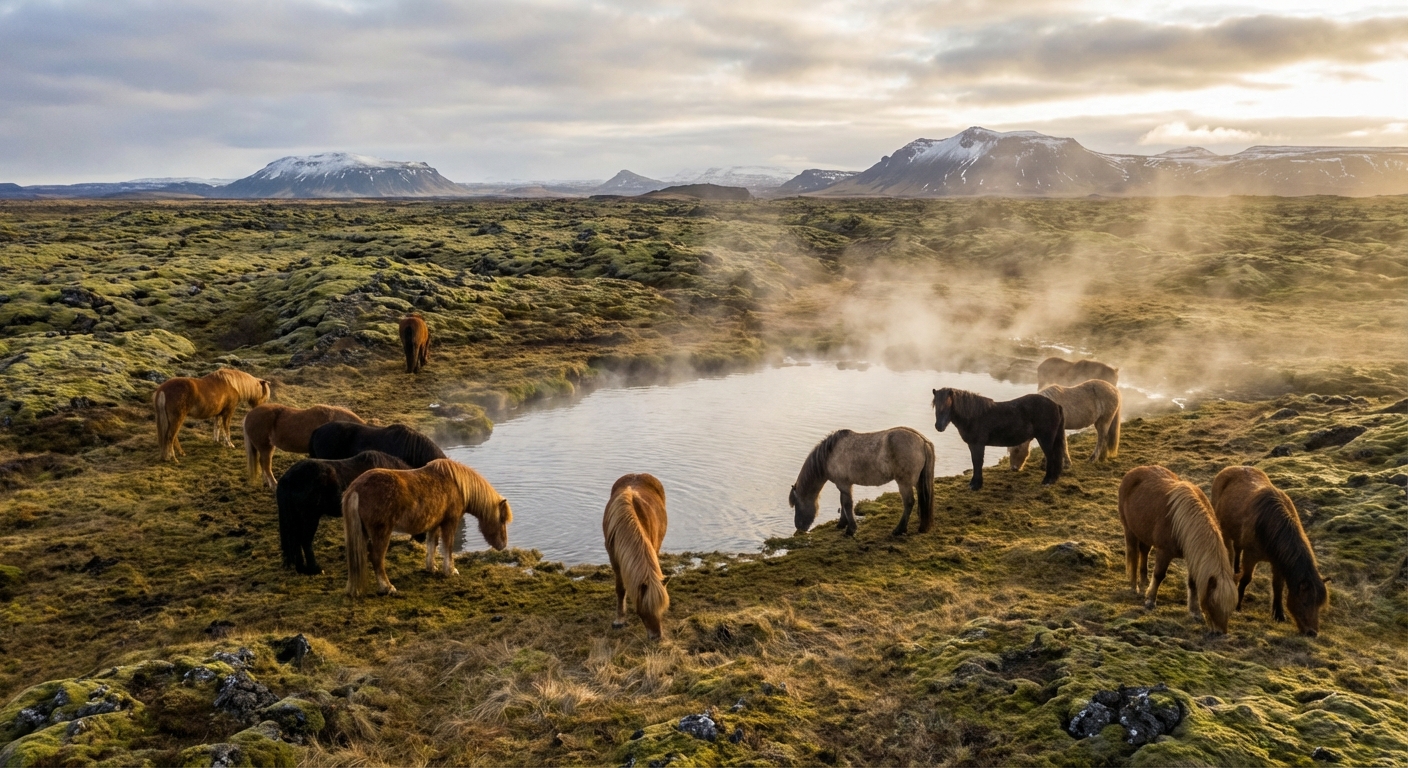
The horses had scattered themselves in that loose arrangement they settle into when feeding isn't an event on the clock—heads grazing low, gentle currents of motion, that quiet form of communion that needs no announcement. I entered without anything in my hands, without summoning anyone, without seeking to extract something from them. Yet a single mare raised her head and redistributed her weight as though I had spoken aloud.
I had not. My shoulders had spoken for me.
I had walked in with my chest aimed directly at her, my steps purposeful, my focus fixed. It was the very stance I assume when my thoughts are consumed by tasks, when my mind has already departed the pasture for elsewhere. She neither bolted nor bristled. She merely recalibrated: a half-step sideways, a pivot that created distance, a subtle repositioning that preserved her ease without spectacle. It appeared to be nothing at all—until I altered my body and observed that "nothing" respond in kind. How often do we broadcast intentions we never consciously chose, our bodies declaring what our minds have not yet acknowledged?
I released the tension in my trajectory. I ceased moving like a demand that insists on an instant answer. I turned my torso aside, let my eyes rest on the earth rather than her face, and permitted my path to arc as though time held no urgency. Her neck descended once more. Another horse, standing behind her, drifted forward as though the atmosphere itself had expanded. Perhaps this is what presence truly means—not the assertion of ourselves, but the quality of space we create for others to inhabit.
This is what we humans overlook when we remain attached to the simplistic notion of a fixed leader. In lived reality, who concedes and who proceeds shifts with circumstance and context. The very horse who steps aside near one location may stand firm near another. The exchange is situational, not a judgment of character. We might ask ourselves: how many of our own relationships suffer from this same misunderstanding—the assumption that roles are permanent rather than fluid conversations?
And this dialogue extends beyond horse to horse.
When we share our lives with them—particularly when we aspire to cultivate trust rather than construct a cushioned world free of all challenge—our physical presence becomes part of the landscape they must read. Our direct approaches, our braced shoulders, our pace, the way we intrude upon their space without awareness: these constitute intrusions, even when we carry nothing in our hands. The same truth governs our human encounters—we are always communicating through our bodies, whether we intend to or not.
I stepped out and returned once more, unhurried. This time I allowed my posture to make no requests. The herd did not "comply." They simply had no need to reorganize themselves around my presence.
Equine Notion
https://equinenotion.com/