The Net as a Negotiation: Slow Feeders and the Right to Set One’s Own Pace
The Question Inside a Simple Tool
At first glance, a slow feeder appears to be a humble bargain: hay remains accessible without being devoured; the stomach avoids emptiness while the portion extends over time. But the deeper inquiry is not whether the net accomplishes its function—it is what manner of relationship it forges between the horse and the passage of hours.
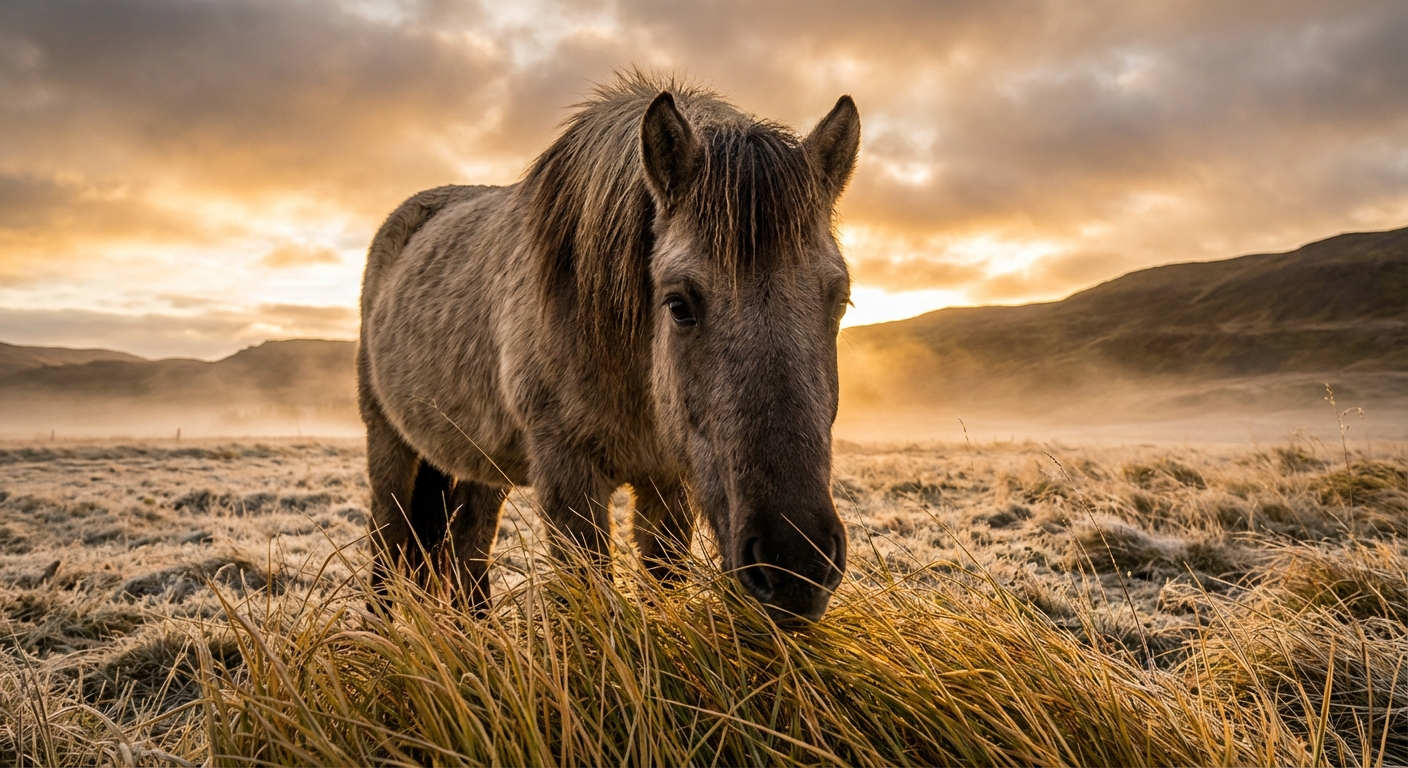
Horses inhabit a digestive truth that refuses to wait politely. Gastric acid arrives without ceasing. The moment consumption halts, an unseen timer begins counting toward discomfort and harm. Uninterrupted access to forage is therefore not an indulgent extra; it constitutes a foundational element of wellbeing. Within this understanding, the slow feeder transcends mere feeding strategy—it becomes an assertion of self-determination: sustenance remains ever-present, and the horse alone governs how the hours unfold.
We might recognize ourselves in this need—the quiet longing to set our own tempo, to have what nourishes us available without scarcity shaping every choice. True autonomy begins when the essentials are secure enough that we can finally breathe.
Autonomy Is Not Just "Access"
One can technically make hay "present" while still stripping away control over rhythm. A slow feeder suspended where the horse cannot fully settle, or positioned in a manner that demands uncomfortable postures, transforms nourishment into labor rather than a calming cadence. The stomach may receive its portion, yet the psyche may be denied its sense of flow.
Here the paradox of safeguarding emerges quietly. We introduce an apparatus to shield the horse—from hasty consumption, from waste, from our own anxiety about excess. When that apparatus dominates the experience of eating, protection begins masquerading as restriction. The horse may then express that restriction through the only truthful vocabulary available: restlessness at the feeder, sudden departures and returns, or cyclical behaviors that serve as a dispatch from the environment.
Stereotypic behavior, viewed through this lens, is not some arbitrary vice. It frequently signals that the surroundings have failed to satisfy a fundamental requirement. When the slow feeder becomes the day's primary source of tension, it transforms into the platform upon which that communication is staged.
How often do our own repetitive anxieties reveal not personal failing, but environments that quietly deny us something essential? The body speaks what the voice cannot name.
Pace Control Is a Whole-Day Design Problem
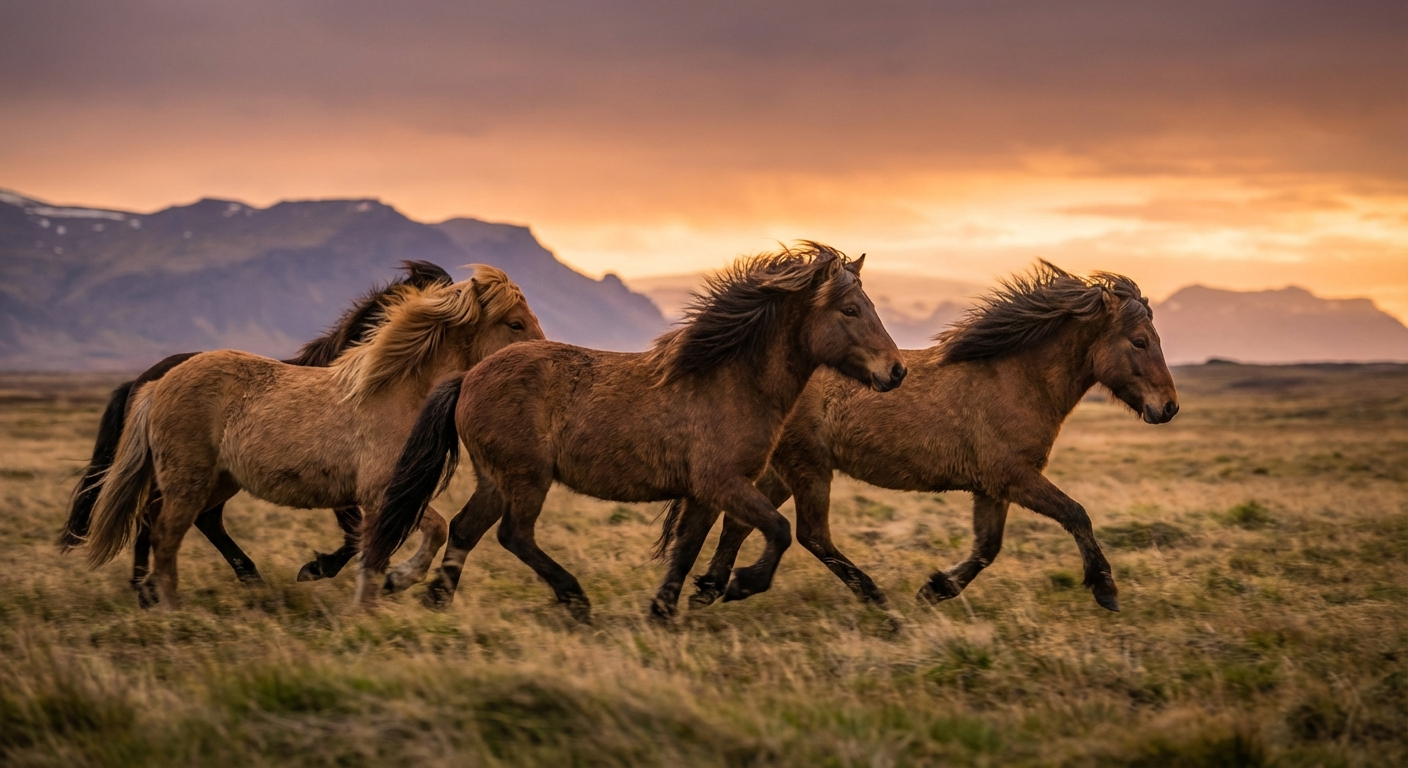
Since horses are engineered for motion rather than stillness, sovereignty over eating rhythm cannot be separated from sovereignty over movement. A horse's natural locomotion is immense—spanning many kilometers in a single day. When existence is compressed into confined quarters, "slow feeding" risks becoming "slow existing," where the horse is nominally engaged yet never genuinely traversing the hours.
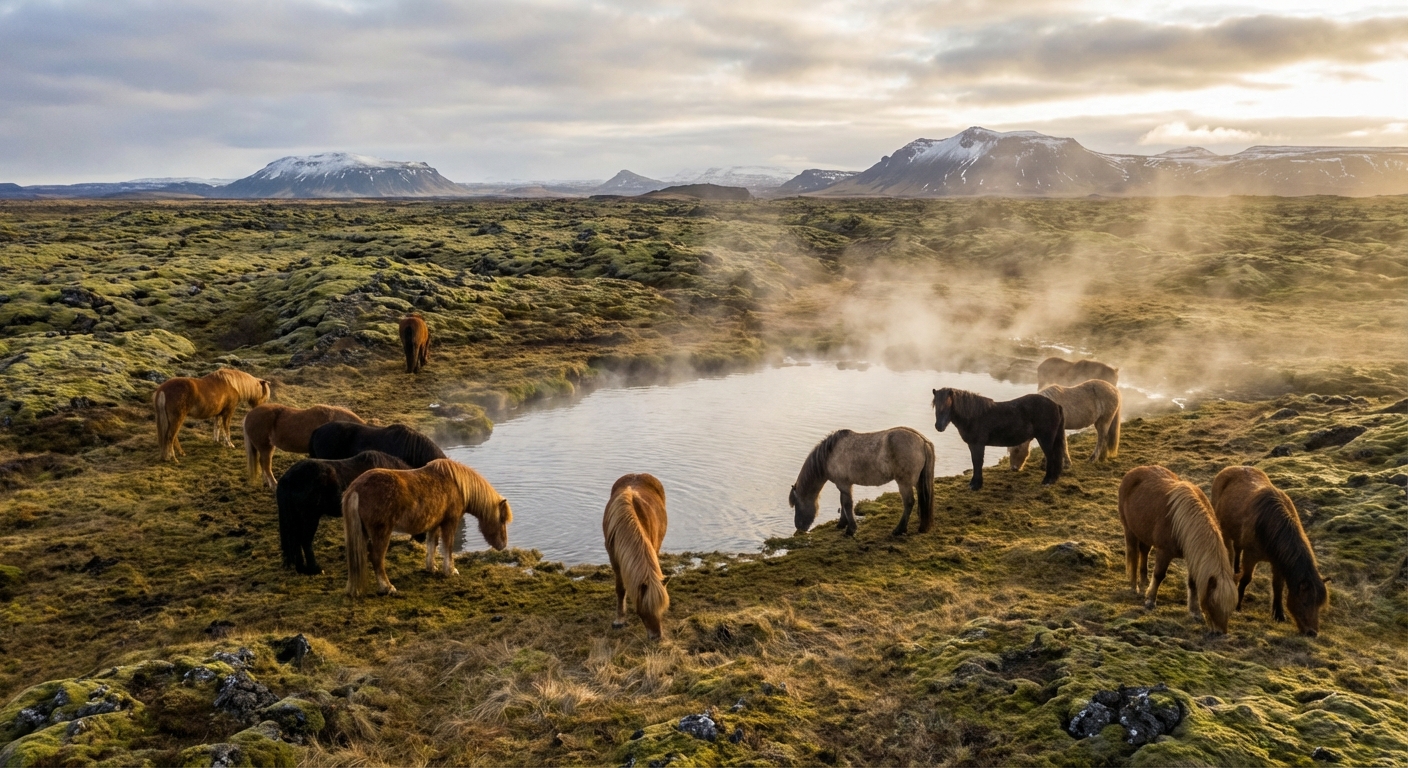
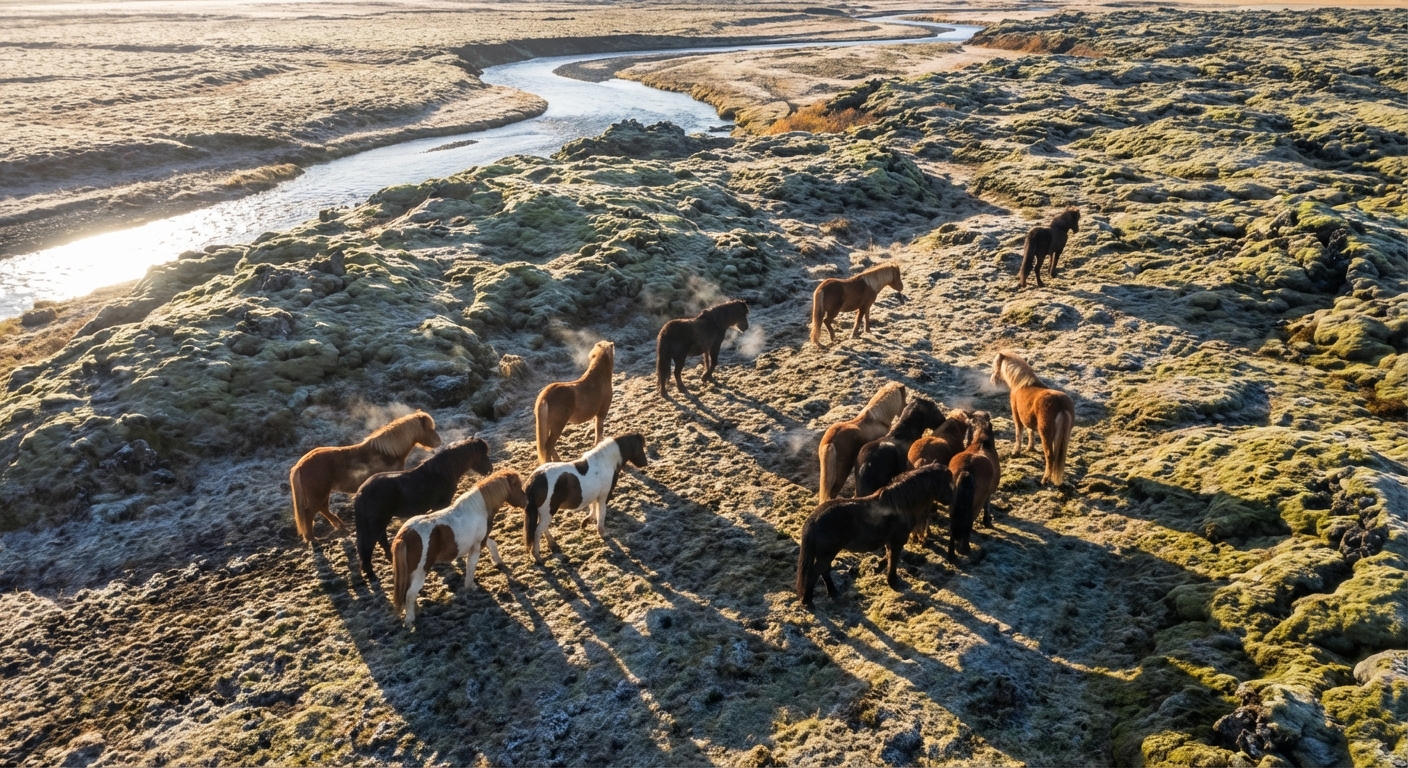
An approach rooted in coexistence regards the slow feeder as one element within a living geography. Distributing forage across multiple stations can invite spontaneous walking between bites, allowing the horse to weave movement into eating as evolution intended. This is not about programming exercise. It is about declining to architect a day that demands immobility as the price of being fed.
This principle also touches the communal existence of horses. Herd hierarchies are not governed by a single unchanging authority controlling all resources; dominance and yielding shift according to circumstance and bond. When forage appears at only one cramped location, humans inadvertently compress perpetual negotiation into a chokepoint. When forage is dispersed and genuine choice exists, social dynamics can remain nuanced—fewer confrontations, less friction, greater space for peaceful cohabitation.
We too flourish when our days are designed for movement rather than mere occupation, and when our communities offer enough room that we need not constantly jostle for position.
The Ground Beneath the Feeder Matters
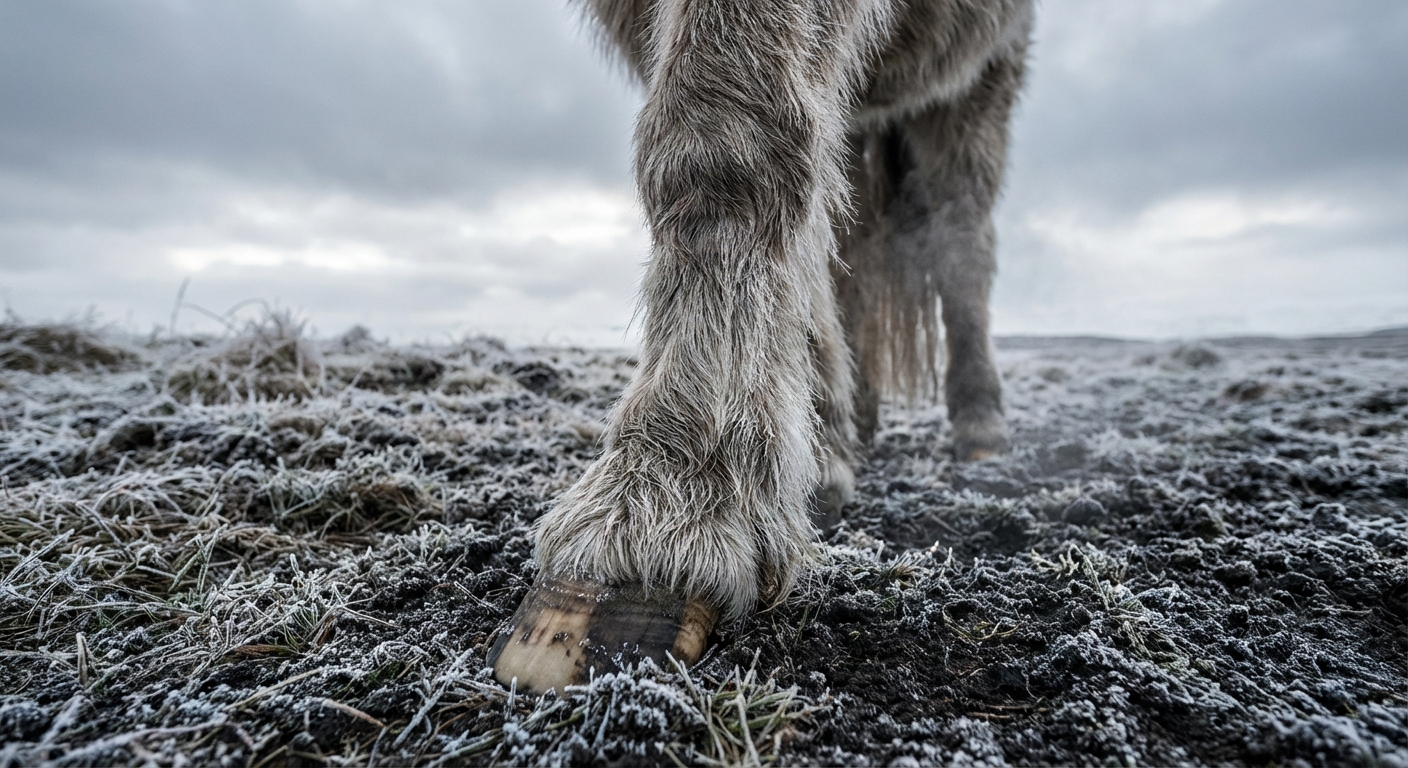
Conversations about slow feeders often proceed as though they hover suspended, divorced from earth. In truth, they gather hooves, saliva, manure, and the force of rain into a concentrated ring. The vitality of soil and the stewardship of pasture are not peripheral concerns; they belong to the core of welfare.
When a single site becomes the eternal feeding center, the terrain can deteriorate, and the horse's world can contract around that compromised zone. The land then yields diminished returns: less dependable footing, less viable grazing, less comfort when the rains come, fewer spots that feel welcoming for standing and eating. Coexistence is, in part, the discipline of not compelling the horse to dwell amid the wreckage of our expedience.
A slow feeder positioned with awareness of the land can achieve the inverse. It can redistribute impact, safeguard areas in recovery, and sustain a pasture that continues to thrive. In this way, temporal sovereignty for the horse and regeneration time for the soil become a single design philosophy expressed through two distinct forms.
The places where we gather our nourishment shape us as much as the nourishment itself. To care for the ground is to care for the one who stands upon it—a truth that extends far beyond pastures.
A Shift in the Human Role
Unbroken access to forage redefines what "caretaking" signifies. The human position evolves from being the dramatic moment of food delivery toward becoming the unobtrusive architect who ensures sustenance never disappears. Slow feeders can facilitate this transformation—provided they are employed as instruments of continuity rather than mechanisms of control.
This becomes especially significant whenever circumstances interrupt eating: travel, medical interventions, disruptions to routine. The instant consumption ceases, the acid clock resumes its ticking. A management philosophy centered on perpetual forage availability learns to foresee these interruptions and mitigate them where feasible—not through urgency, but through anticipation.
Ultimately, the finest slow feeder is not the one that most precisely rations hay. It is the one that grants the horse possession of moments: to eat, to rest, to wander, to return—without the day feeling like a sequence of approvals sought and granted.
Perhaps the deepest gift we can offer any creature—or any person—is the freedom to move through time as their own, unburdened by the constant need to ask permission simply to exist.
Equine Notion
https://equinenotion.com/