Soft Eyes, Open Gate: When a Horse Treats Our Gaze Like a Fence
Soft Eyes, Open Gate: When a Horse Treats Our Gaze Like a Fence
It unfolded in the quietest of moments: I stood beside the hay, motionless, summoning no one, demanding nothing. I was simply observing.
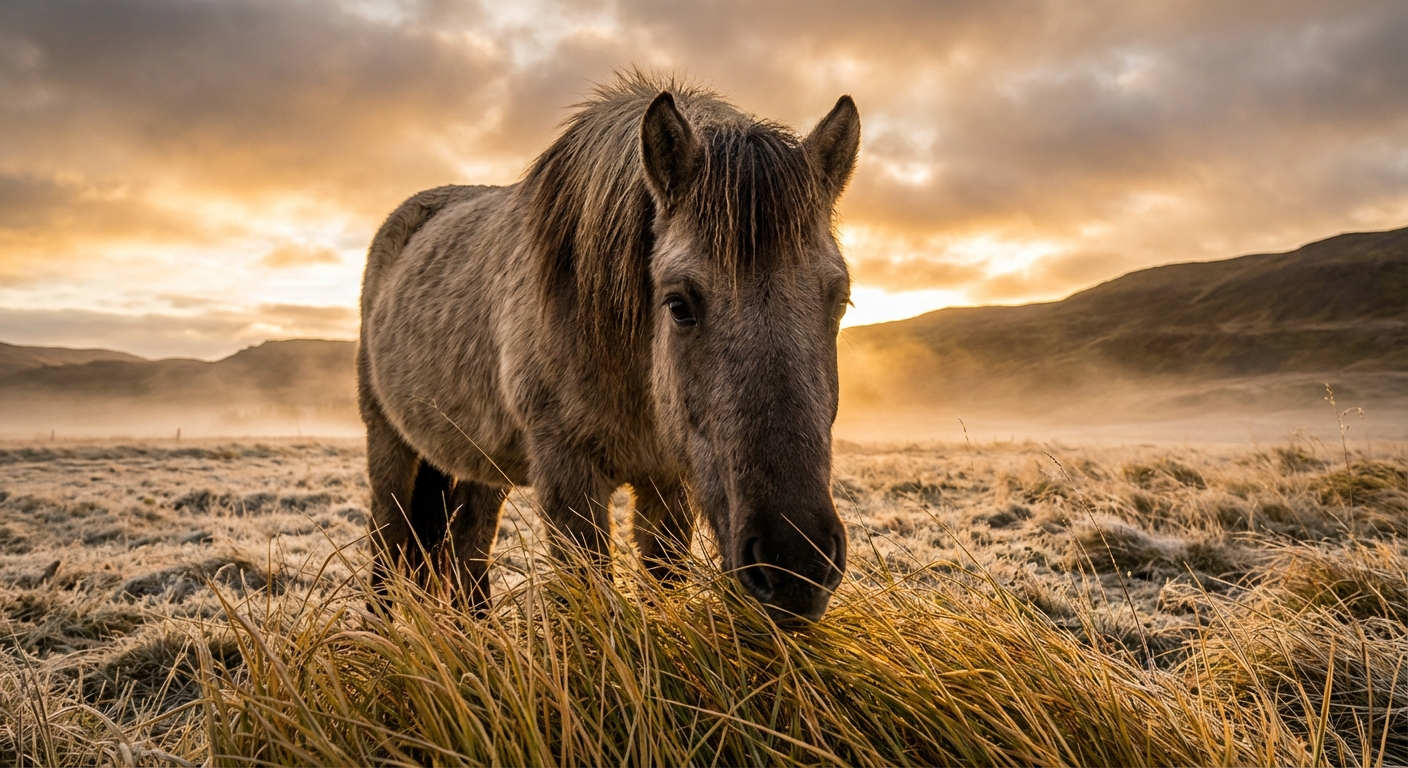
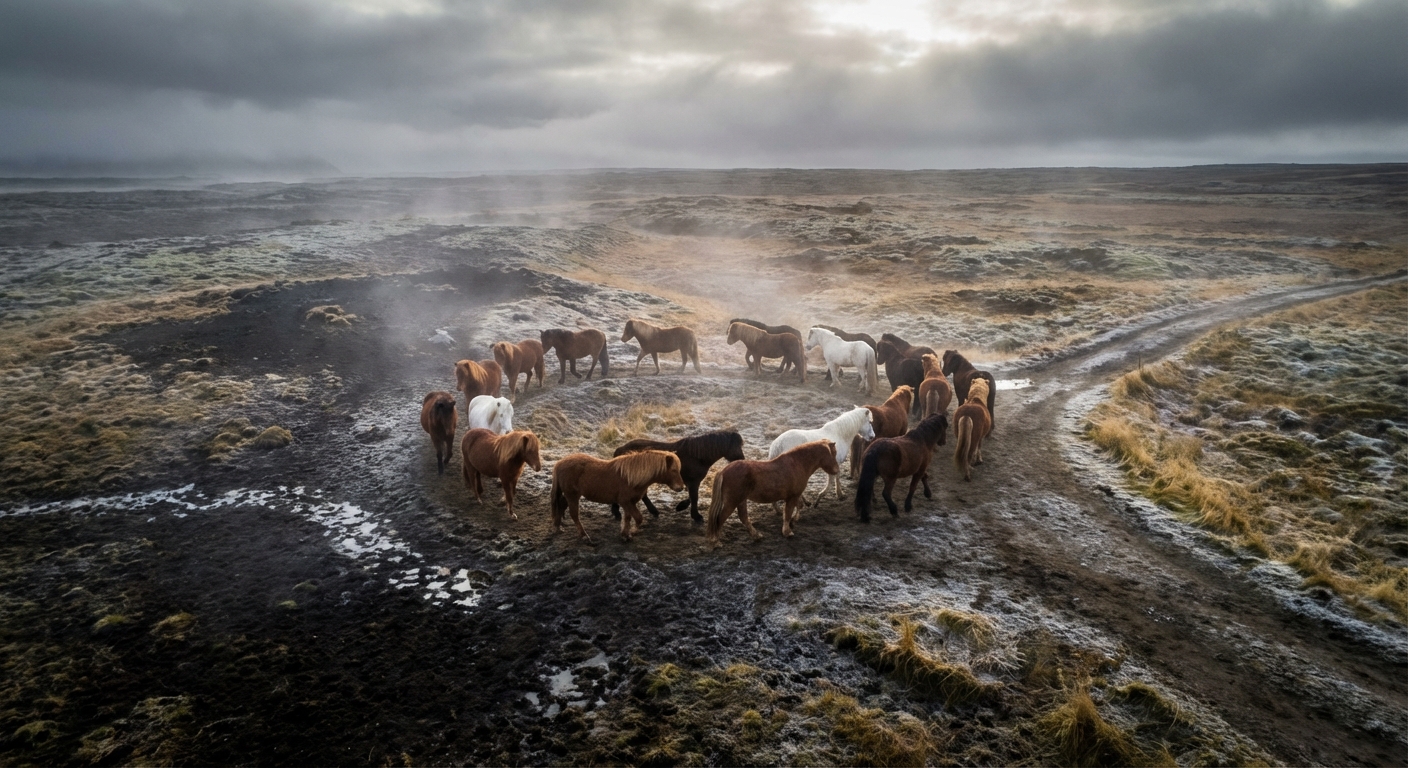
One of the mares had her nose deep in the forage, engaged in what horses are designed to do—graze briefly, rest, graze again, keeping digestion and time flowing forward. The instant I locked my eyes onto her neck, she raised her head. Not alarmed. Not "discovered." Merely… paused. Her chewing halted mid-motion, ears rotated toward me, and her weight redistributed as though my focus had materialized into something tangible she needed to navigate around. How often do we, too, sense when someone's attention lands on us—feeling watched before we consciously register it, our bodies responding to an invisible weight we cannot name?
I conducted a small trial without formalizing it into anything deliberate. My feet remained planted while only my gaze shifted. I directed my eyes beyond her—toward the hedgerow, the earth, toward nothing specific. Her head descended once more. The hay continued its silent purpose.
In that instant, my understanding of "space" expanded. It wasn't merely my physical footprint that held significance. It was the invisible thread stretching from my eyes to her form. My gaze functioned as a kind of stance—capable of obstructing or welcoming, constricting or releasing, all without taking a single stride. We might consider how our own attention operates similarly in human encounters: the way a fixed stare can feel like pressure, while softened eyes can feel like permission.
Within a herd, the roles of deferring and asserting are not fixed identities; they shift according to context and relationship. The same dynamic can exist between horses and humans. A horse might interpret a person's unwavering stare as something requiring accommodation, much as they would create space at a feeding site when social dynamics change. This does not signify "submission." It can indicate awareness of outcomes and the preservation of harmony. Perhaps we recognize this in ourselves—the way we instinctively adjust our presence depending on who holds the room, not from weakness, but from a kind of social intelligence.
Beneath all of this runs the physiological truth that never stops. A horse's stomach acid does not pause simply because we choose to be "present." The moment eating ceases, the countdown toward discomfort begins. In shared existence, uninterrupted access to forage is not a privilege—it is the foundation. If my watching can cause a horse to lift her head, reduce her intake, step away from the hay, or shift from eating to vigilance, then my "observation" carries weight. It becomes intervention. This invites reflection on how our presence—even when silent, even when still—shapes the conditions of those around us in ways we rarely measure.
I retreated from the hay, angled my shoulders gently away, and allowed my eyes to soften—not concealing myself, simply refusing to fix anyone in place with my attention. The mare reclaimed her own chosen distance. Another horse wandered through, unrushed. The group continued their walking and grazing in that unhurried rhythm, the kind of motion that sustains a horse across the hours.
At times, coexistence is precisely this uncomplicated: caring for a horse means guaranteeing that food remains perpetually accessible—and guaranteeing that our own bodies, our eyes included, do not inadvertently become the barrier that interrupts their nourishment. In our human lives, too, we might ask: what invisible fences do we build with our attention, and how might we learn to open the gate?
Equine Notion
https://equinenotion.com/