Speaking Like Weather: Calm Reassurance as the Soundtrack of a Shared Field

Hook
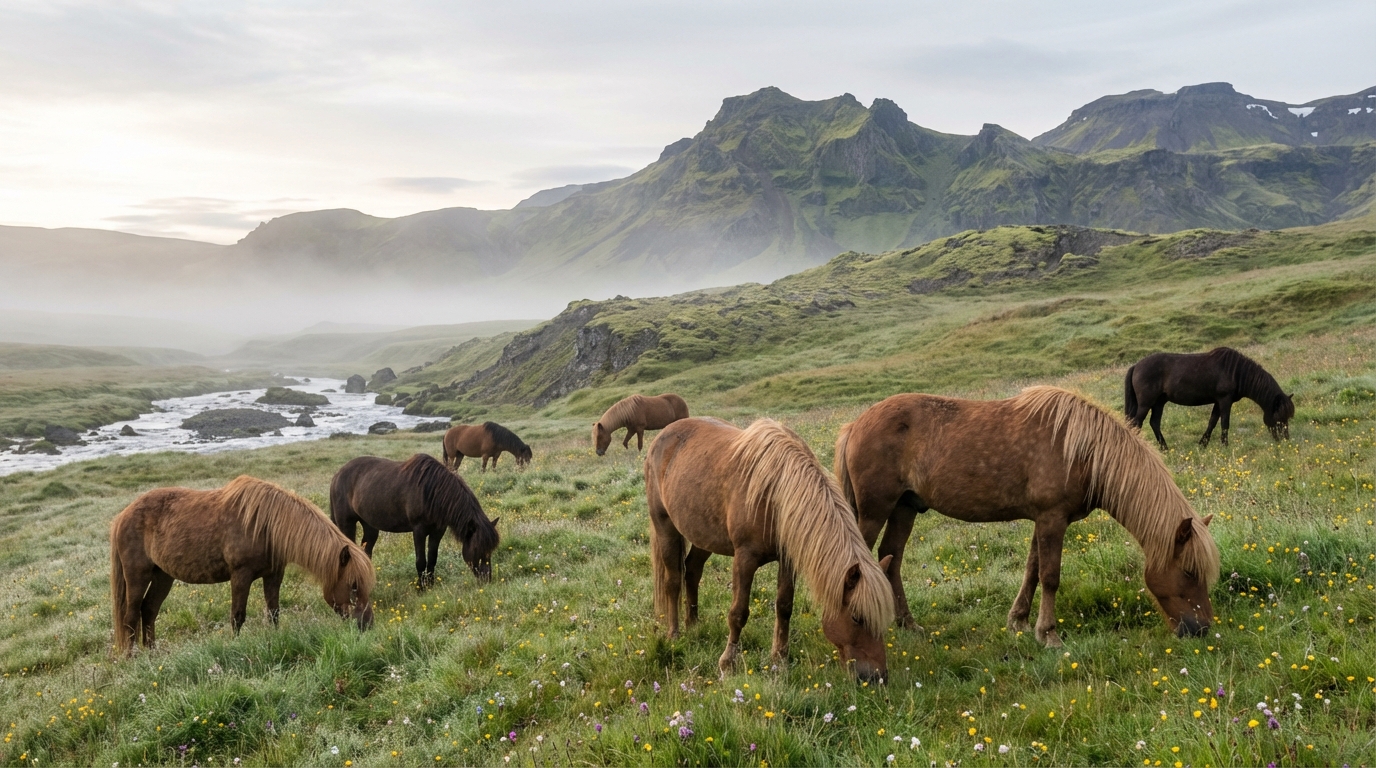
I move along the fence line in a way that makes it seem as though we humans are the ones contained, while the horses possess the open land. I summon no one. I request nothing. I simply let words fall—quiet, unremarkable, without haste—as I tend to the hay and survey the grounds. My voice carries no instruction. It resembles weather instead: ever-present, reliable, and perfectly easy to tune out.
This is where genuine calm reassurance takes root in true cohabitation. Not as an instrument for eliciting response, but as a quality of sound that permits the day to remain uncomplicated.
1) When the land is theirs, your voice has to fit
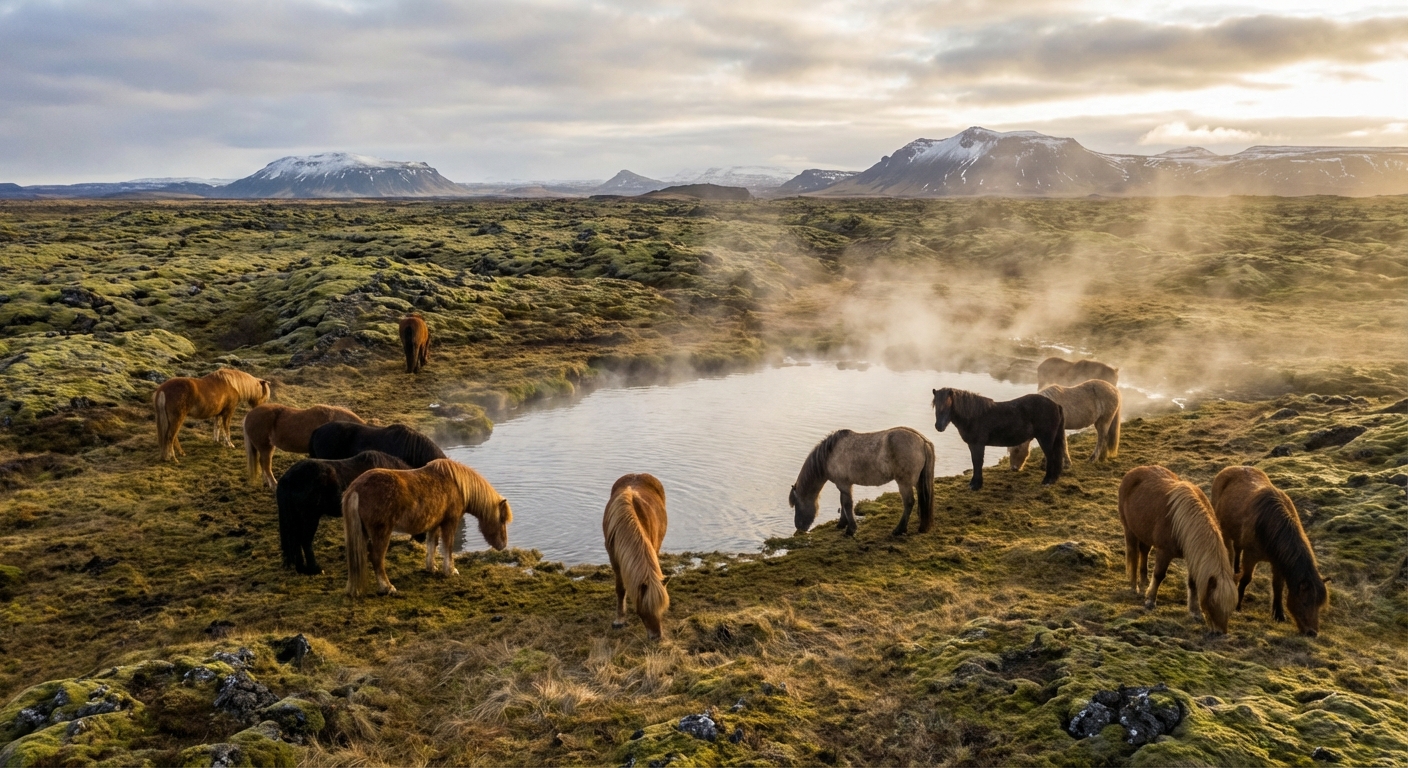
In conventional settings, horses spend their lives confined to narrow stalls. Here, the arrangement is inverted—the vast majority of the terrain belongs to them, while we occupy the modest fenced area near the dwelling. This reversal fundamentally alters how human presence registers in their world.
When horses possess the freedom to withdraw, your voice cannot function as a snare.
A voice that attempts to draw in, convince, or anchor a horse in position contradicts a life where the animal retains genuine choice. Calm reassurance stands as the antithesis of vocal grasping. It is a sound that honors distance. It refuses to pursue the horse across the pasture. It declines to transform the entire landscape into a zone of pressure.
Within such an environment, an even tone proves most effective precisely when it makes no claim on attention.
We might ask ourselves whether our own voices—in homes, workplaces, relationships—similarly honor the freedom of those around us, or whether we unconsciously cast nets of expectation with every word.
2) Reassurance without summons: talking *near* horses, not *at* them
A delicate distinction exists between addressing a horse directly and simply speaking within the horse's sphere of existence.
A calm voice can operate like a focused beam—directed, persistent, intent on producing an outcome. Yet in a shared pasture, reassurance more often emerges from speech that remains diffuse and gentle. A handful of simple utterances as you move about, pause, and attend to your tasks. Nothing abrupt. Nothing performed.
The intention is not to cultivate reliance on your voice. The intention is to render your presence legible. When your tone remains constant, the horse need not expend energy interpreting you.
This holds greatest significance when you harbor no designs on the horse whatsoever. Coexistence apart from riding or training means the horse's hours do not orbit around your purposes—therefore your voice should carry no trace of agenda.
Perhaps the deepest gift we can offer anyone—human or animal—is a presence that requires no translation, no vigilance, no bracing for what comes next.
3) The sound of a day without a feeding clock
Our approach to nourishment follows no rigid timetable. Rather, we seek to encourage the instincts of natural grazing. We ensure the surroundings provide access to diverse varieties of hay and wild-growing herbs, allowing the horses to select intuitively according to their needs.
This choice-centered environment reshapes the very texture of reassurance.
When no fixed schedule looms to prepare for, the voice need not become a herald of countdown. It need not kindle anticipation, restlessness, or the coiled tension that gathers around an expected moment.
A tranquil tone during feeding-related work can remain exactly what it is: a background signal that nothing pressing unfolds. You are here, you are in motion, you are replenishing or inspecting provisions—yet you are not sounding an alarm that announces, "Gather now and vie for your share."
In this manner, voice participates in preserving a sense of spaciousness around sustenance. Not through governing horses, but through keeping the human atmosphere leisurely.
How different might our own mealtimes, our own rhythms of receiving, become if we released the tyranny of the clock and trusted in sufficiency?
4) Letting quiet be the main language—voice as the gentle exception
Calm reassurance functions best when it does not eclipse the field itself.
When horses inhabit a landscape with ample room, with diverse foraging possibilities, and with the capacity to choose freely, silence already conveys its own message: nothing is required of you in this moment.
A voice can reinforce that message when employed sparingly and with regularity—brief, soft, unremarkable. Not ceaseless chatter that fills every pause. Not an emotional display. Merely enough that, when sound does arise, it registers as familiar.
It may be as elementary as quietly narrating your actions as you walk: inspecting, carrying, setting down, stepping away. The reassurance resides not in the words themselves but in the absence of any edge.
The aim is not to compel the horse to attend. The aim is to make continued living effortless for the horse.
In our human encounters too, perhaps the greatest kindness is speech that asks nothing—that simply accompanies another's existence without redirecting it.
5) Consistency in tone is a kind of boundary
A fence renders boundaries visible to the eye. Yet tone can establish boundaries through an entirely different medium.
When your voice maintains its calm, it delineates clearly what you are refraining from: you are not intensifying, not pursuing, not insisting. It communicates that your presence holds steady.
This harmonizes with a life where horses are granted expansive territory while humans inhabit a more modest enclosure. Within such an arrangement, horses should not bear the burden of managing us. They should not need to speculate whether we might suddenly surge into their domain with urgency.
A consistent voice helps keep the human imprint emotionally modest, even as the human form traverses the land.
And because the horses enjoy access to varied hay and wild herbs—because they are permitted to make their own nutritional decisions—a theme of autonomy already pervades. A calm tone echoes that theme rather than contending with it.
We might recognize here a universal truth: that the steadiness of our presence often matters more than its content, and that reliability itself becomes a form of respect.
6) Calm reassurance as coexistence: a voice that doesn't take the day hostage
The most elemental measure of a reassuring voice is this: does it permit the horse to go on being a horse?
In a setting where the land opens to them and where feeding encourages natural foraging rather than time-bound pressure, the most considerate voice is one that refuses to reorganize the entire field around a human occasion.
Calm reassurance does not pursue intimacy. It does not require the horse to demonstrate trust. It aspires only to become a predictable feature of the environment—one that does not constrict the atmosphere.
When voice achieves such ordinariness, it can recede into what truly matters: space, choice, and a day that belongs to the horses as fully as it belongs to us.
And perhaps this is the quiet invitation extended to all of us: to become so undemanding in our presence that others—whether horse or human—can simply continue becoming themselves.
Equine Notion
https://equinenotion.com/