Stop Casting the ‘Alpha’: What Horses Actually Negotiate When We’re Not Looking
Stop Casting the 'Alpha': What Horses Actually Negotiate When We're Not Looking
The narrative of the "alpha" seduces us with its simplicity. A single horse commands, the rest obey, and every flattened ear serves as confirmation. Yet a herd does not exist within a catchphrase. It exists within moments—subtle decisions about who gives way, who draws near, who pauses, and what holds significance in this instant. When we persist in imposing an alpha narrative onto horses, we do more than misread them; we begin managing a crisis of our own making.
A Crown That Doesn't Exist
A horse may appear assertive at the hay pile yet uncertain at the water trough. The very same animal can stand firm one afternoon and defer without hesitation the next. This is not "inconsistency"—it is the truth that equine social standing is bound to circumstance and to particular bonds between individuals.
Here lies the quiet damage the alpha myth inflicts upon welfare: it collapses a living, fluid social tapestry into a fixed identity marker. Once a horse receives the label "dominant," every exchange becomes filtered through that designation. A single step forward transforms into "challenging you." An expression of warning becomes "attempting to rule the herd." And suddenly humans feel compelled to respond—not through careful watching, but through correction.
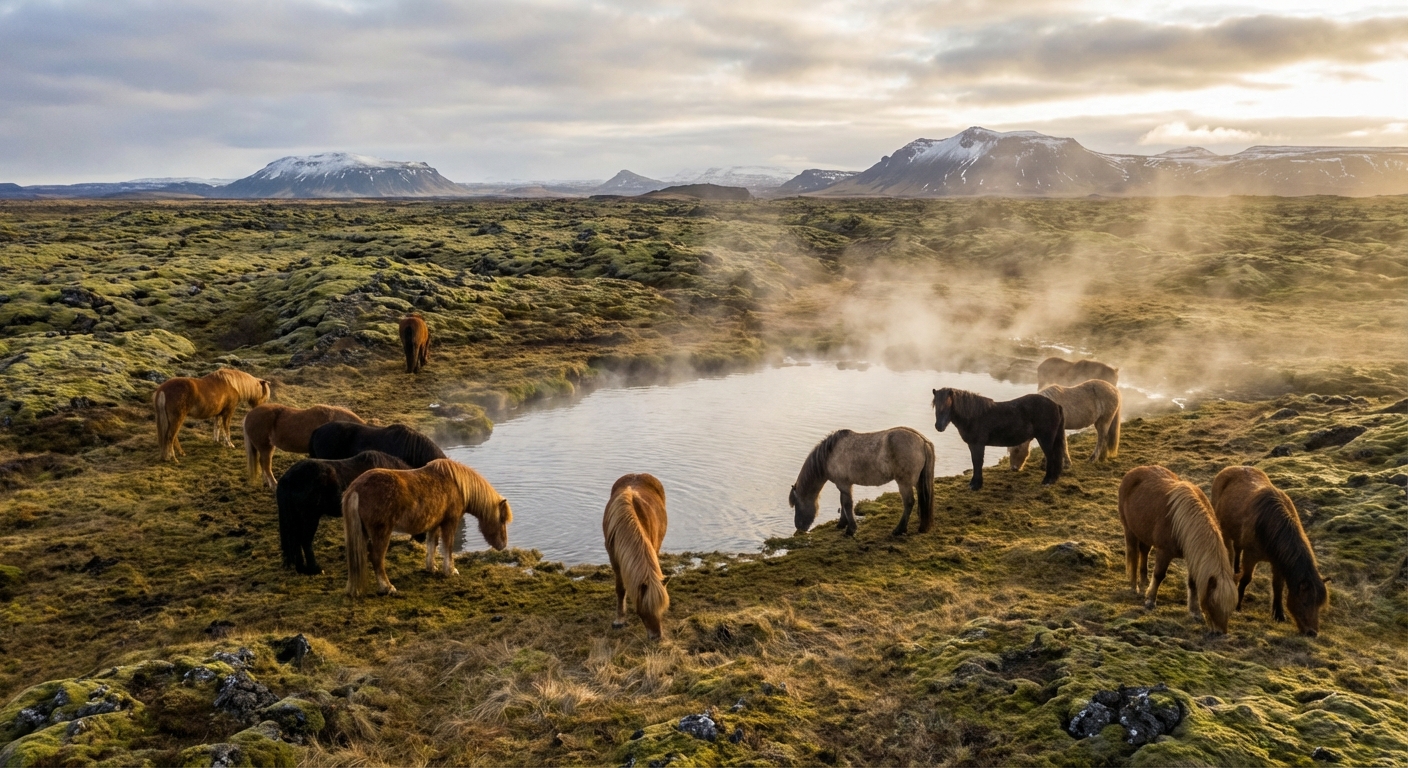
What horses actually demonstrate within groups is rarely an obsession with triumph. Much of the observable peace emerges from familiarity and recollection: who customarily yields near a particular resource, who is generally left undisturbed, who favors a margin of distance, who can share without friction. The "hierarchy" resembles less a throne room than a collection of understood expectations. We too might recognize how our own social worlds function not through rigid ranks but through unspoken understandings—patterns of deference and assertion that shift depending on context, relationship, and what is at stake in the moment.
Resource Truth: Who Yields Where
If dominance exists at all, it exists in a circumscribed sense: who retreats from whom in relation to something particular.
This precision is essential. One horse may vigilantly protect a favored feeding station while displaying no concern for directing movement across the pasture. Another may be the first to venture toward unfamiliar ground, yet willingly step aside at the hay. Two horses can maintain a settled dynamic between themselves that bears no resemblance to how either behaves with any other companion.
When we disregard this complexity and demand a single hierarchy—one ranking that accounts for every moment—we lose sight of what the behavior actually means. We also endanger ordinary negotiation by interfering with it.
For when humans intercede based on a mistaken narrative, we frequently strip horses of their innate capacity: to regulate one another through subtle signals, brief distances, and swift choices that forestall escalation. We insert ourselves into the center, reposition bodies, alter access, then puzzle over why tension persists. In our attempt to impose "harmony," we may generate instability that demands perpetual oversight. How often do we do the same in our human communities—intervening with good intentions, yet inadvertently dismantling the organic negotiations that groups naturally conduct?
The Welfare Trap: Comfort as Control
Much of contemporary horse care rests upon an unexamined premise: suffering is unacceptable, comfort is desirable, and the objective is to eradicate all hardship. Full stop.
But the natural world does not operate by this calculus. An existence devoid of challenge does not cultivate genuine well-being; it cultivates vulnerability. This principle applies as much to social life as to physical constitution. If horses are never permitted to navigate minor social tensions—if every pinned ear summons human intervention—they forfeit practice in the very competencies that sustain functional groups.
This is where "neutral nature" becomes a useful framework. It is not about constructing an immaculate artificial sanctuary. It is precisely the reverse: granting horses space to encounter ordinary existence with their own abilities, while we cease attempting to script every scene.
This does not signify abandonment. It signifies restraint. It signifies discerning the boundary between peril and discomfort, between genuine injury and routine social discourse. Perhaps we might apply this same wisdom to ourselves—recognizing that the impulse to eliminate all friction from our lives, or from the lives of those we love, may inadvertently weaken the very resilience we hope to protect.
Coexistence Without Casting Villains
Sharing space without riding or training poses a different inquiry than "Who holds authority?" It asks: "What is this collective endeavoring to accomplish, and what are they already equipped to sustain?"
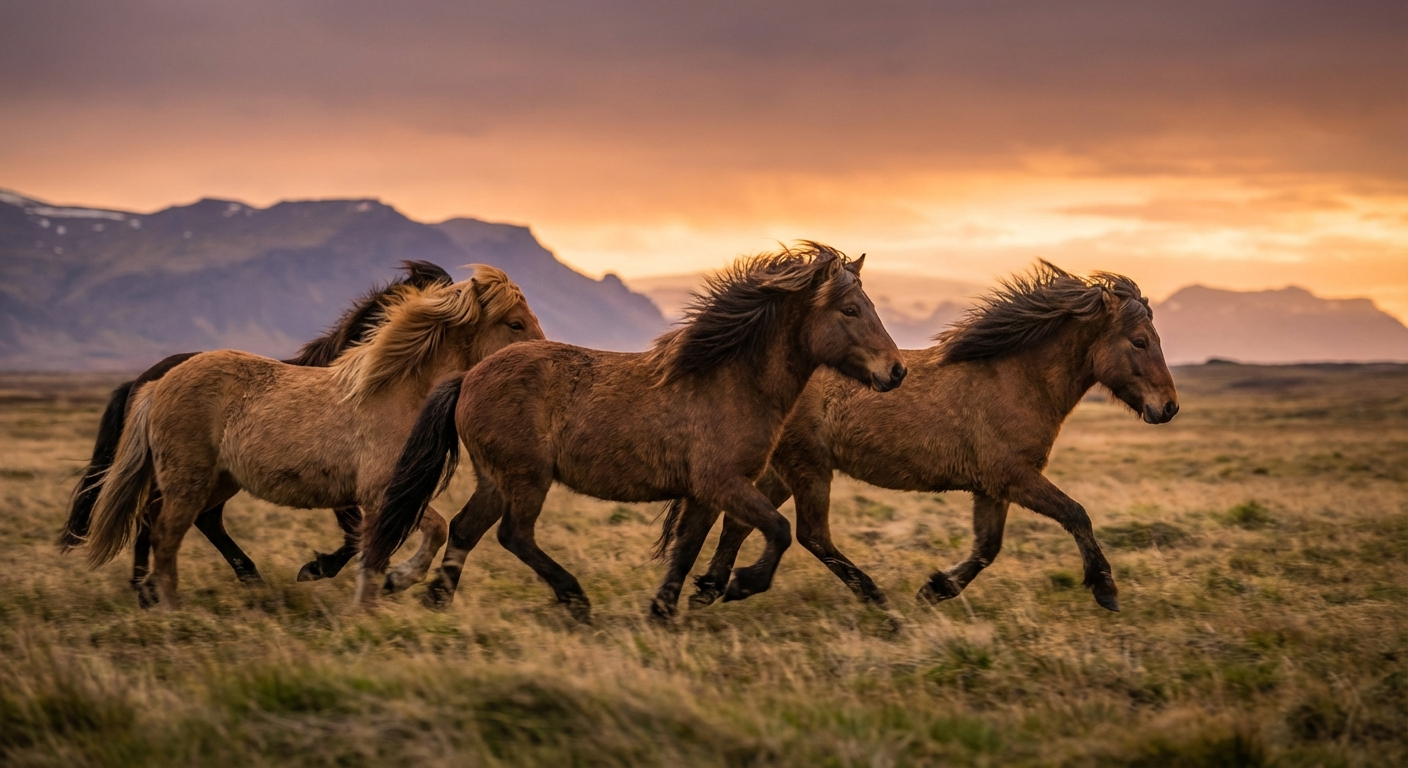
Horses possess fundamental requirements that define their social existence: locomotion, foraging, and companionship. Their physical forms are designed for extended daily wandering and perpetual grazing; their psyches are constructed for dwelling among other horses. When these needs are fulfilled more organically, many social difficulties dissolve of their own accord—not because someone "prevailed," but because the surroundings cease compelling conflict.
And when these needs remain unmet, the alpha narrative becomes a convenient deflection. Overcrowding, restricted access, abrupt human timetables—these can transform minor negotiations into relentless pressure. Stereotypic behaviors may signal that the environment is betraying the horse, not that the horse possesses some moral deficiency. In such circumstances, attributing blame to "dominance" becomes a method of evading the more difficult reality: the arrangement may be demanding the impossible from horses.
Coexistence, then, is partly an ethical commitment to cease portraying horses as antagonists and begin perceiving them as creatures navigating their day. This same reframing awaits us in our human relationships—the invitation to see others not as obstacles or threats, but as beings doing their best to solve the puzzle of existence.
Trust as the Quiet Intervention
A paradox dwells within protection: when we strive to avert every hazard, we may render horses less capable of adaptation. Unceasing interference can deprive a horse of its essential nature.
The alternative is not the abandonment of care; it is the cultivation of trust.
Trust manifests as observation before action. It manifests as permitting horses to exchange low-consequence information without transforming it into a tribunal. It manifests as acknowledging that a herd can possess a form of social wisdom that requires no constant revision from us.
And it manifests as humility: accepting that "dominance" is not a singular, enduring explanation. It is a glimpse—frequently resource-specific, invariably relational, and routinely misconstrued when humans demand a tidy alpha hierarchy.
When we abandon the casting of the alpha, we abandon the casting of ourselves as director. We become what coexistence most requires: a steady presence who does not mistake control for care. In this, horses become our teachers—showing us that true relationship asks not for dominion, but for the quiet courage to witness without grasping, to accompany without commanding.
Equine Notion
https://equinenotion.com/