The Alarm That Never Clocks Out: Coexisting With a Horse’s Long Stress Loop
The Alarm That Never Clocks Out: Coexisting With a Horse's Long Stress Loop
What first catches my attention is never anything spectacular. It is a horse who appears "fine," standing in stillness, committing no obvious fault—yet never quite settling into genuine repose. The body holds motionless, but the entire day carries a quality of readiness. You perceive it in the constant scanning, in the way minor shifts register as events far larger than they ought to be. We often reach for convenient narratives: a challenging temperament, a dominant nature, an ingrained habit. But I find myself circling back to another explanation: a persistent stress loop, the sort that manifests as chronically elevated cortisol and dysregulated HPA function—not because of a single catastrophic event, but because the mundane hours have been architected as a sequence of small emergencies.
Stress Is Often a Schedule, Not an Incident
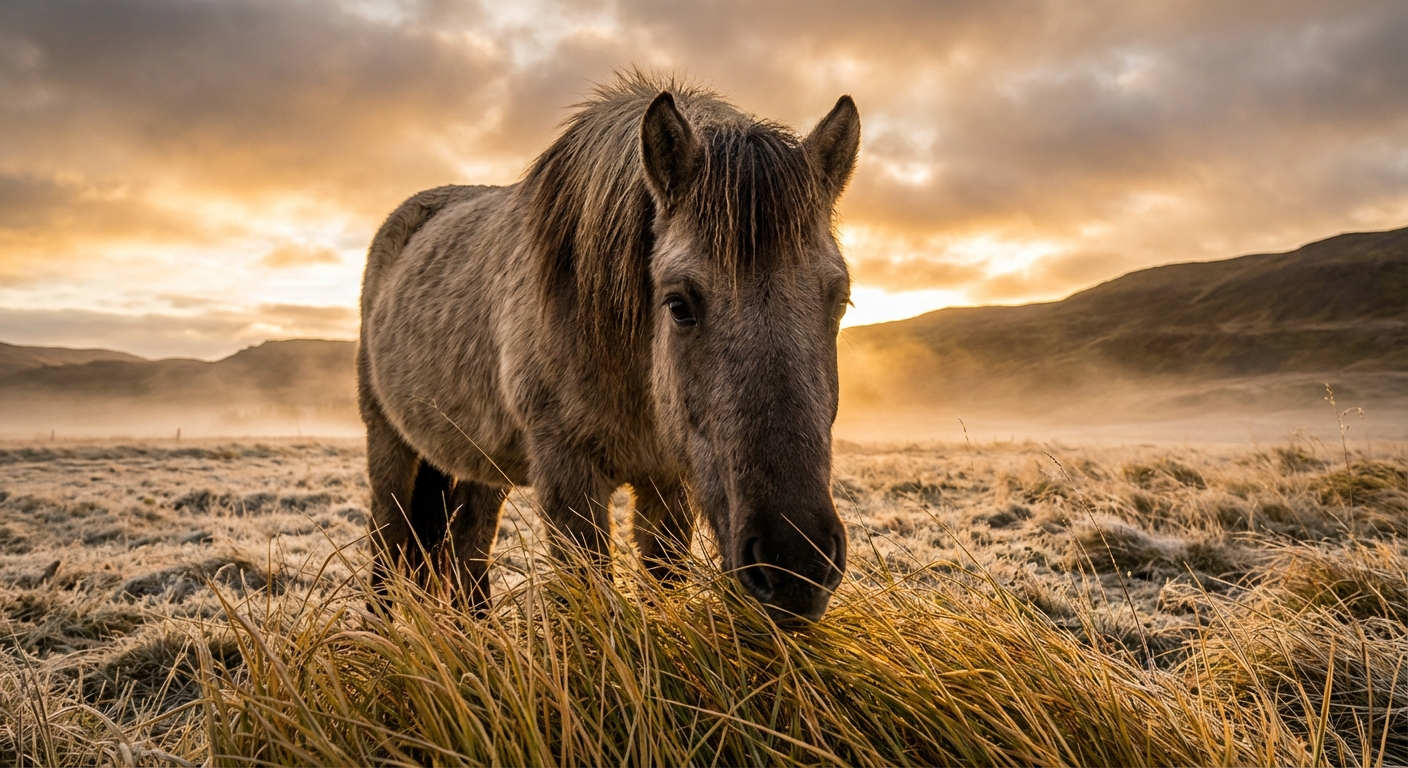
The horse's fundamental design does not revolve around "meals" and "rest periods" the way we humans organize our working hours. The biological core of their internal clock is uninterrupted foraging: a continuous rhythm of chewing, swallowing, wandering, choosing. When this foundation gets replaced by intermittent access, our human timetable becomes the horse's climate.
From a coexistence perspective, this shift is subtle yet profound: we cease viewing ourselves as those who provide food to horses and begin acting as those who ensure nourishment never fully vanishes. This is not indulgence—it is more akin to harm reduction for a creature perpetually producing gastric acid, where the toll of not eating starts accumulating the instant intake ceases.
A day structured around repeated waiting—waiting for meals, waiting in confinement, waiting while humans attend to their own affairs—can forge a body that remains perpetually primed. When a horse cannot engage in what its physiology is designed around, it does not simply "adjust." It adapts by maintaining vigilance. This is one quiet avenue into a stress system that cannot find its off switch.
We might recognize something familiar here: how many of us live days built around waiting—for permission, for the next task, for circumstances to allow us what we actually need? The body that cannot act on its own behalf learns to stay braced instead.
The Body Remembers What the Environment Repeats
HPA dysfunction is not something I can identify through observation alone, nor is it something I can ethically reduce to a simple label. What I can do is witness patterns: what recurs, what gets disrupted, what is made impossible.
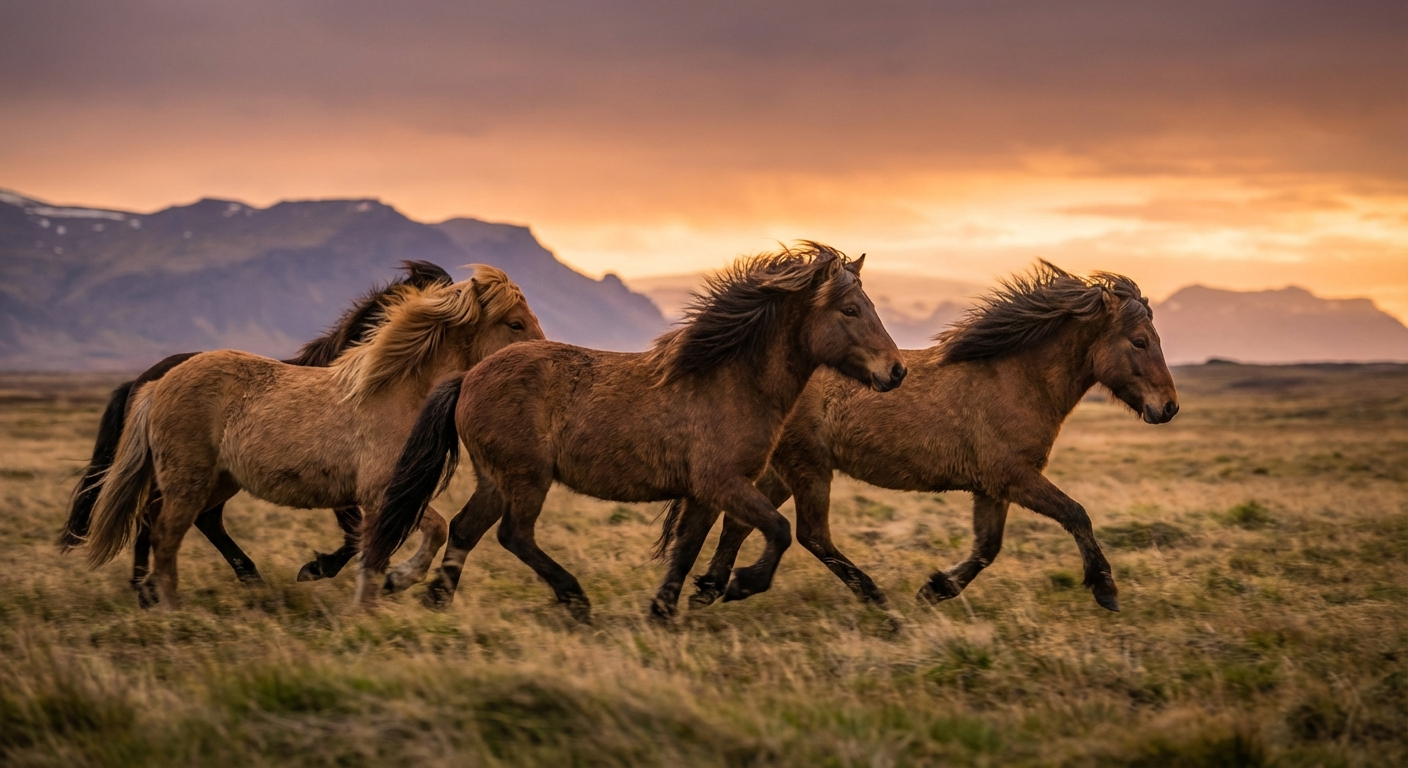
One recurring disruption is locomotion. Horses are not engineered for predominantly sedentary existence punctuated by occasional "workouts." Their baseline is distance—a daily necessity measured in kilometers, not in minutes of human-sanctioned activity. When that movement gets supplanted by containment, the horse may not erupt; it may simply contract. And contraction is not tranquility.
Another pattern is social instability. Life within a herd is not an endless competition. In an established group, much of what appears as "hierarchy" actually emerges from recognition—who gravitates toward whom, who yields at which passage, who has nothing left to prove today. When we frequently reorganize groups, separate individuals, or eliminate the possibility of creating distance, we construct a social reality that keeps the nervous system activated. A horse unable to regulate proximity cannot regulate emotion.
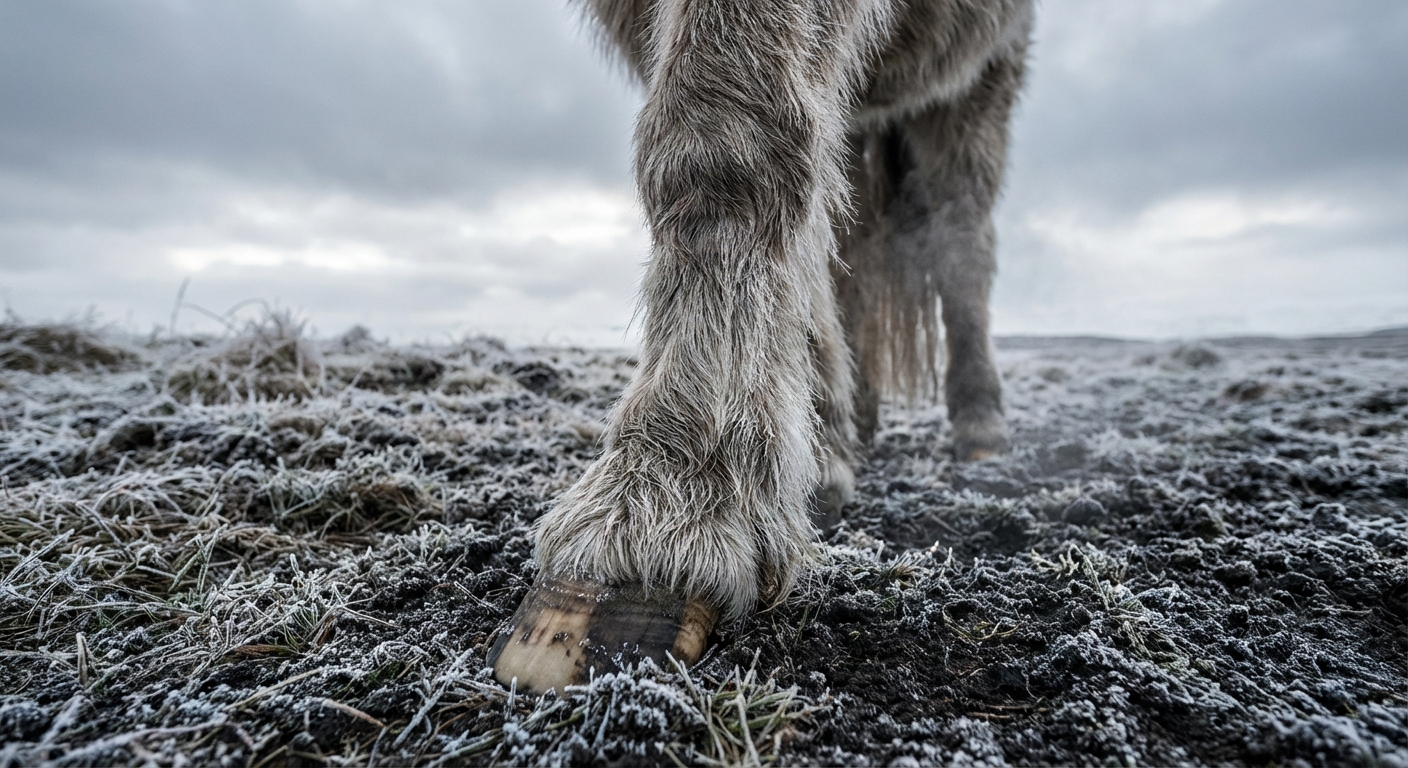
Then there is the paradox of protection: our well-intentioned efforts to safeguard a horse can quietly eliminate the very circumstances that would allow internal regulation. Shelter that obstructs natural existence—restricting movement, preventing hooves from self-maintaining, narrowing the variety of terrain, blocking exposure to weather and earth—can simultaneously restrict the horse's innate capacity for equilibrium.
Humans, too, know this paradox intimately: the safety that shrinks our world often shrinks our resilience with it. What we call protection sometimes becomes the very architecture of our unease.
Stereotypy as a Barometer, Not a Misbehavior
When the stress loop becomes ambient, some horses announce it visibly. Others conceal it. Yet stereotypic behavior stands as one of the most transparent environmental signals available to us: an indication that something within the day is failing to process.
The impulse is to address stereotypy as the issue requiring direct resolution. Coexistence invites a different kind of humility: interpret it as a measurement. When the horse is repeating, the environment is also repeating. When the horse is trapped in a loop, the day itself is trapped.
This does not mean we pursue a singular culprit. It means we search for the absent foundations: unbroken access to forage, room to move in ways that accumulate throughout the day, and social arrangements that permit genuine choice—to approach, to retreat, to rest nearby, to rest apart. When these are missing, the nervous system has fewer exits.
Our own repetitive behaviors—the scrolling, the pacing, the compulsions we barely notice—may similarly be readings rather than failures. They ask us not what is wrong with us, but what is missing from our days.
Pasture, Soil, and the Wider Nervous System
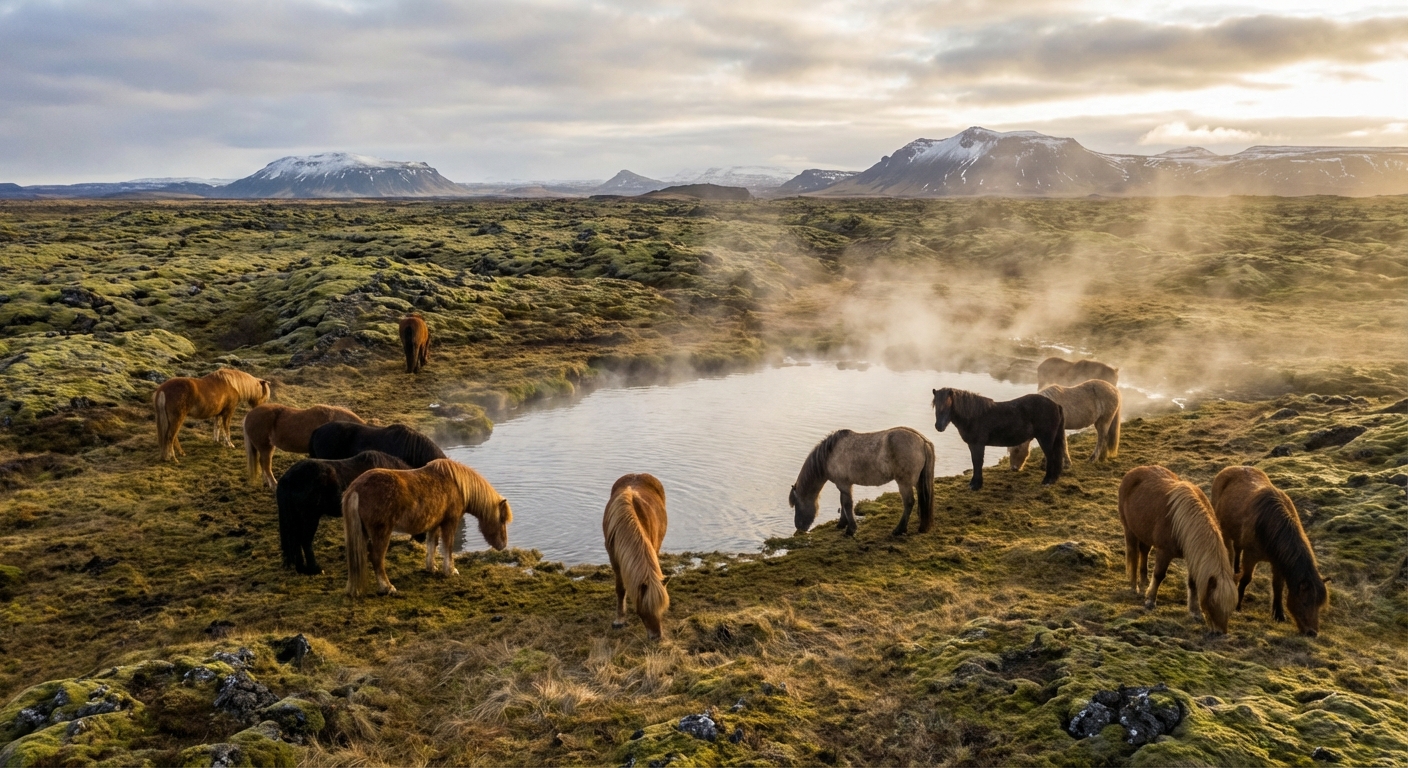
It is tempting to confine stress to what occurs "within the horse." But horses are grazers embedded in an ecosystem. The health of soil and the stewardship of pasture are not merely agricultural concerns; they define what each day can offer.
A thriving pasture enables extended, more organic grazing rhythms and allows the horse to do what horses are meant to do: search, discriminate, travel, and circle back. This is not enrichment as recreation. It is regulation as a way of being.
Even the services an ecosystem provides—those benefits we receive when land is maintained as a living system—are relevant here. When the terrain can accommodate the horse's natural cadences, humans need not substitute nature with perpetual interventions. The day grows less declarative, less fragmented.
And when horses can access diverse natural materials, there emerges the quiet possibility of self-selecting behaviors. Coexistence does not ask us to romanticize this or to pretend it supersedes veterinary medicine. It simply asks us to observe that horses sometimes engage with their surroundings in ways that suggest bodily intelligence. A creature with options can exercise choices that a creature in an impoverished environment cannot.
Perhaps we too are ecosystem creatures, and our nervous systems settle more readily when we are held by living systems rather than managed by scheduled interventions.
A Coexistence Ethic: Lower the Background Volume
If chronic cortisol elevation and HPA dysfunction represent what we wish to prevent, then the practical ethic is not pursuing calm as a display. It is diminishing the ambient intensity of each day.
This means engineering for continuity rather than scheduling: sustenance that does not disappear, locomotion that is not rationed to human-convenient windows, social bonds that are not perpetually disrupted, and safeguarding that does not inadvertently strip the horse of its own regulatory mechanisms.
Coexistence is not passivity. It is deliberate restraint: resisting the compulsion to substitute our control for the horse's world, and instead reconstructing the conditions that permit the horse's internal regulation to function as intended.
This ethic extends beyond the paddock. To lower the background volume of another's life—human or horse—is perhaps the most generous thing we can offer: not solutions, but the sustained quiet in which healing becomes possible.
Equine Notion
https://equinenotion.com/