The Clock at the Gate: When Scheduled Feeding Turns Waiting Into Pressure

Hook
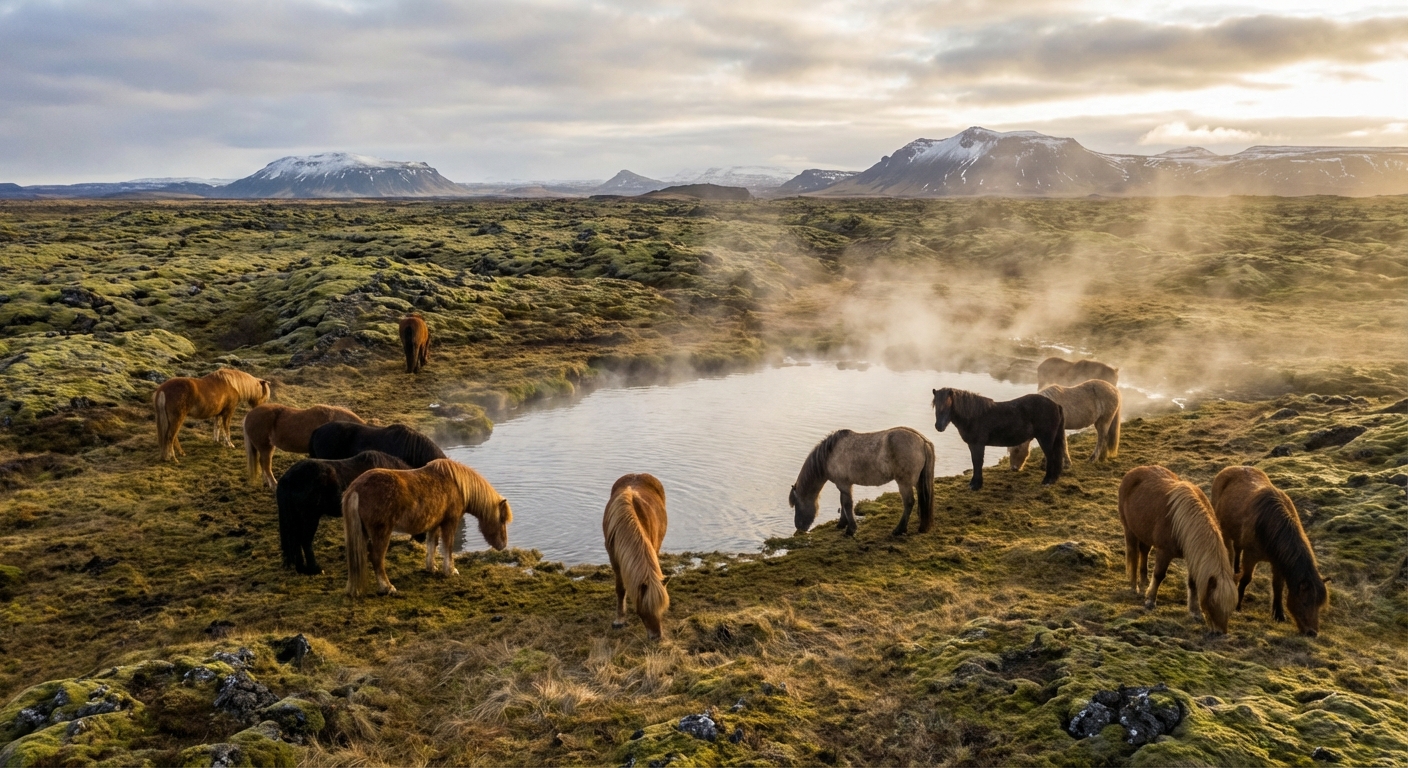
Some days the pasture stretches endlessly before them, and other days it contracts into a corridor with a single destination.
On those narrowed days, the horses congregate at the gate well before the appointed hour. Nothing has occurred yet, but something will—a fixed moment, a ritual they have internalized completely. The act of waiting itself becomes the day's central occupation.
1) When a Schedule Becomes the Loudest Thing in the Space
Feeding governed by the clock accomplishes something deceptively profound: it inscribes an invisible boundary across the hours.
Without any ill intent, the routine transforms into a kind of rhythm that the entire herd calibrates itself around. The land remains vast. The air stays mild. The social fabric continues to hold. And yet the day begins to curve inexorably toward that singular hour.
Within shared existence, this carries weight because a person can unwittingly become the herald of that invisible boundary. Not through any transgression, but simply by being the one whose arrival confirms the prophecy.
We, too, know what it is to live under the tyranny of the clock—how our own days can bend toward deadlines, appointments, and obligations until the present moment becomes merely a waiting room for what comes next.
2) Anticipation Stress: The Weight of "Not Yet"
Expectation is not inherently burdensome. Looking forward to something can bring comfort. Predictable rhythms can render life legible.
Yet when the distance between "almost" and "finally" elongates, the waiting itself accumulates a particular weight. It shows in how a horse's awareness drifts from the here and now—away from stillness, away from unhurried grazing, away from the unremarkable grace of simply existing in open air.
The tension does not originate in the meal itself. It gathers in the suspended time that precedes it.
How often do we find ourselves similarly displaced from our own lives—present in body but already living in the next hour, the next task, the approaching event that has claimed our attention before it has even arrived?
3) How the Human Presence Changes on Feeding-Time Days
When the day is governed by rigid timing, a person's body becomes a message before any action is taken.
Someone appearing at an inopportune moment can inadvertently heighten the tension of expectation. Someone moving deliberately can seem, from the horses' perspective, to have made the delay intentional. Even motionlessness becomes charged with meaning: "Is it time? Is this the moment? Have we been overlooked?"
To share space without riding or directing means recognizing that one's presence constitutes part of the landscape. Not as an instrument, not as a mechanism of control—merely as a reality the horses fold into their interpretation of what is unfolding.
We might consider how our own presence affects others in similar ways—how we become symbols of expectation or relief in contexts we never consciously chose to shape.
4) The Herd Atmosphere Around a Predictable Bottleneck
When feeding is constrained by both clock and location, the collective mood begins to constrict.
A fixed place channels the group's movement. A fixed time channels the group's attention. This can alter how horses negotiate shared space in the moments before the event, even among companions who are otherwise harmonious.
During those minutes, minor exchanges can carry greater intensity than at any other point in the day. Not necessarily explosive, not necessarily perilous—simply more compressed. More vigilant. More prone to disruption.
This reflects no fault in the horses' character. It is the natural consequence of anchoring a single momentous event to an unyielding schedule.
Human communities, too, grow tense around bottlenecks—whether queuing for limited resources or converging on shared deadlines. Scarcity of time or space reshapes even the gentlest among us.
5) Coexistence Without Making the Horse "Manage" the System
The instinct many of us share is to view anticipation stress as something the horse should learn to tolerate. But genuine coexistence begins from a different vantage point: examining what burdens the structure of the day places upon the animal.
When the architecture of daily life repeatedly generates prolonged, pressured waiting, it becomes useful to name that pressure truthfully. Not as defiance. Not as a defect of temperament. Not as a problem requiring correction through force.
At times, the most honorable response is simply to perceive the pattern with clarity: that the clock can grow heavier than anyone intended it to be.
This invitation extends to our own lives as well—to ask not what we must endure, but what our structures are asking us to carry, and whether those demands are truly necessary.
6) A Smaller Promise: Returning Some Time Back to the Horse
When clock-governed feeding dictates the emotional contour of the entire day, one modest aspiration of coexistence is to restore the hours to their natural gentleness.
This need not involve sweeping changes. It starts with awareness: observing when the day begins to lean toward the appointed hour, observing when the field transforms into an anteroom, observing how effortlessly a person's arrival can amplify the mounting tension.
From that foundation, any adjustment—modest, deliberate, grounded in reality—can be measured against a single criterion: does the day feel less like a countdown, and more like a life being lived?
Perhaps this is the quiet revolution available to all of us: to reclaim our hours from the clock's dominion, and to remember that time exists not only to be measured, but to be inhabited.
Equine Notion
https://equinenotion.com/