The Maintenance We Create: When a Human-Made Horse Life Needs Constant Holding

Hook
What if the endless nature of "horse care" arises not from any inherent complexity in horses themselves, but from the environments we construct that demand perpetual intervention?
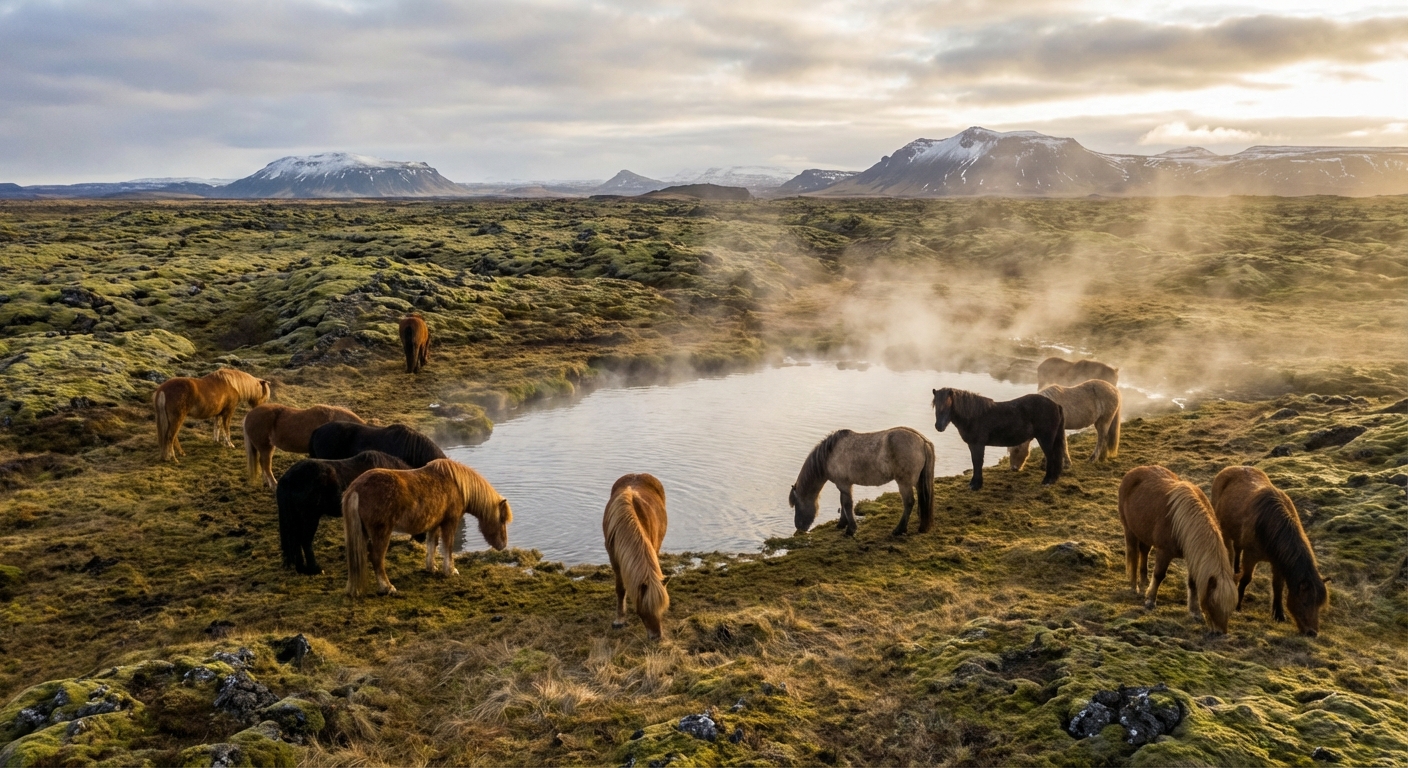
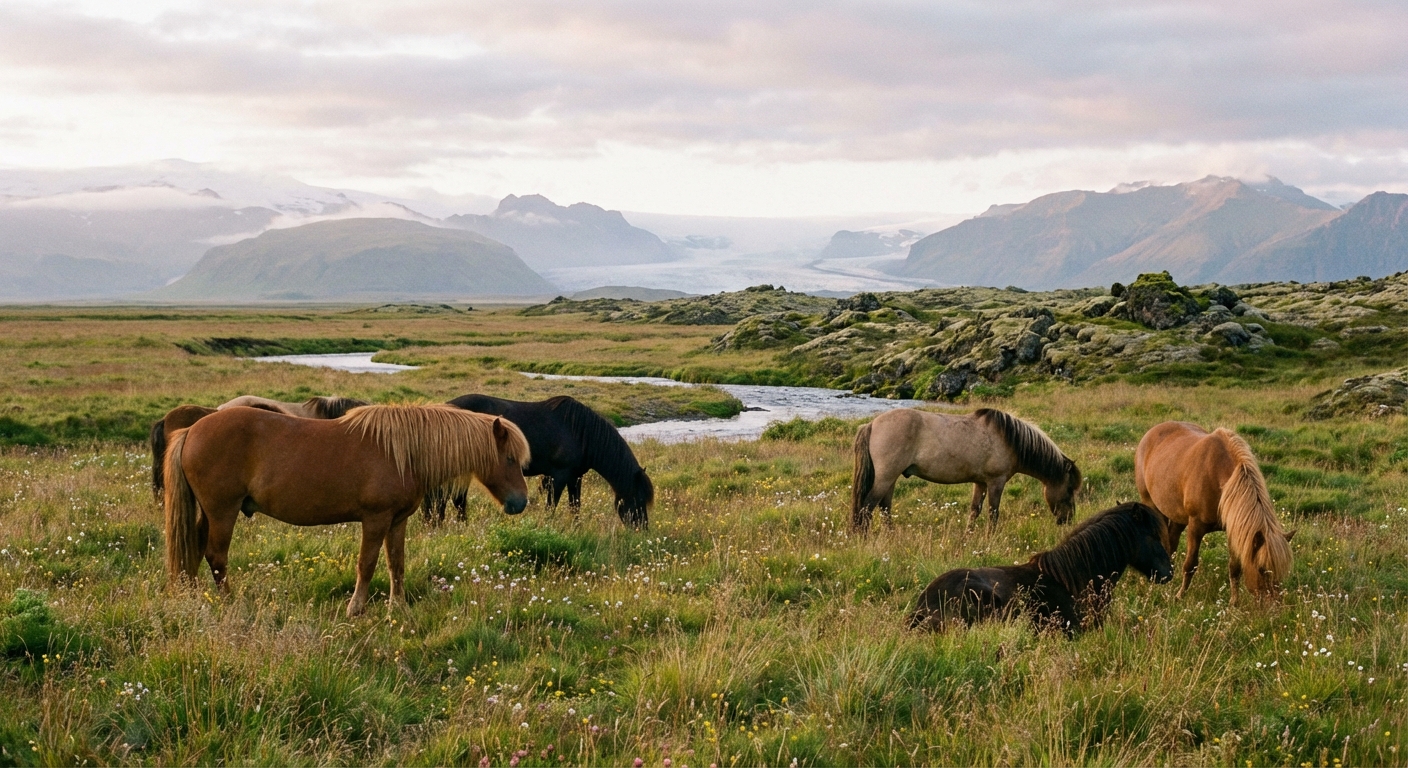
In landscapes shaped by nature, life sustains its own coherence without our moment-to-moment orchestration. In spaces we have engineered, we become the binding force—not as an act of virtue, but as an inevitable consequence of our designs.
This is an exploration of coexistence free from riding and training agendas: how artificially constructed environments quietly generate their own maintenance requirements, and how recognizing this pattern transforms our choices moving forward.
We might ask ourselves the same question about our own lives: how much of our daily exhaustion stems not from life's inherent difficulty, but from the structures we've built that cannot sustain themselves without us?
1) The Hidden Invoice of Design
The moment we determine where a horse may stand, wander, rest, or encounter companions, we simultaneously determine what will demand ongoing attention. The environment transforms into a mechanism that cannot function without continuous human adjustment.
This maintenance manifests as routines we accept as ordinary: the daily repairs, the habitual inspections, the perpetual smoothing of difficulties that resurface in identical forms. We readily interpret this as "conscientious stewardship." Yet it may also serve as evidence: the arrangement itself might be requesting interventions that would prove unnecessary in a less artificially constructed habitat.
Within the framework of coexistence, this recognition carries weight because it reorients our understanding of care. Rather than asking, "How do I stay ahead of every demand?" we might equally ask, "What have we constructed that necessitates staying ahead of everything?"
This insight extends far beyond the paddock. In our workplaces, homes, and relationships, we often exhaust ourselves maintaining systems that were never designed to sustain themselves—and rarely pause to question whether the architecture itself is the problem.
2) When Containment Turns Humans Into the Clock
Artificial environments frequently cast humans as timekeepers, traffic controllers, and gatekeepers of permission.
When a horse's entire day hinges on gates being unlatched, access being authorized, and movement being permitted, the person assumes the function of an operating system. This generates a subtle but persistent tension in the atmosphere: someone must keep track, someone must show up, someone must make the call.
Coexistence that exists apart from riding becomes less about "engaging in activities" and more about honestly confronting what the structure demands. When the design forces the horse to wait for life to commence, the human is not simply providing care—they are holding the switch that initiates existence.
This dynamic can be eased without sweeping transformations. Sometimes it starts with a straightforward acknowledgment: when the horse's fundamental rhythms depend entirely on our schedule, our absence ceases to be neutral. Our absence becomes part of the environment itself.
How often do we find ourselves in similar positions—holding others in suspended animation until we grant them permission to proceed? The question of whether we are caretakers or controllers haunts every relationship where one party holds the keys.
3) The More We Simplify Space, the More We Complicate Management
Spaces designed by humans frequently strip away complexity: diminished choices, reduced pathways, limited opportunities for distance, fewer possibilities for sharing territory without being compressed into identical locations.
As space becomes simplified, management requirements tend to proliferate. Humans must then orchestrate what the environment no longer provides organically. Who occupies which area. Who encounters whom. Who receives access at what hour. Who requires separation. Who demands surveillance.
This observation makes no judgment about any particular housing arrangement nor claims that one configuration universally succeeds. It simply identifies a recurring pattern: when we subtract options from a living system, we frequently must substitute those options with our own labor.
Coexistence grows more tranquil when we acknowledge this exchange. Not to assign blame to ourselves, but to perceive with clarity that certain "horse problems" are fundamentally "system problems."
Our own lives mirror this paradox. We streamline our schedules, our spaces, our relationships—then wonder why we feel busier than ever, having unwittingly appointed ourselves managers of everything we eliminated.
4) Maintenance as a Relationship: The Horse Learns What the World Requires
Within an artificial arrangement, maintenance transcends the merely physical. It acquires a relational dimension.
When a horse discovers that comfort, access, and respite arrive exclusively through human intervention, the human's presence takes on particular significance. The person is not simply present. They become the pathway to the day's essential elements.
This can cultivate a form of dependency that resembles affection, courtesy, or good behavior. Alternatively, it may generate friction that appears as restlessness, hypervigilance, or emotional withdrawal. The aim is not to decode behavior from an external vantage point. The aim is to perceive the foundational condition: a horse may be responding to a world that demands intermediation.
Coexistence without training can be as straightforward—and as challenging—as offering presence without converting it into currency. When a horse draws near, we can discern whether we are being sought for connection, or whether we are being sought as the gateway to what the environment keeps locked away.
We might recognize this dynamic in our human bonds as well—the way dependency can masquerade as love, and how we sometimes confuse being needed with being cherished.
5) A Different Goal: Fewer "Fixes," More Built-In Permission
An artificial environment can foster a mentality of perpetual repair: addressing symptoms rather than reconsidering their origins.
A gentler aspiration is to establish and select conditions that demand less remediation. Not flawlessness. Not an illusion of complete autonomy. Simply fewer instances where the sole remedy is a person intervening to preserve the day's viability.
Here is where coexistence shifts from idealistic to pragmatic. When the arrangement requires unceasing supervision, the human's existence becomes a succession of pressing obligations. When the arrangement allows space for choice and natural rhythms to emerge unsupervised, care can evolve from dominion to accompaniment.
Even when substantial alterations remain impossible, the perspective itself can transform. The inquiry becomes: which duties constitute genuine care, and which duties represent maintenance extracted by design?
This distinction—between care that nourishes and maintenance that merely props up flawed systems—offers a compass for evaluating how we spend our finite energy in every domain of life.
6) Living Nearby Without Becoming the Repair Crew
There exists a particular gentleness in sharing space with horses while expecting nothing from them—no riding, no training objectives, no performance standards. Yet that gentleness can be eclipsed when our entire connection is constructed upon maintenance tasks.
To coexist does not mean relinquishing responsibility. It means recognizing when responsibility has calcified into perpetual crisis because the environment lacks the capacity to sustain the horse's life independently.
Sometimes the most profound action is not introducing another routine, but eliminating a dependency. Not withdrawing effort through carelessness, but withdrawing effort because the circumstances no longer require human patchwork.
When the environment ceases producing constant maintenance demands, the human can at last appear as a companion rather than an administrator. Not because we earned that position—but because we ceased constructing a world that insisted upon management from the outset.
Perhaps this is the deepest teaching horses offer us: that true presence becomes possible only when we stop building lives—theirs and our own—that cannot exist without our constant fixing.
Equine Notion
https://equinenotion.com/