The Pause at the Trough: Letting Water Be a Choice, Not a Command
The Pause at the Trough: Letting Water Be a Choice, Not a Command
It caught my attention in a fleeting instant—one that could have easily slipped by unnoticed.
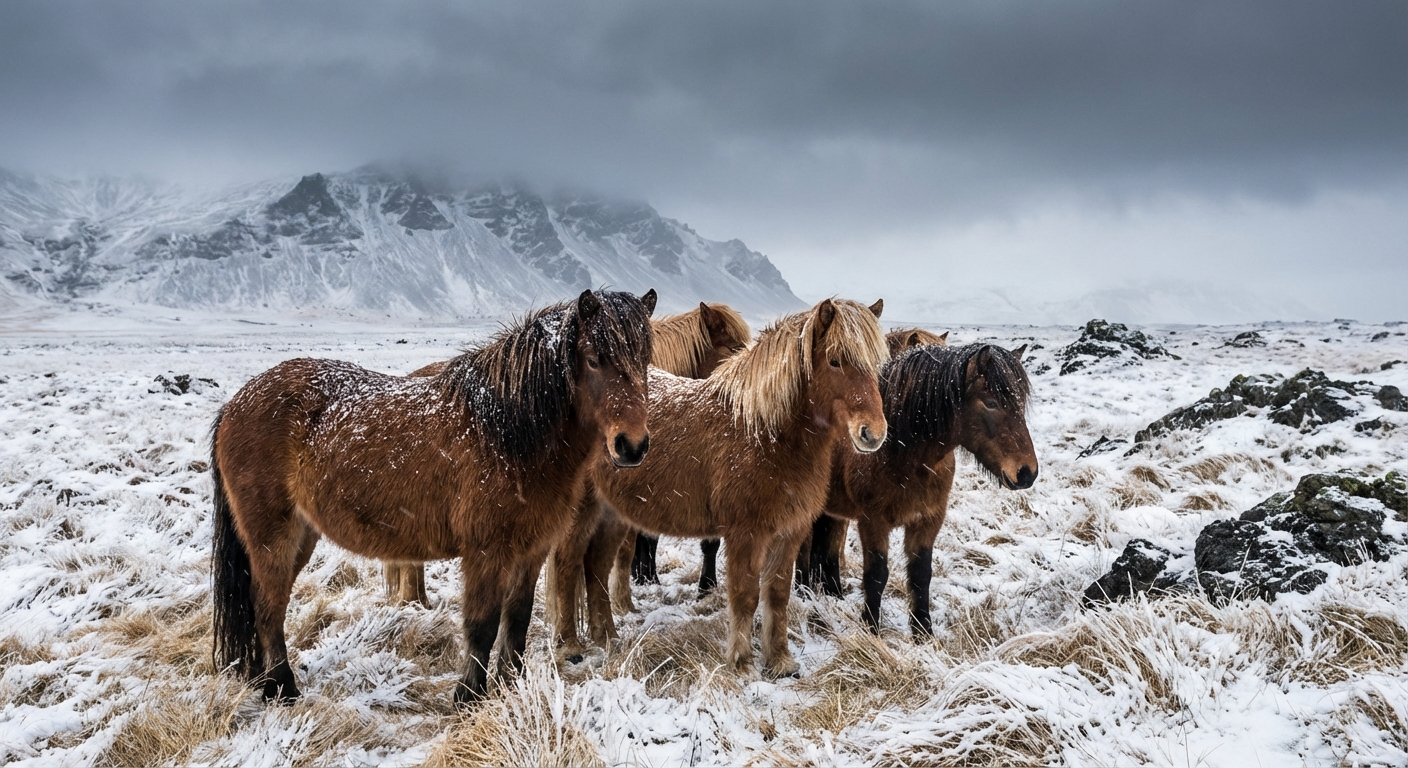
The trough stood brimming. The day held nothing remarkable. I approached with assumptions shaped by human logic—water serves thirst, thirst demands water, equation complete. Yet the horse did not drink. He moved forward, dropped his head low, and remained motionless with his muzzle hovering just above the waterline. There was no theatrical rejection. No "behavioral issue." Only a prolonged, silent evaluation.
In a world defined by management, the instinctive response is to frame this as inconvenience: he's being selective, he's unfocused, he's proving something. But living alongside another species continually demands something more difficult of me—to recognize that hesitation carries its own intelligence. How often do we, too, rush past our own moments of pause, labeling our hesitations as weakness rather than wisdom?
We already embrace this understanding in other contexts. We speak of unrestricted forage availability as foundational, acknowledging that the equine digestive system operates outside human meal schedules. We recognize that when grazing ceases, an internal timer begins—a biological rhythm beyond our jurisdiction. We train ourselves to observe feeding behaviors and note the consequences when those patterns are disrupted. Viewed through this lens, a horse deliberating over water no longer appears eccentric. It reveals the same underlying truth: daily existence is constructed around physiological imperatives, and the horse inhabits those rhythms from within. Perhaps we might honor our own bodies' quiet signals with the same patience—the subtle cues we override in the name of productivity.
So I stood still. Not as a method of conditioning—merely as a modest exercise in holding back. I observed his actions rather than projecting my expectations. He adjusted his stance slightly. He exhaled once more. He grazed the surface with his lips, paused, then approached again. In time, he drank.
Nothing in that encounter demanded that I "correct" him. Instead, it invited me to examine my own assumptions about care—the framework that positions comfort as virtue and difficulty as failure, casting the human as perpetual fixer. Neutral nature, as I've come to understand it, is not some flawless manufactured sanctuary. It is an ongoing practice of faith: allowing the horse to engage with his surroundings, gather information, exercise agency, and preserve his own capability. We might ask ourselves what competencies we have lost by being perpetually managed, perpetually smoothed over, perpetually spared from our own assessments.
If a horse's lips and nostrils serve as instruments for interpreting his world, then each time I rush him past that interpretation, I am not conserving time. I am depleting the reserves of his self-sufficiency.
Equine Notion
https://equinenotion.com/