The Return Path: What It Means When a Horse Could Leave, Yet Stays
Hook
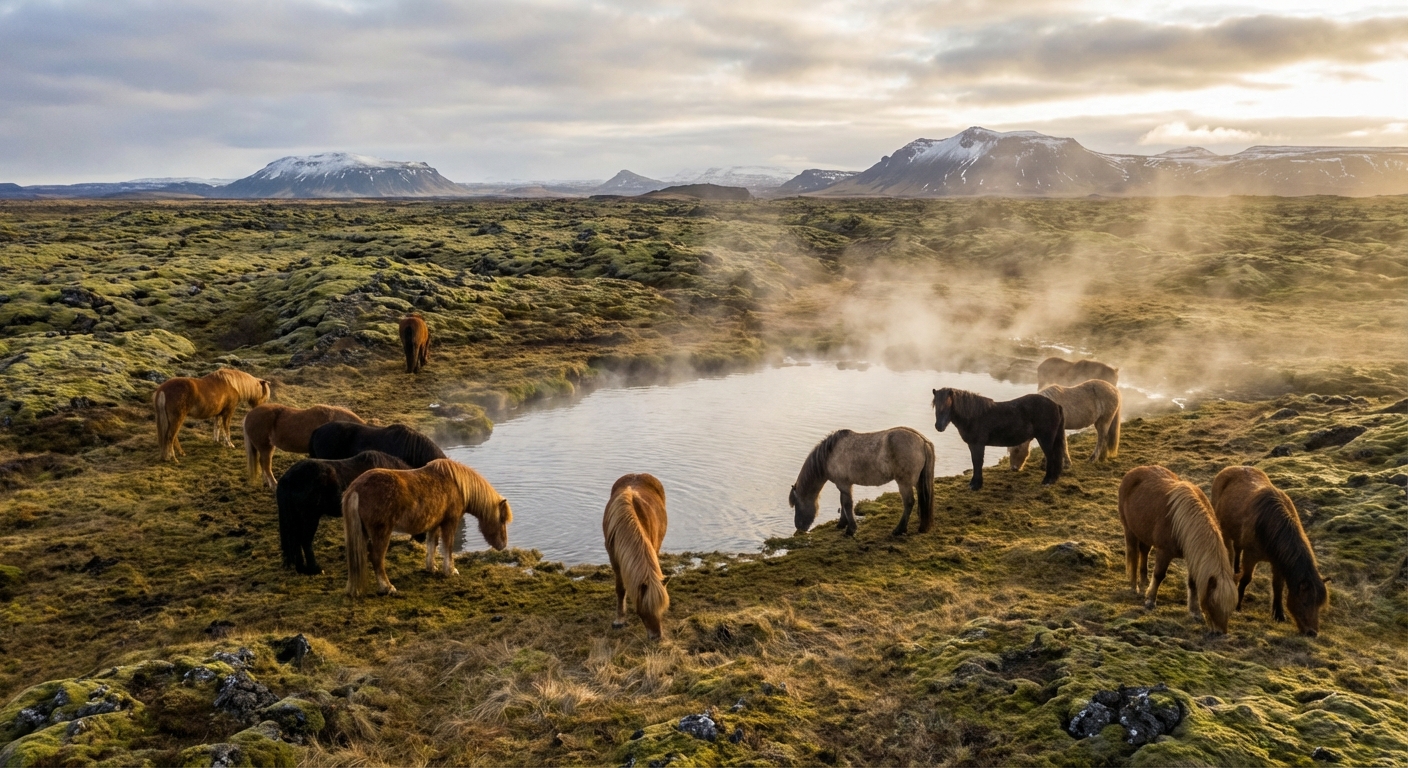
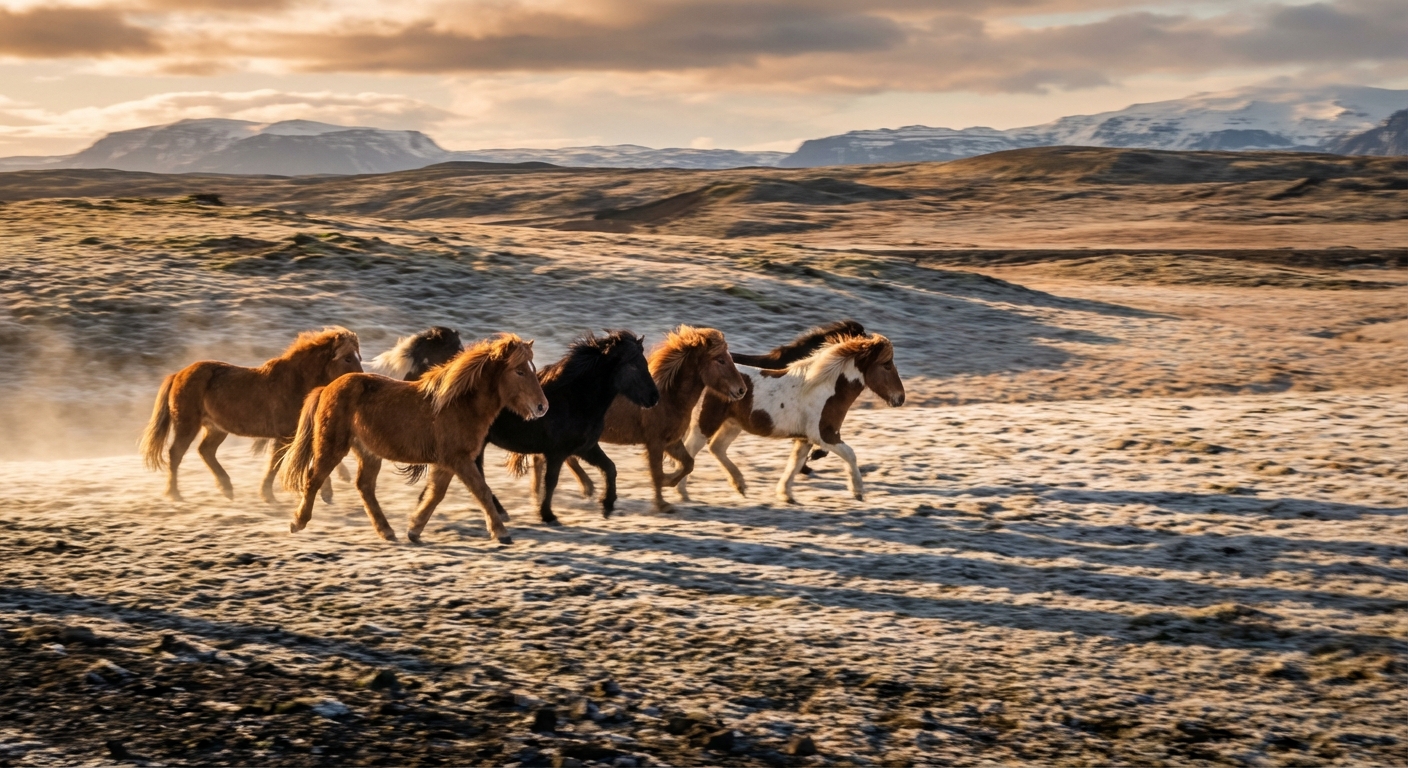
What does "home" signify to a horse when no physical boundary demands it?
Living without fences invites us toward a seductive narrative: the horse remains, therefore the horse believes in us. Yet remaining can be far subtler than that—less a pronouncement, more a quiet daily choice that need not be transformed into proof.
We might ask ourselves the same question: how often do we stay in places or relationships not out of grand conviction, but simply because, today, it feels right enough to remain?
1) Staying isn't a performance
When a horse lingers close without any barrier holding it there, we're tempted to read it as a message meant for us. It becomes easy to inflate this into an emblem of our own achievement: *behold what I have created.*
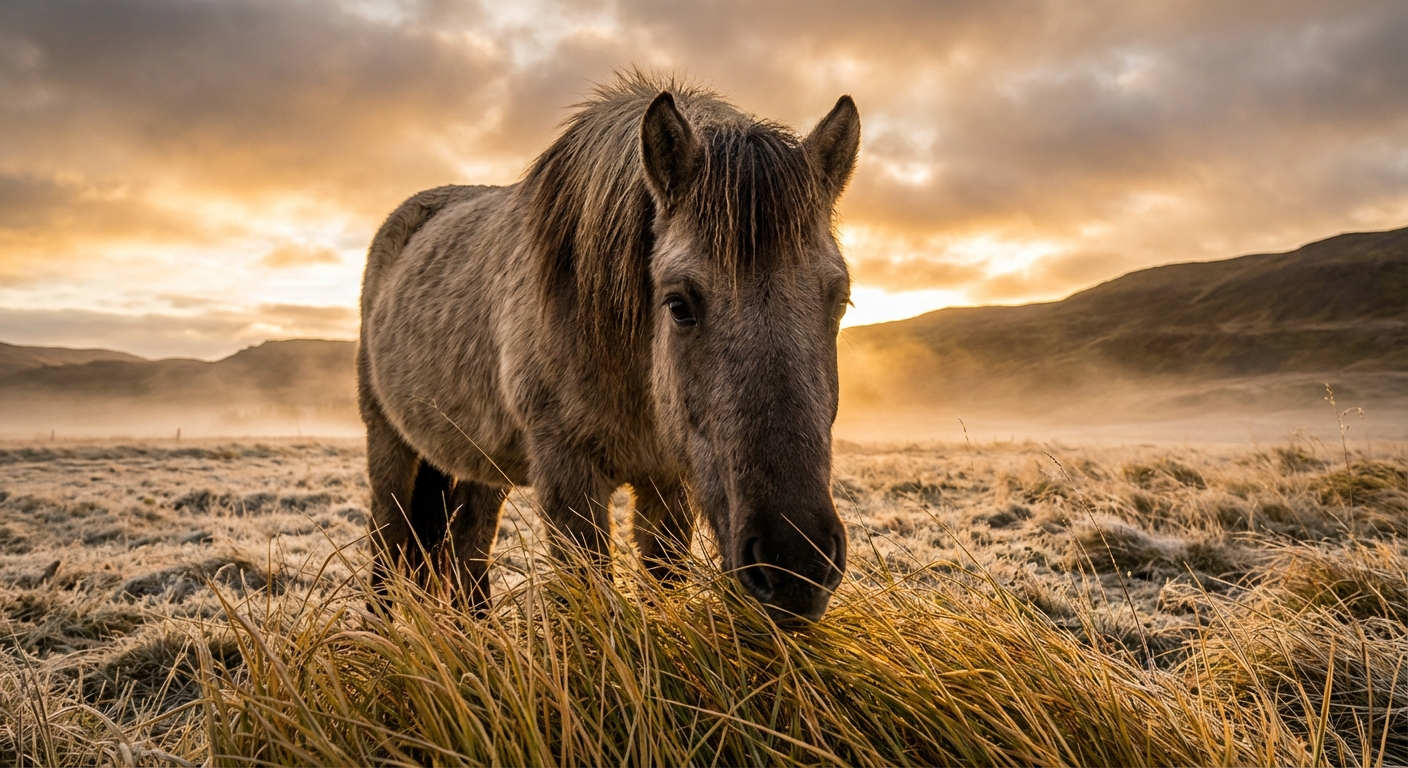
In a life of coexistence without riding or training, this mindset is the first burden to release. A horse's presence need not be read as a vow. It can be utterly ordinary—the simplest available option in that particular moment. And it may shift tomorrow without signaling that anything has "broken."
Fence-free existence, understood this way, is not a theater. It is an unfolding circumstance where neither species must continually justify every movement.
Perhaps we too can learn to let our own presence in someone's life be enough, without needing it to mean something monumental.
2) The human urge to convert choice into certainty
A horse with the freedom to depart awakens a specific human craving: the hunger for reassurance. When the horse stays, we exhale in relief. When the horse roams, we rush toward explanations, corrections, or protocols.
Coexistence invites something less grasping: allowing "staying" to remain open-ended.
When we cease pursuing certainty, we become gentler companions to live beside. Not because we've conquered some method, but because we stop forcing every instant into an examination. Life without fences can illuminate this truth: the horse's whereabouts is not an ongoing verdict on our value.
How much lighter might our human bonds become if we stopped treating presence as a score and absence as a failure?
3) Home as a pattern, not a border
In the absence of fences, "home" transforms from a fixed perimeter into a recurring rhythm: the place where the body settles into ease, where the mind grows gentle, where the day feels navigable.
For us humans, this shift is understated yet transformative. Rather than fixating on containment, we attend to what renders a place worth returning to. Not to ensnare the horse in comfort, but to let the horse select that comfort freely, without coercion.
Fence-free coexistence evolves from a demonstration of liberty into a cultivation of return—return to stillness, return to the familiar, return to an existence that doesn't require perpetual negotiation with humans.
We might consider our own lives through this lens: what makes a place or person feel like home is rarely the walls, but the quality of peace we find there.
4) Being present without trying to "earn" staying
One can share space with horses while still acting as though perpetually running for office. We linger too close. We scan for signals. We "verify" whether the horse continues to choose us, still endorses the arrangement, still validates our narrative.
A setting without fences reveals just how clamorous that energy can become.
Coexistence apart from riding or training can become a discipline of presence without agenda. Occupying the same space without summoning, without enticing, without making proximity the objective. Let the horse's distance become part of the shared vocabulary, not a dilemma requiring resolution.
Within that silence, staying loses its intensity. It may occur organically—or it may not—and in either case, the relationship is granted room to breathe.
In our human connections too, the most enduring bonds often form when we stop campaigning and simply allow ourselves to be present, without requiring proof of our importance.
5) When a horse leaves: keeping dignity in the moment
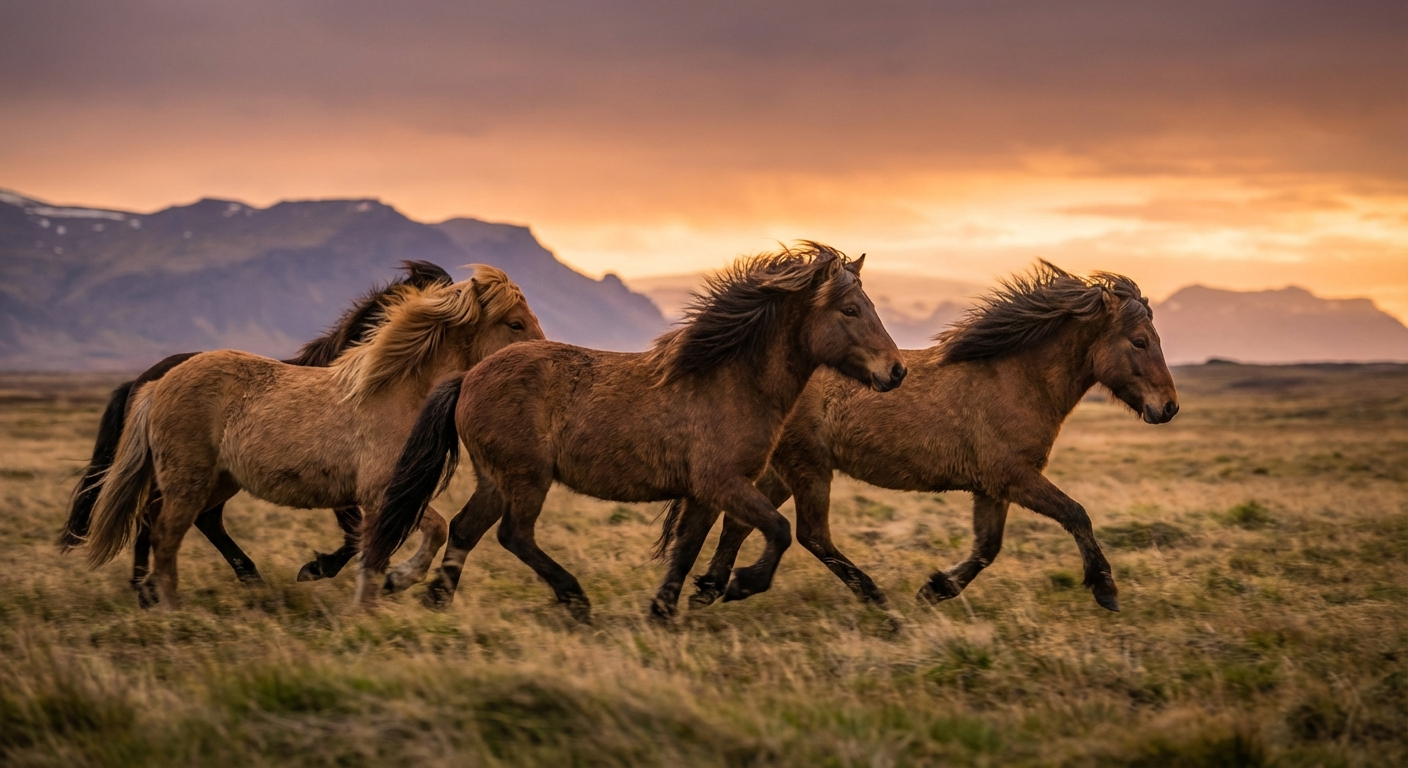
Life without fences necessarily includes the prospect of absence. When a horse turns and walks away, how the human responds carries weight.
Coexistence does not mean we remain passive; it means we decline to convert every departure into crisis. We can resist the impulse to burden the leaving with emotional consequence—tense urgency, frantic energy, a sudden crusade to "reclaim control."
Instead, we can maintain a more grounded stance: capable, watchful, and not personally wounded by motion. The horse's sovereignty stays whole, and so does the bond between us.
There is wisdom here for all our relationships: allowing others to move away without interpreting it as rejection preserves both their dignity and our own.
6) The quiet outcome: staying as an everyday thing
Perhaps the most unexpected insight fence-free living provides is this: staying can become unremarkable.
Not because it is assured, but because it is no longer mined for significance. The horse is not a metaphor. The human is not an arbiter. The pasture is not a tribunal. It is merely a space where two lives intersect—sometimes intimately, sometimes at a distance—without insisting that every choice be decoded into a declaration.
When a horse possesses the freedom to leave yet chooses to remain, we can observe it, savor it, and then allow it to be simply what it is: a moment of shared existence, not a binding agreement.
Perhaps the deepest freedom we can offer anyone—horse or human—is the gift of staying without it being weighted with meaning, and leaving without it being shadowed by betrayal.
Equine Notion
https://equinenotion.com/