The Third Horse: How Alliances Quietly Hold a Herd Together
The Third Horse: How Alliances Quietly Hold a Herd Together
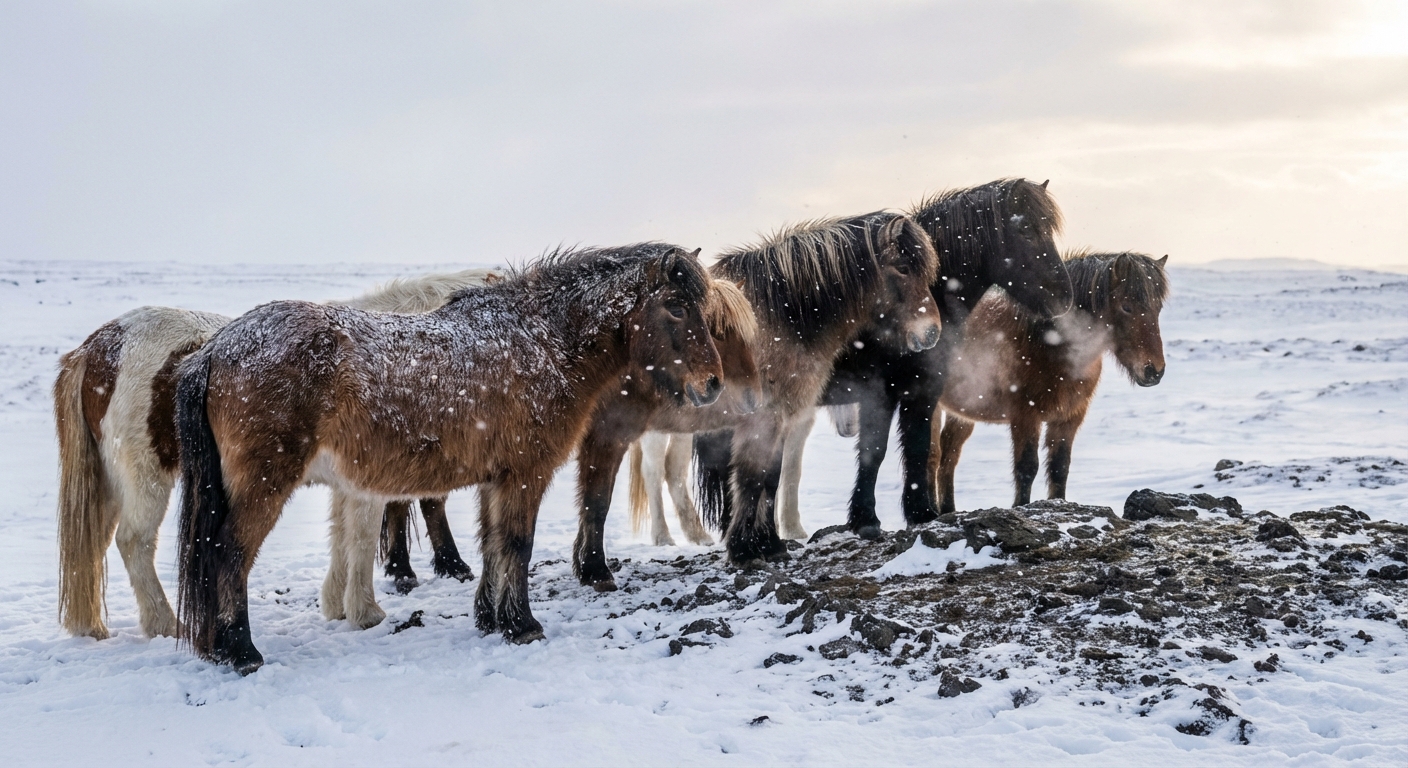
Yesterday I witnessed a fleeting moment that could easily be dismissed as unremarkable. Two horses stood at the hay, positioned so closely their shoulders nearly grazed one another. A third approached—unhurried, undemanding. Simply there. The pair neither dispersed nor greeted the newcomer with any theatrical resistance. Rather, one of the original two adjusted by the smallest measure—a half-step, scarcely a movement at all—and the arriving horse eased into the gap as though the space had been held in waiting.
It bore no resemblance to negotiation. It carried the quiet certainty of ritual.
This is what reshapes my understanding of equine coalitions. We are drawn to the conspicuous: the pursuit, the snap of teeth, the declared victor. Yet alliance is frequently woven from minor concessions that accumulate into something dependable. Who creates room. Who pauses. Who is permitted at the prime location, and who receives an unspoken invitation to join. In our own lives, we might ask whether our closest bonds are built on grand gestures or on the small, repeated acts of making space for one another.
Within a herd, support does not always manifest as vigilance at the boundary or the expulsion of a competitor. Sometimes support is merely being the horse whose nearness emboldens another to approach a valued resource. Sometimes it is the horse who steps forward first—not as a leader issuing commands, but as a grounding presence that others feel secure in following. Sometimes it is the horse who positions itself between opposing forces, not to engage in conflict, but to diffuse tension by drawing focus. We humans, too, often underestimate those among us who lead not by directing, but by steadying—whose calm presence makes others brave enough to move.
What lingered with me most was how the "third horse" altered the social calculus without any visible assertion. Within that triad, the web of relationships carried more weight than any fixed hierarchy. Near the food, deference shifts depending on who stands alongside whom. A horse that yields to one companion may stand firm beside another. The bond itself performs the labor—not some unchanging rank or title. Perhaps our own communities function similarly: less a ladder of positions than a living network of partnerships, where who we stand beside determines what we can hold.
For those of us who live alongside horses, this demands a different quality of attention. If uninterrupted access to forage represents a baseline of welfare, then the manner in which horses share that forage becomes a matter of well-being, not simply "social dynamics." When grazing ceases, the body begins its quiet decline. A horse subtly displaced is not merely navigating a social moment—it may be forfeiting hours it is physiologically designed to spend eating. This principle extends to human caregiving as well: the quiet exclusions we overlook may carry consequences far deeper than we imagine.
I walked away and resisted the urge to frame it as a narrative of dominance. The tranquil configuration at the hay was not something I orchestrated, nor was it maintained through perpetual struggle. It was sustained by partnership—an ordinary alliance that rendered shared space feel safe and expected. Perhaps the most profound order in any community, equine or human, emerges not from enforcement but from the accumulated trust of small, daily accommodations.
Equine Notion
https://equinenotion.com/