When the Box Becomes the Body: Chronic Stabling, Circulation, and the Health You Can’t Measure From a Doorway
Hook
What becomes of a horse's body when their entire existence contracts to a small enclosure—day upon day, season upon season? Before we even enter the territory of ethical debate, there is a quieter question worth holding: if a horse is designed for a life of continuous motion, pausing, grazing, and moving once more, what shifts when movement becomes the exception rather than the constant?
I cannot pretend to trace every internal consequence from an observer's vantage point. Yet I can speak to what unfolds when a horse's world expands again—when the land opens before them, when the day ceases to be a series of closed chapters, and when the horse regains the authority to shape their own hours through wandering, stillness, and foraging.
Perhaps we, too, know something of this—the difference between a life that moves freely and one that waits for permission to begin.
1) The "Small Hokje" Problem: When Space Shrinks to a Routine
Across countless stables, horses spend their days confined to small stalls. This fact alone carries weight—not as an abstract matter of welfare philosophy, but as a concrete, daily, physical truth. A cramped space does not merely restrict where a horse may travel; it diminishes how often a horse can choose to travel at all.
When such confinement becomes chronic, the body is compelled to exist within a rhythm not of its own making. Even when food arrives and care is administered, the horse's innate cadence—step, pause, browse, step—finds fewer and fewer opportunities to express itself naturally. As the horse's choices contract, their entire existence can begin to resemble waiting.
We might recognize this feeling in ourselves: the slow erosion that comes when our days are shaped entirely by external schedules, leaving little room for the rhythms that are truly our own.
2) Turning the Fence Around: A Home That Admits Who Is Confined
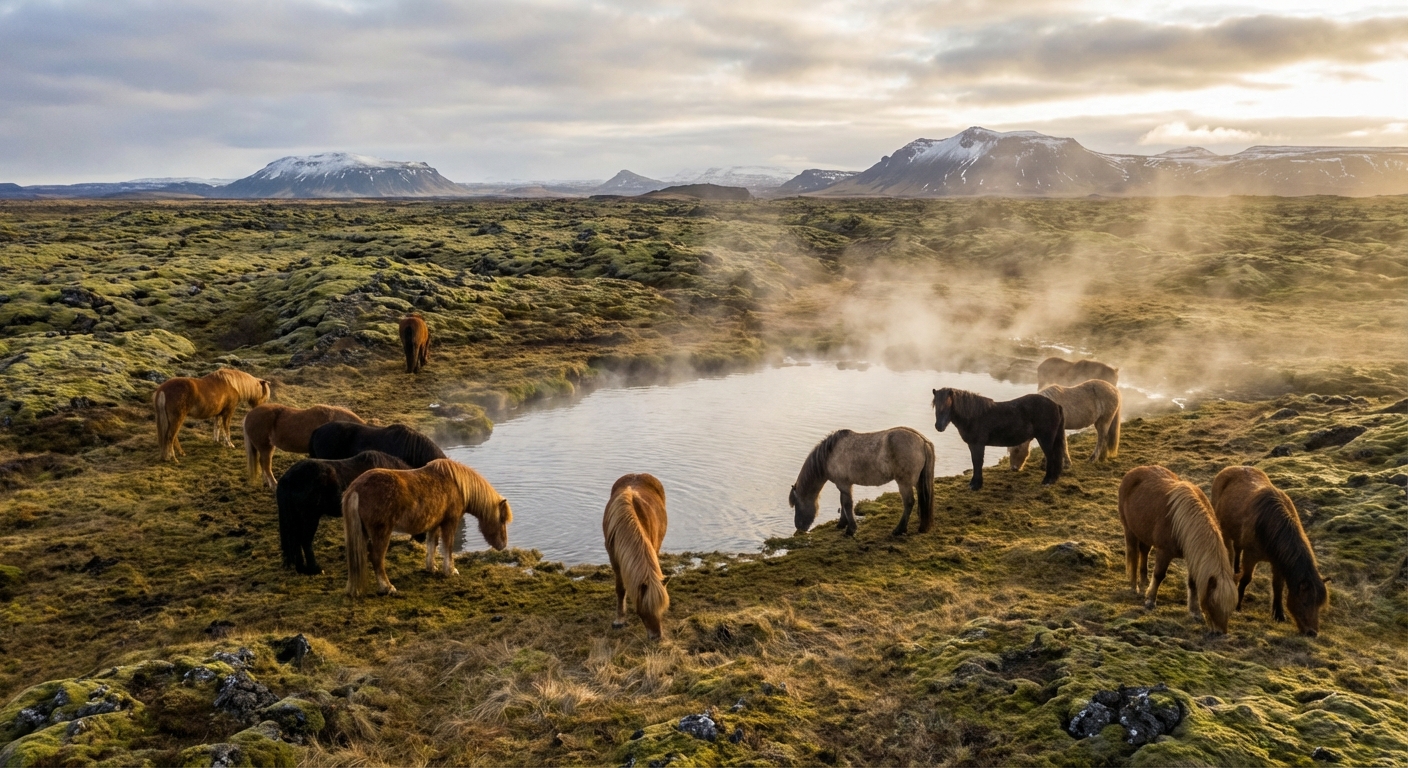
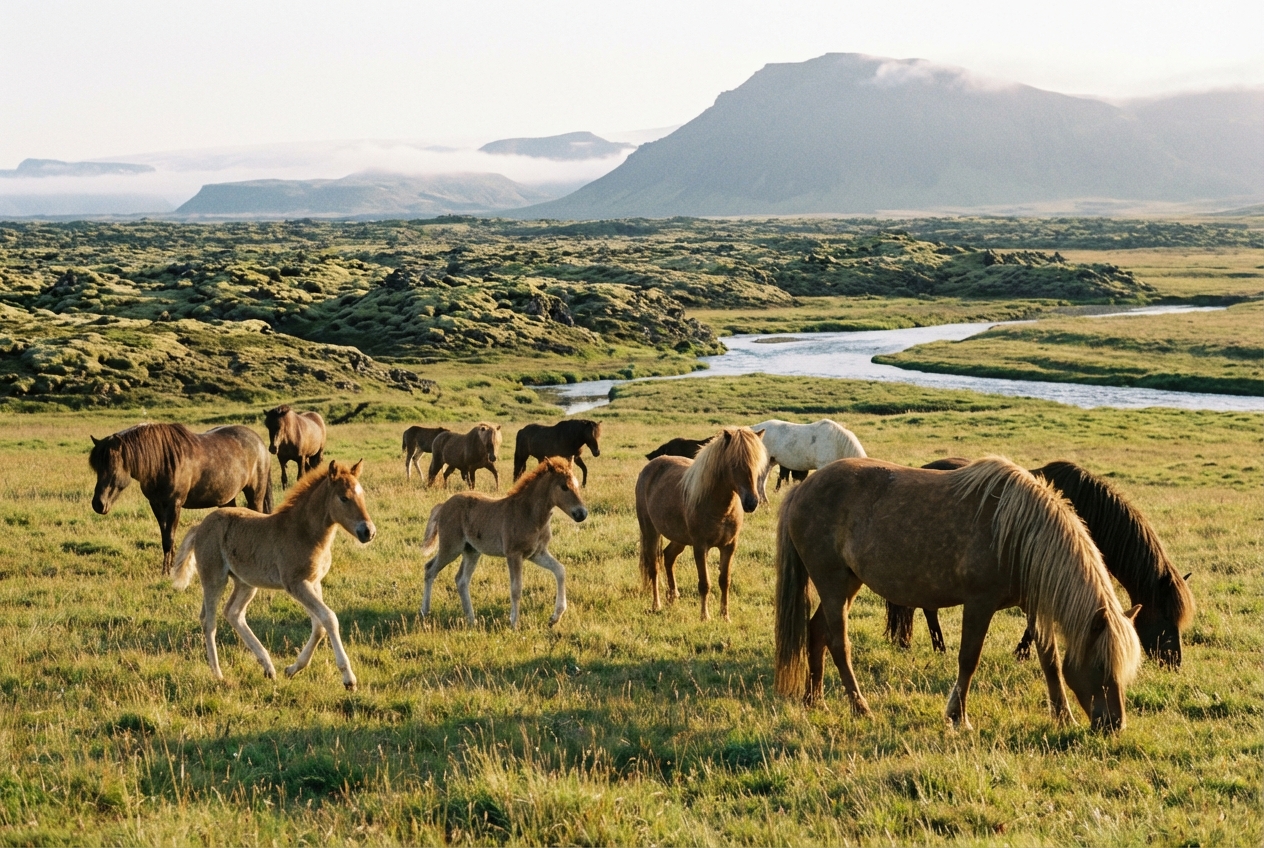
We chose a different arrangement for our land: the vast majority of it remains open to the horses. The visual effect is almost paradoxical. We positioned the fence so that it appears as though we—the humans—are the ones enclosed within a small area near the dwelling.
This inversion carries meaning beyond symbolism. It demands a practical honesty. If a confined space seems acceptable for the horse, why should it feel strange or uncomfortable to envision it for ourselves?
And it transforms what "management" actually means. Rather than dictating where the horse is permitted to exist, the emphasis shifts toward cultivating an environment safe enough to permit authentic freedom of movement, where the horse may select distance, closeness, shade, or open ground—without requiring approval.
There is something clarifying in this reversal: it asks us to feel, rather than merely rationalize, the conditions we create for others.
3) Circulation as a Daily Habit, Not a Treatment
When we consider vascular health, the most difficult admission is one we often try to avoid: you cannot simply "supplement" healthy circulation onto the edges of a confined existence the way you might add a powder to feed or introduce a new piece of equipment. Circulation—whatever its internal workings—belongs to a whole body that lives through repeated, unremarkable movement.
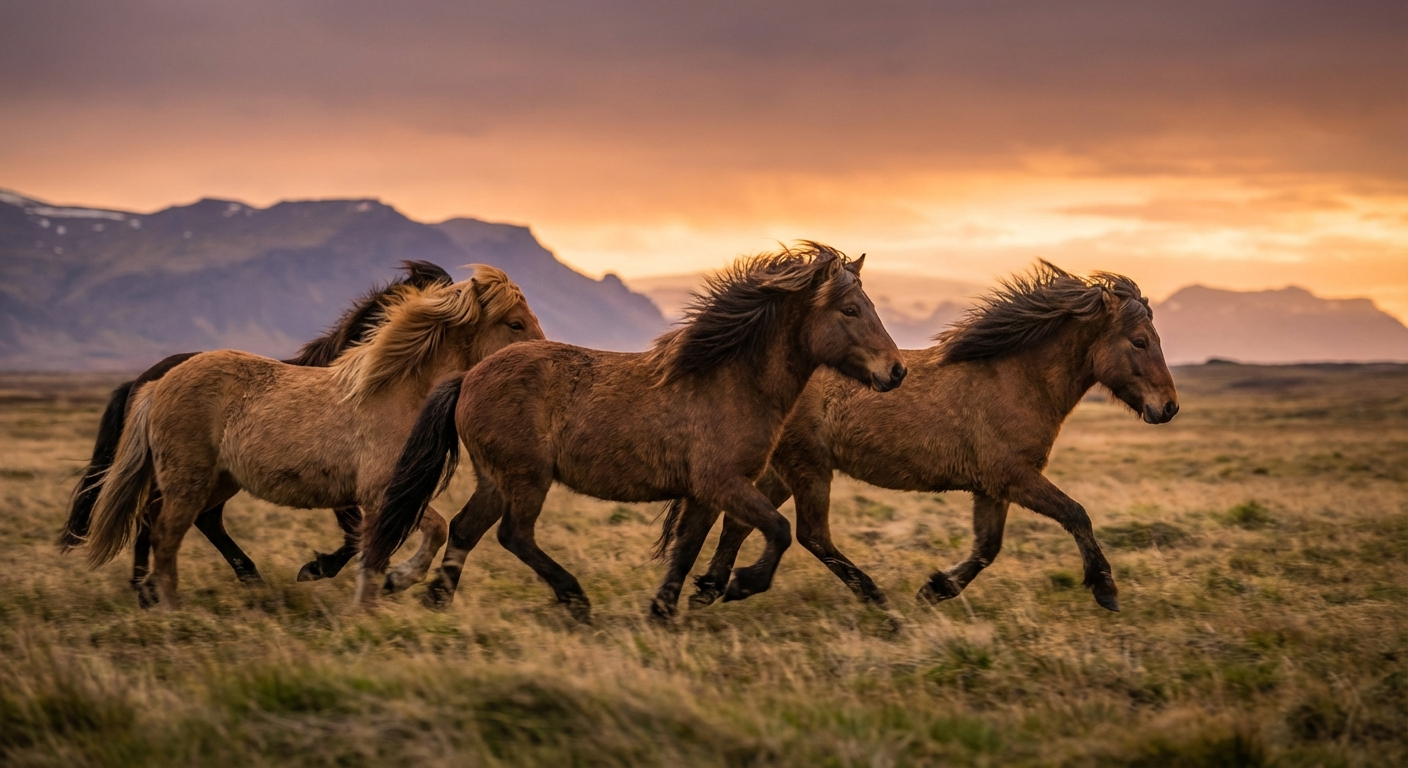
This is where chronic stabling becomes significant without requiring dramatic assertions. A horse with access to expansive terrain can maintain their body in gentle motion as part of ordinary life: walking between grazing areas, drifting to new spots, choosing to stand still and then moving on.
There is no need to impose that movement. There is no need to transform it into exercise. The environment itself extends the invitation.
We might consider our own circulation, our own vitality—how much of it depends not on interventions, but on whether our daily lives are structured around stillness or around motion.
4) Feeding Without a Clock: Letting Forage Create Motion and Choice
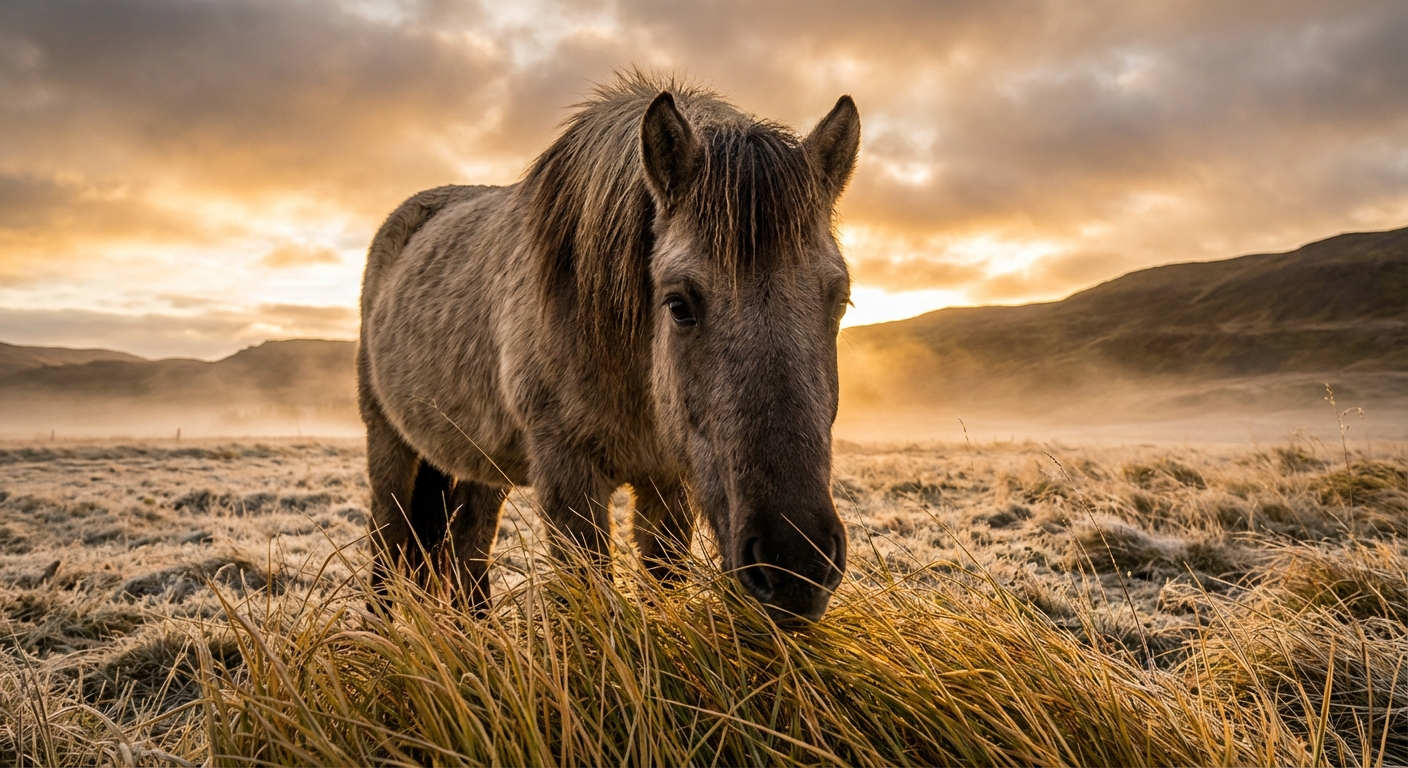
One of the most tangible ways we nurture natural living is through our approach to feeding. Rather than dispensing meals at predetermined hours, we strive to cultivate genuine foraging behavior. We offer access to varied hays and wild herbs, allowing the horses to select what their bodies instinctively seek.
This matters to the body in subtle ways. A meal delivered on schedule can compress life into sharp peaks: anticipation, rapid consumption, then vacancy. But an environment that encourages browsing and selection gives the horse continuous reason to do what they were made to do—move, seek, taste, return, shift.
Crucially, this does not require us to "make" the horse move. The horse moves because the day is organized around living, not around awaiting the next human intervention.
How much of our own restlessness, we might ask, comes from days built around waiting—for the next meal, the next task, the next permission to act?
5) The Health You See Indirectly: Posture, Presence, and Self-Directed Calm
When a horse has the opportunity to inhabit a vast, open landscape, you begin to perceive health through indirect markers rather than isolated corrections. The horse can stand wherever they wish, not wherever they must. They can depart and return. They can choose proximity to others or claim solitude.
This is not a guarantee that every ailment vanishes. It is simply a departure from chronic restriction as the baseline condition. And that departure transforms what you witness day after day: the horse's capacity to settle without being "put away," their ability to organize rest without being imprisoned within it, their ability to compose a life that is more than a sequence of interruptions.
If chronic stabling exacts any long-term toll, it may be precisely here—in the erosion of self-directed normalcy. A body is not merely an anatomy; it is a pattern endlessly repeated.
We know this truth in our own lives: that wellness is not only the absence of illness, but the presence of agency—the quiet power to shape our own days.
6) Coexistence Without Riding: Designing a Life Instead of Demanding One
It is entirely possible to share existence with horses without riding, without training agendas, without converting every encounter into an evaluation. In such a relationship, the land performs much of the labor. You become less a director of behavior and more a steward of conditions.
Opening space, inverting the logic of confinement, and feeding in ways that support foraging are not "techniques." They are decisions about what kind of life we believe a horse deserves to have.
And if the worry is chronic stabling and the gradual wearing away of health—including those deep, difficult-to-prove alterations that trouble us—then the most grounded response available to us is also the most ordinary: cease building the day around a box, and begin building it around a living landscape.
Perhaps this is the quiet wisdom horses offer us: that the shape of our enclosures—physical or otherwise—becomes, over time, the shape of our lives.
Equine Notion
https://equinenotion.com/