When the Coat Lifts: Noticing Hair-Raising Moments Without Turning Them Into a Project

Hook
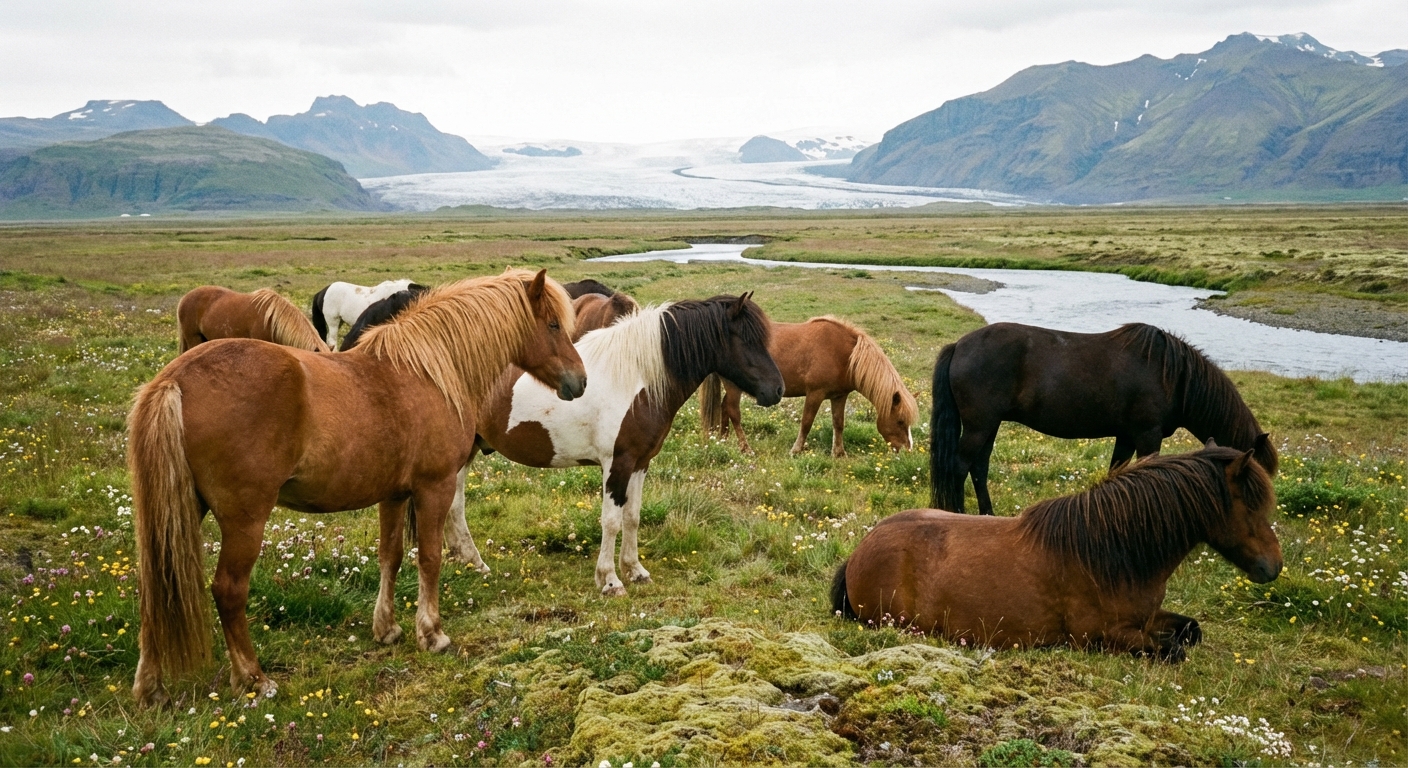
Every so often, you glance over and witness something subtle: a horse's coat seems to elevate, as though each hair has momentarily decided to stand apart from the skin. The instinct is to assign meaning right away—temperature, anxiety, arousal, atmospheric shift, emotional state—and then act upon that assumption.
Without credible references to guide this inquiry, I cannot assert what causes the coat to rise or what purpose it serves. What I can share is a philosophy of coexistence: how to observe this quiet physical transformation without converting it into a signal, a judgment, or a call to intervene.
1) Start with what you can actually confirm
Living well alongside another being begins with truthfulness about the limits of our understanding.
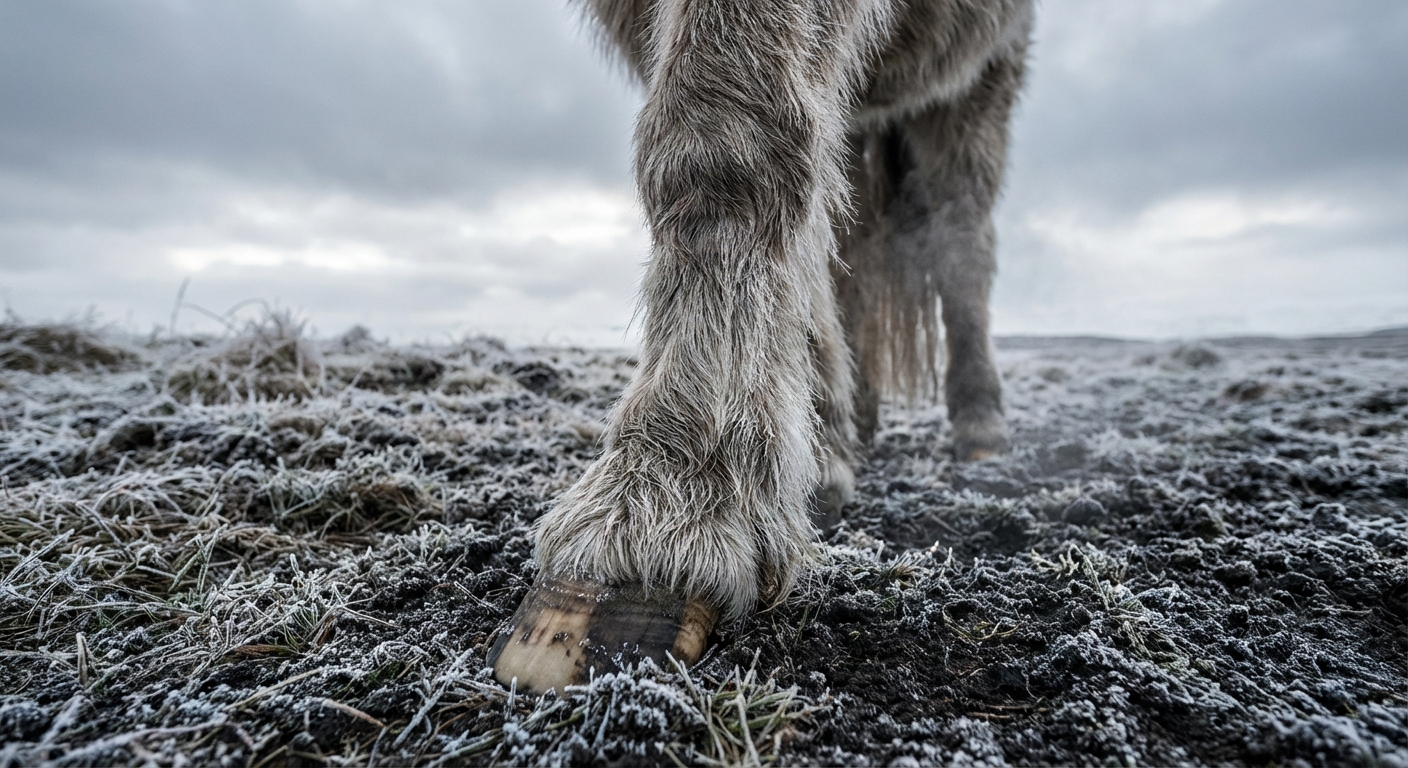
What you can verify in that instant is uncomplicated: the coat appears altered from how it looked moments before. Perhaps it seems lifted, bristled, fuller, or as though the hairs have separated from the body's surface. This is pure observation.
What remains beyond your confirmation—absent the broader context you lack—is causation. Interpreting a visible shift as a "window into the horse's internal world" is precisely where we humans tend to abandon presence and drift into narrative.
Therefore, the initial discipline is one of restraint: articulate only what your vision can genuinely verify.
We might ask ourselves the same question in our own lives—how often do we mistake observation for insight, projecting stories onto others when all we truly witnessed was a surface change?
2) Replace explanation with quiet tracking
Upon noticing the coat's subtle rise, allow the following moments to become an exercise in attentive watching rather than problem-solving.
Such tracking requires no words. You remain where you stand. You soften your posture, releasing any air of expectation. You observe whether the horse maintains connection with their environment, withdraws, draws nearer, grazes, settles, or simply holds still.
This is not a method to master. It is a promise you extend to yourself: "I will position myself near enough to perceive, yet distant enough to leave things undisturbed."
In human relationships too, we might find that replacing the urge to explain with the patience to simply witness creates space for truth to emerge on its own terms.
3) Keep coexistence free of accidental pressure
One of the most frequent missteps in the shared life between humans and horses is transforming every noticed detail into a reaction the horse must then absorb and navigate.
Should you intervene hastily—accelerating your movements, encroaching on the horse's space, extending your hand, inspecting, lingering too close—you risk amplifying the intensity of the moment. Even the kindest intentions become burdensome when they arrive with haste.
Coexistence in this context asks that you maintain a consistent, unshifting presence. No abrupt proximity. No fresh demands. No implicit request that the horse prove everything is fine by performing normalcy.
How often in our human connections do we inadvertently burden others with our concern, asking them to manage our worry rather than their own experience?
4) Let the horse keep choice inside the moment
Without relying on assertions about what a lifted coat signifies, you can nonetheless honor something essential in almost any circumstance: the horse's freedom to seek their own ease.
When the horse adjusts their stance, alters the distance between you, angles a shoulder away, averts their gaze, or moves toward cover, you can let that decision remain intact. There is no need to redirect it or decode it.
Within coexistence, a subtle repositioning is frequently the horse's method of recalibrating their own felt sense. Your role is not to confine the horse within the boundaries of your inquisitiveness.
This principle extends beautifully into human life: to love someone well often means allowing their small adjustments without demanding explanation or requiring them to stay fixed in place for our comfort.
5) Use "less doing" as a form of care
In moments of uncertainty, the human impulse tends toward activity.
Yet sometimes the truest form of care manifests as reduced action—particularly when you possess no verified knowledge about what you are witnessing. You can opt to preserve the tranquility of the environment: refrain from generating fresh disturbance, resist drawing others into a vortex of concern, decline to make the horse the subject of anxious discussion.
If you are already present nearby, steadiness alone may be sufficient. Coexistence is not gauged by the frequency of your interventions; it is measured by how secure the horse feels to simply be themselves in your company.
Perhaps the deepest care we can offer anyone—human or horse—is the gift of our unhurried, undemanding presence.
6) Make the moment teach you, not the other way around
When the lifting coat becomes your point of focus, one of the most honoring responses is to receive it as an invitation to sharpen your perception—rather than to strengthen your certainty.
You can recognize recurring themes without pronouncing definitive answers. You can hold in memory the quality of the day, the character of the space, and what the horse chose to do afterward—without crystallizing those recollections into fixed laws.
Gradually, this quality of attention cultivates a more hushed form of relationship: one in which the horse is not perpetually supervised, and you are not perpetually composing the story.
In all our relationships, perhaps the wisest posture is that of the eternal student—allowing life to shape our understanding rather than forcing our understanding onto life.
Equine Notion
https://equinenotion.com/