When the Field Decides to Move: Watching Synchronized Herd Runs as Relationship in Motion
Hook
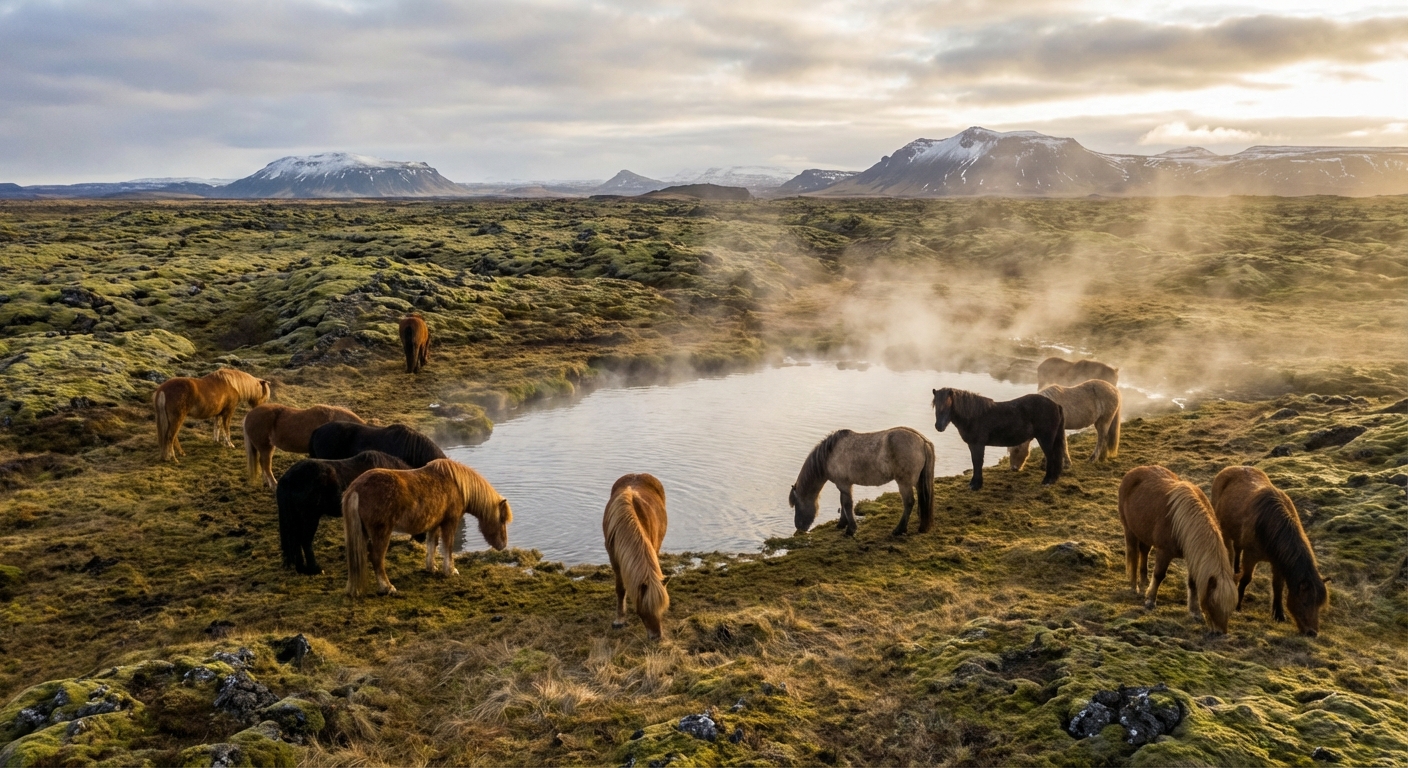
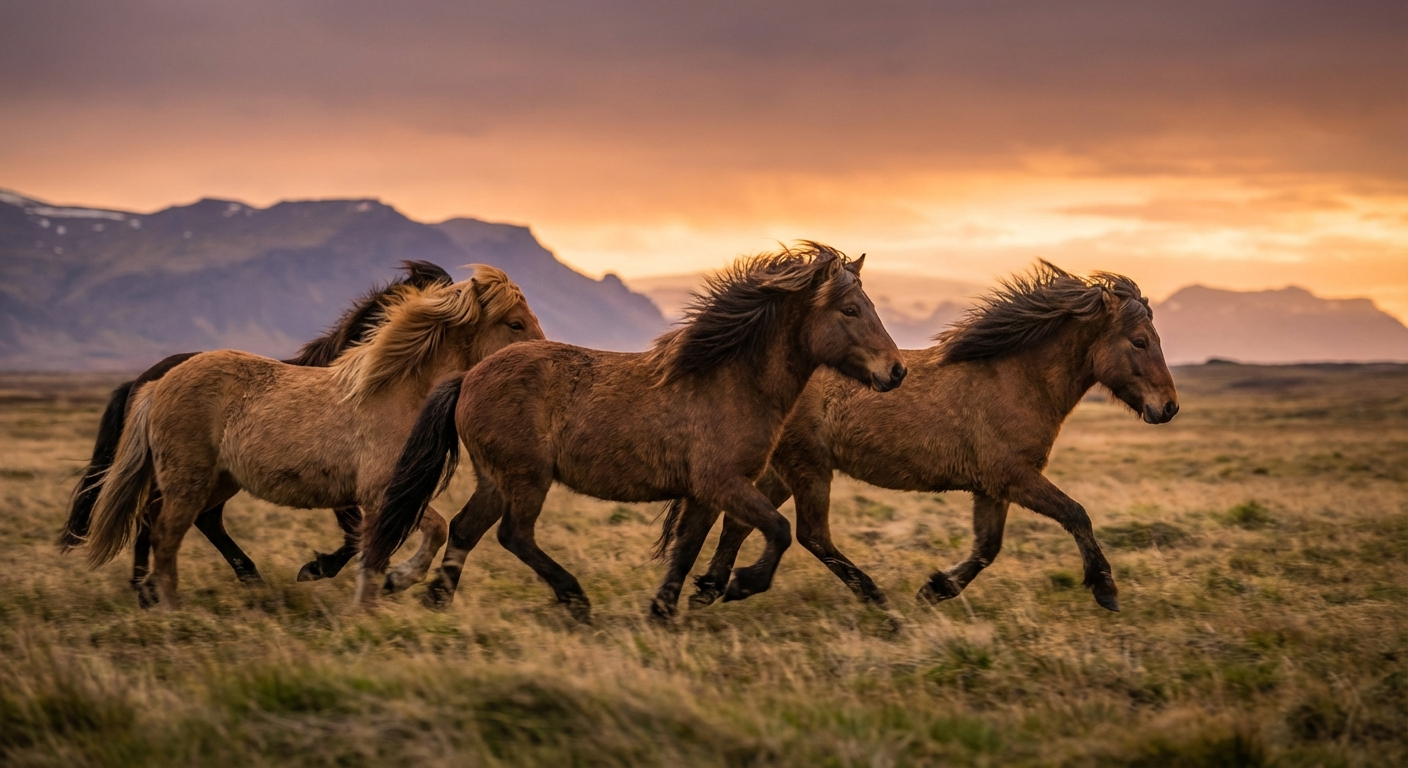
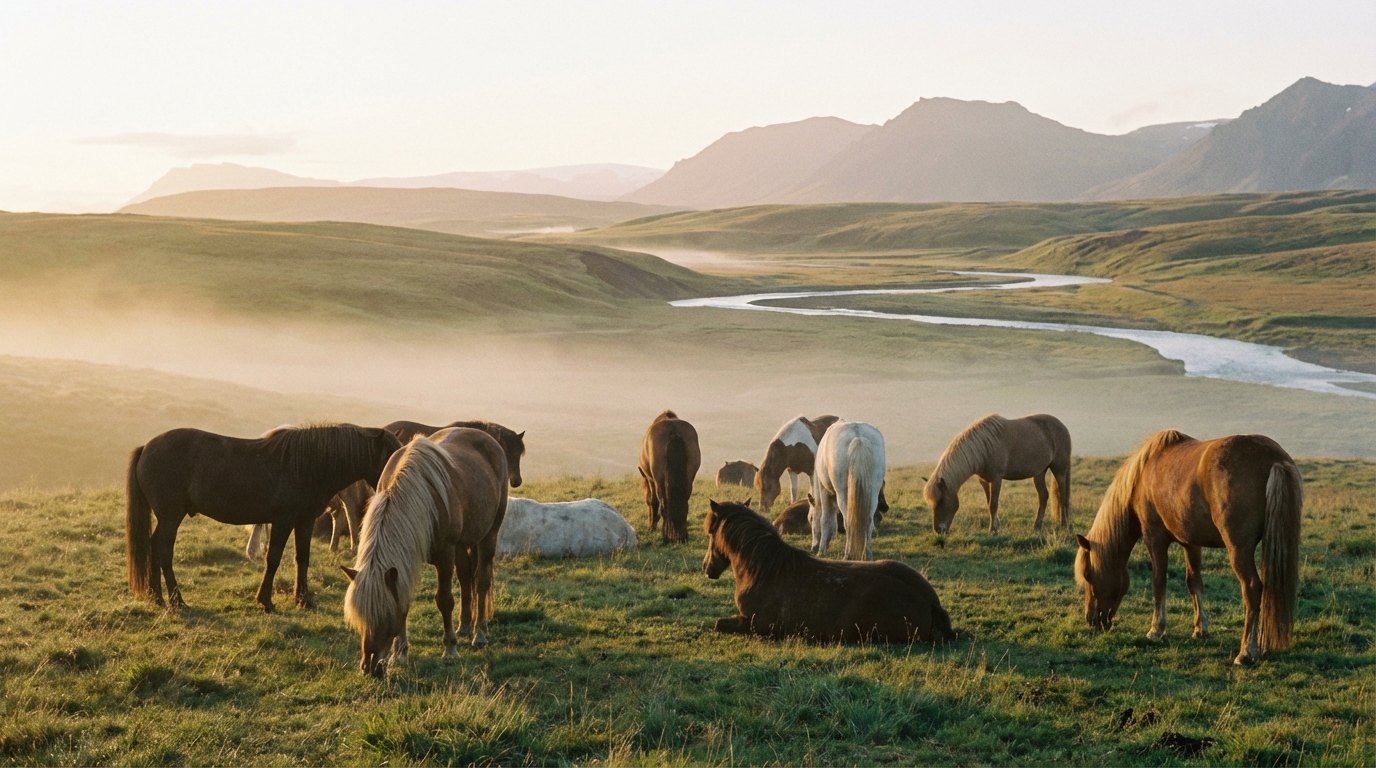
What compels an entire herd to surge forward in unison—absent any signal, any command, any blueprint we might identify? In one breath the pasture stands unremarkable. In the next, it transforms into a singular trajectory.
Collective running may appear as exuberance, as liberation, or as something that simply demanded expression. From the vantage of coexistence, the most valuable reframe might be this: rather than categorizing it as disruption or display, we can receive it as knowledge about connection itself.
1) A Run That Doesn't Ask for an Audience
When horses move together as one body, the temptation arises to construct a narrative around energy requiring "management," or behavior demanding human intervention. Coexistence calls us toward restraint.
A distinction exists between observing and inserting oneself into the unfolding. To observe means allowing the run to remain the horses' own. It means perceiving without attempting to influence the outcome. It also means resisting the urge to use the moment as evidence—no hasty interpretations, no categorizations.
Approached this way, the run becomes less spectacle and more akin to weather: it moves through, shifts the atmosphere of the field, and then the day resumes its course.
We might ask ourselves how often we turn others' spontaneous expressions into problems we must solve, rather than phenomena we are privileged to witness.
2) Coordination as a Kind of Closeness
Synchronized motion can register as bonding because togetherness manifests physically. Not "friendship" as abstraction, but as a collective choice to align for a fleeting interval.
The compelling element is not velocity. It is the correspondence.
- Corresponding in direction without pause
- Corresponding in the instant of departure and arrival
- Corresponding in intensity, then allowing it to diminish
This is not an exercise in rendering horses symbolic. It is merely a practice of recognizing that relationship can be witnessed without becoming saccharine. Coordination remains one of the rare things observable without physical contact.
In our own lives, we might notice that our deepest connections often reveal themselves not through words but through the quiet synchrony of shared rhythm.
3) The Small Signals That Seem to Precede "All at Once"
Even without attempting to interpret the herd, one can observe that "spontaneous" runs frequently do not feel entirely spontaneous when you are truly present.
If you remain quietly nearby—neither calling, pursuing, nor advancing—you may glimpse the overture: a redirection of focus, an alteration in spacing, an arrangement of bodies that resembles consensus taking shape.
Coexistence in this context concerns less the act of interpretation and more the calibration of your own stillness. When something approaches emergence, there is no need to rush toward it. There is no need to announce your presence to the horses.
Allow the moment to remain theirs. Then observe what transforms in its wake.
How often do we miss the subtle preludes in our own relationships—the quiet shifts that precede significant change—because we are too busy making ourselves known?
4) After the Run: The Soft Landing Matters
The conclusion of a synchronized run can illuminate more than the run itself.
When the herd comes to rest—when hooves decelerate, breath patterns shift, bodies disperse or reconvene—there often emerges a sense of "return." Not necessarily return to identical positions, but return to the shared pasture as a place of peace.
As a human present nearby, you can attend to the aftermath without intruding:
- Does the herd drift back into relaxed proximity?
- Do individuals scatter and graze as though nothing occurred?
- Does the group maintain an alert stance, or does it dissolve into everyday cadences?
The purpose is not to evaluate these observations as favorable or unfavorable. The purpose is to let the resolution reveal what function the run served that day: discharge, reunification, a momentary surge of vitality, a recalibration.
We too have our surges and landings—and the quality of our return to stillness often tells us more about our inner state than the intensity that preceded it.
5) Staying Non-Participatory Without Becoming Distant
Choosing not to ride or train does not equate to absence. It means declining to convert every equine moment into a human-directed occasion.
A practical approach to maintaining this boundary is to adopt a form of presence that clearly does not constitute a cue:
- Remaining stationary rather than following the motion
- Keeping your physical expression neutral rather than "participating"
- Allowing your attention to be soft rather than focused
This is not about rendering yourself invisible. It is about becoming predictable and undemanding.
In a pasture where horses already coordinate among themselves, your finest offering may be to remain one fewer variable to account for.
There is wisdom here for all our relationships: sometimes the greatest gift is to be a steady, unobtrusive presence rather than an active participant.
6) A Different Kind of Bonding: Being the One Who Doesn't Interrupt
Humans frequently seek to bond through action. Horses can experience bonding as permission.
If synchronized herd running represents one way the group embodies togetherness, then coexistence becomes the decision not to sever the thread. Connection does not require "involvement." You can become recognized as the one who does not transform their collective moment into a supervised moment.
Gradually, this can alter the texture of proximity. Not because you insisted upon trust, but because you embodied it: you trusted the herd to possess its own coordination, and you trusted the field to contain it.
This is a bond forged from restraint—quiet, steady, and without force.
Perhaps the deepest human bonds are similarly built: not through our insistence on being needed, but through our willingness to let others be whole without us.
Equine Notion
https://equinenotion.com/