When the Field Goes Still: Making Space for a Herd’s Vigil

The Urge to Do Something
The death of a companion is among those rare events that can render even the most familiar pasture suddenly foreign. Our human instinct rises without hesitation: tidy the scene, make room, bring back order. We grasp for action because action shields us from the weight of powerlessness.
Yet living alongside another species poses a more difficult inquiry than mere practicality. It asks whether our compulsion to "manage" the situation aligns with their need to remain near what has been altered. Within the space between these two needs, quiet damage can occur—not born of malice, but of neatness. Sometimes, in sweeping away what pains us, we also remove what allows a community to comprehend its loss.
We might recognize this same tension in our own lives: the well-meaning friend who rushes to distract us from grief, when what we needed was simply to sit with the absence a little longer.
Silence as Information
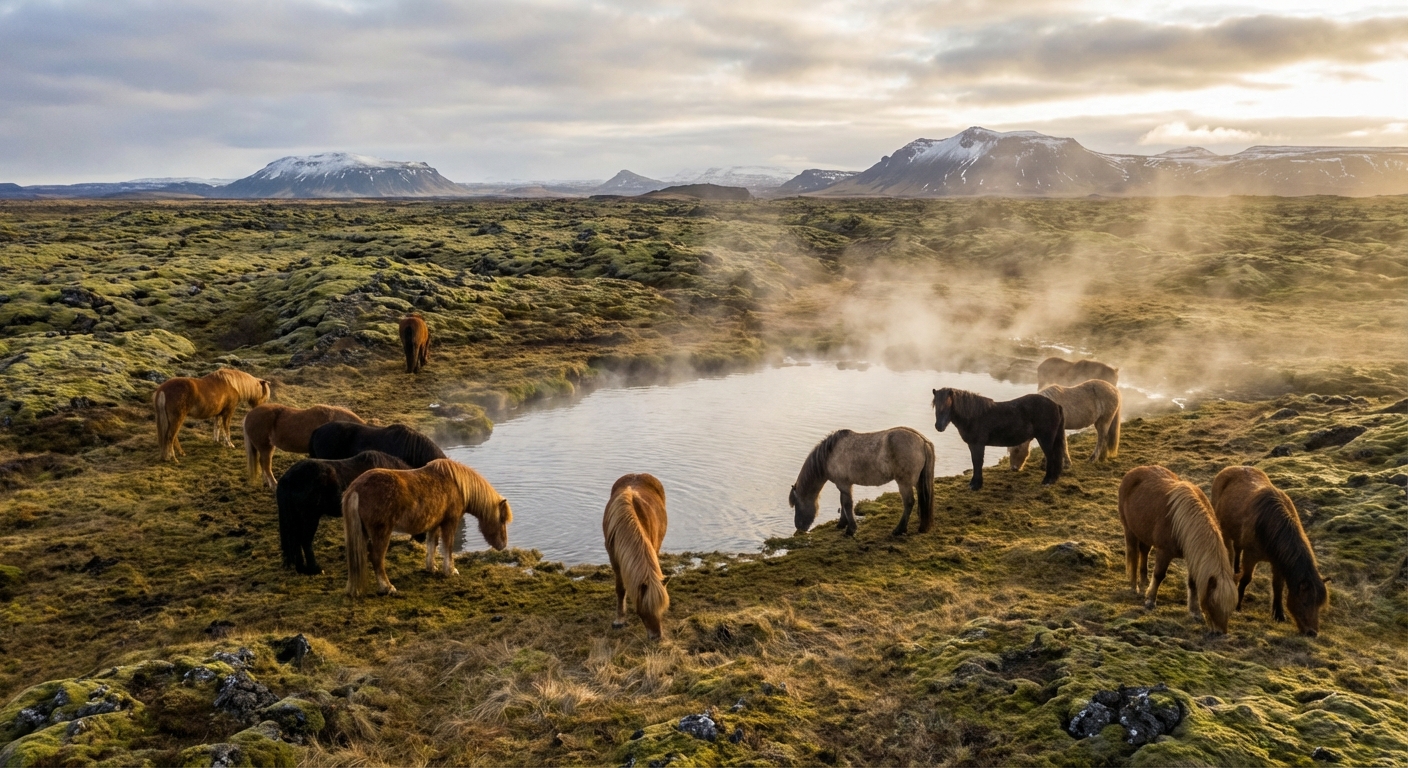
A vigil requires no spectators and is never a show. When the herd congregates, when they remain close, when time itself seems to thicken around a single spot, we need not force the scene into a tidy interpretation. We can receive their stillness as data without shaping it into a narrative of our own design.
To coexist in such moments means refusing to treat the herd's behavior as something requiring a solution. It means holding back from categorizing what we observe as either excessive or insignificant. At times, the most honorable stance is simply acknowledging that the field holds significance we may never fully grasp.
How often do we, too, rush to explain another person's sorrow rather than letting it exist on its own terms?
Restraint as Care
Some forms of assistance are actually intrusions in disguise. Likewise, certain kinds of distance constitute genuine support. Restraint, understood this way, is not abandonment—it is the deliberate choice to allow the herd to dictate the rhythm of the moment.
This does not demand our absence. It demands that we make ourselves deliberately peripheral. That we move gently. That we keep our gaze soft and wide rather than probing. That we allow our hands to rest unless they are genuinely called upon. True coexistence is defined not only by what we offer, but by what we refrain from commandeering.
In human relationships, too, the deepest love sometimes expresses itself through knowing when not to intervene.
Afterward, the Shape of the Day
Once the herd eventually returns to its familiar patterns, we may feel invited to hurry forward and "restore normalcy." But normalcy, in the wake of loss, is not a lever to be pulled. It is a form that reconstitutes gradually, often in unexpected configurations.
A life shared freely with horses—one that does not revolve around riding or training—invites us to gauge our success by how seldom we must impose ourselves. Death puts that principle to the test. It presents an occasion when our control could easily swell, defended by urgency and raw feeling. Yet the more space we grant the herd to move through their own process, the more we cultivate a quiet, enduring form of partnership: remaining present without claiming the center.
Perhaps this is what all grief asks of us—to witness without possessing, to accompany without directing the journey.
Equine Notion
https://equinenotion.com/