When the Herd Breaks Into Play: The Welfare Clue We Don’t Have to Teach

Play as Surplus
It begins as a quiet rebellion against the mundane.
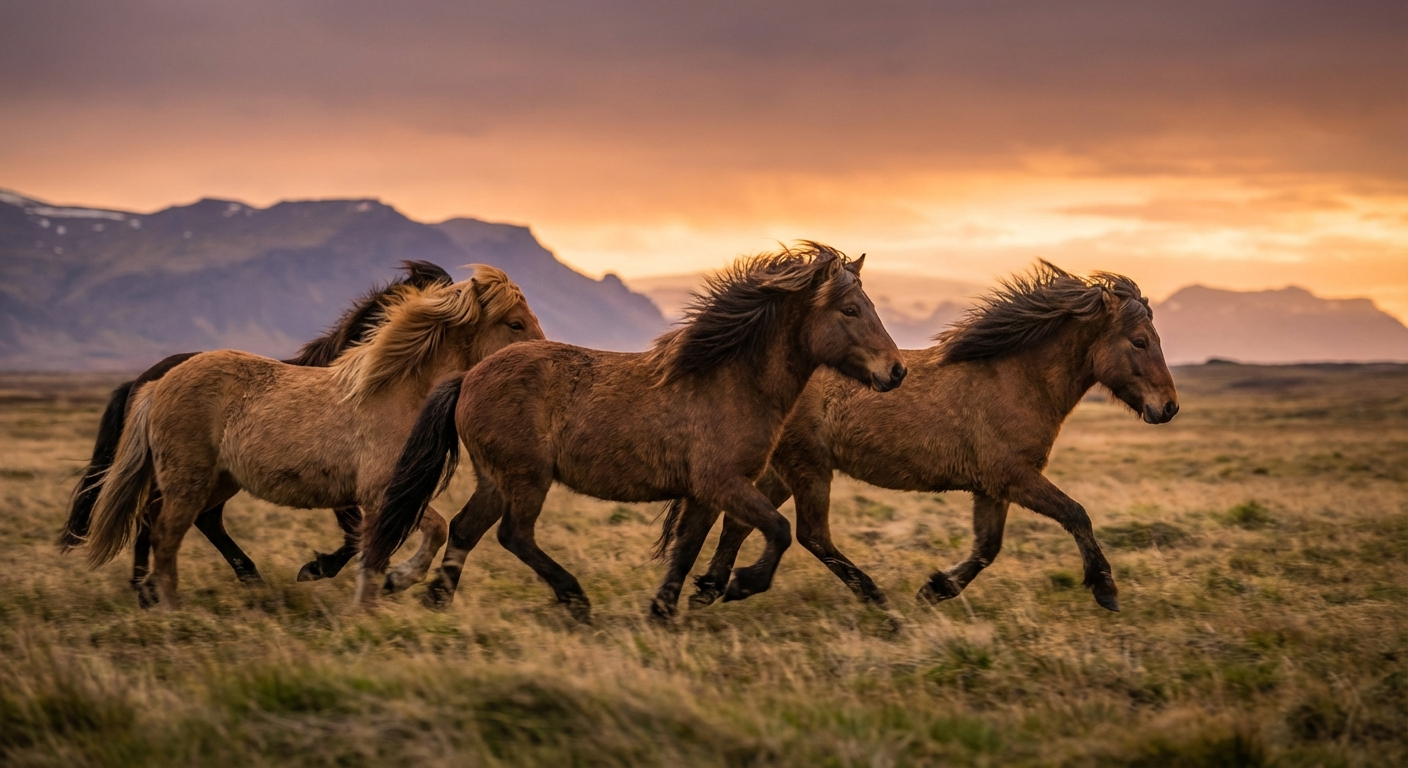
A shoulder drifts sideways without reason. Two heads rise in unison—not from fear, but from some unspoken conspiracy of delight. One horse traces an aimless loop through space, then pauses in anticipation. Another responds with a half-hearted pursuit that dissolves into nothing. No territory is being claimed. No objective is being achieved. The moment exists purely as excess.
This "excess" is precisely why play holds such significance in shared existence.
Within human-managed environments, we learn to scan for the absence of problems: no digestive distress, no limping, no overt tension. Yet horses offer us something far more revealing than mere silence. They display behaviors that emerge only when fundamental needs have already been satisfied.
An animal evolved for nearly continuous grazing and steady locomotion cannot easily feign contentment. When the underlying physiology is under strain—when the stomach endures prolonged emptiness while acid continues its relentless production, when movement is confined to stillness, when social existence remains perpetually fraught—the entire day becomes consumed by mere survival. When survival claims the day, nothing remains for purposeless joy.
Play, then, functions as a welfare ledger. It signals that necessities are not simply present but dependably so, freeing energy for pursuits that offer no immediate survival advantage.
This has nothing to do with "releasing pent-up energy." It speaks instead to a system stable enough to produce abundance.
We might recognize this truth in our own lives: genuine creativity and spontaneous joy rarely emerge when we are merely getting by—they require a foundation of security from which the spirit can afford to wander.
The Day That Makes Play Possible
If we accept play as a marker of positive states, we must ask: what conditions tend to give rise to it?
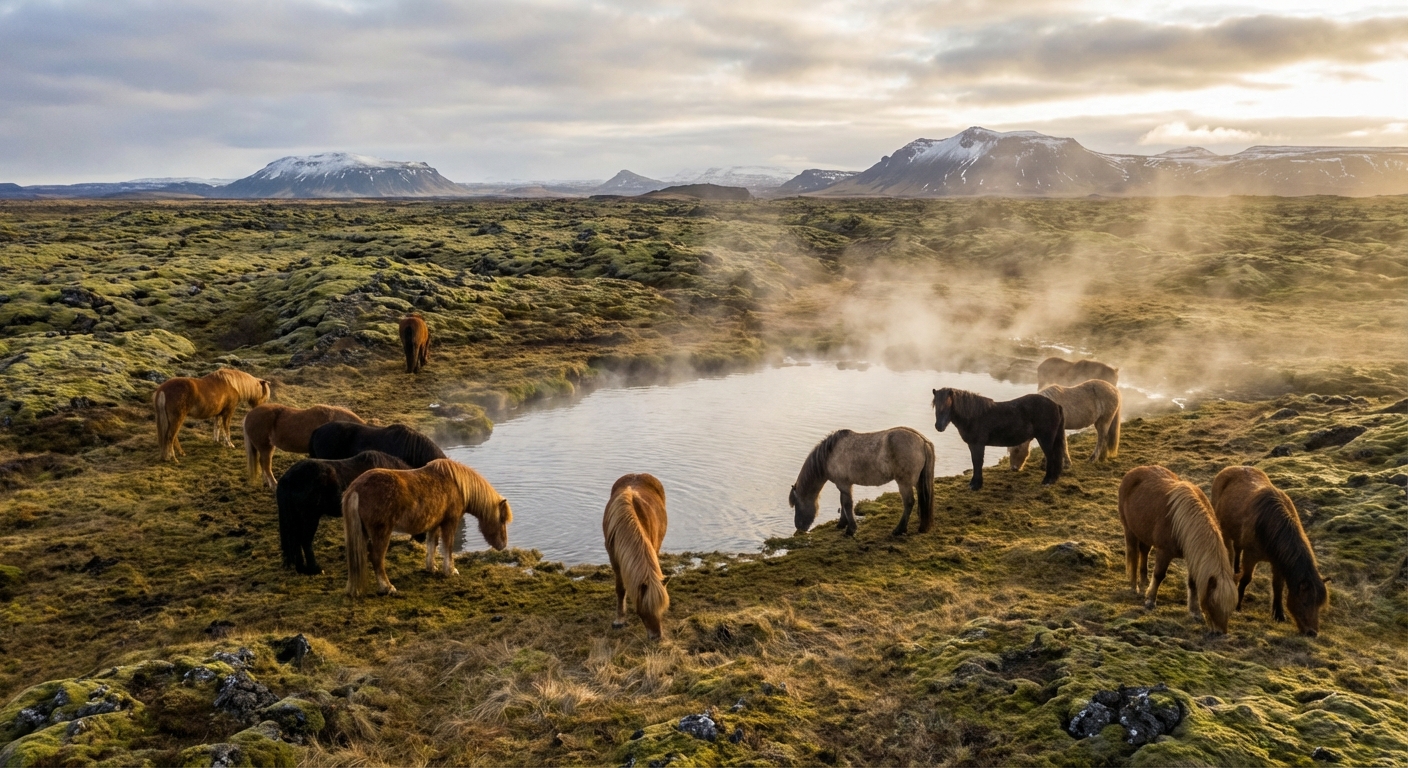
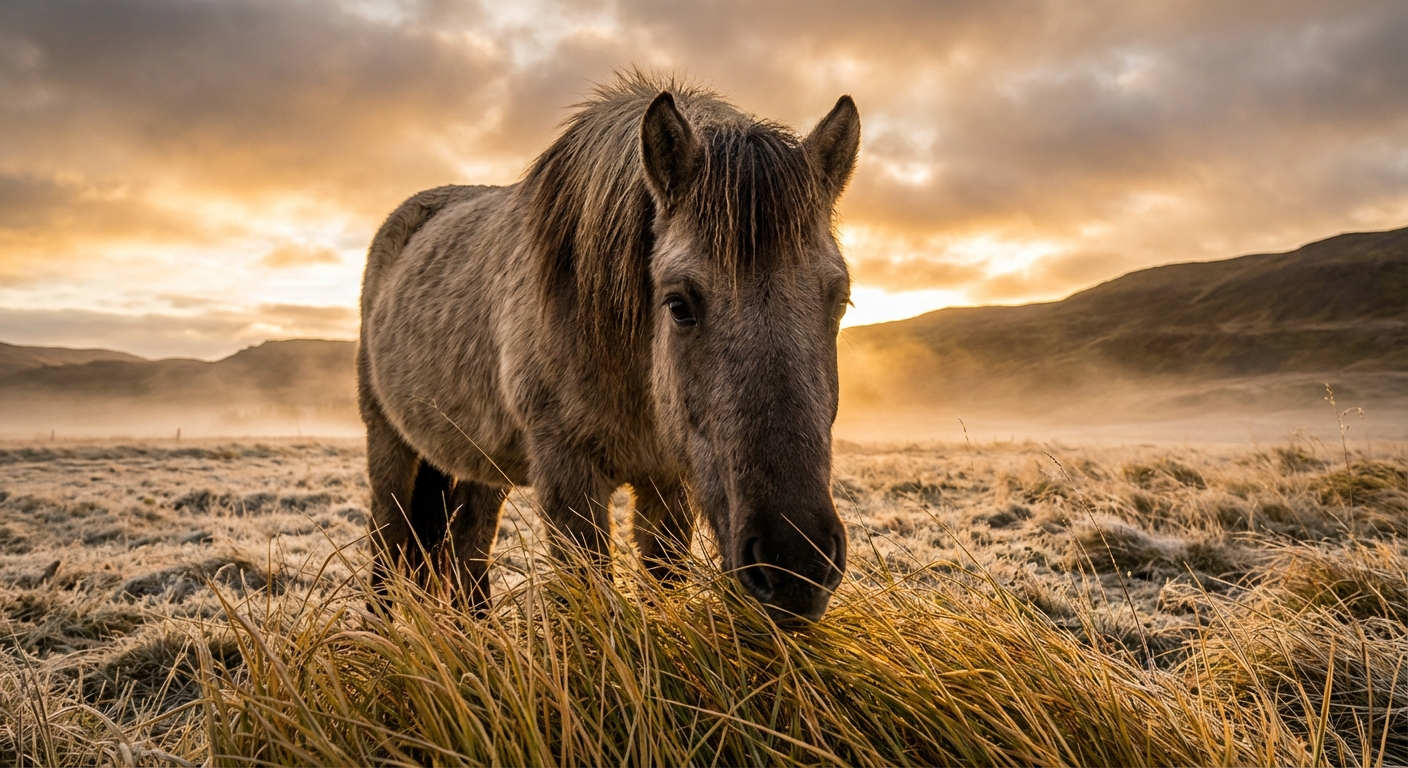
Begin with the bedrock upon which horses construct everything else: uninterrupted access to forage. Within a coexistence framework, available food is a given, not something earned. The human role transforms from "provider of meals" to "guarantor of constant access." The moment eating ceases, the clock of gastric damage begins its count. A horse managing that internal siege is unlikely to invest energy in lightness.
Next, consider locomotion—not as exercise, but as an ecological imperative. Horses were never designed for lives spent predominantly motionless. Their baseline requirement for movement falls somewhere between 15 and 30 kilometers each day. When travel becomes an ordinary feature of daily life—meandering, surveying distances, reuniting with companions—play finds a physical canvas on which to emerge. Play typically appropriates the routes a horse already knows.
Finally, there is the social terrain. Life within the herd is not perpetual combat; it consists mostly of relational negotiation. Who elects to stand beside whom, who defers at narrow passages, who approaches with forbearance, who maintains distance. When these bonds achieve sufficient stability, play becomes less risky. Not safe in the sense of absolute certainty, but safe in the sense that the collective can absorb the unexpected without turning hostile.
Play might be understood as a form of ballot: the horse declares, "The world is predictable enough that I can improvise."
How often do we, too, find ourselves unable to play—to experiment, to take creative risks—because our social or material ground feels too uncertain beneath us?
The Shadow Twin: When the Environment Speaks Through Repetition
It proves useful to consider play alongside its contrasting signal.
Stereotypic behavior serves as an environmental barometer—evidence that something in daily life fails so persistently that the horse must fabricate its own solace. Repetition does not indicate a "difficult temperament." It frequently represents body and mind attempting to endure a routine misaligned with biology.
Play, by contrast, is not manufactured solace. It is spontaneous expansion.
Both convey information. Yet they speak in distinct languages.
When play vanishes, we are tempted to attribute it to temperament, advancing years, or some inexplicable shift "in disposition." Coexistence invites us to examine the environment's major variables first: Has foraging been disrupted more frequently? Has the social configuration shifted in ways that heighten daily alertness? Has the horse's world of movement contracted into a smaller territory? Has management introduced additional waiting—more intervals where the horse stands idle while internal processes continue unabated?
The aim is not to manufacture play. The aim is to recognize what kind of world permits it to arise.
In our own experience, the disappearance of lightness and spontaneity often signals not a personal failing but an environment that has grown too demanding, too unpredictable, or too confining.
The Protection Paradox, and the Courage to Allow a Real Life
Much of what we label "care" is actually a choice for control.
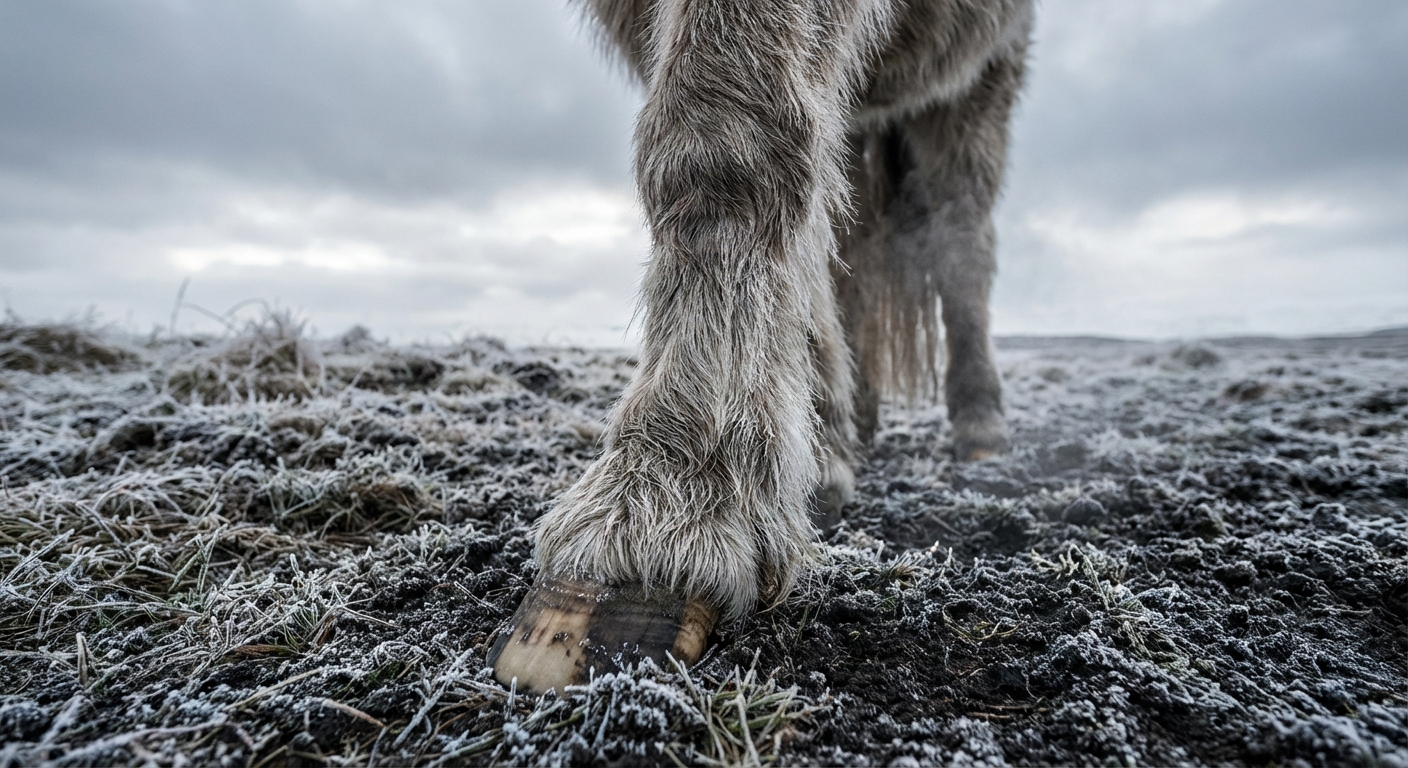
We shield hooves by adding armor that subtly alters what the hoof can accomplish. We shield bodies by diminishing environmental complexity until the horse inhabits a reduced sensory and physical realm. We shield schedules through inflexible routines that bend equine time to human convenience.
This constitutes the protection paradox: the more thoroughly we attempt to eliminate risk, the more we may strip away the very conditions a horse relies upon to sustain itself.
Play does not flourish in a life rendered frictionless.
A living terrain—diverse footing, shifting weather, room to roam, social options, earth to roll upon—does more than provide "enrichment." It enables the horse's innate maintenance systems to function. It creates space for self-directed regulation, including the subtle acts of self-medication and environmental engagement that horses select when given freedom.
And when foundational needs are fulfilled within that broader world, play can emerge as the natural consequence of a body no longer perpetually compensating.
We might ask ourselves the same question: have we so thoroughly insulated our lives from challenge and uncertainty that we have inadvertently eliminated the conditions under which vitality and play can flourish?
Watching Without Turning It Into a Project
There exists a particular quality of human attention that destroys what it observes. We categorize, quantify, intervene, and reduce the horse to a collection of metrics.
Coexistence calls for a different mode of watching—something closer to what seasoned horse people have always possessed: the embodied wisdom born of countless hours of quiet presence, of perceiving how horses reflect our inner states, how trust deepens through patience and mutual rhythm. Play can be witnessed in this same manner: not as performance, not as training objective, but as free expression that speaks truthfully about the quality of the day.
When play emerges, it seeks no recognition.
It simply attests that the horse's existence contains sufficient continuity—sufficient time for eating, for traveling, for social equilibrium—that joy can surface without appointment.
Perhaps the deepest lesson here is for us: the capacity to witness without grasping, to appreciate without possessing, may be among the rarest and most necessary forms of love we can offer—to horses, and to one another.
Equine Notion
https://equinenotion.com/