When the Lab Catches Up to the Meadow: Letting ‘Science’ Arrive Late to What Horses Live Daily
Hook
Nothing remarkable occurred this morning.
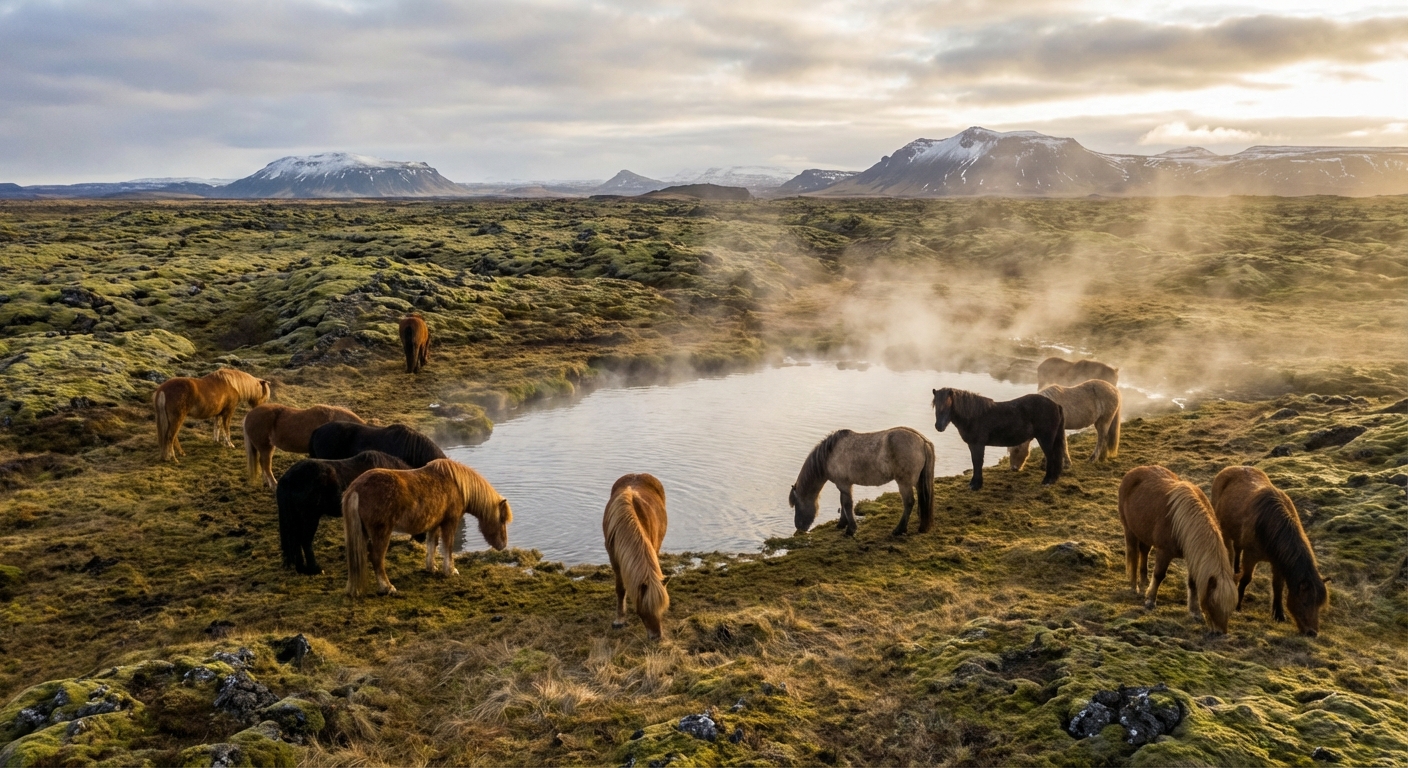
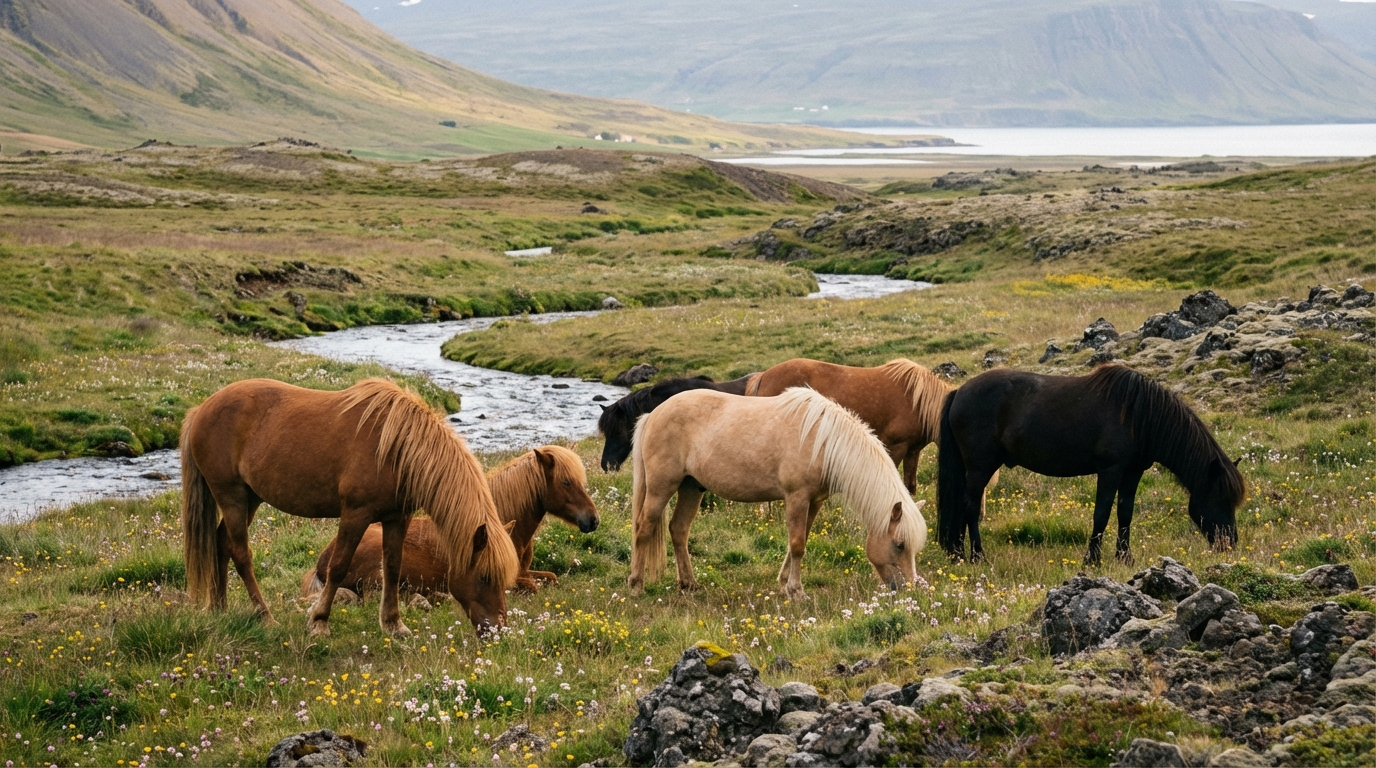
One horse redistributed her weight. Another released a long breath. A subtle shift in spacing settled the entire group into greater ease. Nobody "instructed" anyone. Nobody "practiced" anything. Yet the moment carried fullness—because it possessed its own inherent structure.
Eventually, we humans will attempt to label that structure. We'll document it, quantify it, submit it for publication, and declare it validated. The horses will continue their way of being, indifferent to our documentation.
What might this reveal about us?
Consider how often we wait for external validation before trusting what we already sense. A parent intuits their child needs more unstructured play, but hesitates until an expert confirms it. A worker feels their creativity dying under micromanagement, but questions their own perception until a study says so. We've learned to distrust our direct experience, as if living something isn't evidence enough.
Perhaps the horses remind us: wisdom doesn't require a certificate. Some truths are simply lived before they're proven.
When did you last dismiss your own knowing while waiting for someone else to confirm it?
1) The long delay between living and proving
Sharing space with horses—absent riding, absent training—places you in a peculiar position: you bear witness to a reality that seeks no validation.
Horses don't halt their lives to await our verdicts. They flow through each day already filled with choices, inclinations, and recalibrations. When people announce "research validates," it can sound triumphant, like crossing a finish line. But within ordinary shared existence, it resembles more of a tardy guest finally arriving.
The perceptual shift is gentle. Rather than treating studies as authorization to believe your observations, you start from what's evident before you: horses move through their world as though they've always understood what makes a day function smoothly.
What might this reveal about us?
We live in a culture that has outsourced trust. We've been trained to doubt our senses until credentials arrive. A grandmother's remedy becomes legitimate only when a laboratory rediscovers it. A teacher's intuition about a struggling student gains weight only after testing confirms it. The knowing came first; the proof came decades later.
There's a deeper invitation here: What if we honored both? What if we could hold our direct experience as valid while remaining open to what formal inquiry might add? Not one replacing the other, but a conversation between ways of knowing.
What wisdom have you carried for years that you're still waiting for permission to trust?
2) Coexistence begins where performance ends
When you strip away riding and training from the equation, an enormous amount of static disappears.
No curriculum requires defending. No goal demands pursuit. No impulse arises to treat the horse as a project to complete.
What's left is elemental: dwelling in proximity.
This simplicity transforms what "research validates" can signify. It shifts from ammunition for arguments toward acknowledgment of something you've observed countless times. The horse's manner of existing stops appearing as behaviors requiring management and begins revealing itself as a quiet intelligence articulated through countless small selections.
Within this way of living, you don't "exploit" a horse's tranquility; you safeguard the circumstances that permit tranquility to emerge.
What might this reveal about us?
Think about your closest relationships. The ones that nourish you most deeply—are they built on performance and outcomes? Or on simply being present together? A friendship where you must constantly prove your worth exhausts differently than one where you're simply welcomed as you are.
The same applies to how we relate to ourselves. When we stop treating our own growth as a "project" with measurable deliverables, something softens. We stop managing ourselves and start inhabiting ourselves.
We don't manufacture peace within. We create conditions where peace can surface on its own.
Where in your life might you be trying to force an outcome that would arrive naturally if you simply stopped pushing?
3) The horse's knowledge is practical, not rhetorical
Human speech delights in converting lived experience into catchphrases.
Horses have no interest in catchphrases. They deal in outcomes.
They inhabit a domain where ease, tension, availability, restoration, and companionship carry immediate weight. Their "understanding" isn't a position to defend; it's an ongoing sequence of functional adaptations. When you share their space, you recognize they require no spectacular displays to demonstrate intelligence. They reveal it by sidestepping the superfluous, selecting what works, and allowing the day to remain unremarkable.
When humans eventually articulate these patterns using technical vocabulary, it serves a purpose. But it remains interpretation. And interpretation should never claim to have authored the source material.
What might this reveal about us?
We live in an age of beautiful theories and broken lives. We can articulate self-care while running ourselves ragged. We can explain healthy boundaries while saying yes to everything. The gap between what we know intellectually and what we practice daily can become a canyon.
Horses close that gap effortlessly. Their knowledge lives in their bodies, in their moment-to-moment choices. They don't theorize about rest—they rest. They don't debate boundaries—they maintain them.
Perhaps real wisdom isn't about having the right words. It's about making the next small choice that serves life.
Where has your eloquent understanding outpaced your embodied practice?
4) What changes when humans stop trying to be right
The pull with any form of validation—whether scientific or otherwise—is to transform it into triumph.
Yet coexistence requests a different stance: not "I knew it all along," but "I will proceed with greater care."
Dwelling alongside horses without an agenda of instruction renders humility tangible. You cannot squeeze the day into a predetermined story without losing sight of what's genuinely unfolding. The horse transforms from a point to prove into a neighbor to regard.
Within this neighborly orientation, "research validates" becomes less a weapon for winning and more a whisper of caution: if humanity is only now arriving at what horses have always embodied, we ought to tread lightly with our conclusions and even lighter with our interventions.
What might this reveal about us?
Being right feels so good. It lights up something primal in us—the satisfaction of winning, of knowing, of having the answer. But notice what happens in a conversation when someone is more invested in being right than in understanding. Connection dies. Curiosity vanishes. The other person becomes an opponent rather than a fellow traveler.
What if we traded the pleasure of being right for the deeper satisfaction of being present? What if "I see what's actually here" mattered more than "I told you so"?
The horses don't care about being right. They care about what works. And somehow, that makes them wiser than most arguments.
In your most important relationships, what would change if you released the need to be right?
5) The most convincing evidence is the day that stays calm
A certain kind of evidence requires no footnotes.
It's the day that unfolds steadily because every being had sufficient space to make choices.
Not because a person engineered it. Not because someone imposed order. Because the surroundings permitted the horses to arrange themselves without being trapped by our agendas.
Here is where shared existence becomes its own practice. You grow attuned to what nurtures ease—and what fractures it. You develop appreciation for the unremarkable hour, the silent configuration, the seamless transition from one portion of the day to the next.
Should studies mirror what you've already observed, very well. But the evidence that matters most is the lived kind: the herd's capacity to continue without perpetual supervision.
What might this reveal about us?
We often measure success by drama—the big wins, the visible achievements, the stories worth telling. But what about the days where nothing went wrong? The meeting where everyone felt heard? The evening where the family simply existed together without conflict?
These quiet victories rarely make the highlight reel. Yet they may be the truest measure of a life well-arranged.
The horses teach us to notice what we usually overlook: the profound accomplishment of an ordinary day that holds together. Not because someone forced it, but because the conditions were right.
What unremarkable moments in your life might actually be evidence of something working beautifully?
6) Let confirmation be a bridge, not a pedestal
Validation from formal sources proves useful when it cultivates wiser action: deeper patience, fewer presumptions, softer surroundings, and diminished fixation on command.
But a hazard lurks in pedestal-construction—elevating "research" above the horse's actual existence, as though the horse required our stamp of approval to be legitimate.
A more wholesome orientation treats validation as a crossing between realms: the realm of recorded knowledge and the realm of immediate encounter. Employ it for dialogue with those who need official language, certainly—but never allow it to supplant the discipline of observing, waiting, and modulating your own way of being present.
Shared existence isn't a hypothesis. It's a daily engagement with what actually is.
What might this reveal about us?
We need bridges. Some people can only receive wisdom when it arrives in certain packaging—credentials, data, peer review. That's not a flaw; it's simply how they've learned to trust. Meeting them where they are is an act of compassion.
But we also need to guard against replacing the territory with the map. The study about connection is not connection. The book about presence is not presence. The theory of love is not love.
Perhaps the deepest wisdom lives in holding both: using formal knowledge as a bridge to reach others, while never forgetting that the truest knowing happens in the living—in the watching, the waiting, the adjusting, the being-with.
The horses will continue their ancient way regardless of what we publish about them. And perhaps that's the final teaching: reality doesn't need our confirmation. It simply invites our participation.
What would it mean to participate more fully in your own life—not as a theory to perfect, but as a relationship to inhabit?
Equine Notion
https://equinenotion.com/