When Walls Don’t Matter: How Horses Measure Home by Felt Safety, Not Construction

===HTML_START===
Hook
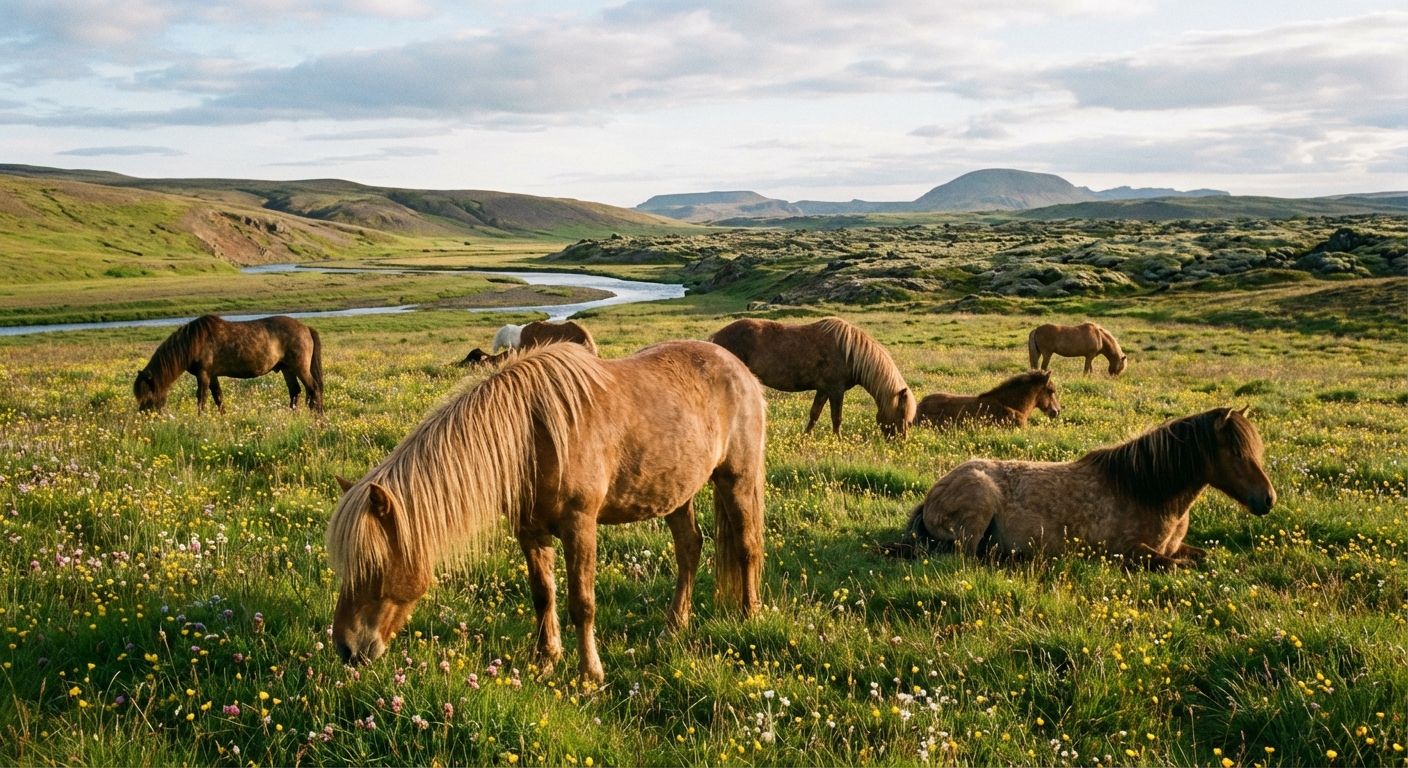
I once witnessed a fleeting exchange that revealed more about the meaning of "home" than any building ever could: two horses approached the same feeding spot, and one hesitated for half a breath, rotated an ear, shifted their stance, and quietly allowed the other to proceed. No pursuit. No conflict. Simply a wordless understanding—followed by both heads dropping peacefully to eat.
To an outsider, it might have appeared as nothing more than routine turnout. But viewed from within, it was something far more profound: a space that *felt* genuinely safe.
1) Housing as a feeling, not a footprint
We humans tend to assess horse accommodations by tangible features: fencing, roofing, gates, enclosure shapes. Horses register these elements as well, yet their daily experience of security often depends on something far less concrete: whether their surroundings permit them to sidestep tension without confrontation.
A modest space can become a true sanctuary when a horse retains the freedom to select their position, choose their companions, and access necessities without being cornered into unwanted disputes. Conversely, even the most elaborate facility can breed anxiety if a horse anticipates being hurried, obstructed, or pressed into social negotiations they cannot gracefully refuse.
Living peacefully alongside horses—without riding or formal training—begins with this recognition: that safety is partially a matter of design, but predominantly a matter of relationship. Perhaps we humans, too, understand this truth in our own lives—that the places where we feel most at home are defined less by their architecture than by the quality of presence we share with those around us.
2) The social shortcuts that keep peace
Harmony within a herd is typically preserved through minuscule adjustments that occur well before any situation intensifies. To gauge whether the living arrangement genuinely feels secure to the horses, observe the informal "traffic protocols" they establish among themselves.
Helpful observations in the field include:
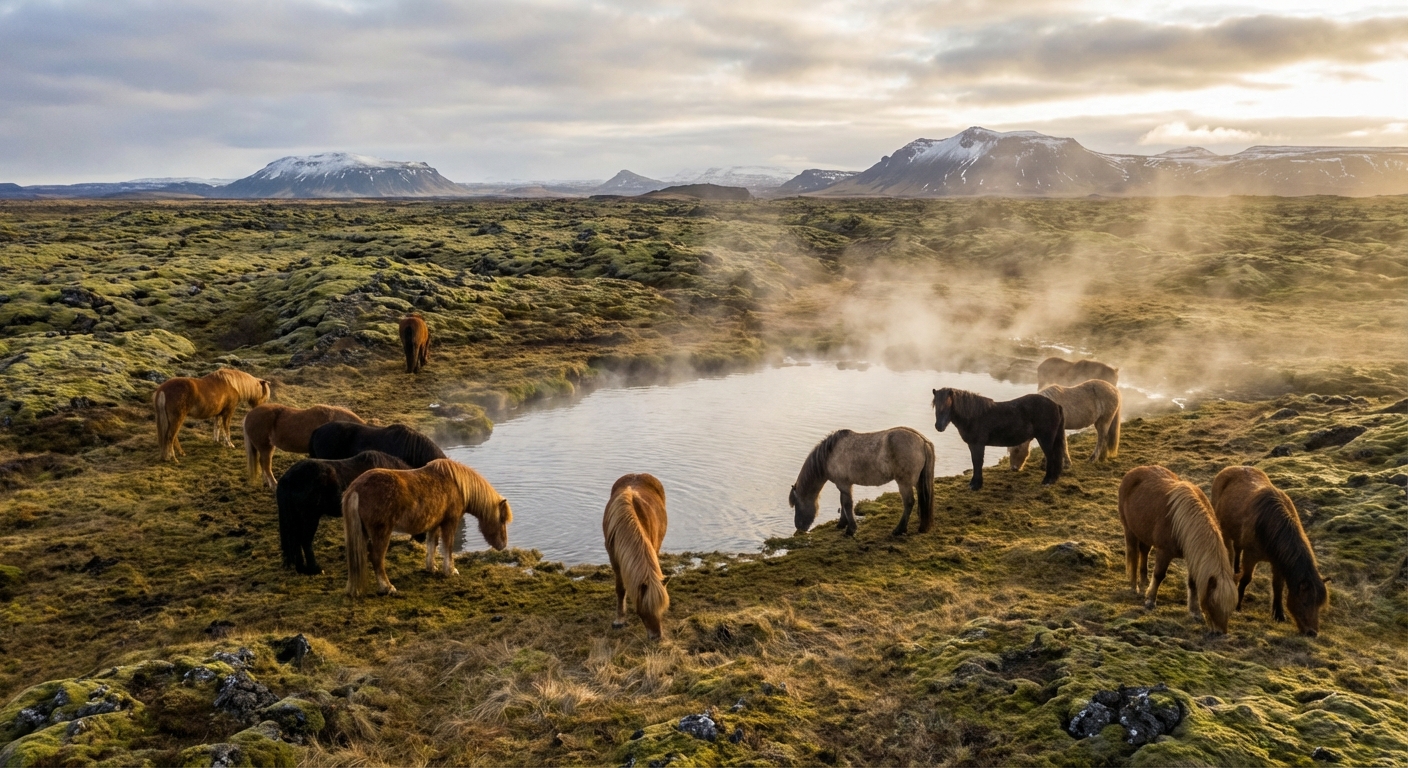
- Which individuals consistently choose to position themselves or rest beside one another—not as a single occurrence, but as an ongoing pattern.
- Reciprocal grooming, relaxed following, and communal rest—understated indicators of ease.
- Their manner of navigating shared resources like hay and water: do they permit passage, offer space, and return without friction?
- Nuanced communications through ear positioning, head orientation, body positioning, or a single sidestep.
These are not learned commands. They represent the herd's indigenous language for declaring, "Cohabitation works here." When such signals function properly—when they are genuinely *honored*—the space feels secure regardless of its aesthetic refinement. We might recognize this same principle in our own communities: the unspoken courtesies, the small yieldings, the mutual acknowledgments that transform a mere location into a place of belonging.
3) "Dominance" as a moment-to-moment agreement
There is a temptation to reduce a group to fixed categories: the leader, the victim, the self-assured one. Yet lived reality typically operates with greater nuance than such labels suggest.
One horse may defer at the hay pile while standing firm at the watering spot. Another may give way to a specific companion yet pay no such deference to a different herdmate. Position fluctuates according to circumstance, relationship, and the resource at hand, appearing quite different from one moment to the next.
This understanding bears directly on housing considerations because perceived safety increases when social exchanges remain foreseeable and open to negotiation. When a horse can dependably circumvent pressure—through pausing, adjusting their angle, awaiting their moment, or selecting different company—the environment nurtures tranquility. When they cannot, no physical structure will fill that void. Human relationships mirror this fluidity; our own sense of security often depends not on fixed hierarchies but on knowing that our boundaries will be respected as circumstances shift.
4) Why resource access shapes the nervous system of a place
A horse's feeling of security is intimately connected to whether fundamental needs can be fulfilled without social expense. The question is not merely *what* resources exist, but *what it feels like to reach them*.
Here, straightforward management decisions can bolster felt safety without converting daily life into a rigid timetable. Rather than distributing food at predetermined hours, consider encouraging innate foraging instincts by offering varied hays and wild plants, empowering horses to select according to their own requirements.
The benefit extends beyond nutrition. The presence of choice transforms the emotional atmosphere surrounding nourishment. When feeding no longer revolves around a single high-stakes interval, there is less vigilant waiting, diminished anticipation, and fewer charged approaches. The herd gains additional opportunities to exercise those gentle negotiations—hesitate, yield, pass—without the interaction devolving into competition.
No instruction is required. Simply observe whether, across time, the horses navigate resources with looser muscles, more level heads, and fewer sudden displacements. There is wisdom here for our own lives: when abundance replaces scarcity, when access feels assured rather than contested, the entire atmosphere of a community softens.
5) The overlooked marker: how easy it is to say "no"
Within human environments, safety frequently implies robust barriers. Within equine environments, safety more often means an unobstructed departure.
Notice what unfolds when one horse prefers not to interact. Can they drift off without pursuit? Can they alter course without being intercepted? Can they find rest without being perpetually displaced?
When a horse can refuse engagement—whether social or spatial—without repercussion, the environment expands psychologically beyond its physical boundaries. That awareness of "I can depart" constitutes its own form of refuge. It can carry more weight than an impeccable roofline or a flawlessly constructed enclosure.
For those who share their lives with horses, this insight calls forth a different quality of attention: cultivating options rather than compelling proximity, and honoring a peaceful withdrawal as deeply as a warm greeting. We might ask ourselves the same question in our human bonds: do we create space for others to decline, to step back, to choose distance without penalty? True safety, for any creature, includes the freedom to say no.
6) Coexisting as an observer: helping without taking over
There exists a subtle art in witnessing without rushing to intervene. Countless herds dissolve tension through understated communication that remains invisible unless one deliberately seeks it.
A human can nurture felt safety by:
- Attending to recurring partnerships and favored resting companions.
- Observing whether the sharing of resources appears peaceful or strained.
- Acknowledging that "who yields first" may vary by situation rather than signifying a permanent hierarchy.
- Permitting the herd's delicate vocabulary—ear adjustments, head movements, body orientations, a single step to the side—to accomplish its purpose.
This is not mere inaction. It represents a conscious decision to regard horses as competent social beings, and to evaluate their housing by the emotional climate within—not solely by the visible infrastructure.
When a place truly feels safe, the evidence often appears in the most ordinary details: leisurely walking, peaceful eating, shared repose, and the everyday wonder of two horses passing one another with nothing to prove. Perhaps the deepest lesson horses offer us is this: that the quality of our presence matters more than the grandeur of our constructions, and that home is ultimately measured not in square feet but in felt peace.
Equine Notion
https://equinenotion.com/
===HTML_END=== ===IMAGE_PROMPT=== Two horses in soft morning fog, one yielding space to the other near a hay pile in a misty meadow at dawn. The scene is captured in a wide composition showing the gentle exchange between them—one horse with ears turned attentively, body angled slightly aside, while the other passes peacefully. Muted golden light filters through the fog, creating an atmosphere of quiet trust and unspoken understanding. The surrounding landscape fades into soft grey-green tones, emphasizing the intimate moment of peaceful coexistence over any visible fencing or structures. ===IMAGE_PROMPT_END===