When We Want to “Detox”: Staying Close While a Horse Seeks What It Needs
Hook
What does it truly mean when we declare a horse is "detoxing"? More often than not, we are naming our own fear—fear of loose stool, of disorder, of a body doing something we cannot explain.
When life with horses is not organized around riding or training, the wisest beginning is rarely a dramatic act of intervention. It is the environment itself: what options are available, how time unfolds, and whether the horse possesses genuine freedom to choose what resonates with its being.
So too in our own lives—when we feel unwell or uncertain, the first question is rarely what remedy to seize, but what space we have created for our own quiet discernment.
1) The human urge to label: "diarrhea" becomes a story
The moment a horse's droppings shift in consistency, we humans instinctively grasp for explanations that feel orderly. "Detox" is such a word—it offers comfort, as though the body were executing a purposeful design.
Yet true coexistence invites a different form of solace: not the reassurance of certainty, but the steadiness of remaining present without imposing a narrative upon the horse. When we neither ride, nor train, nor micromanage each moment, we gain access to something increasingly rare—the practice of witnessing without immediately converting observation into judgment.
Within this understanding, "charcoal seeking" transforms from a fact we can pronounce into a mirror reflecting our own psyche: do we chase simple explanations because we cannot bear the weight of unknowing?
We humans do this constantly—turning ambiguous symptoms into definitive stories, because sitting with mystery asks more of us than we wish to give.
2) A home designed for choice, not schedules
One tangible way we resist the pull of panic is by declining to transform eating into a scheduled event. Instead of dispensing food at predetermined hours, we cultivate natural foraging wherever possible.
This reshapes the emotional atmosphere surrounding digestion entirely. Rather than a horse lurching from emptiness to satiation according to human timing, the day becomes an unbroken terrain of possibility. That urgent edge—where we feel compelled to "fix" everything immediately—softens, because the horse is not imprisoned within a rigid routine.
This offers no guarantee against digestive disturbances. It is simply a manner of living that grants the horse space for small, continuous choices—free from the tyranny of our clocks.
How often do we humans also suffer under artificial schedules that sever us from our own rhythms of hunger and rest?
3) Diverse forage as a form of respect
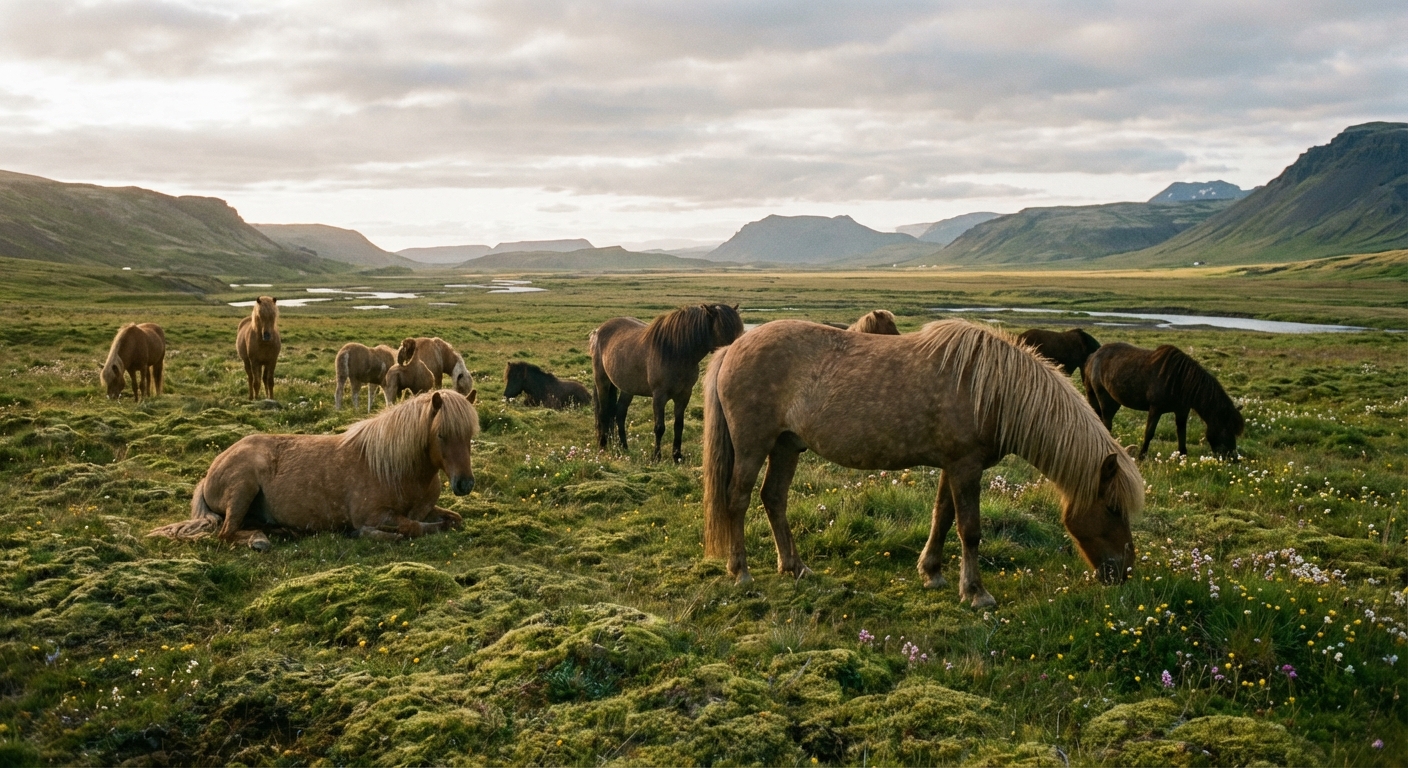
Our philosophy of feeding revolves around accessibility: varied hays and wild herbs, presented so the horse may select freely.
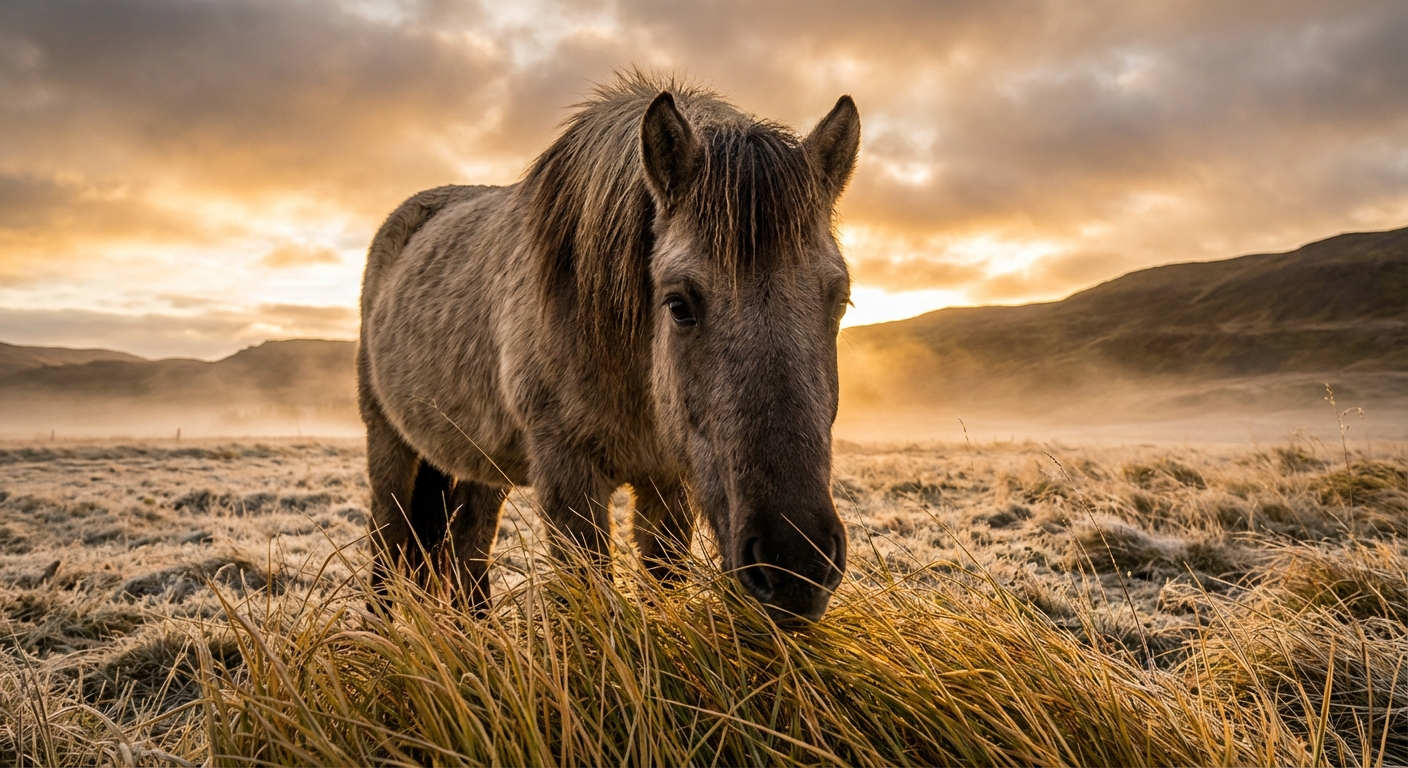
This becomes essential when we are tempted to view diarrhea through a "detox" framework and pursue a singular solution. Within a more heterogeneous environment, the horse is not confined to one monotonous feed yielding one monotonous response. The horse may wander among different roughages and botanical offerings, choosing whatever aligns with instinct in that precise moment.
Here is where the notion of "seeking" finds its ground. Rather than us proclaiming what the horse must be doing, we establish conditions where authentic choice exists—and then we bear witness to what the horse genuinely does.
In human terms, we might ask: do we offer ourselves—and those we love—enough variety to let wisdom emerge from within?
4) Letting the horse lead without turning it into a technique
Coexistence can silently morph into yet another project if we are not vigilant: we begin "permitting choice," but only as a strategy to achieve a predetermined result. Diarrhea manifests, we watch with anxiety, and every bite becomes a diagnostic clue.
The alternative is more elemental, and more demanding: we establish the diverse forage environment and allow it to simply exist. We observe preferences without hastening to decode them into a human agenda.
When a horse gravitates toward one variety of hay today and another tomorrow, we need not manufacture a conclusion. We can recognize that the body speaks its own dialect—and our primary responsibility is to refrain from interrupting that language with our hunger for certainty.
This discipline of non-interference may be one of the hardest lessons for humans anywhere: trusting another's intelligence without needing to translate it into our own terms.
5) Space changes everything: who is really "confined" here?
Anxiety about digestion tends to intensify when horses occupy cramped quarters, because the entire system operates under pressure: pressured schedules, pressured movement, pressured choices.
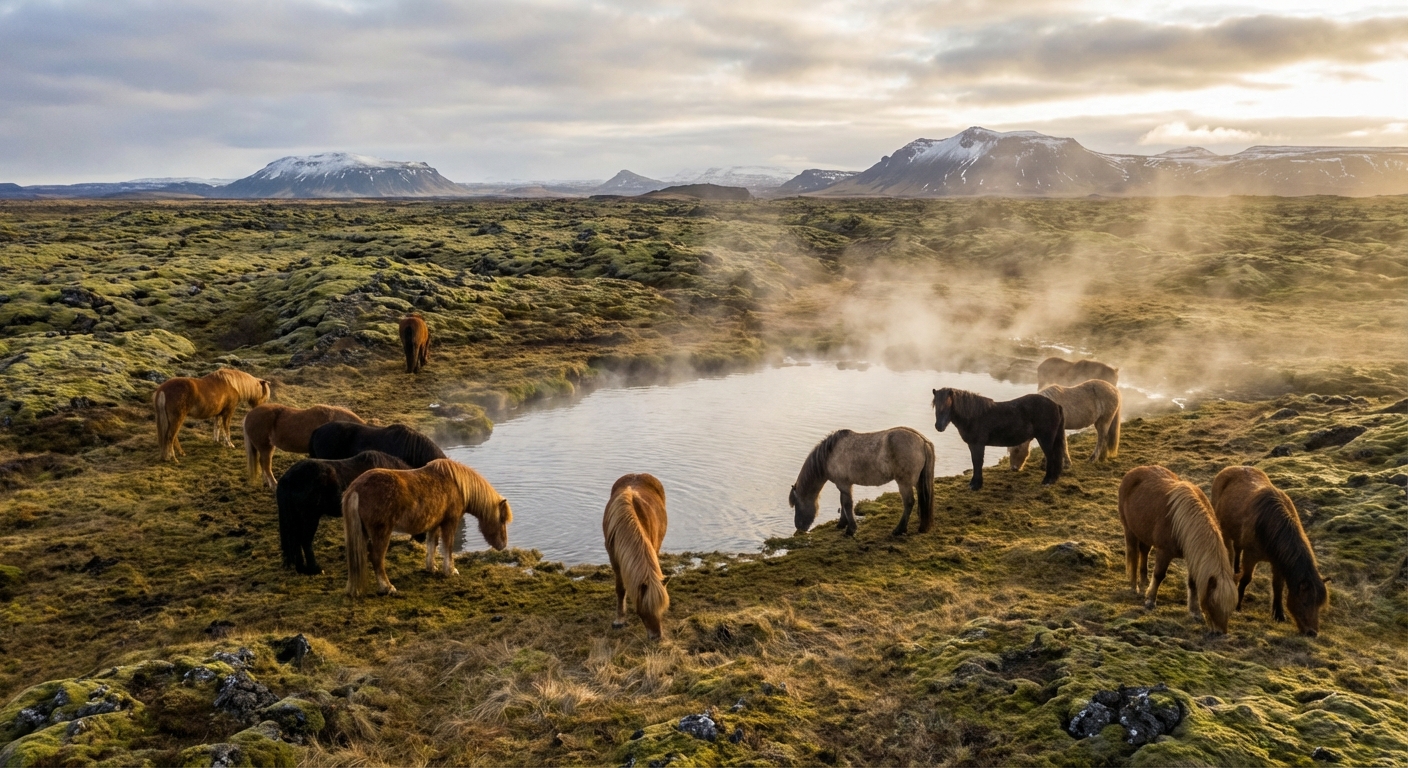
In our arrangement, the majority of the land lies open to the horses. The image inverts itself almost paradoxically: it appears as though we humans occupy the smaller fenced area beside the house, enclosed by barriers we ourselves erected—as if we have "confined ourselves."
This reversal profoundly affects how we meet bodily concerns. Spaciousness nurtures self-governance. A horse capable of traversing a broader landscape and deciding where to stand is not dwelling inside perpetual human crisis.
When the environment is not constructed upon restriction, our responses can become less domineering as well. We may remain beside the horse—present, watchful—without transforming every signal into a catalyst for alarm.
Perhaps we too would find more peace if we questioned which walls we have built around ourselves, and whether the confinement we fear is partly of our own making.
6) Coexistence during uncertainty: staying close without grabbing the steering wheel
When we speak of "charcoal seeking" or "detoxification," the honest reality (within this way of living) is that we need not prevail in any debate about what transpires inside the gut. Our task is to keep the external world hospitable.
This translates to:
- refusing to compress eating into fixed schedules, so the body is not hurled between extremes
- providing varied hay and wild herbs, so the horse may instinctively select what it requires
- sustaining a living space that breathes openness—where the horse's day is sculpted by movement and choice, not by cramped confinement and ceaseless human intervention
Diarrhea may still unsettle us. Yet within a coexistence model, the guiding principle holds firm: we construct a home that affords the horse latitude for its own subtle adjustments, and we cultivate the discipline of not converting the horse's body into our personal narrative.
In the end, this is the art of companionship itself—standing near without seizing control, offering presence without demanding that another's mystery resolve into our understanding.
Equine Notion
https://equinenotion.com/