When You Can’t See the Spray: Coexisting With Horses Through Forage Choice and Humble Uncertainty
Hook
What if one of the greatest dangers to a horse's digestive health is also the most impossible to identify?
It's not a sudden crisis. Not a scene you could capture with a camera. Rather, it's a persistent unease about what might coat the plants, settle into the hay, or drift across the pastures—particularly when glyphosate enters the discussion. This is an uneasy space for any caring human to inhabit: holding deep concern, craving certainty, yet accepting that not every fear can be quantified or confirmed.
In the way we choose to live alongside horses—free from riding, free from training agendas—the most genuine response I've discovered isn't about seizing control. It's about shaping circumstances where the horse retains meaningful choices.
What might this reveal about us?
How often do we face invisible threats in our own lives—the slow accumulation of stress, the quiet toxicity of certain relationships, the unseen effects of choices we make daily? We want certainty. We want a test, a number, a definitive answer. But life rarely offers that clean resolution.
Consider the parent who worries about screen time, processed foods, or environmental toxins affecting their child. There's no perfect measurement, no guaranteed safe threshold. Or the professional who senses something corrosive in their workplace culture but can't quite name it or prove it. The anxiety lives in the gap between caring and knowing.
Perhaps the wisdom isn't in finally achieving certainty—but in learning to act meaningfully within uncertainty. Not paralysis. Not denial. But creating conditions where life can find its own way through.
What invisible concern are you carrying right now that resists easy answers?
1) The Invisible Problem and the Limits of "Knowing"
Glyphosate is the kind of word that triggers an immediate desire for action: eliminate this, purchase that, follow a precise schedule. Yet daily reality with horses seldom provides such neat boundaries.
So much of what enters a horse's digestive tract arrives without announcement: through whatever happens to be present, through repetition, through limitation. This is precisely why unseen worries like pesticide exposure weigh so heavily on the mind. When you cannot verify what has contacted a particular plant, the temptation grows to respond with inflexible protocols and severe restrictions.
But genuine coexistence demands a different stance. It requires acknowledging what remains beyond our verification, then constructing surroundings that allow the horse to move through their world with instincts fully engaged.
What might this reveal about us?
We live in an age that promises data on everything—yet the things that matter most often slip through the metrics. The quality of a friendship. The long-term effects of our daily habits. Whether we're actually present with our children or just physically nearby.
Think of how we approach health anxieties. We might obsess over one supplement, one diet, one routine—grasping for the illusion of control. A friend once told me she'd spent months researching the "perfect" water filter, paralyzed by conflicting information, while her deeper need was simply to trust that she was doing enough.
The horses teach us something profound here: when certainty isn't available, rigidity isn't the answer. Building an environment rich with options might matter more than finding the one "right" solution.
Where in your life have you confused restriction with safety?
2) A Different Kind of Safety: More Land, Not More Locking Up
A common reaction to fear is containment. Across many properties, horses find themselves confined to cramped stalls, as though reducing space automatically increases security.
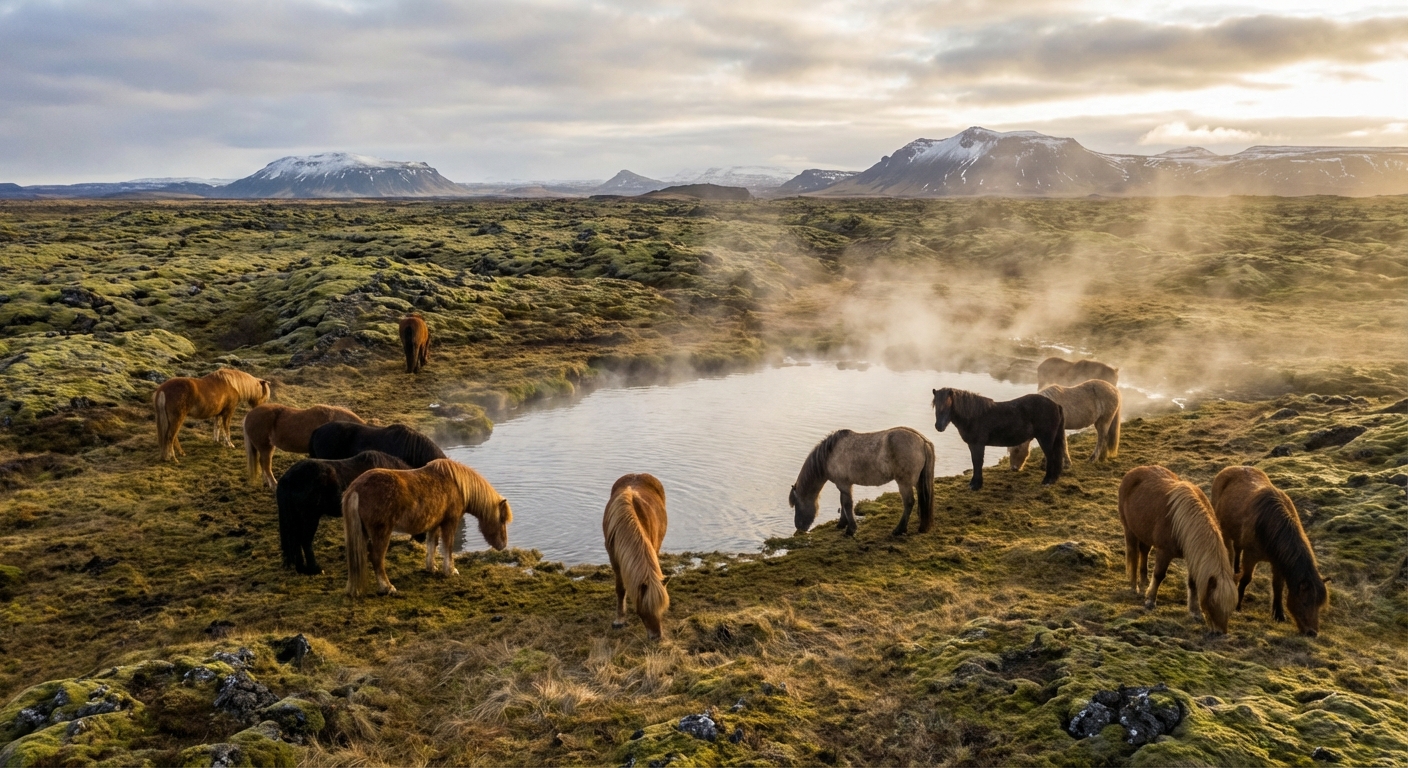
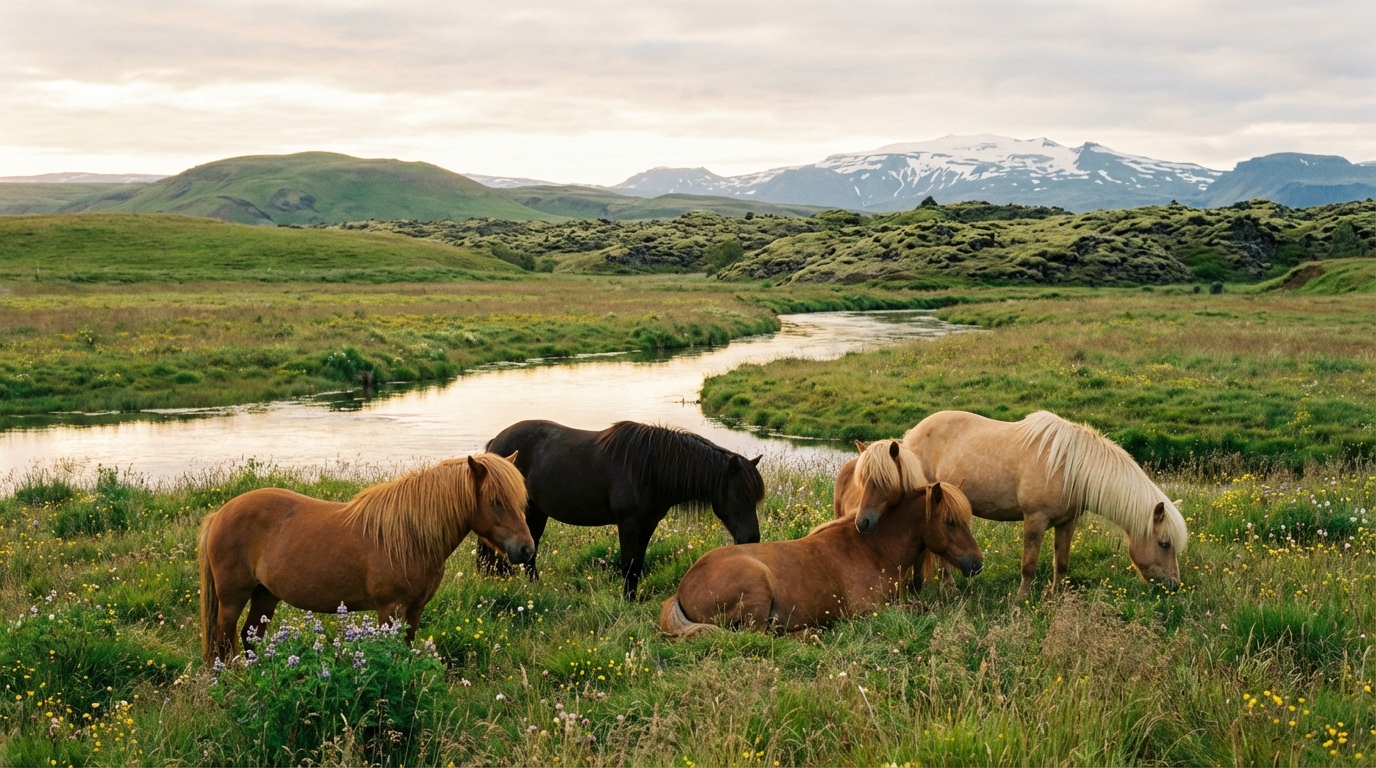
We chose an approach that appears almost inverted: the majority of our property remains accessible to the horses. The visual irony still catches my attention—our fencing creates the impression that we humans are the ones "contained" near the dwelling, while the horses roam the broader territory.
This becomes significant when environmental concerns trouble your mind. The solution isn't always to compress existence until risk disappears. A compressed life carries its own damage. Living together in true partnership means weighing worry against worthiness: providing space for the horse to wander, to decide where to rest, and to exist in a manner that reflects authentic horse living rather than a human spreadsheet of managed hazards.
What might this reveal about us?
How often do we shrink our own lives—or the lives of those we love—in the name of safety? The parent who won't let their teenager take any risks. The person who stays in a job that's slowly diminishing them because leaving feels too uncertain. The relationship where we control every variable to prevent the possibility of hurt.
I think of a colleague who, after a health scare, initially responded by eliminating everything—travel, social gatherings, any food that wasn't meticulously researched. Months later, she realized she'd protected herself into a kind of living death. The breakthrough came when she asked: "What am I actually saving this life for?"
There's a strange arithmetic we rarely examine: the cost of the cage itself. A life made small enough to be "safe" may no longer be a life worth protecting.
The horses, given open land, remind us that dignity requires room to move. That real security might look like expansion, not contraction.
What have you confined—in yourself or others—believing it was protection?
3) Gut Support Without a Clock: Feeding That Respects Foraging
Yet another typical human impulse is to enforce rigid meal schedules. It appears conscientious. It feels orderly.
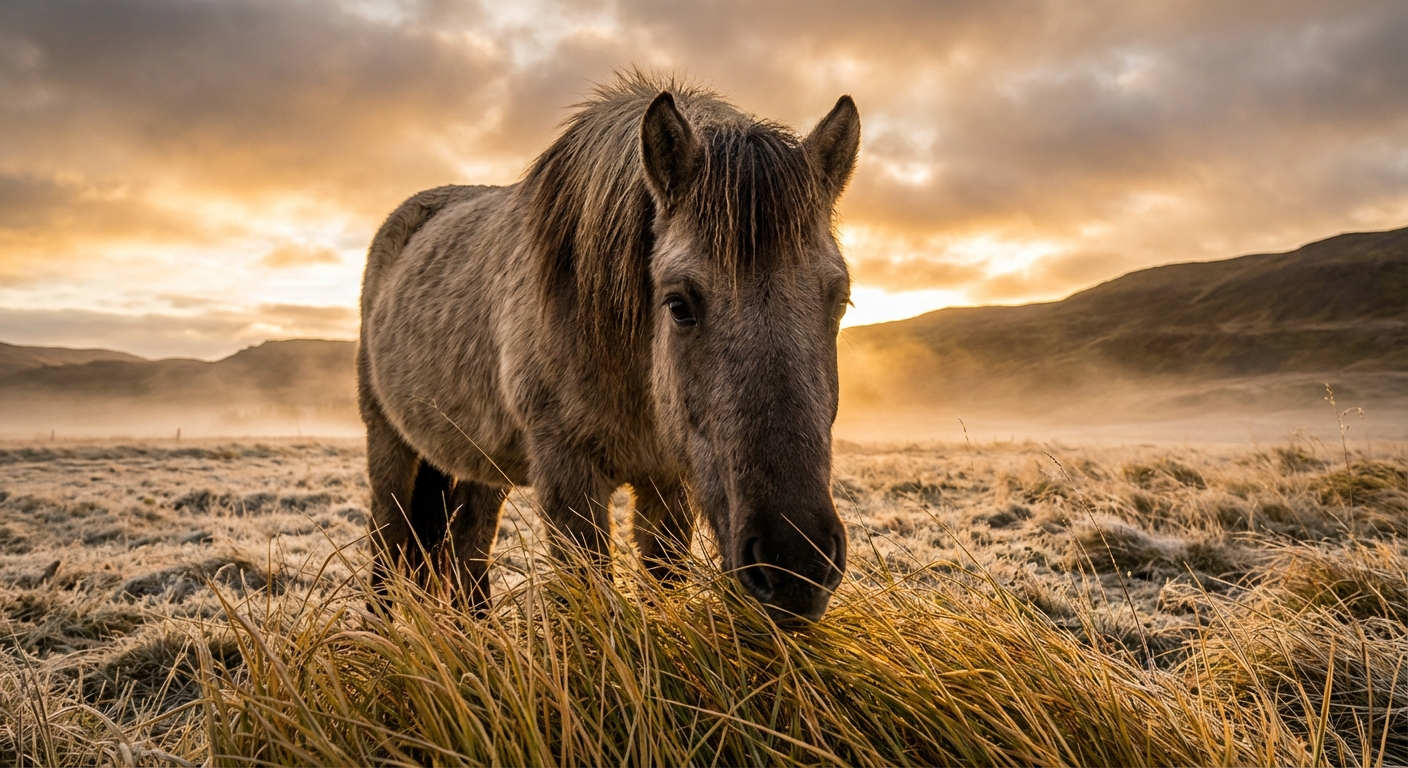
With our horses, however, I avoid feeding on strict, predetermined timetables. My aim instead is to encourage natural browsing patterns as fully as circumstances allow. The digestive system isn't machinery requiring an on/off mechanism. A horse evolved for seeking, tasting, circling back, and continuing onward.
When glyphosate and intestinal harm occupy your thoughts, this philosophy shifts from claiming some flawless remedy to simply refusing to lock a horse into monotonous, unchanging intake. Feeding by the clock can inadvertently manufacture the very vulnerability you hoped to avoid: reliance on a single source, a single variety, a single rhythm—leaving the horse without recourse if something proves problematic.
The objective transforms into consistent availability and genuine selection, rather than theatrical fixes.
What might this reveal about us?
We love our schedules. Our meal prep Sundays. Our optimized morning routines. There's comfort in the structure—but sometimes the structure becomes the cage.
Consider how we feed ourselves—not just food, but information, relationships, experiences. Many of us consume the same mental diet daily: the same news sources, the same social media feeds, the same conversations with the same people. We've created a kind of psychological monoculture. And when something in that single stream becomes toxic, we have no alternatives, no other sources of nourishment.
Or think about how we approach self-improvement. The rigid program. The 30-day challenge. The belief that discipline means forcing ourselves into a single unchanging pattern. But what if growth, like digestion, works better when it can seek, sample, return, and continue?
The horse's gut knows something our productivity culture has forgotten: life thrives on rhythm, not rigidity. On access, not restriction.
What single source have you become too dependent upon?
4) Variety as a Practical Form of Care: Different Hay, Wild Herbs, Real Options
The most tangible action I take—because it can actually be accomplished—is cultivating surroundings where horses encounter multiple varieties of hay and naturally growing herbs.
Not for aesthetic purposes. Not as some idealized vision.
As a means of inviting the horse into active partnership with their own sustenance.
The underlying logic is straightforward: horses possess an innate capacity to select the nutrients their bodies require. By presenting diversity, you release the gut from processing identical input hour after hour. You also abandon the pretense that humans invariably recognize which singular "correct" option addresses every requirement.
This carries particular weight beneath the cloud of pesticide anxiety. I cannot station myself beside each plant and certify its complete history. What I can do is decline to stake the horse's entire digestive existence on a single limited choice.
In daily practice, this translates to establishing access to numerous foraging opportunities—various hay varieties on offer, wild herbs growing within reach—enabling the horse to adjust and choose. Partnership here isn't about defeating a chemical through some clever intervention; it's about assembling a living abundance that prevents the horse from being trapped.
What might this reveal about us?
We often seek the one answer. The one diet. The one philosophy. The one relationship that will meet all our needs. But perhaps wholeness comes from variety—from having multiple sources of meaning, nourishment, and connection.
I think of people who've built their entire identity around one role—parent, professional, partner—and the devastation when that single source is disrupted. The executive who retires and loses all sense of self. The parent whose children leave and who suddenly doesn't know who they are.
The horses, offered a living menu, teach us about resilience through diversity. Not scattered attention, but multiple roots. Not one basket for all eggs, but a rich ecology of sustenance.
This applies to our inner lives too. Different practices for different seasons. Multiple ways of finding meaning. Various relationships that nourish different aspects of who we are.
What would it mean to build a "living menu" for your own soul?
5) Letting the Horse Be the Expert: Instinct, Selection, and Trust
When people discuss digestive troubles, the conversation often sounds clinical and technical. We position ourselves as the authorities.
Yet sharing life with horses cultivates a gentler humility: the horse already interprets their environment through bodily wisdom.
When you supply varied forage, you communicate something essential without speaking: "I won't impose certainty I don't genuinely possess." You also recognize that the horse's instinctive responses aren't obstacles to work around. They represent a capability worth honoring.
This sits at the core of coexistence beyond riding or conditioning. Rather than molding the horse's actions to serve our purposes, we arrange the surroundings so the horse can pursue horse purposes—exploring, tasting, deciding, moving forward.
And when anxieties like glyphosate surface, there's a particular comfort in this approach. You needn't pretend you command the entire world. You can concentrate on what remains within your power to provide: territory, diversity, and the respect inherent in allowing choice.
What might this reveal about us?
How often do we override our own instincts—or the instincts of those we care for—because we think we should "know better"? The body says rest; we push through. The gut says something's wrong in this relationship; we rationalize. The child shows us who they are; we try to shape them into who we think they should be.
There's a particular kind of love that says: "I trust you to know things I cannot know for you." It's the opposite of control, yet it requires more courage. It means sitting with uncertainty. It means believing that wisdom exists beyond our understanding.
A friend who works with trauma survivors once told me: "The most healing thing I can do is create conditions where their own wisdom can emerge. Not fix them. Not direct them. Just... make space."
The horses, reading their world through the body, remind us that intelligence isn't only cognitive. That instinct isn't primitive—it's ancient knowing. That sometimes the most profound respect we can offer is to stop overriding and start trusting.
Whose wisdom—including your own body's—have you been dismissing?
6) Living With Concern Without Turning Life Into a Cage
Deep caring and freedom from worry's imprisonment can coexist.
Granting the horses access to most of our property contributes to this balance. Nourishing them in ways that honor natural browsing instincts contributes to this balance. Making diverse hay and wild herbs available contributes to this balance.
None of these represent dramatic solutions. They won't generate striking transformation narratives. But they accomplish something that matters in the texture of everyday existence: they preserve the expansiveness of the horse's world.
Perhaps this represents the most truthful position we can adopt toward things that evade our sight—like the specter of pesticide traces and the fear of intestinal harm they might cause. We answer by reinforcing the foundations of horse existence: ample space to inhabit, and authentic agency over what enters their bodies.
What might this reveal about us?
We live in an age of anxiety. Climate. Health. Economy. The future of everything. And the temptation is to let that concern build walls around our lives until we're "safe" but no longer living.
But there's another way. The horses show us: respond to fear not by shrinking life, but by strengthening its foundations. Not by controlling every variable, but by building resilience. Not by eliminating all risk, but by creating conditions where life can navigate its own path through uncertainty.
This is perhaps the deepest teaching: care can coexist with spaciousness. Concern doesn't have to become constriction. We can hold our worries and still leave room for life to breathe, to choose, to unfold in ways we cannot predict or control.
The quiet solutions—space, variety, trust, options—don't make for dramatic stories. But they make for lives worth living. For horses. And perhaps for us.
What would it look like to strengthen the foundations of your life, rather than narrowing its walls?
Equine Notion
https://equinenotion.com/